
Aspen to Crested Butte Hike: A Complete Guide (2026)

The wildflowers on West Maroon Creek in July
Hiking from Aspen to Crested Butte is one of our favorite weekends of the year, without fail. Eleven miles through the Maroon Bells-Snowmass Wilderness, over two high mountain passes, through wildflower meadows and along alpine streams — it's as good as Colorado hiking gets. The wildflowers in July are extraordinary. The logistics to pull it off are real but manageable. This guide covers both.
The route is written starting from Aspen, but it can be done in reverse from Crested Butte — the logistics work the same way in either direction. For everything else to do in Aspen in summer, see our Aspen Summer Travel Guide. Looking for a comfortable place to sleep before your adventure begins? Check out our favorite hotels in Aspen here. Staying in Crested Butte? Here’s our Crested Butte travel guide.
Getting to the Trailhead
From Highway 82, take the Maroon Creek exit at the roundabout. After about 4.5 miles you'll reach the welcome station. A few things to know before you go:
Parking passes sell out fast in peak summer months — get one well in advance if you're planning to leave a car at the trailhead. The fee to enter the Maroon Bells is $10 per vehicle regardless of how you're arriving.
Drop-off option: If you're getting dropped off rather than parking, you need to arrive at the welcome center before 8am. A taxi or friend works for this.
Bus option: A bus runs from Aspen Highlands to the Maroon Bells trailhead. The simplest option if you don't want to deal with parking permits.
The Route
The hike starts with the Maroon Bells directly behind you — the twin peaks above Maroon Lake are one of the most photographed spots in Colorado and a genuinely dramatic starting point. From there the trail climbs along West Maroon Creek through wildflowers and past Crater Lake, which appears at about 1.6 miles in and is worth a pause.
The first major climb takes you up to West Maroon Pass at 12,500 feet — the high point of the first half of the hike with sweeping views of the Elk Mountains in every direction. On a clear July day the wildflowers on the approach to the pass are the best we've seen anywhere in Colorado.
From West Maroon the trail descends briefly before climbing again to Frigid Air Pass — the second high point and the one that rewards with the widest panoramic views of the surrounding wilderness. The descent into the East River Valley from here is one of the more beautiful sections of the route — alpine meadows, occasional wildlife, and the sense that you're properly in the backcountry.
River crossings: In summer months there are several unavoidable river crossings along West Maroon Creek. Bring water shoes or plan to cross barefoot — hiking in wet boots for the rest of the day is miserable and avoidable.

High Alpine views along the route
Getting from the Trailhead to Crested Butte
The hike ends at a trailhead several miles outside of Crested Butte — you'll need to arrange transport into town. Three options:
Dolly's Mountain Shuttle — A dedicated shuttle service that covers the Crested Butte area. Book ahead in summer.
Maroon Bells Shuttle — Will shuttle your car in either direction between Crested Butte and Aspen for approximately $400. Some services will also have someone bike or run over, pick up your car, and deliver it to the trailhead. Worth the cost for the simplicity.
Friend coordination — The most satisfying solution if you can pull it off: two groups start on opposite ends simultaneously, swap car keys at the summit or along the trail, and each finishes with a car waiting. Takes coordination but adds a social dimension to the whole trip that makes it more memorable.

Crater Lake is found approximately 1.6 miles into your hike to Crested Butte.
Tips
Fitness level: Strenuous. Eleven miles with significant elevation gain including two passes above 12,000 feet. Assess honestly before committing — the altitude affects performance considerably if you're coming from sea level. Spending a day or two in Aspen before the hike helps with acclimatization.
Timing: Start early. Colorado afternoon thunderstorms are reliable in July and August — being above treeline on the passes after noon is inadvisable. Aim to be at West Maroon Pass by 10am or earlier.
Weather: Check the forecast the morning of. Mountain weather moves fast and the passes offer no shelter. Pack a rain jacket regardless of what the forecast says.
Permits and camping: Some sections require overnight camping permits if you're doing this as a two-day trip. Check current regulations before you go.
Leave No Trace: The Maroon Bells-Snowmass Wilderness is heavily visited. Pack out everything, stay on trail, and don't pick the wildflowers.
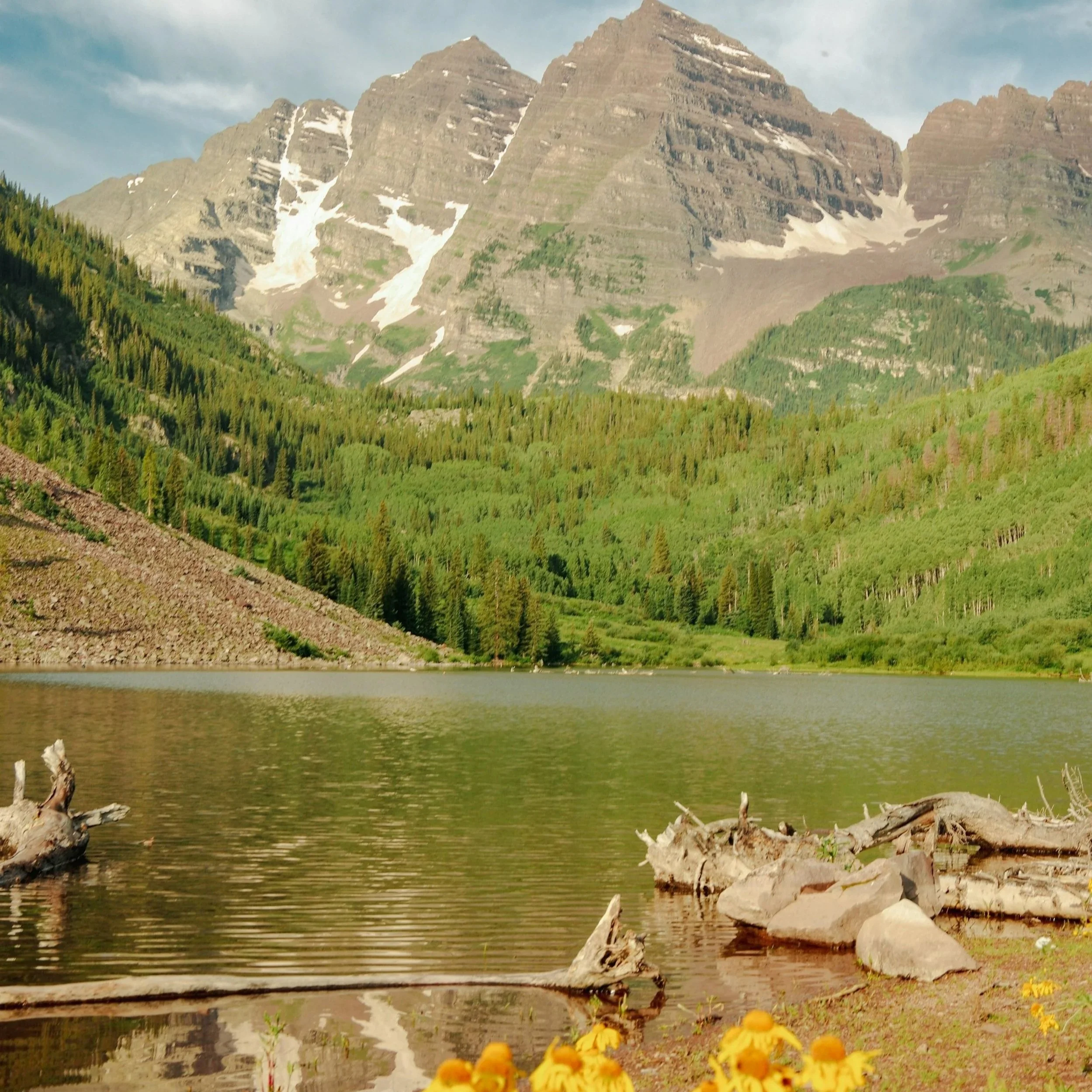
The Maroon Bells in Aspen, Colorado are a great way to begin or end a hike.
What to Bring
Water shoes for river crossings
Hiking poles — useful on uneven terrain and essential at river crossings
Substantial food — snacks and a proper lunch for the summit
More water than you think you need
Rain jacket
Layers — mornings and the summit are cold even in July
Camera — you will use it constantly
When to Go
July is peak wildflower season — the West Maroon Creek approach in mid-July is as good as wildflower hiking gets in Colorado. The passes are typically snow-free by late June. August is equally good for weather and the wildflowers linger into early August most years. Avoid going too early in the season — the passes can hold significant snow into June and crossing them without proper equipment is dangerous.

One of the numerous river crossings along West Maroon Creek trail
FAQs About the Aspen to Crested Butte Hike
How long is the Aspen to Crested Butte hike? Approximately 11 miles one way, with around 3,000 feet of elevation gain including two passes above 12,000 feet.
Is it better to hike Aspen to Crested Butte or Crested Butte to Aspen? Both directions are equally beautiful. The Aspen side has the advantage of the Maroon Bells as a starting backdrop. The Crested Butte side has a slightly gentler approach. Most first-timers start from Aspen.
Do you need a permit for the Aspen to Crested Butte hike? You need a timed entry pass for the Maroon Bells area in summer, and camping requires additional permits. Day hiking does not require a separate permit beyond the entry fee.
Is the Aspen to Crested Butte hike safe? Yes for experienced hikers who start early, check weather, and are prepared for altitude. The river crossings require care and the passes should be cleared before afternoon thunderstorms arrive.
Can you do it in one day? Yes — most fit hikers complete it in 5-7 hours. An early start is essential.
Related Articles
Best Hikes in Snowmass Village