
Camping in Isla Espíritu Santo with Todos Santos Eco Adventures: An Honest Review
Overall: 9/10
Wildlife: 10/10 | Food: 8/10 | Guides: 10/10 | Comfort: 6/10 | Value: 9/10
We have stayed at One & Only resorts, Four Seasons properties, and private island resorts across three continents. The camping trip we did with Todos Santos Eco Adventures on Isla Espíritu Santo was one of the best travel experiences we have had anywhere. Not despite the rustic conditions — because of what those conditions made possible. When you sleep on a UNESCO Biosphere Reserve with no roads, no electricity, and no other guests, and your guides are trained marine biologists who know every whale by name, the ring-tailed cat jumping on your tent at 2am starts to feel less like a problem and more like the point.
Here's the honest picture.
What Is Isla Espíritu Santo?
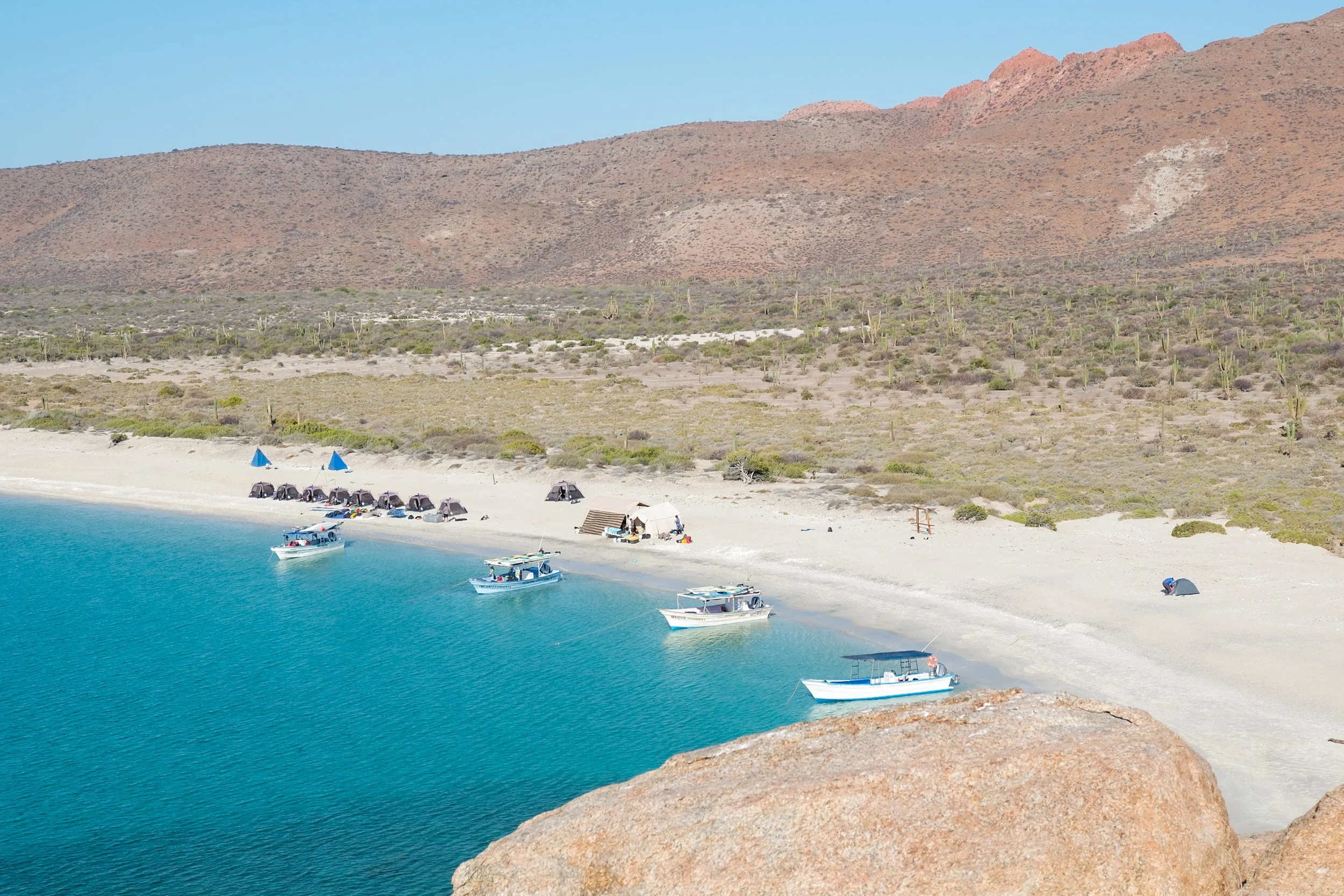
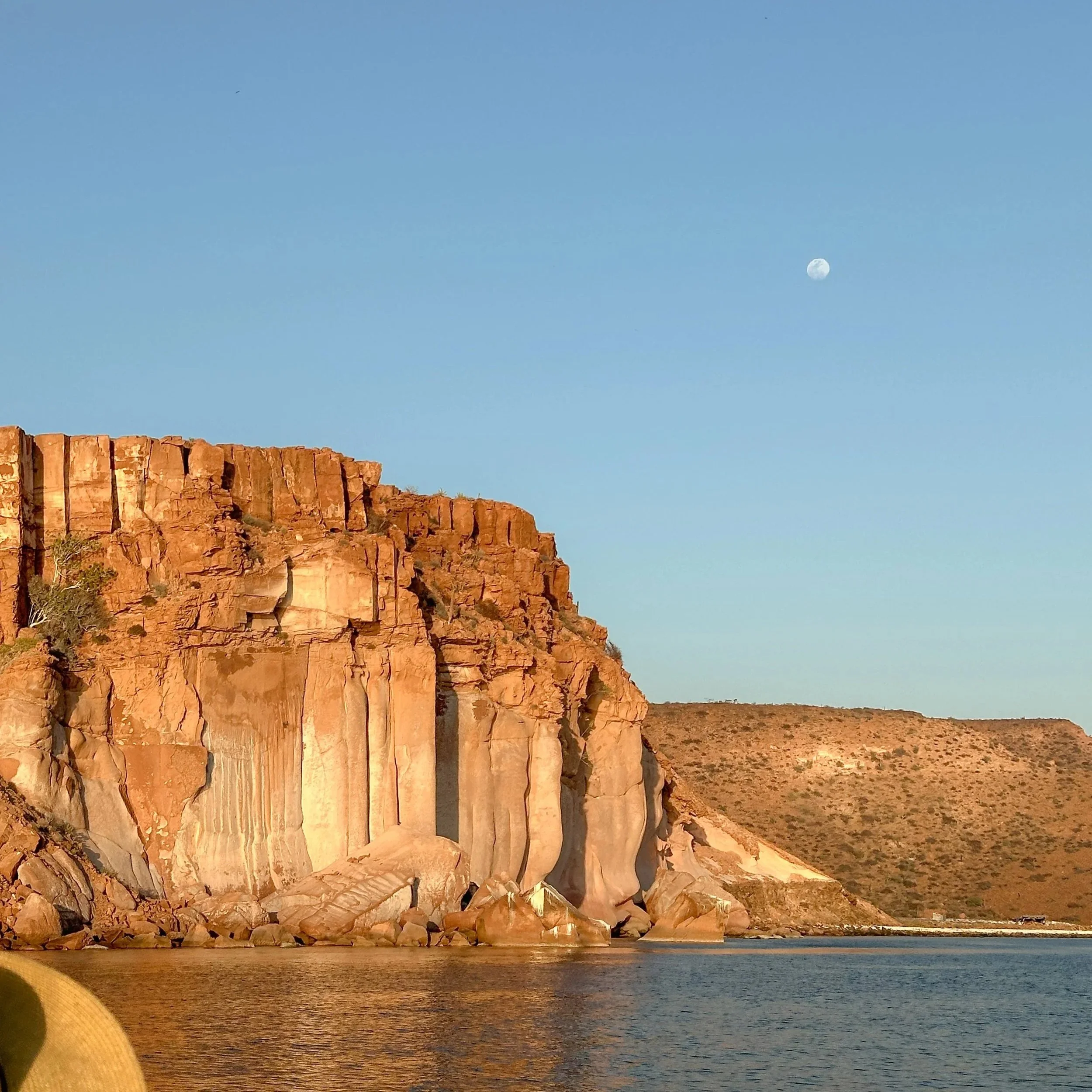
Isla Espíritu Santo is a UNESCO Biosphere Reserve in the Sea of Cortez, about 45 minutes by boat from La Paz in Baja California Sur. Jacques Cousteau famously called the Sea of Cortez the "aquarium of the world" — Espíritu Santo is the heart of it. The island has no permanent residents, no infrastructure, and no tourist facilities. What it has is some of the most extraordinary wildlife concentration in the Western Hemisphere: a resident sea lion colony of over 500 animals, humpback and blue whales in season, bottlenose dolphins, whale sharks, manta rays, and more species of fish than most people will see in a lifetime of diving.
The island is only accessible by boat and only a handful of operators are permitted to run camps on it. Todos Santos Eco Adventures is one of them.
Todos Santos Eco Adventures
Based in La Paz, Todos Santos Eco Adventures has been running wildlife and camping expeditions in the Sea of Cortez for years. The thing that sets them apart from comparable operators — and this became clear within the first hour — is the caliber of the guides. Every guide on our trip was a trained marine biologist. Not a naturalist with a weekend certification, not an enthusiastic local with good storytelling. Marine biologists who study these animals, know the whale populations individually, and can explain what you're seeing in real time with genuine scientific depth. For children who are at the age where the natural world is starting to become genuinely interesting, this is the difference between a nice boat trip and an experience that shapes how they think about the ocean for the rest of their lives.
Our guides were also extraordinarily warm with our kids — patient, enthusiastic, and consistently making sure the children had the best vantage point for every sighting. This is not always the case on wildlife trips. It was consistently the case here.
The Wildlife
There is no diplomatic way to write this section — the wildlife was extraordinary in a way that makes the word "extraordinary" feel inadequate.
Humpback whales — We saw multiple humpbacks on multiple days, including a mother and calf pair that surfaced close enough to the kayaks that our guide asked us to hold our paddles and stay still. The calf was curious. The mother was patient. We sat in silence for several minutes while they moved around us. Nobody on the trip said anything for a long time afterward.
Blue whales — The largest animals that have ever lived on Earth, and we saw them. Blue whales are not reliably sighted anywhere — their range is vast and their movements unpredictable. The fact that the Sea of Cortez concentrates them in season, and that our guides knew where to look, meant we had multiple sightings over the course of the trip. Watching a blue whale surface and exhale — the column of vapor, the impossibly long back, the small dorsal fin appearing almost as an afterthought — is one of those sights that recalibrates your sense of scale.
Sea lions — The colony at Los Islotes is one of the most accessible wild sea lion colonies in the world. We swam with them. The juveniles in particular are intensely curious and genuinely playful — they swim directly at you, veer off at the last moment, and circle back immediately. Our youngest was hesitant at first and within ten minutes was laughing into her snorkel mask. It's the kind of wildlife interaction that doesn't feel like an intrusion because the sea lions are clearly the ones choosing to engage.
Dolphins — Multiple pods throughout the trip, including a large group of bottlenose dolphins that bowrode the boat for several minutes on the return from one of the snorkel sites. Children on the bow of the boat watching dolphins directly below them — this is the image from the trip that comes to mind first.
The Camping
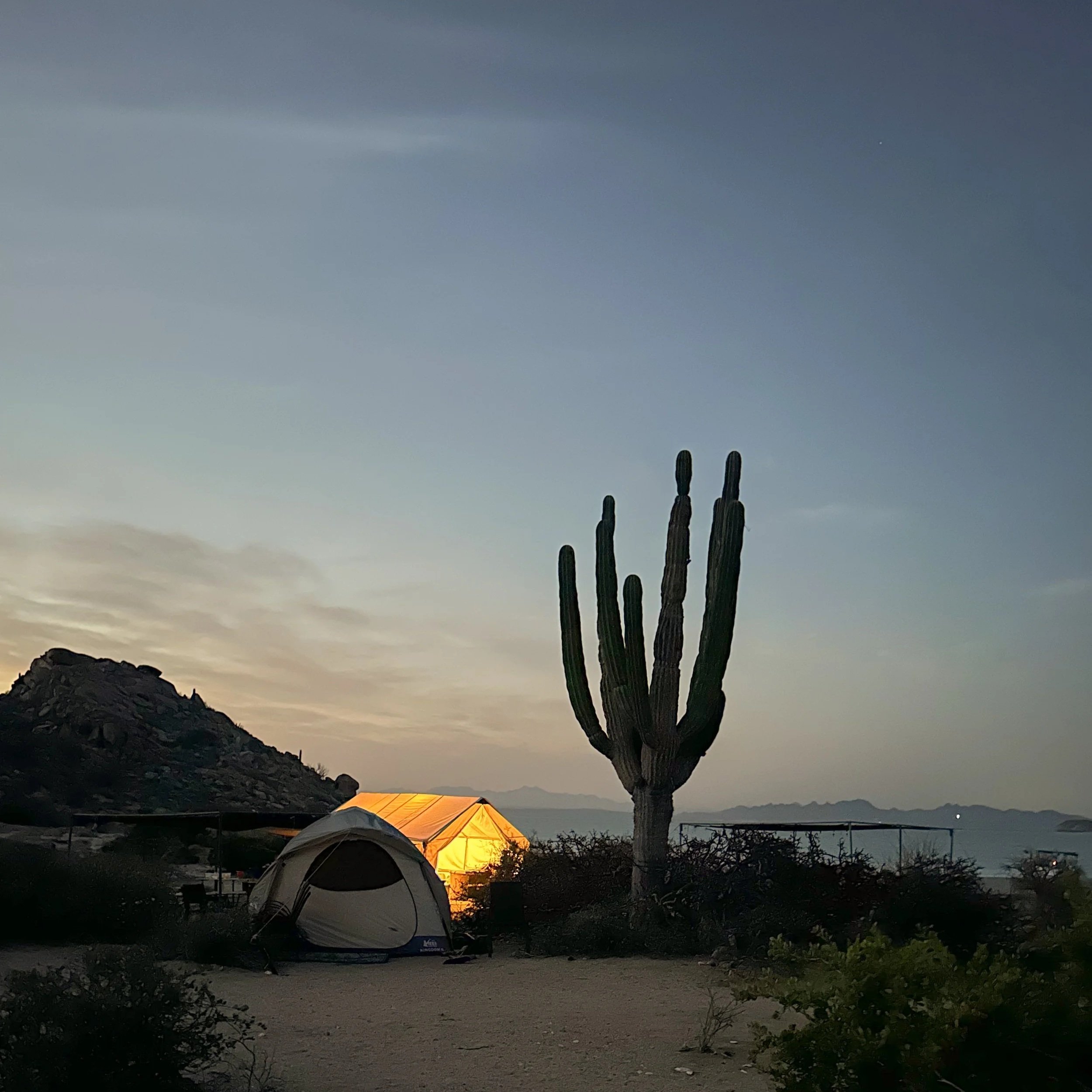
Let's be honest about this: it's camping. Tents on the beach, composting toilets, no showers, no air conditioning, no electricity beyond what's needed for lighting. If those conditions are dealbreakers, this is not the right trip.
If you can make peace with them — and we found we could, more quickly than expected — what you get in return is sleeping on one of the most beautiful beaches in Mexico under a sky with no light pollution, waking up to the sound of the Sea of Cortez, and having the island essentially to yourselves.
The tents are well-maintained and properly set up on elevated platforms with good sleeping pads. The camp is organized and thoughtfully run. Nothing felt improvised or unsafe.
The ring-tailed cats: Espíritu Santo has a resident population of ring-tailed cats — nocturnal, raccoon-adjacent, and deeply committed to investigating campsites after dark. They jumped on our tent. They rustled through bags. We were slightly less delighted at 3am but recovered quickly. Consider it wildlife access of a different kind.
The Food
Three hearty meals daily and a happy hour each evening — all prepared on site by the camp team. The food was genuinely good in a way that surprises you given the context. Fresh fish tacos, grilled proteins, substantial breakfasts before long days on the water, and a happy hour with cold drinks and snacks that became the nightly ritual everyone looked forward to.
For children who have spent active days kayaking and snorkeling, the portion sizes were exactly right. Nobody went to bed hungry.
The happy hour deserves a specific mention — sitting on the beach as the sun dropped behind the island's limestone cliffs, drinks in hand, recapping what we'd seen that day, is one of the better end-of-day rituals we've experienced on any trip anywhere.
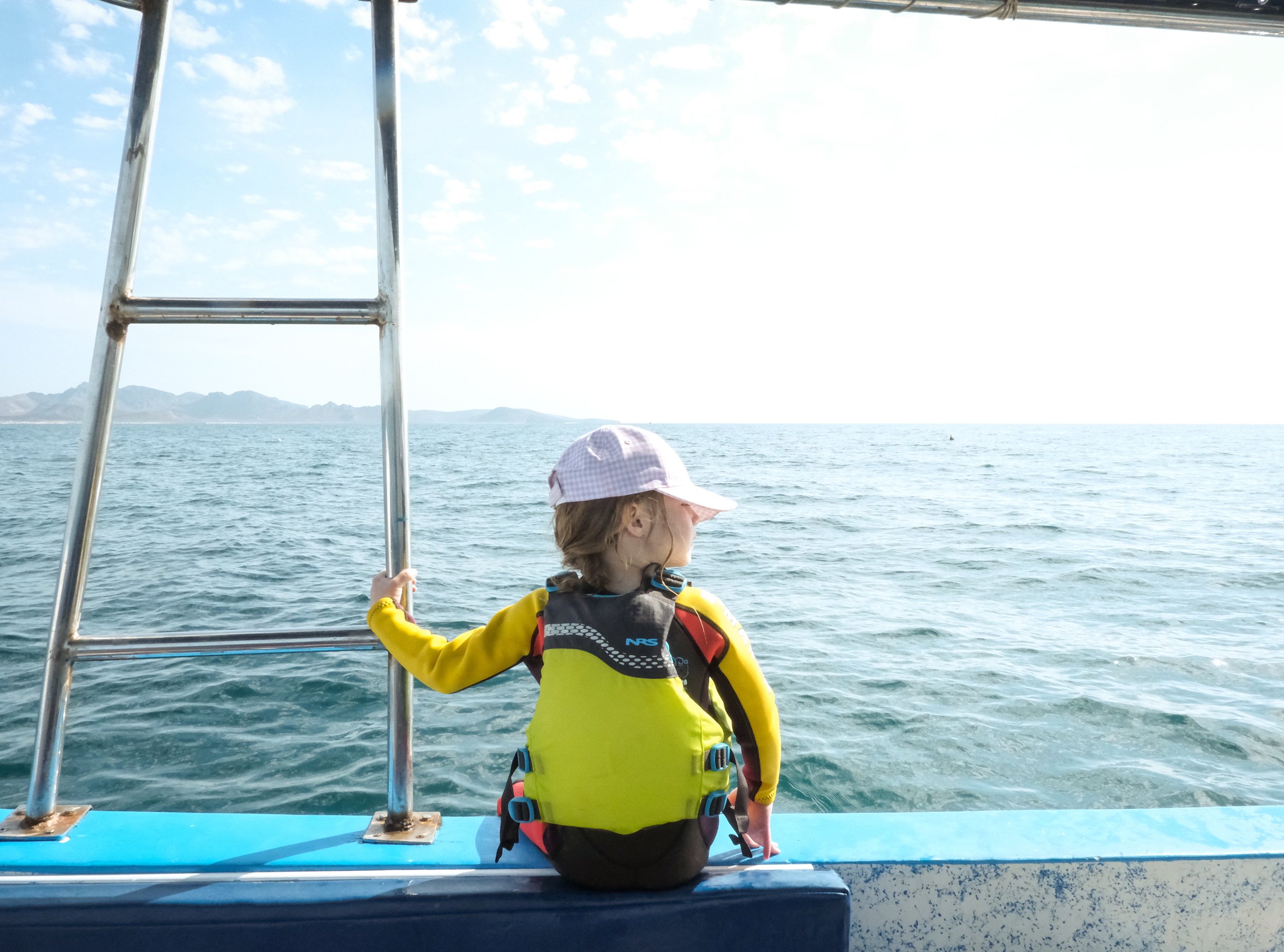
Is It Good for Families?
Yes — with the right age range and realistic expectations. The trip works best for children aged six and above who can manage a full day of kayaking and snorkeling without exhaustion becoming a problem. Younger children can participate in many of the activities but may find the longer water days tiring.
The guides' warmth toward children is the deciding factor. We never felt like our kids were an inconvenience to the adult experience of the trip. They were consistently included, explained to, and prioritized in every wildlife sighting. The sea lion swim in particular was handled perfectly for the children — patient introduction, appropriate supervision, and guides who understood that a child's first close encounter with a wild animal requires a different pace than an adult's.
Practical Notes
Getting there: Fly into Los Cabos or La Paz. La Paz is the closer airport but has limited direct connections from the US. Los Cabos is about two hours by car. Todos Santos Eco Adventures handles logistics from La Paz.
What to bring: Sun protection is the most important item — the Sea of Cortez reflects significant UV even on overcast days. Bring more sunscreen than you think you need, a wide-brimmed hat, water shoes for the sea lion colony, and a dry bag for any electronics on the water. Comfortable clothes that can get wet and dry quickly. A headlamp for camp after dark.
What not to expect: Hot showers. Air conditioning. Wi-Fi. Reliable phone signal. If any of those are non-negotiable, this is not the right trip.
Booking: Book directly through Todos Santos Eco Adventures. Trip dates are limited and the permits for camping on Espíritu Santo restrict group sizes, so availability goes quickly in peak season. December through April is the best window for whale sightings.
Is It Worth It?
Yes — unreservedly. This is the kind of trip that produces stories your children tell for years. The combination of wildlife access, guide quality, and the sheer improbability of the location makes it genuinely irreplaceable. You cannot recreate the blue whale sighting at a resort. You cannot get the sea lion swim from a beach club. The ring-tailed cat will not appear at your overwater bungalow.
For families who have done the resort circuit and are looking for something that feels genuinely different — something that gives children a real encounter with the natural world rather than a curated version of it — this is the answer.
Book with Todos Santos Eco Adventures
FAQs About Camping Isla Espíritu Santo
Is camping on Isla Espíritu Santo safe for families? Yes — Todos Santos Eco Adventures is a well-established operator with experienced marine biologist guides and a strong safety record. The camp is organized and properly managed.
When is the best time to see whales at Isla Espíritu Santo? December through April for humpback and blue whales. Whale sharks are present June through November. Sea lions are resident year-round.
How rustic is the camping? Tents on elevated platforms with good sleeping pads, composting toilets, no showers or electricity. Genuinely rustic but not uncomfortable. Prepare expectations accordingly.
How far is Isla Espíritu Santo from La Paz? About 45 minutes by boat from La Paz.
What age is appropriate for this trip? We recommend six and above for the full experience. Younger children can participate but may find the longer water days tiring.