
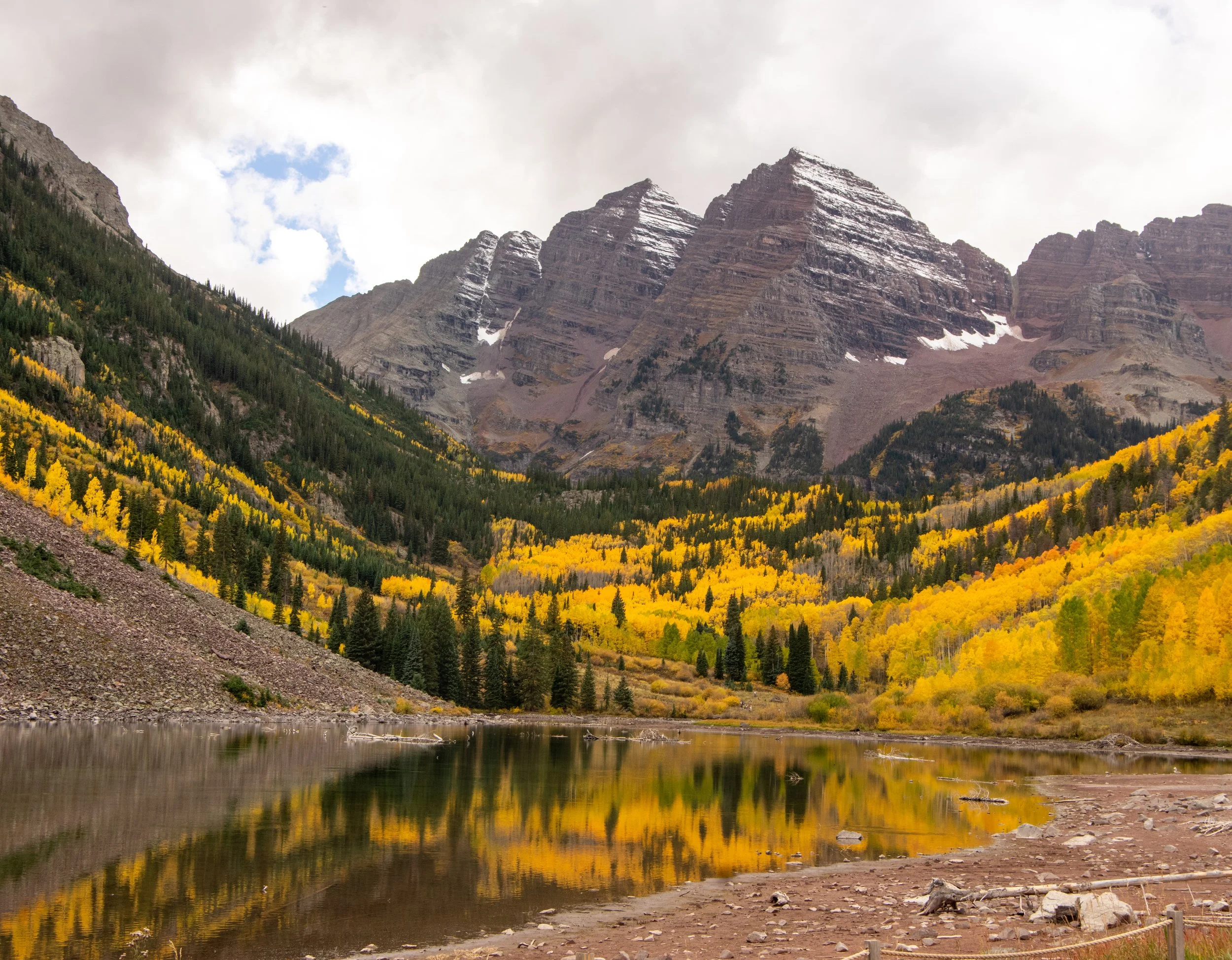
The Maroon Bells are the most photographed mountain range in North America — and once you see them, you understand why. Two fourteeners reflected in Maroon Lake against a backdrop of high alpine wilderness, surrounded by wildflower meadows and the kind of scenery that makes you want to cancel your plans and stay indefinitely. They sit 12 miles from downtown Aspen, and visiting them is not optional.
This guide covers everything you need to know: how to get there, what it costs, the best hikes, what to do with kids, the new 2026 e-bike fee, and how to avoid the most common mistakes first-time visitors make.
Quick Guide: Maroon Bells At a Glance
Location 12 miles from Aspen, Maroon Creek Road
Elevation Maroon Lake: 9,580 ft · North Maroon Peak: 14,019 ft
Season May 15 – October 31, 2026
Shuttle cost $16/adult · $10/senior (65+) and children under 12
Parking cost $10/vehicle (reservation required)
Parking hours Before 8am or after 5pm only
E-bike fee (NEW 2026) $5 per e-bike — effective May 15
Regular bike Free — no fee, no reservation needed |
Reservations visitmaroonbells.com
How to Get There
By Shuttle — The Recommended Option
The RFTA shuttle is the way most visitors access the Maroon Bells and it is genuinely the best option for most people. Shuttles depart from the Maroon Bells Welcome Center at Aspen Highlands Ski Area and take approximately 15 minutes each way. The ride itself passes through beautiful scenery — aspens, mountain views, the first glimpses of the Bells through the trees — and arriving by shuttle means you step off directly at Maroon Lake without the stress of parking logistics.
Cost: $16 per adult · $10 per senior (65+) and children under 12
Season: May 22 through October 18, 2026
Reservations: Required and strongly recommended — book at visitmaroonbells.com as early as possible, especially for July and August visits which sell out weeks in advance.
Book your Maroon Bells shuttle reservation here →
By Car — Early Morning and Evening Only
Private vehicles are restricted on Maroon Creek Road between 8am and 5pm from May 22 through October 18. If you want to drive, you must arrive before 8am or after 5pm — and a parking reservation is required.
Cost: $10 per vehicle
Reservation: Required — book at visitmaroonbells.com
Tip: The early morning arrival is the better option. Arriving before 8am means you beat the crowds, see the lake in the morning light before the day hikers arrive, and have the most serene version of the experience available.
By Bike — Road Bike or E-Bike
Cycling to the Maroon Bells is one of the great Colorado bike rides — a 16.2-mile round trip from Aspen Highlands that climbs 1,300 feet over 8 miles, through aspen groves and beneath the watchful gaze of 14,026-foot Pyramid Peak, before the road bends and the Bells come into view.
Road bikes: Free, no reservation required. The route is almost entirely vehicle-free during daytime hours thanks to the car restrictions — which makes for a genuinely pleasant and safe road ride.
E-bikes: NEW $5 fee effective May 15, 2026. Beginning this summer the US Forest Service is charging a $5 amenity fee for all e-bikes entering the Maroon Bells Scenic Area — the same fee currently applied to motorcycles. Under Forest Service policy e-bikes are classified as motorized vehicles. The fee does not apply to standard non-motorized bicycles. More than 8,000 e-bikes visited the Bells last summer, and the fee will go toward maintaining and managing the area.
Important: If you rent an e-bike, ask your rental shop whether the $5 fee is included in your rental rate — some operators are building it into their pricing and providing a verification code. The fee is collected at the welcome station approximately 1.5 miles uphill from T-Lazy-7 Ranch.
No reservation needed for cyclists or e-bikers — you can arrive any time. The fee is not limited and will not sell out.
By Snowmobile — Winter Only
In winter, Maroon Creek Road is closed to vehicle traffic and the Bells are accessible by snowmobile tour from T-Lazy-7 Ranch. The winter landscape is extraordinary — the Bells reflected in frozen Maroon Lake, the valley completely silent and snow-covered. It is one of the most dramatic winter experiences available near Aspen and a genuinely different experience from the summer visit. Book the T-Lazy-7 snowmobile tour here →
Note on the America the Beautiful Pass: If you hold a valid America the Beautiful Pass it covers both the $10 vehicle parking fee and the new $5 e-bike fee. Passholders with parking reservations still need to pay the $2.40 service fee.
Where to Stay
We recommend staying in Aspen before and after your Maroon Bells visit. Our list of favorite hotels in Aspen can be found here.
The Hikes
The Maroon Bells Scenic Area is the starting point for some of the best hiking in Colorado, ranging from a flat lakeside walk accessible to toddlers to multi-day wilderness adventures crossing four mountain passes above 12,000 feet.
One important note before you go: Mountain bikes and all mechanized vehicles are prohibited on the trails within the Maroon Bells-Snowmass Wilderness Area. The cycling and e-bike access described above applies only to Maroon Creek Road and not the hiking trails.
Maroon Lake Scenic Trail — Easy
Distance: 1.7 miles round trip
Elevation gain: Minimal
Best for: All ages including very young children
The most accessible hike at the Bells and the one most visitors do regardless of fitness level. The trail circles Maroon Lake with the Bells reflected in the water. This is the iconic view and it is genuinely as beautiful as every photograph suggests. The path is well-maintained and mostly flat, making it suitable for strollers and young children. Allow 45-60 minutes at a relaxed pace.
Crater Lake Trail — Moderate
Distance: 3.6 miles round trip
Elevation gain: 500 feet
Best for: Families with older kids, moderate hikers
The most popular day hike from Maroon Lake. The trail follows Maroon Creek upstream through willows and wildflowers to Crater Lake, with increasingly close views of the Bells as you ascend. The lake itself sits in a dramatic amphitheater beneath North Maroon Peak and Maroon Peak. Wildflowers from mid-July through early August are extraordinary. Allow 2-3 hours round trip.
West Maroon Pass Trail — Difficult
Distance: 13 miles round trip (or one way to Crested Butte)
Elevation gain: 2,500 feet to the pass at 12,500 feet
Best for: Experienced hikers, strong intermediate hikers
One of the most spectacular and rewarding hikes in the Elk Mountains. The trail climbs steeply from Maroon Lake through wildflower meadows and rocky alpine terrain to West Maroon Pass at 12,500 feet, with panoramic views of the Elk Mountains that are among the best in Colorado. Most hikers turn around at the pass and return to Maroon Lake.
For the truly ambitious, the West Maroon Pass trail is also the starting point of the legendary hike from Aspen to Crested Butte, a 12.2-mile one-way backcountry route over the pass and down into the Slate River Valley. This hike requires advance planning including a car shuttle or arranged transport from the Crested Butte side. Read our complete Aspen to Crested Butte hiking guide for everything you need to know.
Buckskin Pass Trail — Difficult
Distance: 9 miles round trip
Elevation gain: 2,800 feet
Best for: Strong, experienced hikers
A strenuous climb through alpine meadows to Buckskin Pass with sweeping views of the Snowmass Wilderness. This is the trail for serious hikers who want a challenge and the highest-elevation views available on a day hike from Maroon Lake. The wildflowers on the upper sections in July are extraordinary.
Four Pass Loop — Very Difficult / Multi-Day
Distance: 26-28 miles loop
Elevation gain: ~8,000 feet total
Best for: Experienced backcountry hikers, overnight trips
One of the great loop hikes in Colorado. The Four Pass Loop crosses West Maroon, Frigid Air, Trail Rider, and Buckskin Passes over 26 miles of spectacular wilderness terrain. Most hikers complete it over 3-4 days with overnight permits. Overnight wilderness permits are required and available at recreation.gov.
Visiting Maroon Bells with Kids
The Maroon Bells are one of the most accessible major natural wonders in the United States for families with young children. The Maroon Lake Scenic Trail is stroller-friendly and the flat lakeside path gives very young children a genuine wilderness experience without demanding fitness they don’t have.
For families with slightly older children the Crater Lake Trail is manageable and the destination (a dramatic mountain lake beneath the Bells) is rewarding enough to make the effort worth it. Bring plenty of snacks, water, and layers as the weather at 9,500 feet changes quickly even in summer.
Practical tips for families:
Book the shuttle in advance — July and August sell out weeks ahead
Arrive early or late to avoid peak crowds between 10am and 3pm
Bring water shoes if you want kids to wade at the lake edge
The elevation is significant — at 9,580 feet children may tire more quickly than at lower altitudes
There are restroom facilities at Maroon Lake
Best Time to Visit
Wildflower season: Mid-July through early August
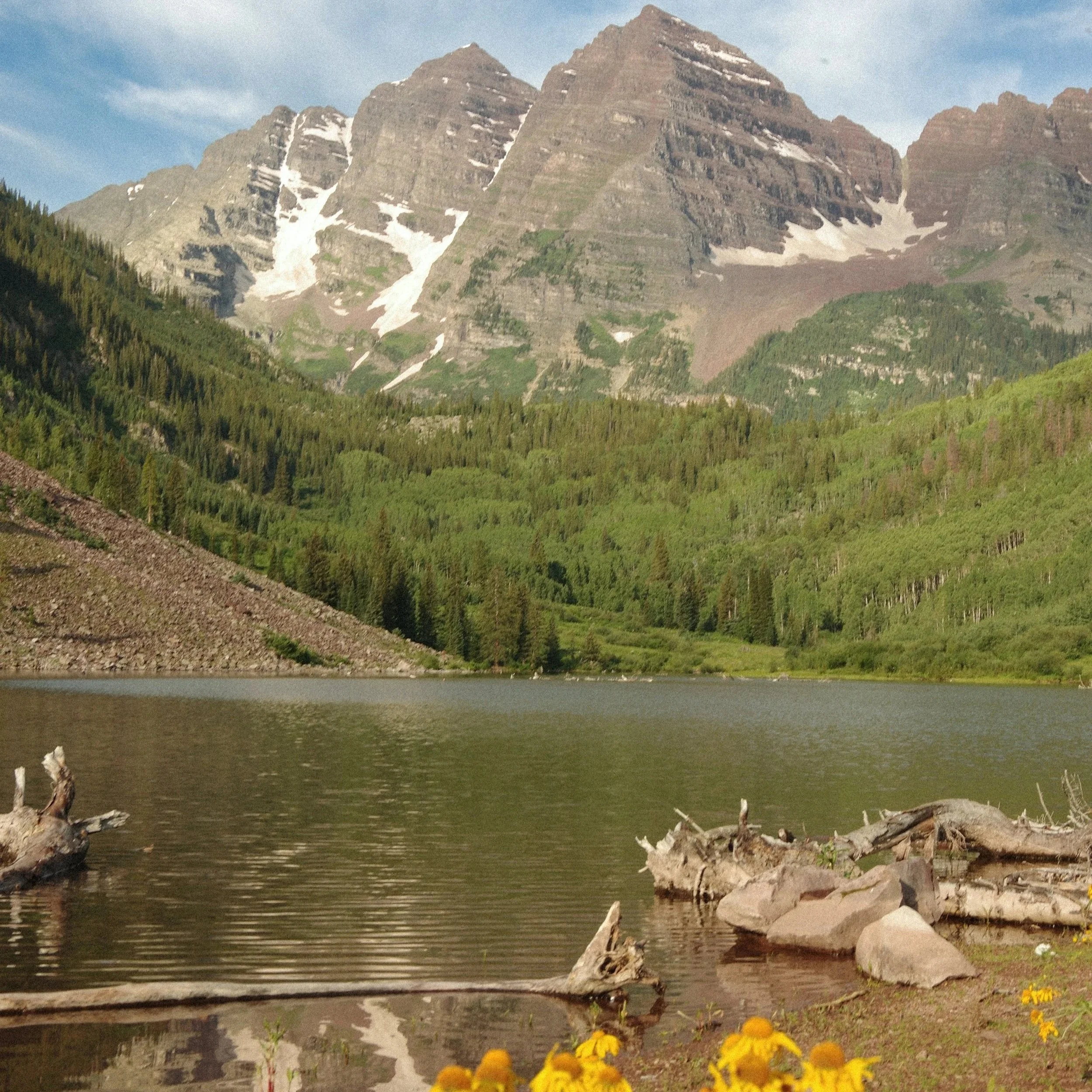
The single best time to visit Maroon Bells. The meadows surrounding the lake are carpeted in wildflowers, and the combination of flowers, green valley, and the dark red peaks of the Bells is extraordinary. This is also the busiest period so book shuttle reservations as early as possible.
Fall foliage: Mid-September through early October
The aspen groves along Maroon Creek Road turn gold in September and the contrast with the dark rock of the Bells is one of the most photographed natural scenes in Colorado. Crowds are slightly lighter than peak summer but the shuttle still fills up so book ahead.
Early summer: Late May through June
Snow is often still present on the upper trails and the wildflowers haven’t peaked, but the crowds are significantly lighter and the valley has a raw, early-season beauty that many locals prefer. Water levels in the creek are high from snowmelt.
Photography: Sunrise and the first hours of morning light are the best times for photography at Maroon Lake as the Bells are reflected most clearly in calm morning water before afternoon winds disturb the surface. This means arriving with a parking reservation before 8am or booking the earliest shuttle available.
Practical Tips
Book early — this cannot be overstated. Shuttle reservations for July weekends sell out weeks in advance. Parking reservations for peak season (May 15-July 31) were released in February. If you’re visiting in summer without a reservation, plan to arrive before 8am with a parking reservation or accept that you may not be able to access the Bells at all.
Bring layers. Maroon Lake sits at 9,580 feet. Summer temperatures can swing 30-40 degrees between morning and afternoon, and afternoon thunderstorms are common from July through August. A rain layer and warm mid-layer are worth carrying regardless of the morning forecast.
Leave early if you see clouds building. Afternoon thunderstorms in the Elk Mountains develop quickly and lightning above treeline is serious. If you’re on any of the higher trails — West Maroon Pass, Buckskin Pass — plan to be below treeline by early afternoon.
Respect the wilderness. Stay on designated trails. The wildflower meadows are fragile at altitude and foot traffic off-trail causes damage that takes decades to recover. Pack out everything you pack in.
Dogs: Dogs are permitted on Maroon Creek Road and on the trails but must be leashed at all times within the Scenic Area.
Frequently Asked Questions
Do I need a reservation to visit Maroon Bells?
If you’re arriving by shuttle or car during the restricted hours (8am-5pm, May 22-October 18), yes — reservations are required and strongly recommended. Cyclists, e-bikers, and motorcyclists do not need reservations. Book at visitmaroonbells.com.
How much does it cost to visit Maroon Bells in 2026?
Shuttle: $16/adult, $10/children and seniors. Car parking: $10/vehicle. E-bikes: $5 per e-bike (new fee effective May 15, 2026). Regular bicycles are free.
What is the new e-bike fee at Maroon Bells?
Starting May 15, 2026, all visitors entering the Maroon Bells Scenic Area on e-bikes are charged a $5 amenity fee — the same rate applied to motorcycles. The fee does not apply to non-motorized bicycles. It is collected at the welcome station approximately 1.5 miles uphill from T-Lazy-7 Ranch. Some rental shops include the fee in their e-bike rental rates.
How far is Maroon Bells from Aspen?
Maroon Lake is approximately 12 miles from downtown Aspen via Maroon Creek Road. The shuttle from Aspen Highlands takes approximately 15 minutes.
Can you hike from Maroon Bells to Crested Butte?
Yes — the West Maroon Pass trail connects Maroon Lake to Crested Butte over 12.2 miles of spectacular backcountry terrain crossing West Maroon Pass at 12,500 feet. It requires advance planning including car shuttle logistics. Read our complete Aspen to Crested Butte hiking guide for everything you need to know.
What is the best hike at Maroon Bells for beginners?
The Maroon Lake Scenic Trail — 1.7 miles round trip, essentially flat, suitable for all ages including very young children. For a slightly longer moderate hike the Crater Lake Trail at 3.6 miles round trip is the next step up.
Can you visit Maroon Bells in winter?
The road is closed to vehicle traffic in winter but the Bells are accessible by snowmobile tour from T-Lazy-7 Ranch. It is one of the most dramatic winter experiences near Aspen.
When do wildflowers peak at Maroon Bells?
Mid-July through early August is typically peak wildflower season. The combination of wildflowers and the Bells is the most photogenic time of year to visit.
Is Maroon Bells worth visiting?
Yes — without qualification. The Maroon Bells are one of the most extraordinary natural settings in the United States and the accessibility of the shuttle system makes them genuinely achievable for visitors of all fitness levels and ages. They are the defining experience of a summer visit to Aspen.