
Puglia Travel Guide (2026) — Where to Stay, Eat, and What to Do
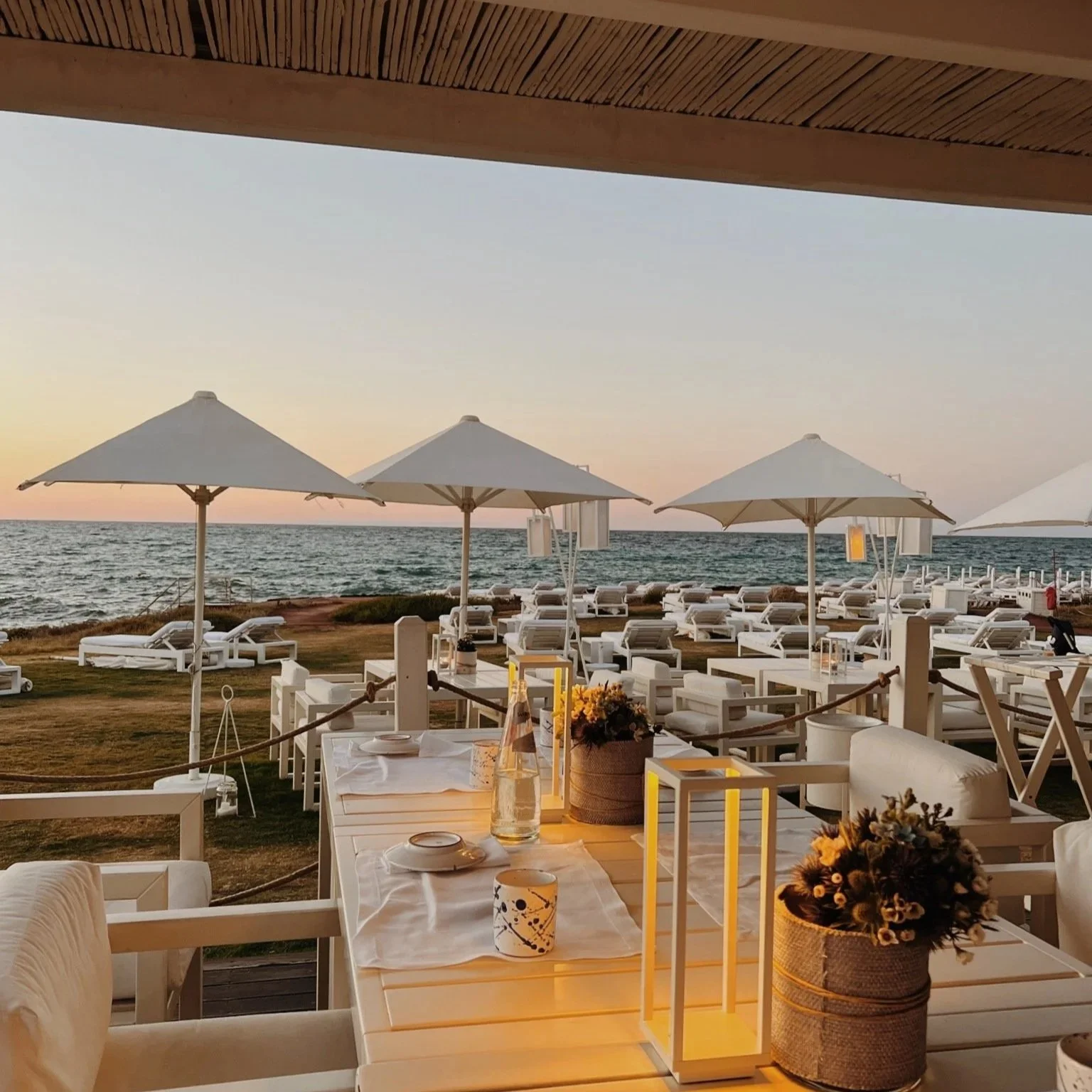
Puglia is the region of Italy that travelers who know Italy well keep going back to, and the one they wish they’d discovered sooner. Located in the heel of Italy’s boot, it has everything that makes the country extraordinary — extraordinary food, beautiful historic towns, warm people, long coastlines — without the crowds and prices that have overtaken Tuscany, the Amalfi Coast, and Rome.
The landscape is unlike anywhere else in Italy. Ancient olive groves, some of the oldest in the world, stretch across a flat limestone plain toward the Adriatic Sea. Whitewashed hilltop towns glow in the evening light. And the trulli make the region feel like nowhere else on earth.
We traveled to Puglia on a multi-generational family trip and it exceeded every expectation. This guide covers everything you need to plan your own visit — the towns, the food, the hotels, and the practical details that make the difference between a good trip and a great one.
Why Visit Puglia
Puglia rewards travelers who are looking for the Italy that hasn’t yet been fully discovered. A few reasons it consistently over-delivers:
The food is extraordinary. Puglia produces more olive oil than any other Italian region, grows some of the country’s best tomatoes and vegetables, and has a seafood tradition rooted in the Adriatic that results in some of the finest simple cooking in Italy. Orecchiette — the ear-shaped pasta made by hand on almost every street corner in Bari — is the region’s signature dish, and eating it with fresh burrata and a glass of local Primitivo wine is one of the great simple pleasures of Italian travel.
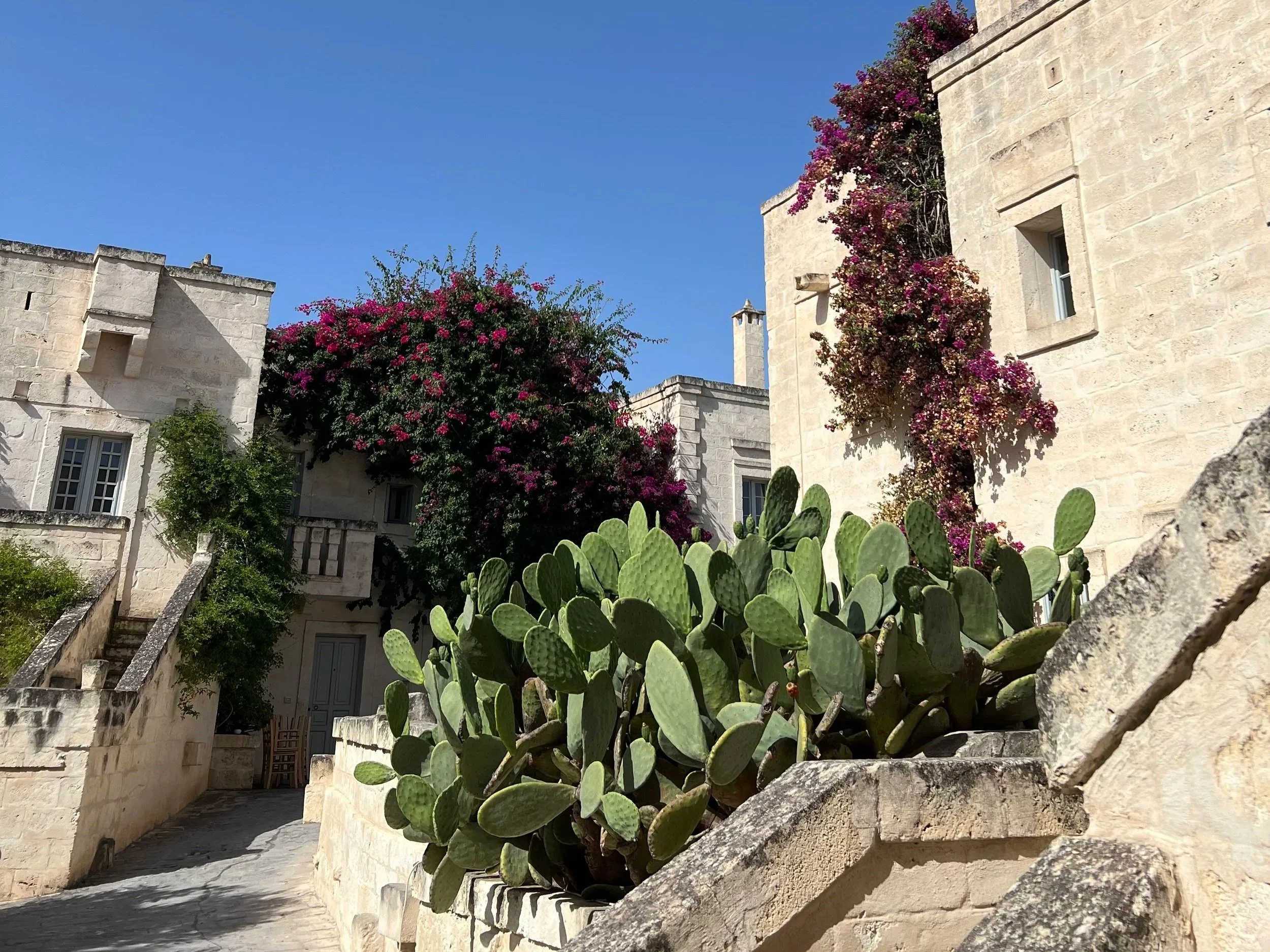
The masserias. The accommodation story in Puglia is genuinely unique. Masserias are converted farmhouses — thick stone walls, ancient olive presses, wisteria-draped courtyards — that have been transformed into some of the most beautiful and characterful hotels in Europe. Staying in one is not just a hotel experience; it’s an immersion in the landscape and history of the region.
The pace. Puglia still operates at an Italian pace rather than a tourist pace. Lunch takes two hours. The passeggiata — the evening stroll through town — is still a real social institution. The beach clubs encourage you to stay all day. This is a place that actively resists rushing.
It’s genuinely good for families. The beaches are calm and beautiful, the towns are pedestrian-friendly, the food delights children and adults equally, and the masserias have pools that make long afternoons easy and wonderful.
The Best Towns in Puglia
Ostuni — The White City
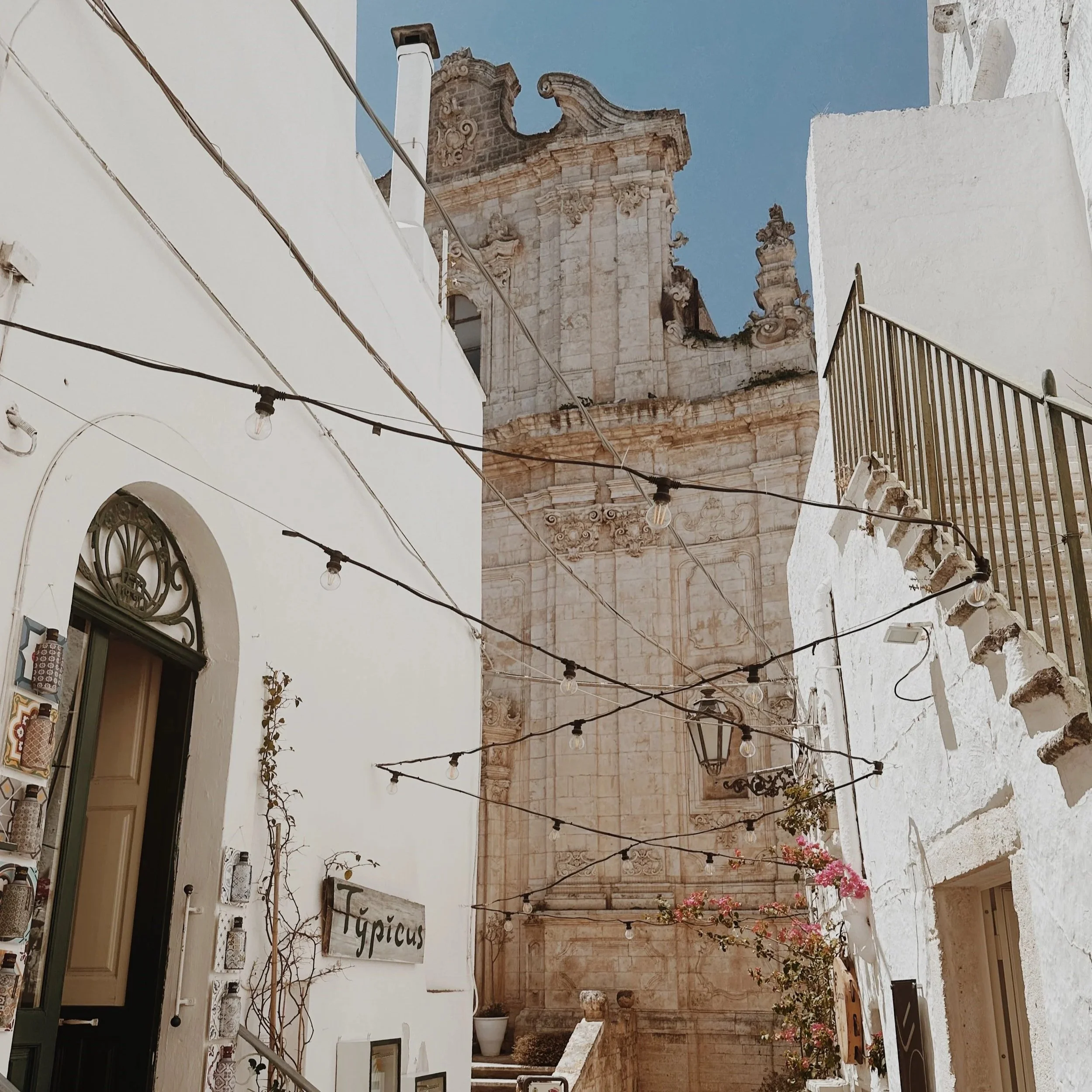
Ostuni is Puglia’s most visually dramatic town — a hilltop labyrinth of whitewashed buildings, narrow lanes, and bougainvillea spilling over ancient walls, with views over the surrounding olive-covered plain stretching to the sea. It’s the town that appears in every Puglia photograph for good reason: the light here in the evening, when the white stone glows gold, is genuinely extraordinary.
Getting lost in Ostuni is not a failure of navigation — it’s the point. Every turn reveals a new courtyard, a small church, a view over the countryside. The olive oil and wine shops make it an excellent place to stock up on edible souvenirs. The restaurants in the old town are consistently good, and the abundance of ceramic shops makes browsing genuinely enjoyable.
Ostuni works well as a base — close to the coast, well-connected to other towns, with enough character in the old town to spend evenings on foot rather than driving.
Alberobello — The Trulli Capital
Alberobello is the UNESCO World Heritage Site at the center of the Valle d’Itria — a town of over a thousand trulli, the extraordinary whitewashed stone houses with conical roofs that are unique to this part of Puglia. Nothing prepares you for what it actually looks like in person: a hillside of pointed stone cones, each one individually built without mortar, stretching across the landscape in a way that seems both ancient and otherworldly.
It is touristy — there’s no avoiding that — but it earns its crowds. Walking through the trulli district at dusk, when most day-trippers have left and the lanes are quieter, is one of the more genuinely magical experiences in southern Italy. Children find it endlessly fascinating.
The trulli are not just architectural curiosities. Many are still lived in. Others have been converted into restaurants, shops, and some genuinely charming places to stay.
Polignano a Mare — Cliffs and Turquoise Sea
Polignano a Mare is the postcard town of the Adriatic coast — buildings perched on limestone cliffs above turquoise water, with the sea visible through archways and down alleyways throughout the town. The water here is extraordinarily clear, the color shifting from pale green to deep blue depending on the depth, and seeing it from the sea — by boat or catamaran charter — gives a perspective that the town itself can’t quite replicate.
The old town is car-free closest to the sea, making it an ideal place for a late afternoon passeggiata. It’s more tourist-oriented than Monopoli but retains genuine character. The gelato here is consistently excellent — the town takes it seriously.
Monopoli — Working Port Town
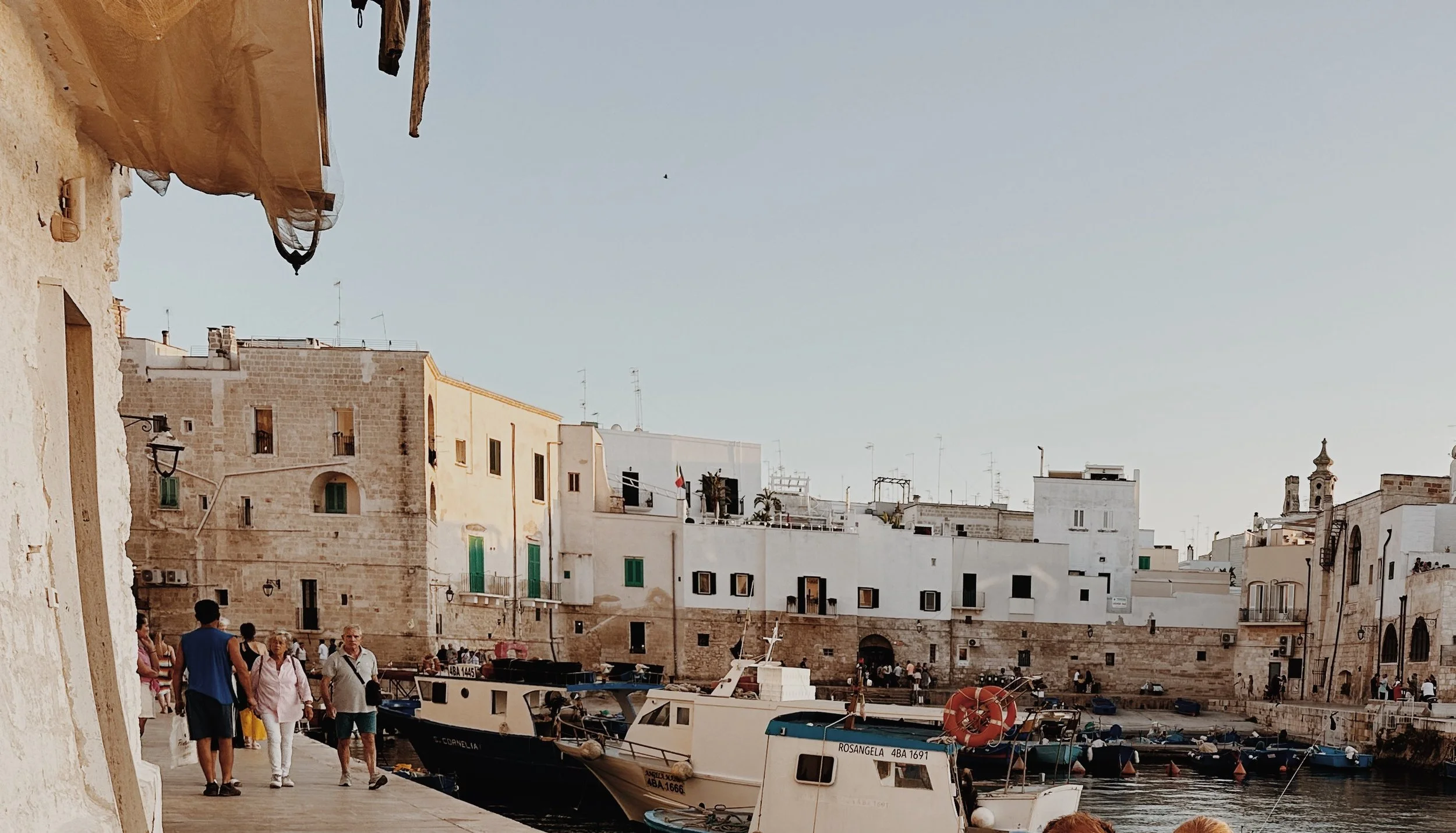
Monopoli is the most authentically Italian of the coastal towns — a working port where fishing boats still unload their catch while tourists eat at the surrounding restaurants. The old town is entirely pedestrian-friendly, the harbor is charming and active rather than merely picturesque, and the overall atmosphere is one of a real town that has absorbed tourism without being consumed by it.
It’s small enough to explore thoroughly in a day but rich enough to base yourself in for a longer stay. The seafood is excellent — proximity to the working port tends to guarantee that.
Locorotondo and Cisternino — Valle d’Itria Villages
These two hilltop villages in the Valle d’Itria are less visited than Alberobello and Ostuni but every bit as beautiful — circular whitewashed streets, flower-filled balconies, and the extraordinary panorama of the trulli-dotted valley below. Locorotondo in particular has a perfectly preserved circular historic center that most visitors miss entirely. Both are excellent for lunch stops and evening aperitivo.
Where to Stay in Puglia
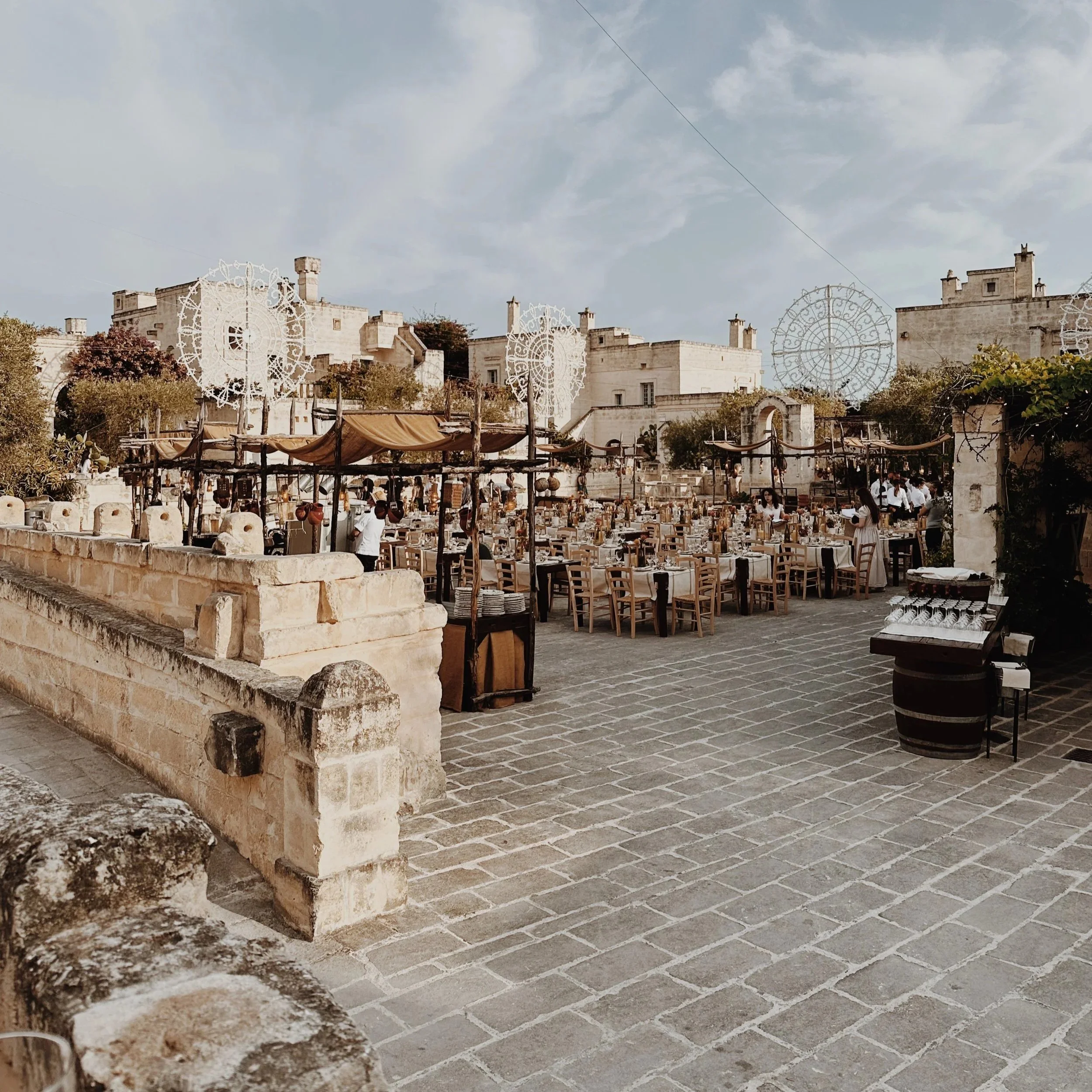
The best accommodation in Puglia is in a masseria — and the range runs from full-service luxury resorts to intimate family-run farmhouses. The right choice depends entirely on what you want from your stay.
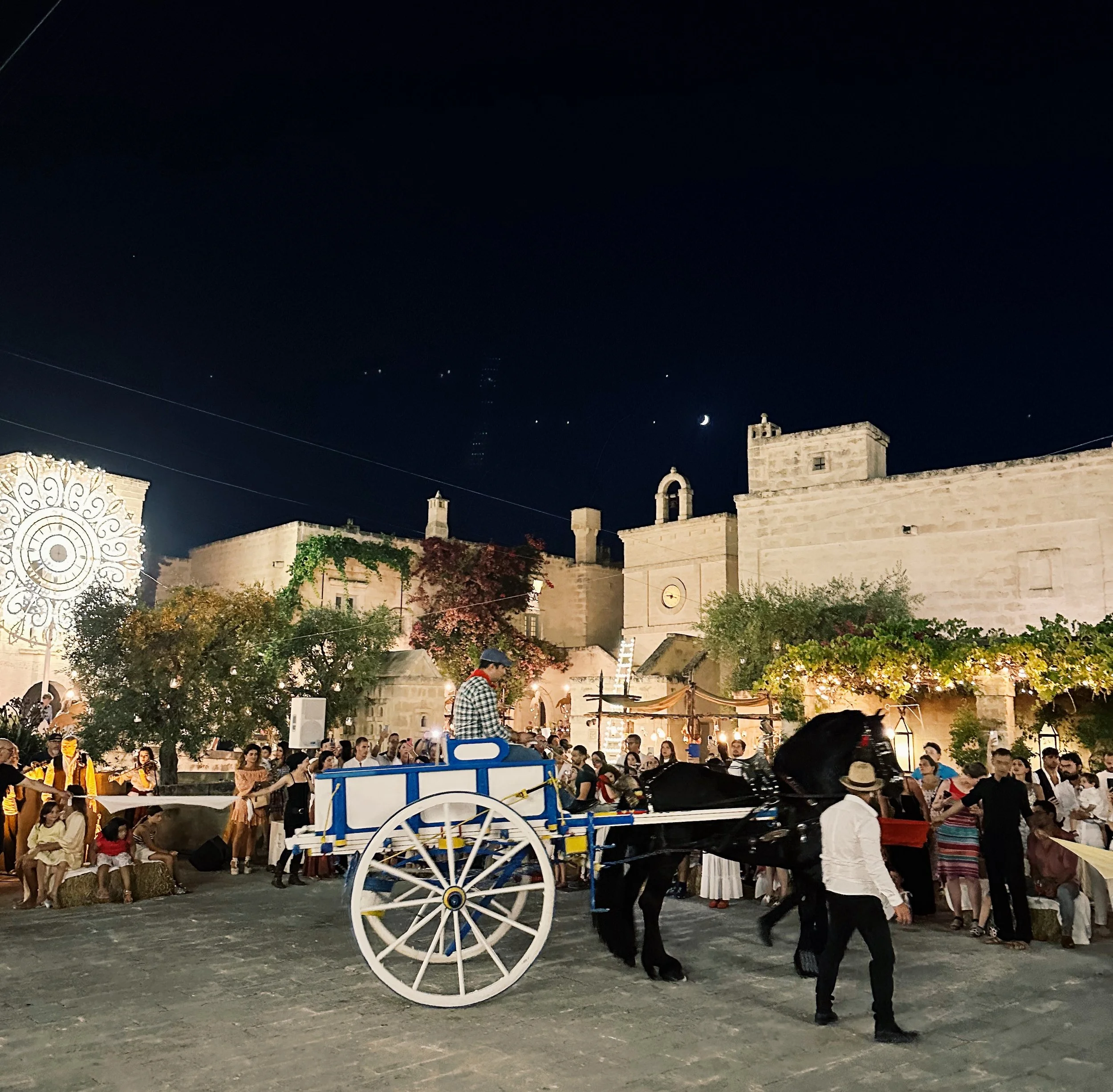
Borgo Egnazia — The finest full-service resort in Puglia and our base for our family trip. Borgo Egnazia is large but beautifully executed — multiple pools, a strong kids club, several restaurants, access to a beach club, and the extraordinary Festa del Borgo summer events that feel like being invited to the most elegant party in southern Italy. If you want everything handled and are traveling with children, this is the right choice.
Masseria Torre Maizza — A Rocco Forte property near Savelletri with polished service, refined rooms, and beach club access. The most consistently luxurious stay in Puglia for travelers who want hotel-quality service in a masseria setting.
Masseria San Domenico — One of the most atmospheric and traditional masserias in the region — deeply rooted in place, with one of the best private beach setups in Puglia. For travelers who want something that feels genuinely ancient rather than renovated-for-Instagram.
Paragon 700— A restored palazzo in Ostuni that gives you something most masserias don’t: walkability into one of the best towns in Puglia. The best choice for travelers who want boutique design and easy town access.
For a full breakdown of every option by travel style, see our complete best hotels in Puglia guide.
What to Eat in Puglia
Eating in Puglia is one of the great simple pleasures of Italian travel. A few things you should not leave without eating:
Orecchiette — The ear-shaped pasta that defines Puglian cooking, made by hand by women on the streets of Bari and served across the region. The classic preparation is with cime di rapa (broccoli rabe) and a generous pour of local olive oil. Do not leave Puglia without eating it multiple times.
Burrata— Puglia is the birthplace of burrata, and the fresh version here — made that morning, still at room temperature, split open over good bread — is definitively different from anything available outside the region. Order it everywhere.
Fresh seafood — The Adriatic produces excellent sea urchin, octopus, clams, and fish. The seafood crudo — raw fish and shellfish dressed simply with olive oil and lemon — is one of the finest things you can eat in southern Italy.
Taralli — A soft twisted cracker that appears on every table and in every bag as a snack. They become addictive very quickly.
Primitivo wine — The indigenous red grape of Puglia, producing full-bodied, deeply flavored wines that pair perfectly with the region’s food. The wine from Manduria is the most celebrated, but good Primitivo is available everywhere.
For specific restaurant recommendations, see our full best restaurants in Puglia guide.
What to Do in Puglia
Rent a boat or catamaran. Seeing the Adriatic coastline from the sea — the limestone cliffs, the sea caves, the towns perched above the water — gives a completely different perspective from the land. We rented a catamaran through Almarano Charters and it was one of the highlights of the trip. The water is calm enough for paddleboarding and swimming, and the view of Polignano a Mare from the sea is extraordinary.
Spend a day at a beach club. The beach club culture in Puglia is one of its pleasures. You arrive in the morning, claim a sun lounger, swim, eat a long seafood lunch, swim again, and leave in the late afternoon. No itinerary, no rushing. Torre Canne and the coast near Fasano have excellent beach clubs — Borgo Egnazia guests have access to Coccaro Beach Club, which is one of the finest.
Walk the trulli of Alberobello at dusk. The UNESCO trulli district is busiest midday. Come back in the late afternoon when day-trippers have gone and the light is warm and golden. Bring children — they find the rooftops endlessly fascinating and the scale of the streets perfectly sized for them.
Wander Ostuni at sunset. The white buildings glow in the evening light in a way that photographs can’t fully capture. Get a gelato from one of the old town’s shops and walk without a destination. This is Puglia at its most itself.
Take a pasta-making class. Several masserias offer morning cooking classes teaching orecchiette-making — the hand technique that produces the region’s signature pasta shape. It’s harder than it looks, genuinely fun for families, and you eat what you make for lunch afterward.
Visit Castel del Monte. The 13th-century octagonal castle built by Holy Roman Emperor Frederick II stands alone on a hilltop about an hour north of the main tourist area — perfectly preserved, architecturally extraordinary, and worth the drive for anyone with a day to spare.
Visit a Beach Club-Puglia has such a vartiet of beaches, and one of the best way to experience them is through a beach club. Read our full list of favorite beach clubs here.
Getting to and Around Puglia
Flights: The main airports are Bari (BRI) and Brindisi (BDS). Bari is the better arrival point for the northern part of the region (Alberobello, Locorotondo, Ostuni, Fasano). Brindisi is closer to the southern Salento area. Both have connections through Rome or Milan from most international destinations.
Car: A car is essential for exploring Puglia properly. The towns are spread across the region, the best masserias are in the countryside, and public transport between them is limited. Rent at the airport on arrival. Roads are good and driving is straightforward outside of the towns.
Base: The Fasano-Savelletri-Ostuni triangle is the best base for most itineraries — central to the main towns, close to the coast, and home to the highest concentration of good hotels. Alberobello and the Valle d’Itria are 30–45 minutes west; Polignano a Mare and Monopoli are 30 minutes north; the coast is minutes away.
When to Visit Puglia
May and June are the best months for most travelers — warm enough to swim, beautiful and uncrowded, with the countryside at its most lush. The Adriatic is warm from June onward.
September is excellent — the summer heat breaks, the sea is still warm from summer, and the crowds thin significantly after the first week. Harvest season begins in September, which makes the countryside particularly beautiful and the local food especially seasonal.
July and August are peak season — very hot (regularly above 35°C/95°F), very busy with Italian domestic tourists, and hotel rates at their peak. The beach clubs are wonderful but the towns are crowded. If you visit in July or August, book everything well in advance and plan outdoor activities for mornings and evenings rather than the middle of the day.
October through April is off-season — many masserias close, the beach culture shuts down, and the region becomes much quieter. Not ideal for a first visit but genuinely beautiful for travelers who want to experience Puglia without any tourists.
Puglia for Families
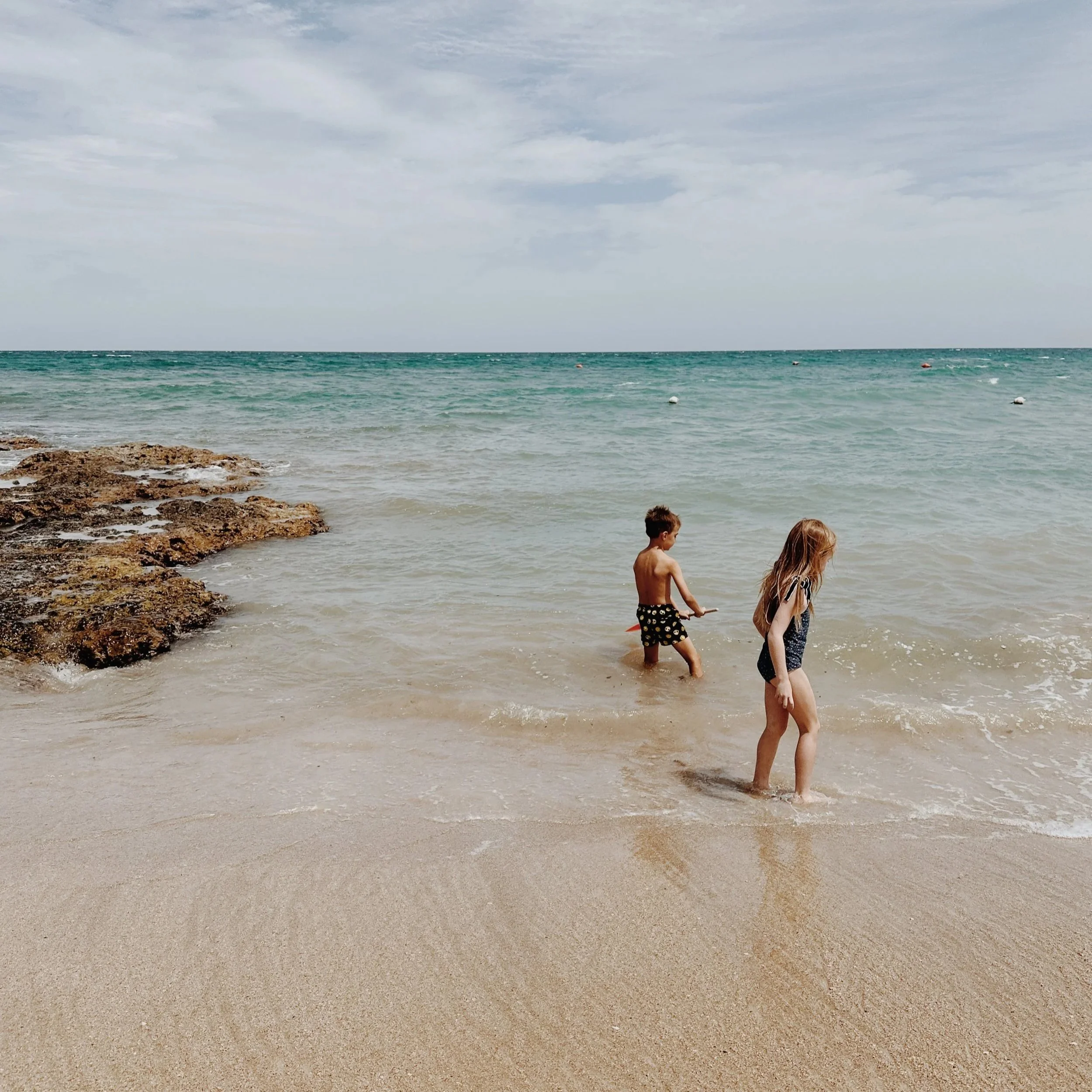
Puglia is one of the best regions in Italy for families — and one of the most underrated family destinations in Europe. The beaches are calm and clear, the masserias have pools and outdoor space that make long afternoons easy, the food delights children as much as adults, and the pace of life is slow enough that nobody feels rushed.
The trulli of Alberobello fascinate children in a way that most historic sites don’t — the scale, the unusual rooftops, the narrow stone streets are perfectly sized for young imaginations. The boat trips are a genuine highlight for all ages. And Italian culture’s warmth toward children means that traveling with kids here feels actively supported rather than merely tolerated.
For families specifically, Borgo Egnazia is the easiest and most complete choice — a strong kids club, multiple pools, evening activities, and a beach club all in one property. See our Puglia with kids guide for the full family-focused coverage.
FAQs About Visiting Puglia
Is Puglia worth visiting?
Yes — Puglia is one of the most rewarding regions in Italy and one of the most underrated in Europe. The combination of extraordinary food, beautiful historic towns, genuine masseria accommodation, and calm Adriatic beaches delivers an experience that Tuscany and the Amalfi Coast can rarely match at the same price point, and with significantly fewer crowds.
Is Puglia better than Tuscany?
They offer genuinely different experiences. Tuscany has the Renaissance art, the famous wine country, and Florence. Puglia has more authentic local character, better beaches, more distinctive accommodation, and lower prices. Travelers who have done Tuscany multiple times consistently find Puglia more surprising and more rewarding. For families specifically, Puglia is the better choice.
How long should I spend in Puglia?
Five to seven days is ideal — enough time to explore several towns, spend time at the beach, eat well without rushing, and settle into the pace of the region. A week with a good base is far better than three days trying to see everything.
Do I need a car in Puglia?
Yes. A rental car is essential. The region’s best experiences — the masserias, the smaller towns, the coastline — are spread across the countryside and are not accessible without one.
What is a masseria?
A masseria is a traditional Puglian farmhouse — thick stone walls built to withstand the heat, often centered around an ancient olive press or well, with agricultural land attached. The best have been converted into hotels that combine the authenticity of centuries-old buildings with genuine luxury. Staying in one is one of the defining experiences of a Puglia trip.
Is Puglia safe?
Yes — Puglia is one of the safest regions in Italy for tourists. The towns are welcoming, crime rates are low, and the overall atmosphere is relaxed and family-friendly.
Related Articles
Best Hotels in Puglia — Masserias & Boutique Stays