
The Best Hotels in Lisbon: A Curated Guide to Portugal's Capital
Lisbon has spent the last decade quietly becoming one of the most significant city destinations in European luxury travel. The hotel scene has matured, the food has gone from competent to globally serious, and the city's particular geography with seven hills descending in tile and pastel to the Tagus River makes this an incredible place to stay.
The luxury here is quieter than Paris, less polished than Madrid, more textured than Barcelona. The standout properties are restored 18th- and 19th-century palaces rather than purpose-built five-stars, with hand-painted tiles in the breakfast room, and a rooftop pool you reach by a discreet elevator. Travelers expecting Four Seasons-uniform polish across the board sometimes find Lisbon's hotels more idiosyncratic than they were prepared for. Travelers who lean into the idiosyncrasy find the trip is better for it.
This is a guide to where to stay across Lisbon at the luxury and design-led boutique tier. After multiple stays across the city, this is the guide I would write for a friend planning a first trip to Lisbon. Every property below is one I would book myself. None of these placements are paid.
Where to Stay in Lisbon: Our Favorite Neighborhoods
Lisbon is structurally a city of neighborhoods, and where you stay shapes the entire feel of the trip. Most luxury inventory clusters in five districts.
Avenida da Liberdade is the city's grand boulevard — the closest Lisbon comes to Madrid's Gran Vía or Paris's Champs-Élysées — lined with luxury retail, embassies, and the two most established luxury hotels in the city. This is the right base for first-time visitors who want a wide, easily navigable home base with metro access and walkable proximity to most of the historic center.
Chiado is the elegant 18th-century shopping and cultural district — where you'll find Livraria Bertrand (the world's oldest operating bookstore), the major opera and theater, the highest concentration of contemporary design retail, and most of the city's better contemporary restaurants. The neighborhood climbs from the Tagus up through Largo do Camões to Bairro Alto, with several luxury hotels making clever use of the slope.
Bairro Alto sits directly above Chiado — the nightlife and bohemian quarter by night, an under-the-radar boutique neighborhood by day, and home to several design hotels that have made the area editorial in recent years. Noise can be a factor on Friday and Saturday nights; choose your room category carefully.
Príncipe Real is the quieter, more residential design district just above Bairro Alto, with the city's best independent retail, the Embaixada shopping arcade, and an increasingly serious food scene. The right base for travelers prioritizing design and food over the historic-center hustle.
Alfama is the oldest district in Lisbon — pre-Roman, the only part of the city that survived the 1755 earthquake — and the most atmospheric. Tight cobblestone streets, the São Jorge castle at the top, fado bars in the alleys, and a small number of genuinely exceptional hotels tucked into former palaces. The trade-off is that Alfama is the hardest district to navigate with luggage and the slowest to reach by car.
Lapa is the upscale residential district west of the historic center, home to most of Lisbon's embassies, the Lapa Palace, and a quieter, more residential luxury experience for travelers who want to feel like they're staying in the city rather than visiting it.
Lisbon's Humberto Delgado Airport (LIS) is 20 minutes by car from any of these neighborhoods. The city is structurally walkable but the hills are real — wear shoes you can climb in, and consider the trams (the 28 in particular) for the steepest stretches.
At a Glance: The Best Hotels in Lisbon
Hotel Location Best For Book
Four Seasons Hotel Ritz Avenida da Liberdade Grande luxury View Hotel
Valverde Hotel Lisboa Avenida da Liberdade Boutique View Hotel
Olissippo Lapa Palace Lapa Historic palace View Hotel
Verride Palácio Santa Catarina Bica Rooftop Pool View Hotel
Bairro Alto Hotel Chiado Contemporary View Hotel
Memmo Príncipe Real Príncipe Real High Design View Hotel
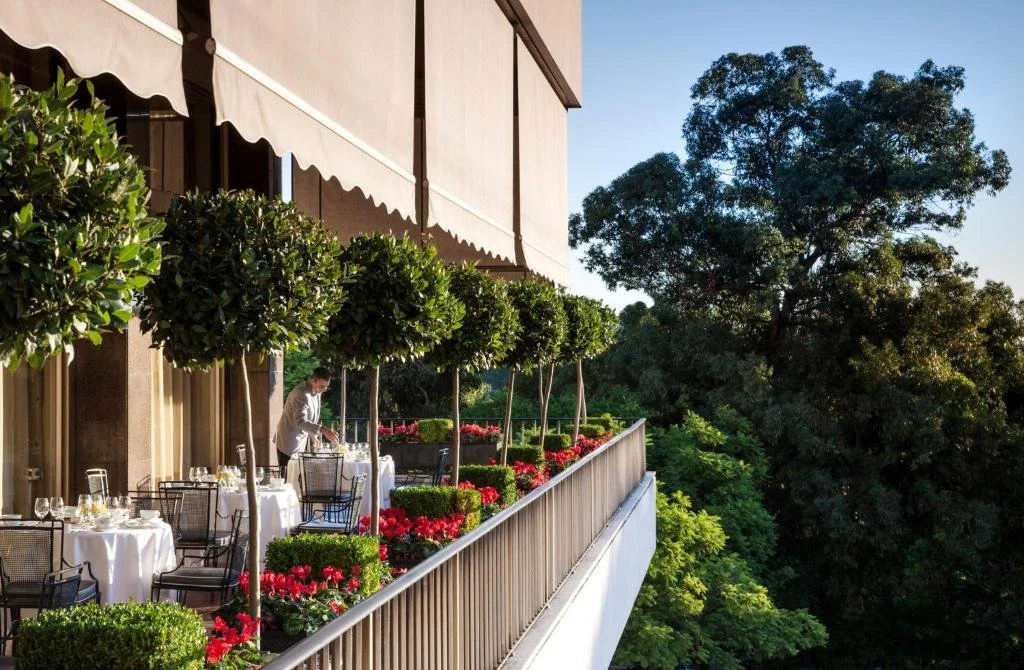
Four Seasons Hotel Ritz Lisbon — Avenida da Liberdade
If Lisbon has a single iconic luxury hotel, it is the Four Seasons Ritz. Opened in 1959 as the personal project of Portuguese prime minister António de Oliveira Salazar — who wanted a hotel grand enough to host the international dignitaries of the moment — the 282-room property sits adjacent to Eduardo VII Park at the head of Avenida da Liberdade and has spent the last seven decades as the address every state visitor, every European royal, and every American luxury traveler defaults to. The 2021 partial renovation under chef Pascal Meynard brought CURA to a Michelin star, and the 11th-floor rooftop running track overlooking the city is one of the only of its kind in the world at this rate point.
The 282 rooms — recently refreshed but holding the mid-century architectural language of the original property — are among the largest in Lisbon, with most categories featuring private balconies overlooking either Eduardo VII Park or the city. The Specialty Suites and the Royal Suite are explicitly built for families and longer stays, with kitchen access available in the upper categories. The hotel holds one of the largest private collections of mid-20th-century Portuguese art on display anywhere in the country — Almada Negreiros, Carlos Botelho, Vieira da Silva — and the public spaces are essentially a curated museum that happens to serve drinks.
The food and beverage program is the strongest of any city hotel in Portugal. CURA holds one Michelin star and is destination-level Portuguese fine dining. Almada Negreiros, the all-day restaurant, handles breakfast and lunch with serious attention. The Ritz Bar is the right pre-dinner drink in Lisbon at this level. Afternoon tea in the lobby has been a Lisbon tradition for sixty years.
What works:
The most operationally complete luxury hotel in Lisbon — full spa, indoor and outdoor pools, fitness center, 24-hour butler service in upper categories
CURA holds one Michelin star; multiple F&B venues at genuine destination level
Specialty Suites with kitchen access work for multi-night stays and multi-generational groups
The 11th-floor rooftop running track and panoramic city views
What to know:
The Four Seasons Ritz is structurally a grand hotel, not a boutique — 282 rooms means you're in the elevator with conferences and tour groups in season. The aesthetic is mid-century and refined rather than design-forward; travelers wanting contemporary Portuguese design should look at Bairro Alto Hotel or Verride. The Avenida da Liberdade location is excellent for retail and walking, less ideal if you want to be steps from Chiado or Alfama — plan on 15-minute walks or short taxis to the historic center.
Check rates and availability at Four Seasons Hotel Ritz Lisbon →
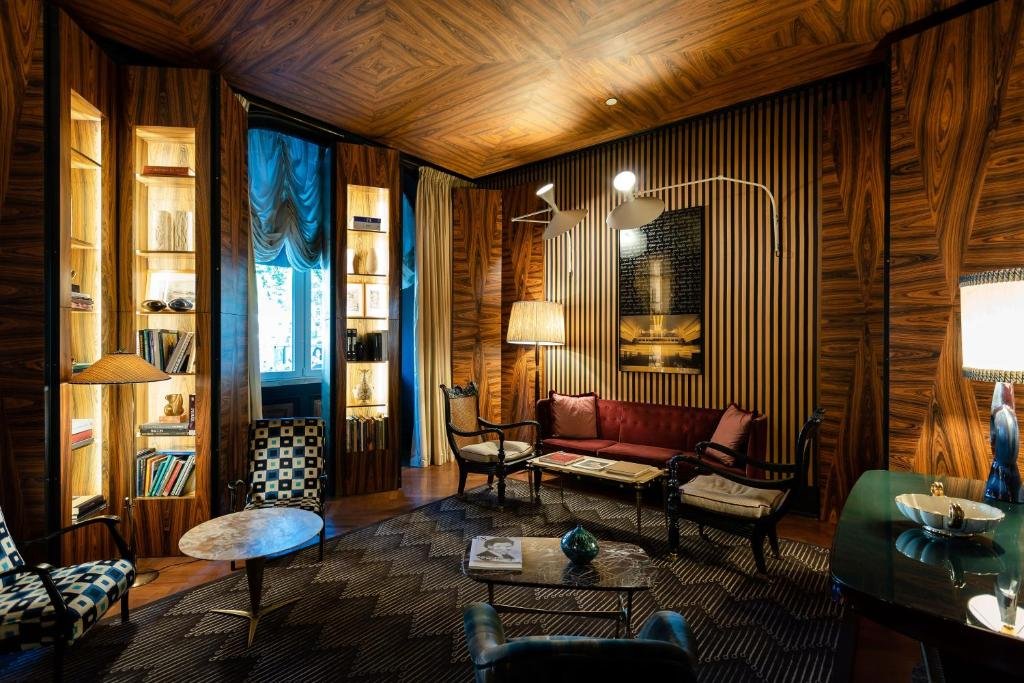
Valverde Hotel Lisboa — Avenida da Liberdade
Valverde is the hidden answer on Avenida da Liberdade. The 48-room Relais & Châteaux property (inducted in 2019) sits behind a discreet door on the city's grand boulevard, in a restored 19th-century townhouse organized around a central courtyard garden that doubles as the open-air heart of the property. From the outside, you would miss the entrance. From the inside, you are in the most intimate luxury hotel in Lisbon — the one most travelers who know the city well recommend without hesitation.
The aesthetic is what Valverde does that no other Lisbon hotel does: a layered, magazine-spread interior of deep colors, vintage furniture, custom-made antiques, art prints, exposed industrial details in the public spaces, and patterned textiles that work harder than they should. The 48 rooms are individually designed; ask for one overlooking the courtyard garden rather than the avenue. The rooftop swimming pool — small, glass-walled, with a view across the rooftops — is one of the most photographed in the city.
O Sítio, the on-property restaurant, runs Portuguese cuisine with a refined contemporary register and is genuinely worth the dinner reservation even if you are not staying. Breakfast in the courtyard garden is the property's defining moment — fresh-baked pastries, custom-made coffee, and the kind of light that makes you slow down by a meaningful amount.
What works:
Central courtyard garden and rooftop pool — both rare for a city property at this scale
Individually designed rooms with serious editorial credibility
Walking distance to Avenida da Liberdade retail and Chiado dining
O Sítio restaurant for in-house dining at destination level
What to know:
Valverde is small. Forty-eight rooms means the property books out far in advance for shoulder season and peak. The hotel is intentionally adult-leaning in atmosphere — children are welcome but the property is not configured around them, and there are no extra beds in any room category. Families with young children should book the Four Seasons or Olissippo Lapa Palace instead. The courtyard garden is the social heart of the property, which means rooms facing it can hear breakfast service early in the morning.
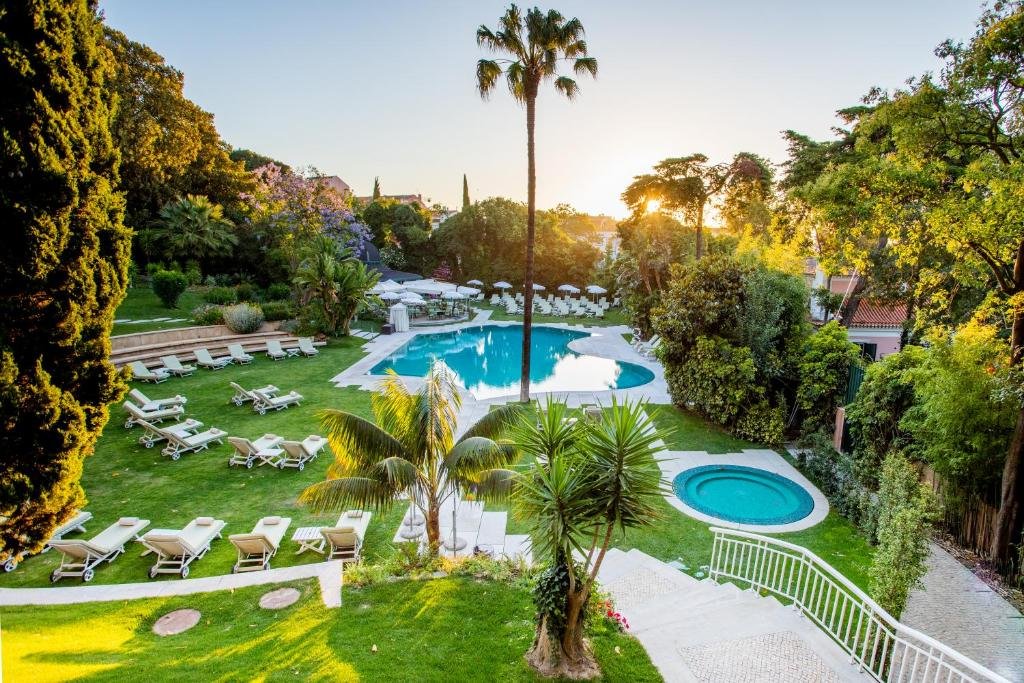
Olissippo Lapa Palace — Lapa
Olissippo Lapa Palace is the historic palace answer in Lisbon — a 19th-century Italianate mansion built in 1870 for the Count of Valenças, set across substantial subtropical gardens in the residential Lapa district, with the Tagus River visible from the south-facing rooms. The property reopened after a comprehensive renovation in 2019 and now operates as a 109-room hotel that splits roughly evenly between the original palace building and a more contemporary garden wing.
The lobby is the original 1870 entry hall, with crystal chandeliers, marble floors, and the kind of architectural detail you cannot fake. The gardens are nearly two acres in the middle of an embassy district, with a heated outdoor pool, mature trees, and walking paths that genuinely feel rural inside one of Europe's denser capitals. The on-property restaurant is decent rather than destination; the case for Olissippo Lapa Palace is the grounds, the architecture, and the genuine quiet — not the food.
What works:
The most substantial gardens of any city hotel in Lisbon — two acres of subtropical greenery
Original 1870 palace architecture with serious preservation work
Heated outdoor pool, indoor pool, full spa, tennis court
Strong family suitability — connecting rooms, kids' programming during summer, garden space for younger children
Lapa residential location offers genuine quiet without being far from the historic center
What to know:
Lapa is residential, which means it is quieter than Avenida da Liberdade but also further from the major sights and restaurants. Plan on 10-minute taxis to most destinations. The garden wing rooms are perfectly comfortable but lack the architectural character of the palace building — pay up for a palace category room if the historic experience matters. The on-property restaurant program is the weakest of the hotels in this guide; the city's better restaurants are a short ride away.
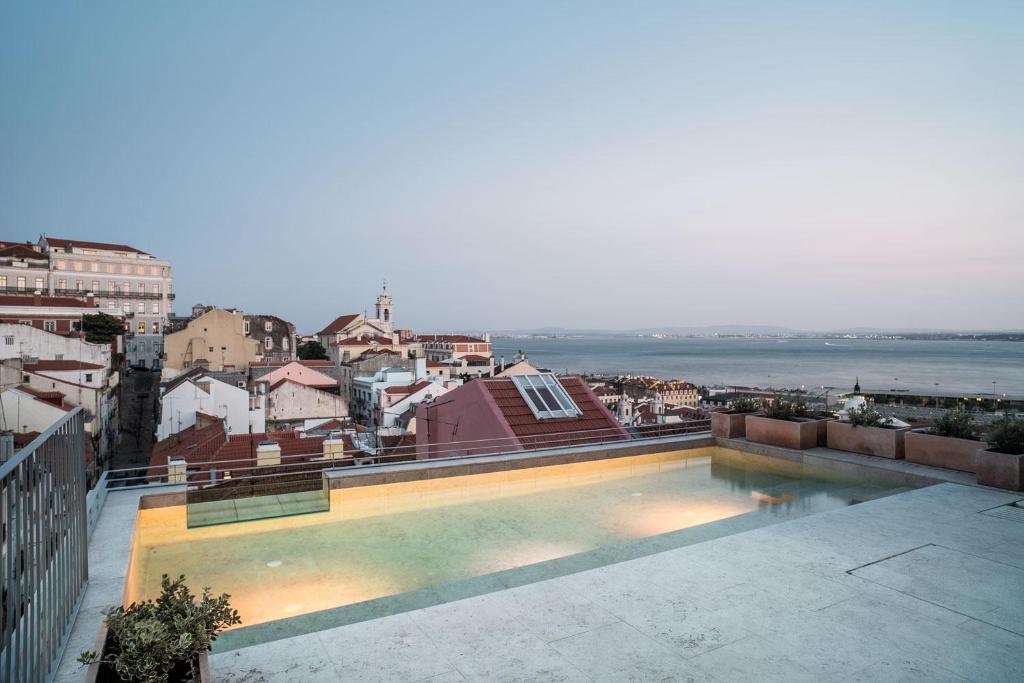
Verride Palácio Santa Catarina — Bica / Chiado
Verride is the design-press pick in Lisbon — a Small Luxury Hotels of the World member housed in a restored 18th-century palace on the Santa Catarina hillside, between Chiado and the Bica funicular, with a rooftop pool and bar that delivers what is arguably the best 360-degree view in the city. The property has 19 suites, each averaging 80 square meters, and a design vocabulary that pairs preserved historic detail — silk-lined walls, ornate ceilings, imported European chandeliers — with contemporary minimalism, Aesop bath amenities, and a clean modern palette.
The location is exceptional. You walk out of the hotel onto the Santa Catarina Belvedere, one of the most photographed viewpoints in Lisbon. Chiado's restaurants and shopping are a three-minute walk; Bairro Alto's nightlife is five minutes; the Time Out Market is fifteen. The rooftop bar — open to non-guests but reservable for hotel guests — has the city's most editorial sunset view.
SUBA, the rooftop restaurant, has been in the Michelin Guide since 2022 and serves contemporary Portuguese cuisine with serious river views. The breakfast program is one of the better à la minute services in any city hotel in Portugal — the chef will customize, the bread is house-baked, and the breakfast room (called the "winter garden") catches the morning light from three sides.
What works:
Rooftop pool and bar with 360° views over the Tagus and city — unmatched at this scale
SUBA restaurant in the Michelin Guide since 2022
Walkable to Chiado, Bairro Alto, Bica, and the riverfront
What to know:
Verride has 19 suites, period — there are no entry-level rooms. Pricing reflects this. Children under 8 are not accepted. Pets allowed on request with charges. The rooftop bar is open to outside reservations, which means it can get busy on weekend evenings and the queue for the elevator can be slow at peak hours. The Bica neighborhood is steep — the walk back to the hotel from the riverfront is uphill and meaningful.
Check rates and availability at Verride Palácio Santa Catarina →
Bairro Alto Hotel — Chiado
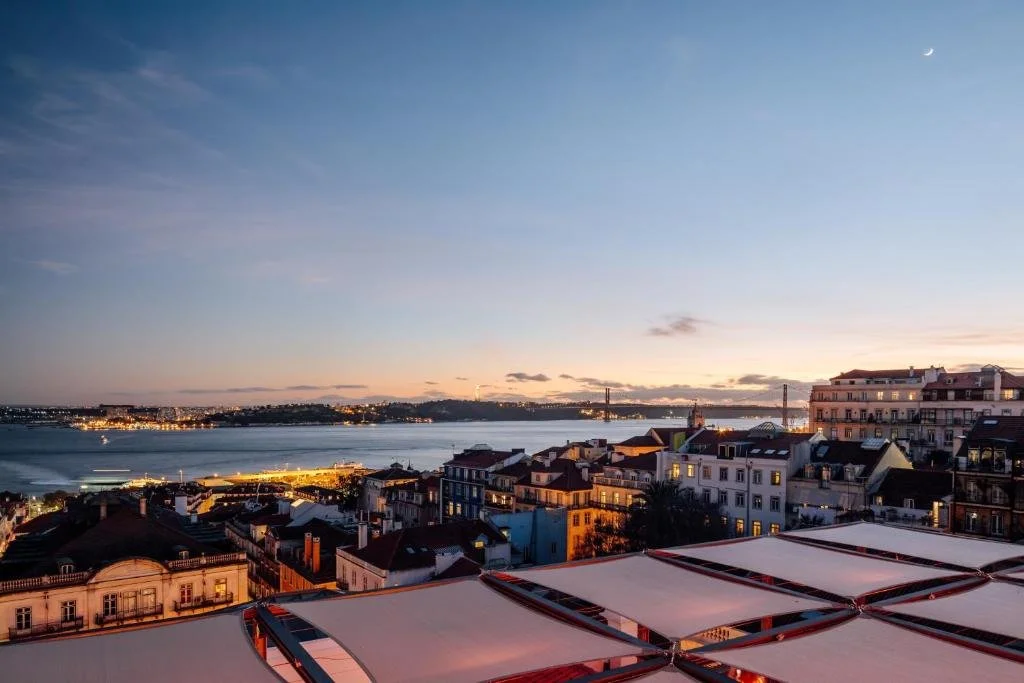
Bairro Alto Hotel is the contemporary design answer in Lisbon — an 18th-century building at the edge of Chiado, fully renovated in 2019 by interior architect Adelaide Marcos, with 87 rooms (including 33 suites), a refreshed contemporary aesthetic, and BAHR — the rooftop restaurant terrace is exceptional.
The aesthetic is contemporary Portuguese — neutral palette, custom-made furniture, Portuguese fabrics, custom art commissions, the kind of design language that reads as serious rather than performative. The rooms vary significantly because of the building's historic structure; the Suite categories are the meaningful upgrade for views and space. The hotel sits on Praça Luís de Camões, the small square at the Chiado-Bairro Alto seam, which means walking distance to nearly every major attraction in central Lisbon: 10 minutes to the river, 5 minutes to Largo do Carmo, 15 minutes to Alfama.
BAHR, the rooftop, is the destination — the restaurant runs a refined Portuguese menu and the cocktail program at the bar is one of the better in the city. The terrace itself is the editorial moment: a long L-shape with views across the rooftops to the river, the 25th April Bridge, and Cristo Rei across the water. Reserve for sunset; book a week ahead in season.
What works:
Walking distance to nearly every major attraction
Recently refreshed design with serious contemporary credibility
Genuine contemporary Portuguese aesthetic — not historic-mimicry
What to know:
The Praça Luís de Camões location is central, which means it is also lively — Friday and Saturday nights in Bairro Alto run loud, and lower-floor rooms can hear the street. Request an upper-floor room or one facing the interior courtyard for quiet. The building's historic structure means rooms vary significantly; the standard categories can run smaller than expected and the layout can feel awkward in entry-level rooms. Pay up to the Suite category if space matters.
Memmo Príncipe Real — Príncipe Real
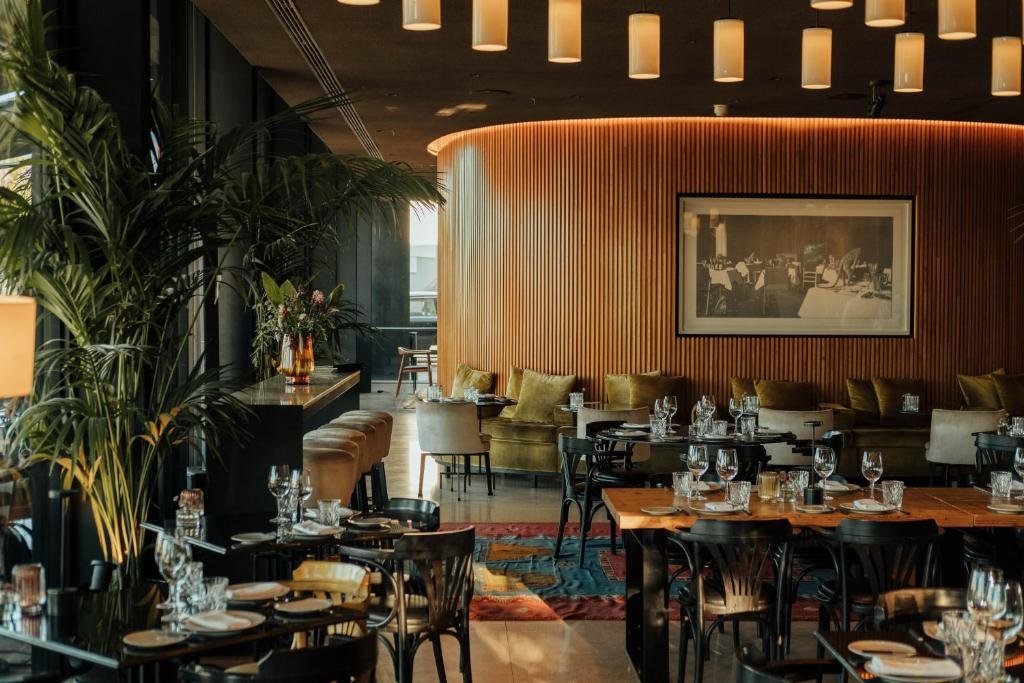
Memmo Príncipe Real is the quietest design hotel in Lisbon. The 41-room boutique sits on a residential street in the Príncipe Real neighborhood — Lisbon's design district, with the city's best independent retail and a genuinely walkable food scene — in a former bishop's residence that was renovated by Bordallo Pinheiro studio into a contemporary boutique with a saltwater rooftop pool and one of the most discreet luxury experiences in the city.
The aesthetic is more restrained than Verride or Bairro Alto Hotel — softer colors, more natural materials, less obvious design statements. The rooftop is the property's defining feature: an outdoor saltwater pool with a deck and bar, sheltered from the street, with a sunset view over the western half of the city. The on-property restaurant runs Portuguese-Mediterranean cuisine in a small, intimate room; the more serious dinners are five minutes' walk away at Pesca, A Cevicheria, or the Embaixada arcade.
The Memmo group operates three Lisbon properties (Príncipe Real, Alfama, and Baixa), and Príncipe Real is the strongest pick of the three — quieter than Alfama, more design-led than Baixa, and in the city's most interesting residential neighborhood.
What works:
Saltwater rooftop pool — rare in central Lisbon, particularly in summer
Príncipe Real is the city's strongest residential design neighborhood for walkable dining and retail
Aesop amenities and serious contemporary design
What to know:
The Memmo brand sits one notch below Four Seasons and Valverde on the operational luxury register — closer to a serious boutique than a full-service luxury hotel. Spa services are limited (treatments by appointment in a single room rather than a dedicated spa facility). The on-property restaurant is good rather than destination — the case for Memmo Príncipe Real is the location, the rooftop, and the design, not the food. Pricing reflects this and runs more accessible than the city's grand hotels.
Check rates and availability at Memmo Príncipe Real →
A Day Trip — or an Extension — to Sintra
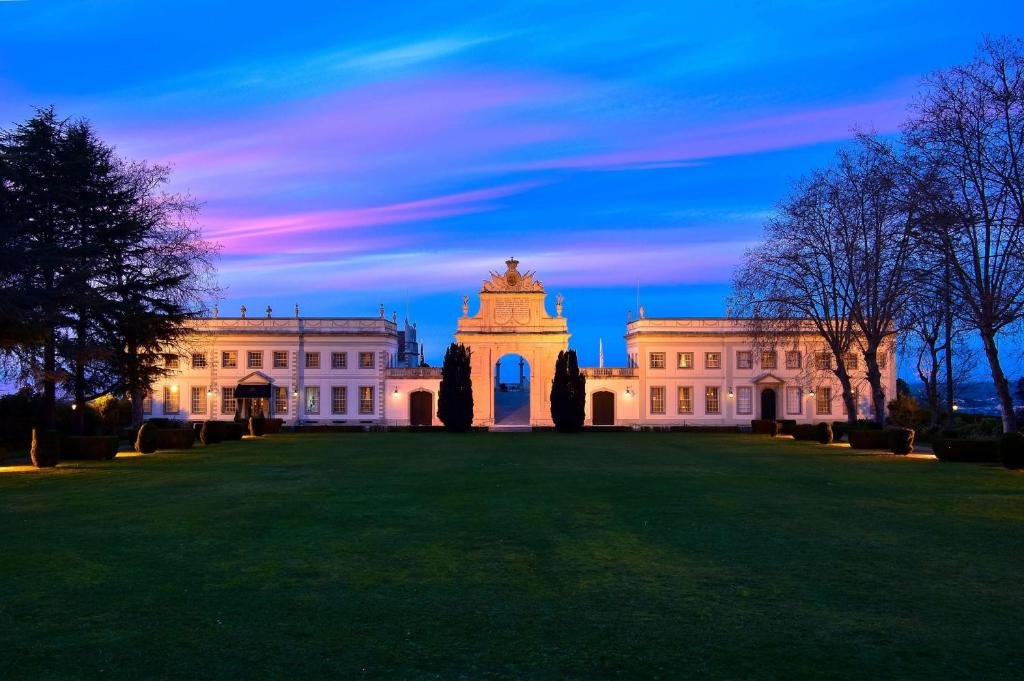
Sintra, 45 minutes from Lisbon by car or train, is the essential day trip from any Lisbon stay — the palaces (Pena, Quinta da Regaleira, the Moors Castle), the wooded hills, the cooler microclimate, and the kind of fairy-tale architectural density that does not exist elsewhere in Portugal. For travelers who want to extend a Lisbon trip with one or two nights in Sintra rather than a day visit, Valverde Palácio de Seteais is the answer.
The 18th-century neoclassical palace was originally built in 1787 for a Dutch consul, later expanded by the Marquês de Marialva, and now operates as a 30-room Tivoli luxury hotel with formal gardens, two swimming pools, a serious spa, and views across the Sintra mountains to the Atlantic. The architecture is the editorial moment — frescoed walls, ornate ceilings, marble floors, the kind of preserved baroque interior that exists in very few hotels at any price point. The on-property Restaurante Seteais runs serious Portuguese fine dining in what is genuinely a former royal salon.
This is the right Sintra base for travelers wanting two nights to do the palaces properly — Pena in the morning, Quinta da Regaleira and the Moors Castle in the afternoon, dinner at the hotel, and a slow second day in the gardens. Day-trippers from Lisbon can still visit the hotel for lunch on the terrace, which is one of the better lunches in greater Lisbon.
Check rates and availability at Valverde Palácio de Seteais →
When to Visit Lisbon
Lisbon has a more forgiving seasonal curve than Comporta or the Algarve — the city works essentially year-round, with each season offering a meaningfully different trip.
May and June are the editorial sweet spot. Temperatures climb to the mid-70s, the light is famously good, and the city is at its most photographable. Hotels run at high occupancy but not full peak; rooftop pools open in May. Book hotels six to eight weeks ahead.
July and August bring high season, with temperatures into the high 80s and 90s and the crowds at the major monuments. The city does not empty out the way Madrid or Paris do, but most Lisboetas head to the Algarve or Comporta, which means the trade-off of fewer locals but more tourists. Book hotels three to four months ahead for these months.
September and early October are the second sweet spot. Temperatures hold in the low to mid-70s, the crowds thin, and pricing softens. This is the time for travelers prioritizing food and culture over rooftop weather, with the bonus that the rooftop pools at most hotels remain open through early October.
November through April is the city's quiet season. Daytime temperatures hold in the 55–65°F range, rain is more frequent, and the rooftop pools close. This is the right time for travelers prioritizing museums, the food scene, and lower rates — Lisbon's gallery and museum schedule peaks in winter, and the city's mild climate means the trip remains comfortable even in February. Hotels run at 50–70% capacity and can often be booked within a few weeks of travel.
The honest planning answer: target the second half of May, mid-June, or the first three weeks of September. Book three to four months ahead.
A Local's Notes on Eating in Lisbon
The Lisbon restaurant scene has matured into something serious over the last decade. The right reservations are made before you arrive.
For fine dining, Belcanto (José Avillez, two Michelin stars) is the highest expression of contemporary Portuguese cuisine and the most coveted reservation in the city. Alma (Henrique Sá Pessoa, two Michelin stars) is the parallel pick — equally ambitious, slightly more accessible to book. Loco (Alexandre Silva, one Michelin star) is the more experimental tasting menu. CURA at the Four Seasons Ritz is one Michelin star and consistently excellent.
For destination casual, Cervejaria Ramiro is the seafood institution — order the percebes (gooseneck barnacles), the carabineros, and the prego steak sandwich at the end as the locals do. Solar dos Presuntos is the classic Portuguese tavern, family-run since 1974, with the best traditional Portuguese cooking in the city. Taberna da Rua das Flores is the small, hard-to-book Chiado spot the locals prefer for traditional dishes done with contemporary precision.
For Time Out Market, the curated food hall in the old Mercado da Ribeira is the right introduction to the breadth of Portuguese cuisine — Henrique Sá Pessoa, Marlene Vieira, and most of the major Lisbon chefs operate stalls. Go for lunch on a weekday when it's manageable; avoid weekend dinners when it's overcrowded.
For pastéis de nata, Manteigaria — in Chiado, Time Out Market, and Príncipe Real locations — is what most Lisboetas prefer over the more famous (and more touristed) Pastéis de Belém. Worth the disagreement.
For Príncipe Real, A Cevicheria (Kiko Martins, ceviche-focused, the gold octopus on the ceiling makes the photograph), Pesca (José Diogo Costa, contemporary seafood), and the Embaixada arcade for casual food are the cluster that defines the neighborhood's food scene.
For breakfast, Dear Breakfast (multiple locations) is the contemporary brunch institution. The Hotel Valverde courtyard does the most refined hotel breakfast in the city.
For coffee, Hello, Kristof in Príncipe Real and Fábrica Coffee Roasters on Rua das Portas de Santo Antão are the editorial picks.
Frequently Asked Questions
Which is the best hotel in Lisbon?
The strongest single pick depends on what you want. The Four Seasons Hotel Ritz Lisbon is the most operationally complete luxury hotel and the safest first-time choice. Valverde Hotel Lisboa is the editorial design pick if you want a smaller and more intimate property. Verride Palácio Santa Catarina is the design-press answer with the best rooftop view in the city. Palácio Belmonte is the ultra-exclusive pick for travelers who want a property unlike anything else in Portugal.
How many days do you need in Lisbon?
Three to four nights is the right amount for a first visit — enough to walk the major neighborhoods (Alfama, Chiado, Bairro Alto, Belém), eat at three or four serious restaurants, do the Gulbenkian Museum and the Belém complex, and take the day trip to Sintra without rushing. Five to six nights opens up Príncipe Real, the LX Factory, the Tile Museum, and more time at the table.
What is the best neighborhood to stay in Lisbon?
For first-time visitors, Avenida da Liberdade or Chiado — central, walkable to nearly everything, with the strongest concentration of luxury hotels. Príncipe Real is the answer for travelers prioritizing design and food. Alfama is the right call for travelers who want the most atmospheric experience and don't mind the steep streets. Lapa is the residential alternative for travelers who want quiet over central.
Is Lisbon a good destination for families?
Yes, with caveats. The hills are real, which makes the city demanding for younger walkers and strollers. The Four Seasons Ritz and Olissippo Lapa Palace are the strongest family-positioned hotels — connecting rooms, kids' programming, swimming pools, garden space. The food is forgiving and most restaurants accommodate children well. Plan shorter sightseeing days than you would in a flat European city.
How do you get from Lisbon Airport to the city?
Humberto Delgado Airport (LIS) is 20 minutes by car from any of the central neighborhoods. Pre-arranged private transfers through your hotel run €40–€80 depending on car class. Standard taxis run €15–€25. Uber and Bolt both operate well in Lisbon. The metro red line connects the airport directly to the city center.
Should I rent a car in Lisbon?
No, for the city itself. Lisbon is best done on foot, metro, and the historic trams (line 28 in particular). The hills, narrow streets, and limited parking make driving genuinely difficult in the historic center. Rent a car only if you are extending the trip to Sintra, the Alentejo, or Comporta.
Is Lisbon worth visiting in winter?
Yes. Daytime temperatures hold in the 55–65°F range, rain is more frequent but rarely sustained, the museums are at their best programming, and the city runs at 50–70% capacity. Hotel rates can drop meaningfully. Pack layers and a packable rain jacket.
Can you combine Lisbon with Comporta?
Yes, easily. Comporta is 75–90 minutes by car south of Lisbon, and most luxury Portugal itineraries combine three to four nights in the city with three to five nights at the coast. For a deeper look at the Comporta hotel scene, see our full guide to the best hotels in Comporta.
The Short Answer:
If you can only remember one recommendation: the Four Seasons Hotel Ritz Lisbon for grande dame luxury, Valverde Hotel Lisboa for the Relais & Châteaux boutique experience, Olissippo Lapa Palace for historic palatial scale with gardens, Verride Palácio Santa Catarina for design and the best rooftop in the city, Bairro Alto Hotel for contemporary design in the center, Memmo Príncipe Real for the quiet design neighborhood, and Palácio Belmonte for the most editorially distinctive stay in Portugal. Add one or two nights at Tivoli Palácio de Seteais if you want to extend into Sintra.
Booking three to four months ahead is the right rhythm for May through September. Winter and shoulder months are easier and more forgiving. Lisbon is, more than most European capitals, a city where the right hotel meaningfully shapes the trip — the difference between a generic luxury stay and a stay that captures what makes Lisbon distinctive is the choice you make at booking.