
The best hotel in Amsterdam is the Pulitzer if you want the most distinctly Amsterdam experience, twenty-five joined canal houses on the Prinsengracht with the Nine Streets at the door. Rosewood Amsterdam, opened in 2025 in the former Palace of Justice, is the city's newest and most polished luxury address. The Waldorf Astoria wins on grand old money, six seventeenth-century mansions on the Herengracht with a Guerlain spa and a two-Michelin-star restaurant. For the Museum Quarter, book the Conservatorium. For a small hotel with serious food, book The Dylan. Expect roughly €400 to €900 per night for a five-star double in 2026, with suites well over €1,000, plus 12.5 percent city tax on top.
Where to Stay in Amsterdam
Two neighborhoods hold nearly all the luxury inventory, and choosing between them is most of the decision.
The canal belt, or Grachtengordel, is the postcard. The Pulitzer, Waldorf Astoria, De L'Europe and The Dylan all sit on the Herengracht, Keizersgracht, Prinsengracht or Amstel, which puts you in the city's most beautiful streets and within walking distance of almost every major museum and restaurant. This is where first-time visitors should stay. The trade-off is that canal houses are historic buildings, which usually means no pool, more stairs and smaller rooms.
The Museum Quarter, or Oud-Zuid, is the residential alternative. The Conservatorium sits here, quieter and leafier, with the Rijksmuseum, Van Gogh Museum and Stedelijk on the doorstep. Rooms are bigger, the spas are better, and the streets are calmer at night. The two areas are walkable to each other in about fifteen minutes.
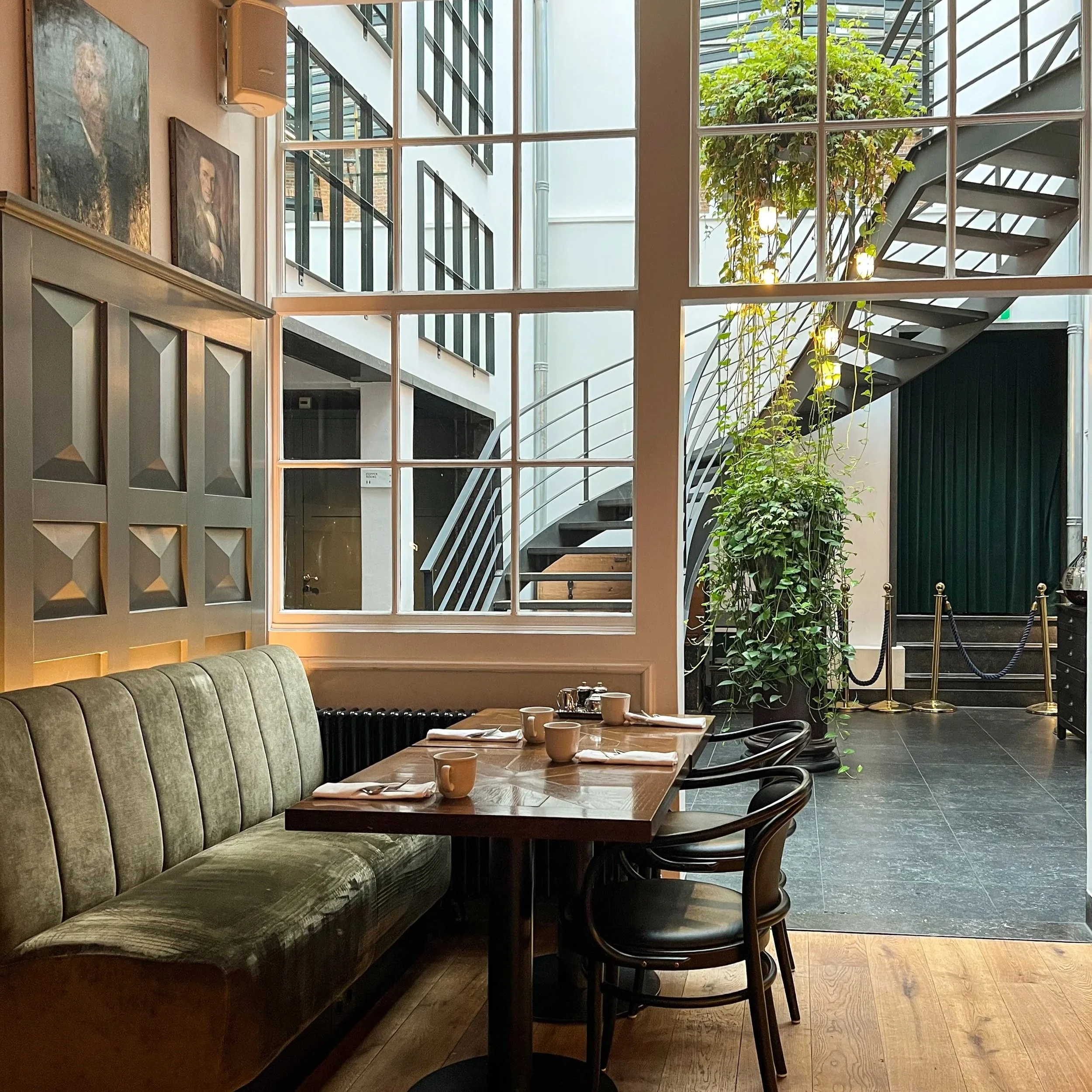
Pulitzer Amsterdam
The Pulitzer is the hotel we would send most people to, since we just stayed here for a week and were blown away by the design and service. Read our full review here. It spans twenty-five restored seventeenth and eighteenth century canal houses joined together, with no two rooms alike.
Family rooms, connecting rooms and a two-bedroom family suite make it the strongest choice in the city for families, and the Very Important Kids program with its treasure hunt through all twenty-five houses is the real thing rather than a marketing line. The hotel runs its own 1909 teak salon boat on daily ninety-minute canal tours departing from the dock outside the entrance, and that tour is the single best thing we did in Amsterdam.
The honest caveat: there is no pool and no spa, though there is a twenty-four hour fitness room, and dinner at Jansz. underwhelmed us relative to the beautiful room it is served in. Eat breakfast here and dinner out.
Best for: first-time visitors, families, anyone who wants the building itself to be part of the trip. Rate anchoring: roughly €400 to €700 for a double, more for family rooms and suites.
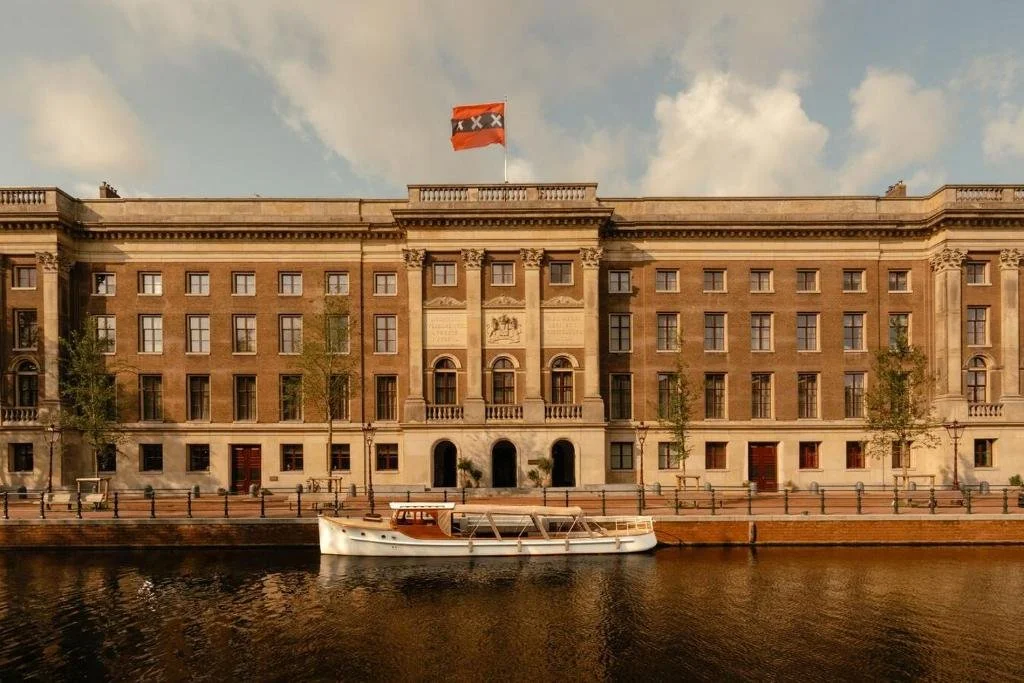
Rosewood Amsterdam
The newest serious arrival in the city and the one changing the conversation at the top of the market. Rosewood opened in the former Palace of Justice, built in 1665 on the UNESCO-listed canals, after a decade of restoration by Studio Piet Boon. It has 134 rooms including five signature suites. It is also the last new hotel development permitted within a monumental building in Amsterdam, which is the kind of detail that tells you how tightly the city now controls its own hotel supply.
The food and drink is a three-part operation: Eeuwen for seasonal dining, Advocatuur for house-distilled jenever, and The Court for pastries. The Asaya Spa has a twelve-meter indoor pool, jacuzzi, sauna, steam room and fitness center, which puts it in a very small group of Amsterdam hotels where you can actually swim. There are over a thousand works of art in the building, plus monthly exhibitions in The Gallery, a curated art walk and a private salon boat.
The honest caveat: it is new, and new hotels take time to find their service rhythm. Entry-level rooms start at 35 square meters, which is generous for Amsterdam but modest against what the rate implies. We have not stayed and would want to before calling it the best in the city.
Best for: design-led travelers, spa and pool seekers, anyone who wants the newest thing. Rate anchoring: roughly €800 to €1,000 for a double.
Waldorf Astoria Amsterdam
The grandest address in Amsterdam and the one that best rewards a special occasion. It occupies six grand seventeenth-century mansions on the Herengracht at numbers 542 to 556, on the stretch known as the Golden Bend. Some date to the 1670s, and the property includes a staircase designed by an architect who worked for Louis XVI, plus a semi-formal garden out back.
There is a Guerlain Spa, a heated indoor pool, and Spectrum, the hotel's restaurant under chef Sidney Schutte. Spectrum holds two Michelin stars and sits on the lower ground floor overlooking the courtyard garden, with a menu that blends Asian influence and regional Dutch produce. Suite guests get twenty-four hour butler service.
The honest caveat: this is a formal hotel with a formal atmosphere, and it is the least playful property on this list. If you are traveling with young children or you want a hotel that feels like a neighborhood, look elsewhere. The rate is also at the very top of the Amsterdam market.
Best for: anniversaries, discretion, serious dining, travelers who want old-world weight. Rate anchoring: roughly €700 upward, well into four figures for the Golden Bend suites.
De L'Europe Amsterdam
The classic grande dame, and the property with the best water views in the city. It has held its position at the confluence of the Amstel for well over a century, and the location is the reason to book it. You are steps from the flower market and the Rembrandtplein while still on the water.
The dining is now the headline. Flore, inside the hotel, holds two Michelin stars plus a Green Star for sustainability, a combination only a handful of restaurants in the world can claim, and the evening begins in the kitchen itself where diners meet the ingredients before moving to the dining room. Chef Bas van Kranen cooks light, sustainable dishes with local ingredients in an intimate setting on the Amstel. The hotel also has an indoor pool, which is rare among the canal-belt properties.
The honest caveat: many guides still list Bord'Eau as the hotel's restaurant, which is out of date. If you are booking for the food, book Flore, and book it well ahead. The hotel's classic style will read as slightly stately to anyone who prefers the Pulitzer's looser character.
Best for: food-led trips, water views, travelers who want a traditional grand hotel. Rate anchoring: roughly €800 to €1,000 for a double.
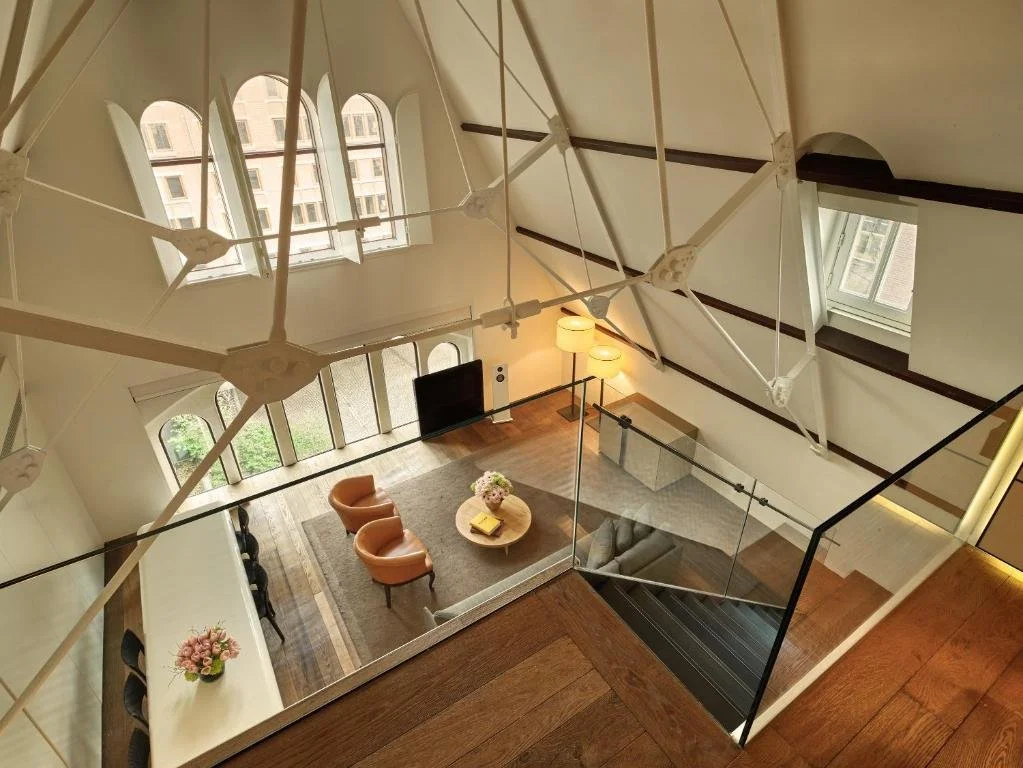
Mandarin Oriental Conservatorium, Amsterdam
The best choice in the Museum Quarter and the best choice in Amsterdam for anyone who wants space. It occupies a former music institution, was named the finest luxury hotel in the Netherlands by Condé Nast, and was redesigned by Milan-based architect Piero Lissoni. The atrium is the most dramatic hotel interior in the city.
The Akasha Holistic Wellbeing Centre offers nutrition therapy, meditation and Watsu, and has arguably the best-equipped gym in Amsterdam. There is an indoor pool. Rooms are large by Amsterdam standards, which makes it a strong option for families who need square footage rather than a kids' program. The Rijksmuseum and Van Gogh Museum are a short walk, as is the shopping on the P.C. Hooftstraat.
The honest caveat: you are outside the canal belt. That is the entire point for some travelers and a drawback for others. If your mental image of Amsterdam is stepping out of your hotel onto a canal, this is not that. Expect a fifteen-minute walk or a short tram ride into the historic center.
Best for: museum trips, spa and wellness, families needing space, repeat visitors. Rate anchoring: roughly €700 upward.
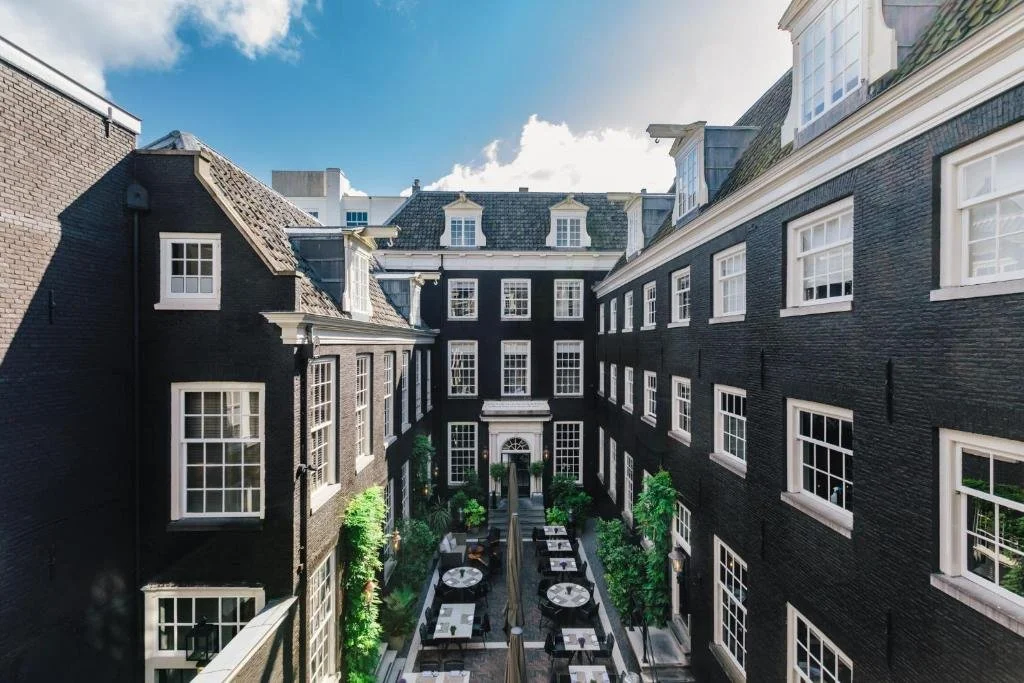
The Dylan Amsterdam
The small one, and the one we would book for a couples trip. It has around forty rooms across two historic canalside houses in the middle of the Nine Streets shopping quarter, which means it shares a neighborhood with the Pulitzer at a quarter of the scale.
Vinkeles, the hotel restaurant, sits in an eighteenth-century bakery on the Keizersgracht under executive chef Jurgen van der Zalm, combining traditional and modern French cooking. It was awarded a second Michelin star in 2023 and has held both since, and the liver, pigeon and turbot dishes are the ones worth planning around. The more casual Occo Brasserie is nearly as good. The Dylan also runs its own private canal boat.
The honest caveat: forty rooms means limited availability and no meaningful facilities. There is a gym but this is a hotel for getting away from things rather than doing things, with no pool and no real spa. It is also not a family hotel in any sense.
Best for: couples, anniversaries, food-led weekends, travelers who prefer small hotels. Rate anchoring: roughly €450 to €700 for a double.
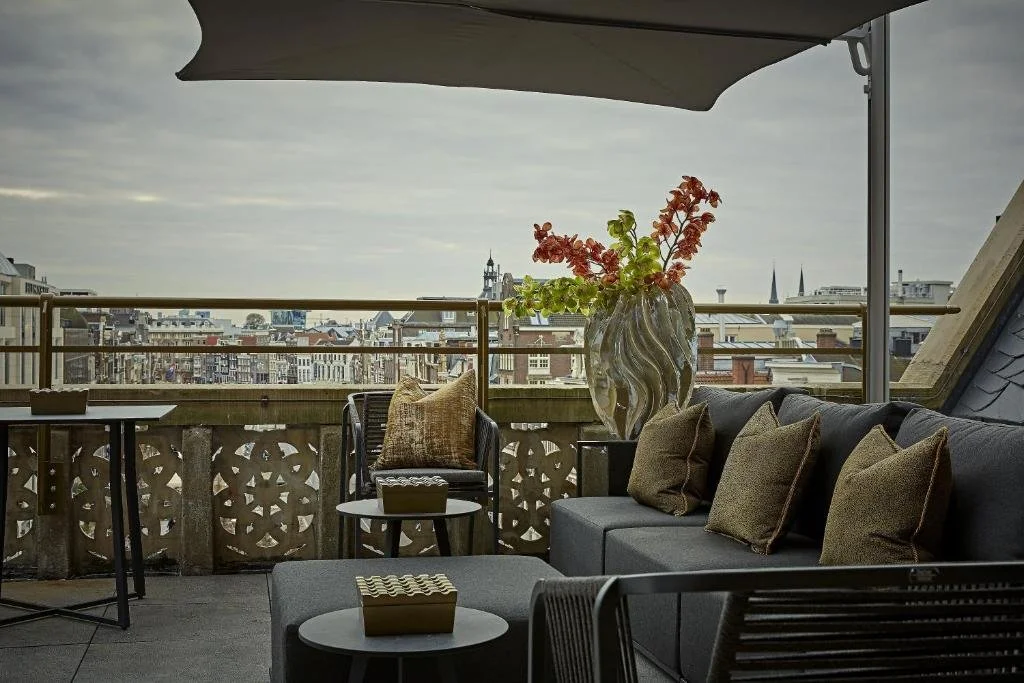
Hotel TwentySeven
The most concentrated luxury experience in the city and the least conventional entry on this list. It is a suite-only property in a central location, singled out for its highly personalized service. Every room is a suite, the hotel is tiny, and the whole operation is built around a level of individual attention that larger properties cannot match.
The location is properly central, on the Dam, which puts the Royal Palace and the main arteries of the old center immediately outside.
The honest caveat: the Dam is the busiest and most touristed square in Amsterdam, and stepping out of the front door means stepping into crowds. That is a very different experience from waking up on a quiet stretch of the Prinsengracht. The property is also small enough that if the service does not click for you, there is nowhere else to go within the hotel.
Best for: luxury travelers who want suites only, short high-intensity city breaks. Rate anchoring: at the top of the Amsterdam market, typically four figures.
Hotel Okura Amsterdam
The food destination, and the outlier geographically. It sits in Zuid, a quieter residential district away from the canal belt. The reason to stay is the dining, with Ciel Bleu on the twenty-third floor and Yamazato serving kaiseki, plus an indoor pool. Ciel Bleu holds two Michelin stars under Arjan Speelman, with panoramic views across the city and a reputation for service that is among the best in the Netherlands. Amsterdam has no three-star restaurants, so the two-star tier is the top of the city's dining scene.
The honest caveat: the location genuinely is out of the way for a first visit, and the building is a tower rather than a canal house, which is the opposite of what most people come to Amsterdam for. This is a hotel for a specific kind of trip.
Best for: dedicated food travelers, business stays, repeat visitors who have done the canals. Rate anchoring: roughly €350 to €600 for a double.
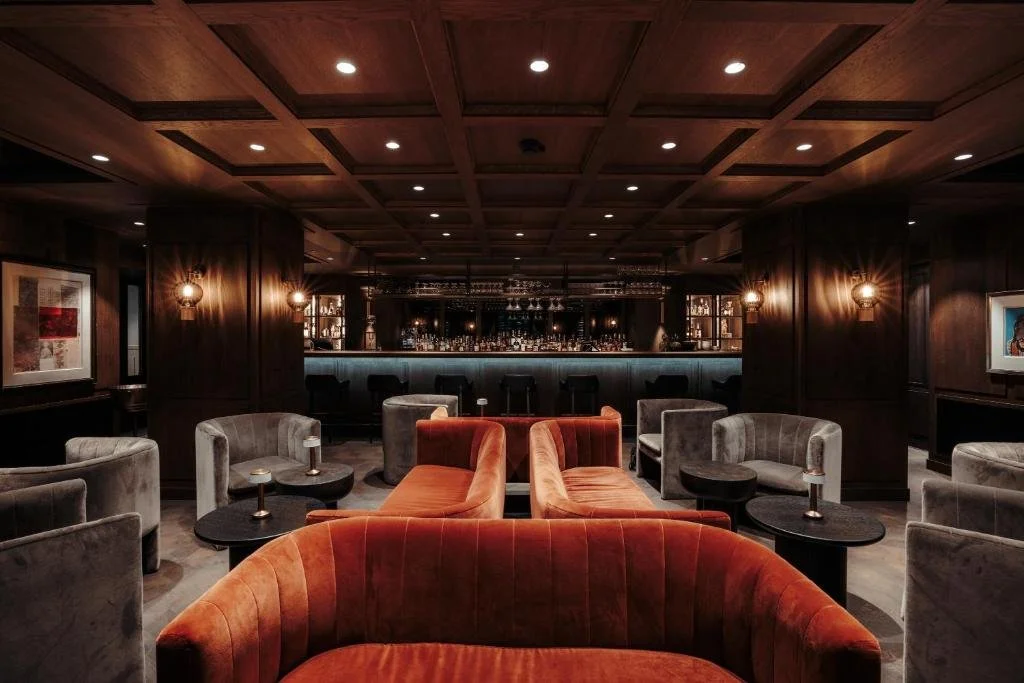
Pillows Grand Boutique Hotel Maurits at the Park
The quiet pick, and the best value at the upper end. It is a park-side property with elegant design in less tourist-heavy surroundings, singled out for travelers who want luxury without the crowds. Pillows properties sit in the designer five-star band rather than the very top tier, which means you are trading some facilities for a meaningfully lower rate and a calmer setting.
The honest caveat: less tourist-heavy means further from the things tourists come for. If this is your first trip and you have three days, the walking adds up. It also does not have the historic drama of the canal-house hotels.
Best for: repeat visitors, longer stays, travelers who want a residential feel. Rate anchoring: roughly €350 to €550 for a double.
Best Time to Visit and When to Book
Late April through early June is the sweet spot. The gardens and canal-side terraces are open, days are long, tulip season overlaps the front end, and the summer crowds have not arrived. September is the other good window, with warm days and thinner streets.
July and August are peak, meaning the highest rates and the most congested canals. November through March is genuinely quiet and considerably cheaper, and Amsterdam in the cold with a canal-house hotel has real appeal, though the gardens close and the days are short.
The important thing about Amsterdam pricing is that it does not follow seasons cleanly. Peak rates are tied to specific weeks rather than seasons, meaning King's Day, tulip festival, Pride and major art-fair weeks. Rates spike during those events and drop on quiet winter weekdays. Check the city calendar before you fix your dates, because moving a trip by four days can change the rate by hundreds of euros a night.
On booking windows, three to four months ahead is enough for most of the year. Push to six or eight months for late April, Pride weekend, or the December holidays, and longer still if you need a specific suite or a family room, since those are single-digit inventory at most of these hotels.
How to Choose
If this is your first trip to Amsterdam, book the Pulitzer. The canal-belt location, the Nine Streets at the door and the sheer character of the building deliver the version of Amsterdam you came for.
If you are traveling with children, book the Pulitzer for the kids' program or the Conservatorium for the room sizes. The same logic we apply in our guide to the best luxury family resorts in the world holds in a city, where the question is whether the hotel actually wants your children there rather than merely permitting them.
If you want the newest and most polished, book Rosewood. If you want grandeur and a Guerlain spa, book the Waldorf Astoria.
If the trip is built around food, book The Dylan for Vinkeles, De L'Europe for Flore, or the Okura for Ciel Bleu and Yamazato. All three restaurants hold two Michelin stars, and all three need booking weeks ahead.
If you need a pool, your options narrow sharply. Rosewood, the Waldorf Astoria, De L'Europe, the Conservatorium and the Okura have them. Most canal-house hotels, including the Pulitzer and The Dylan, do not.
If you have done Amsterdam before, book the Conservatorium or Pillows Maurits and enjoy the quieter half of the city. If you are pairing this with a wider European trip, our Paris with kids guide covers the other end of the same itinerary.
Frequently Asked Questions
What is the best hotel in Amsterdam? There is no single answer, but the Pulitzer offers the most distinctly Amsterdam experience, spread across twenty-five joined canal houses on the Prinsengracht. Rosewood Amsterdam is the newest and most polished at the top of the market. The Waldorf Astoria wins on grandeur and dining. The Conservatorium is the best choice outside the canal belt.
Where should I stay in Amsterdam for the first time? The canal belt, meaning the Herengracht, Keizersgracht or Prinsengracht, and ideally near the Nine Streets or the Jordaan. This puts you within walking distance of most museums, restaurants and canals. The Pulitzer, Waldorf Astoria, De L'Europe and The Dylan all sit in this area.
How much do luxury hotels in Amsterdam cost? Roughly €400 to €900 per night for a five-star double in 2026, with suites and peak dates running well over €1,000. Amsterdam also charges a tourist tax of 12.5 percent on top of the room rate, which is among the highest in Europe and often not shown in the headline price.
Which Amsterdam hotels have a swimming pool? Rosewood Amsterdam has a twelve-meter indoor pool in its Asaya Spa. The Waldorf Astoria has a heated indoor pool, and De L'Europe, the Conservatorium and the Okura all have pools as well. Most canal-house hotels, including the Pulitzer and The Dylan, do not have pools because of the constraints of the historic buildings.
Which Amsterdam hotel is best for families? The Pulitzer, for its family rooms, connecting rooms, two-bedroom family suite and Very Important Kids program, which includes a treasure hunt through all twenty-five canal houses and bedtime stories. The Conservatorium is the alternative if what you need is square footage and a pool rather than children's programming.
Which Amsterdam hotels have Michelin-starred restaurants? Vinkeles at The Dylan, Flore at De L'Europe, Spectrum at the Waldorf Astoria and Ciel Bleu at the Okura all hold two Michelin stars, and Yamazato at the Okura holds one. Amsterdam has no three-star restaurants, so this is the top of the city's dining scene. Note that De L'Europe's restaurant is now Flore, not Bord'Eau, which many older guides still list.
Is Amsterdam expensive for hotels? Yes, relative to its size. The luxury market is small, most properties sit in protected historic buildings that cannot expand, and the city has tightly restricted new hotel development. Rosewood is described as the last new hotel permitted within a monumental building in Amsterdam. Limited supply plus consistent demand keeps rates closer to Paris and London than the city's scale would suggest.
When is the cheapest time to visit Amsterdam? November through March, excluding the December holidays, with quiet winter weekdays offering the lowest rates of the year. Avoid King's Day in late April, Pride in early August, tulip festival weeks and major art fairs, when rates spike regardless of season.