Netherlands
The Netherlands is one of the easiest countries in Europe to travel well, and most trips are shorter than they should be. Amsterdam is the anchor, with three to four nights covering the canal ring, the Rijksmuseum and the Van Gogh comfortably, and it's the best luxury hotel city in the country by a distance. What people skip is everything else, which is a mistake in a place where the train network puts Rotterdam, The Hague, Utrecht and Haarlem all within an hour. May and September are the best months. Late April is the busiest and most expensive stretch of the year, thanks to King's Day and peak tulip season.
The Netherlands is small, flat, dense and organized, which makes it one of the few countries in Europe where you can genuinely see a lot without spending the trip in transit. Almost everywhere is within two and a half hours of Amsterdam by train, and most of the places worth going are within one.
That geography changes how you should plan it. There's no reason to move hotels every two nights here. Base yourself in Amsterdam, book somewhere good, and treat the rest of the country as day trips. It's the opposite of how you'd approach Italy or Spain, and it's why the Netherlands works so well as a first European trip with children.
The other thing to understand is that Amsterdam has been actively managing its own popularity for several years now, with limits on new hotels and cruise arrivals and a steady push to move visitors out of the historic center. That has real consequences for booking. Hotel supply in the canal ring is effectively capped, which keeps rates high and availability tight in a way that doesn't correct itself in peak season.
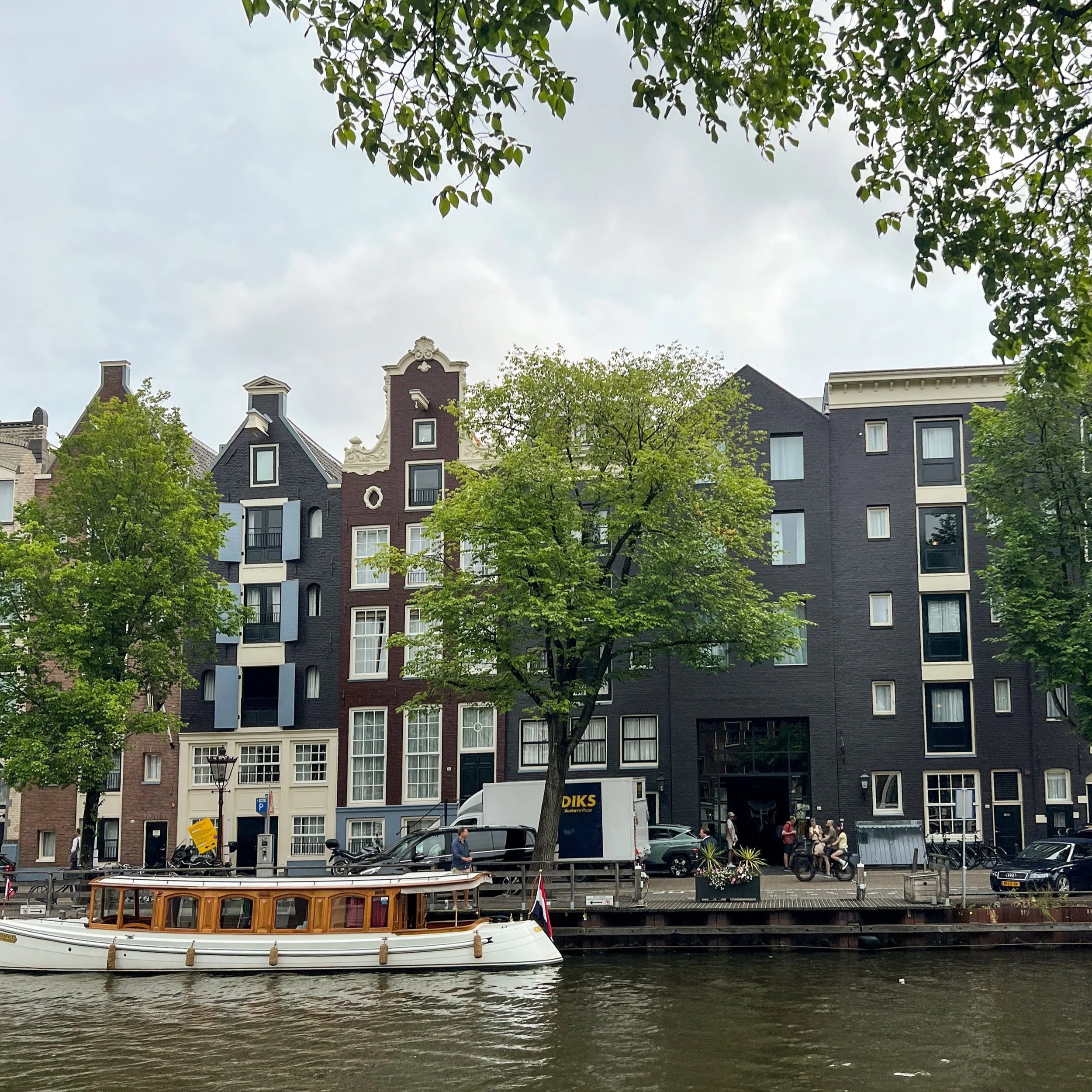
Amsterdam
The anchor of any trip here, and a better city than its reputation suggests. The canal ring is UNESCO-listed and genuinely beautiful to simply walk, the museums are world-class and unusually concentrated, and the food scene was surprising. Hotels are largely 17th-century merchant houses knitted together, and the character varies enormously between them. Our guide to the best hotels in Amsterdam covers the canal-belt icons and the Museum Quarter alternatives, and what the tourist tax and breakfast actually add to the quoted rate. For the closest look at one of them, the Pulitzer Amsterdam review is a full week on the canal with two kids, including which room categories are worth paying up for and which are not. Read our guide to Amsterdam with kids before your stay.
The food is the part most first-time visitors get wrong. Amsterdam has serious fine dining, a deep Indonesian tradition and some of the best casual eating in northern Europe, and almost none of it is on the streets the crowds walk down. The best restaurants in Amsterdam covers what to book weeks out, what to book that morning, and where you can still walk in. There is also some fantastic shopping here, so be sure to check out our favorite stores in Amsterdam.
The country most visitors never see, and all of it is a day trip.
Rotterdam is forty minutes away and looks nothing like the rest of the Netherlands, having been rebuilt after the war into the most architecturally adventurous city in the country. The Hague has the Mauritshuis, which holds the Vermeer, plus Scheveningen beach on its doorstep. Utrecht has canals with split-level wharves that Amsterdam doesn't, and a fraction of the visitors. Haarlem is fifteen minutes from Amsterdam Centraal and is essentially a smaller, calmer version of the same thing.
For windmills, Kinderdijk is the UNESCO-listed one and Zaanse Schans is the convenient one. For beaches and space, the Wadden islands along the northern coast, Texel in particular, are where Dutch families go in summer and almost no international visitors do.
Tulip Season
The single biggest draw after Amsterdam itself, and the most misunderstood. The bulb fields bloom roughly late March through mid-May, with the peak usually landing in mid to late April, though it moves with the weather each year. Keukenhof, the flower garden near Lisse, is open only for that window.
Two things worth knowing. The gardens are not the fields. Keukenhof is a designed park, spectacular but curated, while the actual commercial bulb fields are in the surrounding countryside and are best seen by bike or car. And late April is when tulip season collides with King's Day, which is why that fortnight is the most expensive of the year to book anything.
If flowers are the point of the trip, aim for mid-April and book the hotel by January.
Best Time to Visit
May and September are our picks. The weather is at its most reliable, the terraces are open, the light is good, and you've missed both spikes.
Late April is peak everything. King's Day on the 27th turns the whole country orange and books out months ahead at any price, and it lands inside tulip season. It's a genuinely great experience if that's what you came for, and miserable if it isn't.
Summer is pleasant and busy. Autumn is underrated, with the museums quiet and the light beautiful into October. Winter is cold, gray and wet, and by far the cheapest, with December carrying its own draw thanks to Sinterklaas and the Christmas markets.
The weather is maritime and changeable in every season. Rain arrives sideways, wind is a constant, and layering matters more than the forecast does.
Getting Around
Schiphol sits about fifteen minutes from Amsterdam Centraal by direct train, which makes arrival unusually painless. From there the rail network does nearly everything, running frequently and on time, and there is very little reason to rent a car unless you're heading to the Wadden islands or want to drive the bulb fields.
In Amsterdam itself, walk or take the tram. Cycling is the local mode and it's a genuine pleasure, but the traffic is faster and less forgiving than visitors expect, and it isn't the place to learn. With small children the tram is the simpler answer.
Traveling With Kids
The Netherlands is one of the best countries in Europe for family travel and doesn't get enough credit for it. The infrastructure is built around bikes and prams rather than cars, the food halls make dinner painless, museums are used to children, and the distances are short enough that nobody melts down in transit. Read our guide to Amsterdam with kids before your trip.
The one real friction point is hotel rooms. Canal-house properties are small and often stair-heavy, and connecting rooms are limited. Book early and ask specifically rather than assuming.
What It Costs
Amsterdam is expensive and the Netherlands beyond it is not. Five-star hotel rooms in the capital run roughly €500 to €1,200 a night, with a tourist tax of around 12.5 percent of the room rate added on top and breakfast frequently charged separately at €35 to €50 a head.
Outside Amsterdam, rates drop sharply for comparable quality. Rotterdam and The Hague in particular offer considerably more room for the money, and both are close enough that basing there and commuting in is a legitimate strategy for a longer trip.
Everything on this site is self-funded. No hosted stays, no comped nights, no paid placements.
Frequently Asked Questions
How many days do you need in the Netherlands? Four to five nights covers Amsterdam properly with a day trip or two. A week lets you add Rotterdam, The Hague or Utrecht without rushing, and still doesn't require changing hotels, since the train network makes almost everything a day trip from the capital.
When is the best time to visit the Netherlands? May and September offer the best combination of weather, daylight and manageable crowds. Late April is the most expensive and crowded fortnight of the year because King's Day and peak tulip season overlap. Winter is cheapest, with quiet museums and Christmas markets.
When is tulip season in the Netherlands? Roughly late March through mid-May, peaking in mid to late April depending on the year's weather. Keukenhof opens only during that window. The commercial bulb fields around it are separate from the gardens and are best seen by bike or car.
Do you need a car in the Netherlands? No, for almost every trip. The train network is fast, frequent and reaches nearly everywhere within two and a half hours of Amsterdam. A car is only worth it for the Wadden islands or for driving the bulb fields during tulip season.
Is the Netherlands good for families? Very. Short distances, excellent public transport, pram and bike-friendly infrastructure, and food halls that solve dinner. The main constraint is hotel rooms, since canal-house properties tend to be small with limited connecting options, so book early.
How expensive is Amsterdam? Expensive at the top end. Luxury hotel rooms run roughly €500 to €1,200 a night, plus a tourist tax of about 12.5 percent of the room rate and breakfast often charged separately. Eating and getting around are more reasonable, and the rest of the country is considerably cheaper.
What's worth seeing outside Amsterdam? Rotterdam for modern architecture, The Hague for the Mauritshuis and Scheveningen beach, Utrecht for canals without the crowds, and Haarlem as a quieter version of Amsterdam fifteen minutes away. Kinderdijk for UNESCO windmills, and Texel for beaches.