
Best Beaches in Paros (2026): Which One to Pick, and When
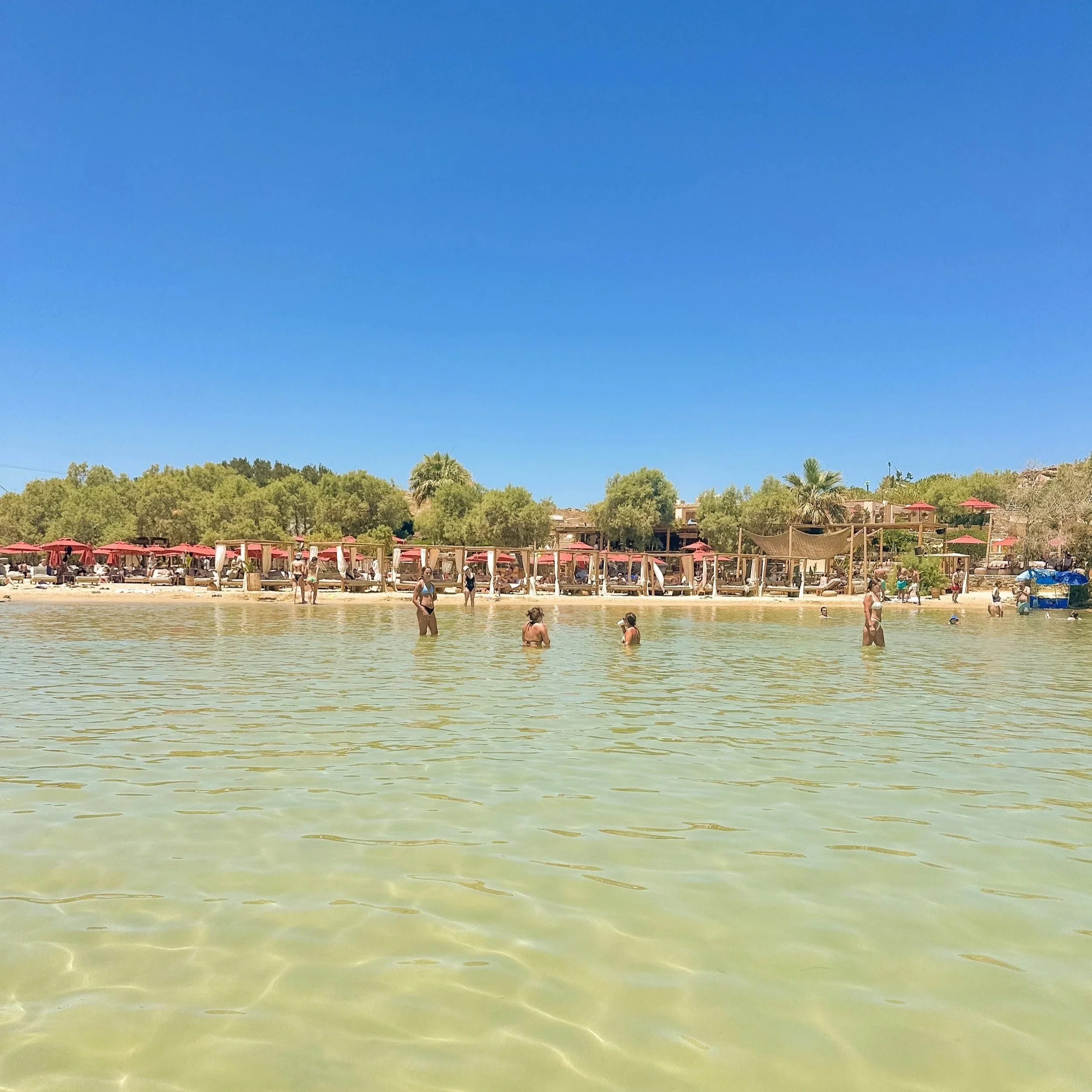
The verdict: The best beach in Paros depends on the wind, not the ranking. Kolymbithres is the famous one, a series of small coves between huge granite boulders near Naoussa, and it's the easiest first swim on the island. Santa Maria is the long sweep of white sand with the best facilities and the most watersports. Golden Beach on the east coast is the biggest and the windsurfing centre of the island. Faragas in the wild south is the prettiest and the quietest, and worth the drive. For families, Livadia at Parikia has the shallowest, calmest water, with Logaras near Piso Livadi the better-looking alternative. And in July and August, check the meltemi before you choose, because the north and east beaches get blown out on the days the sheltered western bays are perfect.
Paros is small enough that no beach is more than about forty minutes from anywhere, which means you don't have to pick one and commit. You pick one each morning, based on the wind. The meltemi blows from the north through July and August, and it turns Santa Maria and the whole northeast coast from beautiful into unusable within an hour. On those days the western and southern bays are calm and empty. On the still days it reverses, and the north is the best water on the island. Locals check before they drive. Visitors drive first and find out.
So this guide is organized by coast, with a note on which way each one faces. If you're still deciding where to base yourself, our guide to the best hotels in Paros breaks the island down by area, and the Paros travel guide covers the rest of the trip.
The North Coast
The Naoussa side, and where most visitors spend most of their time. Exposed to the meltemi, spectacular when it isn't blowing.
Kolymbithres
The one on the postcards, and it earns the attention. Millions of years of weathering have left enormous granite boulders scattered across the shoreline, and the sand collects between them in a string of small, sheltered coves. The effect is genuinely strange, closer to a sculpture park than a beach, and it photographs better than almost anywhere in the Cyclades.
The practical consequence of that geology is that each cove holds very few people, so Kolymbithres feels crowded much earlier than its size suggests. Go early or go late. The water is clear and shallow around the rocks, which makes it good for children who like clambering, less good for anyone who wants to swim lengths.
It's a short drive from Naoussa on the main road, or a water taxi across the bay, which is the better arrival. Cabana Beach Bar handles sunbeds and lunch, and it's one of the properties we cover in our guide to the best beach clubs in Paros.
Santa Maria
The best all-round beach on the island. It's a long stretch of white sand about 4.5km from Naoussa with shallow turquoise water, and it has the widest range of facilities of anywhere in Paros: sunbeds, several bars and restaurants, and a proper watersports operation running paddleboarding, windsurfing, snorkelling and diving.
The shallow, calm water on still days makes it one of the better family beaches, and the scale means it absorbs crowds in a way Kolymbithres can't. Santa Maria Beach Club sits on it, and Marcello at the eastern end is the quieter option on the same sand.
The caveat is the wind. Santa Maria faces north and is fully exposed, so on a strong meltemi day it's for windsurfers and nobody else. That's not a flaw, it's just the deal, and it's why the watersports school is there.
Mirki Santa Maria, sometimes called Mini Santa Maria, is the small bay tucked alongside it. Much smaller, more sheltered, and the one families with young children tend to settle on.
Monastiri
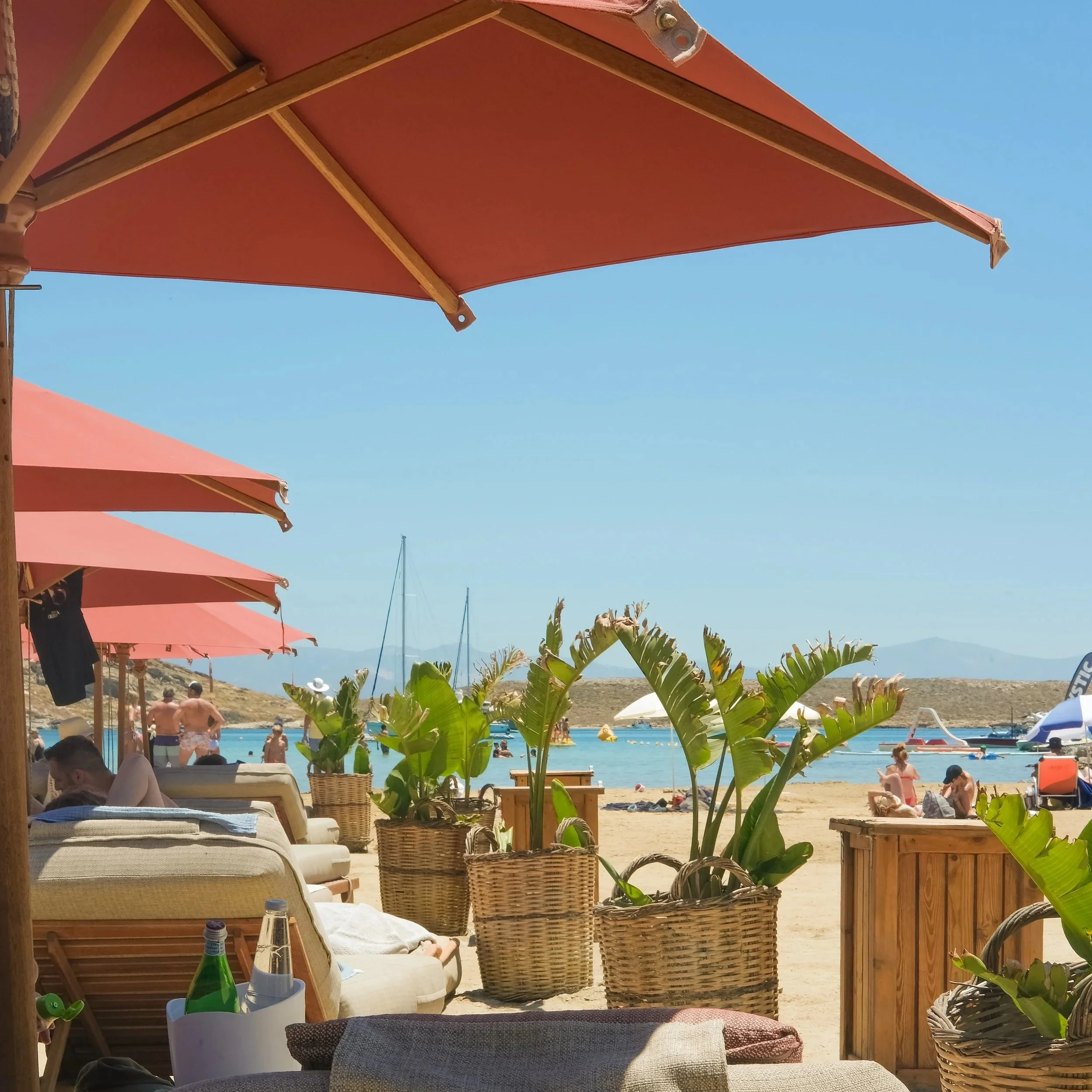
Inside Paros Park on the northern tip, in a protected bay that stays calm when the rest of the north coast doesn't. That shelter is the reason to go, and it makes Monastiri the reliable pick on a windy day when Santa Maria is out.
The setting is lovely, backed by the park rather than development, with good paddleboarding and a beach club restaurant on the sand. Worth knowing before you go: the sand here is coarser than the north coast's white sand, closer to fine gravel in places, and some visitors are disappointed by it. It also fills, and on busy days there's little free sand, so you're renting a bed whether you planned to or not.
Lageri
The quiet one on the north coast. A long sandy stretch east of Santa Maria with no road access to speak of, reached on foot or by boat, and correspondingly empty. No facilities, no shade to speak of, no sunbeds. Bring water and an umbrella. This is the beach for people who've done the famous three and want the version without anybody on it.
The East Coast
Facing Naxos, and the windsurfing side of the island. The most built-up stretch of coastline in Paros, and the liveliest.
Golden Beach
Chrissi Akti, and the biggest beach on the island. Golden sand, clear water, mountains behind it, and a Blue Flag for water quality and facilities. Its size is the point: even in August it rarely feels packed, because there's simply a lot of it.
It's also the windsurfing heart of Paros, with world-class conditions in summer and a schedule of competitions. The same meltemi that ruins the north coast makes Golden Beach work, which is worth remembering on a blowing day.
There are beach bars and restaurants along it, including the Golden Beach Club, and enough space between them to find a quiet section if you walk.
Punda
The party beach, and the closest thing Paros has to Mykonos. Punda Coast runs pools, DJs and a full day-club programme on the southeastern coast, and it gets busy and loud from early afternoon. The beach underneath it is beaufitul, with clear water and soft sand, so this isn't a case of a club papering over a bad beach. But go knowing what it is. If you want a quiet swim, Logaras is fifteen minutes north.
One thing worth getting right before you tell a taxi driver where you're going. Punda Coast on the southeast is this day club. Pounda on the west coast is a different place entirely, the small port where the Antiparos ferry leaves from, and it's also the island's kitesurfing spot for its flat water and steady wind. Same sound, opposite sides of the island.
Logaras
The underrated family beach, and our pick over Livadia if you don't mind the drive. Sandy, crystal clear, with plenty of tamarisk trees for shade and a stretch of tavernas and small hotels behind it. It's sheltered from the wind better than most of the east coast and it draws far smaller crowds than its quality warrants.
It's a few minutes' walk from Piso Livadi, which is a pretty working harbour village with good seafood, so you can make a whole day of it. Bus service runs from Naoussa, roughly twenty minutes.
Kalogeros
The strange one, and worth the effort. A natural bay in the southeast backed by high red and ochre cliffs, with pale pebbles rather than sand and remarkable water colour. There are no sunbeds, no bar, no facilities of any kind. The local tradition is the clay. The cliffs shed a natural grey clay that people smear on and let dry in the sun before rinsing off in the sea, and on a summer afternoon half the beach is grey. It's either a highlight or deeply silly depending on temperament, and children generally love it.
Access is on a rough track. A car with some clearance helps, and a quad or scooter is what most people arrive on.
The South Coast
The wild half, and where the island gets quiet. Longer drives, fewer facilities, better swimming.
Faragas
The best beach in Paros, if best means beautiful and empty. Faragas sits in the rugged southern corner and is really three small coves side by side, with fine sand, trees running down close to the water, and that particular quality of quiet you only get from mild inconvenience. The winding road in keeps the numbers down.
The rocky promontory beside the main cove is the best snorkelling on this side of the island. Faragas Beach Club handles sunbeds and a genuinely good seafood lunch, so you get the isolation without having to pack a cooler. Of every beach on this list, this is the one people come back talking about.
Aliki
A picturesque fishing village in the south with three beaches attached, which makes it the easiest place to spend a full day without moving the car. Piso Aliki is the quiet one, shallow and warm with tamarisk trees for shade and no beach bar. The main Aliki beach is the best of the three: sandy, with sunbeds, several excellent seafood tavernas directly behind it, and a playground next door, which is a small detail that matters enormously with small children. It's also close to the airport, which makes Aliki a smart last-day base if you have an evening flight.
The West Coast and Parikia
Sheltered from the north wind, which is the whole argument for this side. Less scenic than the north, far more usable in August.
Livadia
The main beach at Parikia, and the most child-friendly water on the island. It sits inside the gulf, so there is essentially never a wave, and the water stays shallow a long way out. Clean, clear and calm. It's not the prettiest beach in Paros, and it's backed by town rather than countryside. But if you have a toddler and you want to stop thinking about the sea, this is the answer. Our Paros with kids guide covers the rest of the family picture.
Krios
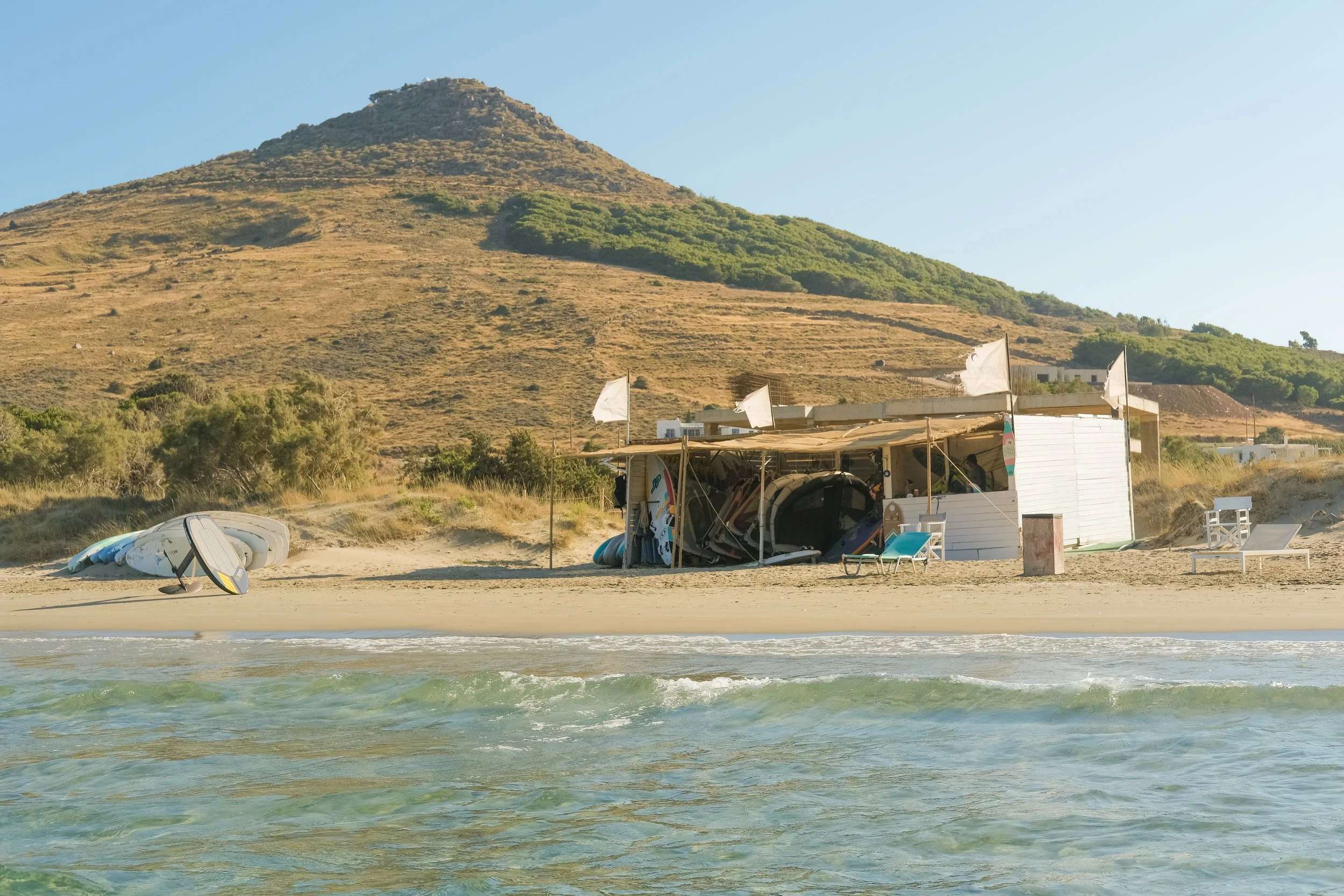
About 2km from Parikia and the quietest of the town beaches, reached by road or by the small boat that runs across the harbour. Calm water, good views back at Parikia, and far fewer people than Livadia. One genuine warning: the high-speed catamarans entering Parikia harbour throw a surprising amount of wash even at reduced speed. It arrives without warning a few minutes after the ferry passes. Keep an eye on small children when you see one coming in.
Agia Irini
About 6km southwest of Parikia, in a deeply indented bay that gives it real protection from the meltemi. Palm trees behind the sand give it an unexpectedly tropical look, and it's shallow and calm. This is the beach to drive to on the day the north coast is unswimmable. It's the single most reliable swim in Paros in high summer, and a lot of visitors never find it.
What a Beach Day Costs
No beach in Paros charges entry. You can put a towel down anywhere for free, and most of the organised beaches keep a public section alongside the paid one, smaller and busier but free. Sunbeds are the only real cost. Budget roughly €15 a pair with an umbrella at the simpler beaches like Kolymbithres, rising to somewhere between €30 and €50 a pair at the big clubs — Santa Maria, Faragas, Golden Beach, Punda. The clubs generally attach a food and drink minimum on top of that. Shoulder season pricing in May, early June and September is noticeably softer.
Book club loungers ahead in July and August. Kolymbithres and Faragas in particular have limited capacity and go early.
On getting there without a car: the KTEL buses reach most of the main beaches from Parikia and Naoussa in summer for a couple of euros each way, which is enough if you're picking one beach and staying put. Water taxis are the better version of the same trip, running from Naoussa out to Kolymbithres and Monastiri, and from Parikia across to Krios and Marcello. For Lageri, Kalogeros, Agia Irini and anything in the far south, you need your own wheels.
The swimming season runs June to mid-September, when the sea sits around 23 to 25°C and is warmest in August. May and October are swimmable but cooler.
Where to Stay for the Beaches
Base yourself in or near Naoussa if the north coast is the priority. Kolymbithres, Santa Maria and Monastiri are all within fifteen minutes, the water taxis run from the harbour, and you get the island's best restaurants at the end of the day.
Base yourself near Santa Maria or Piperi if you want to walk to sand rather than drive to it.
Base in Parikia if you're arriving by ferry, travelling with very young children, or visiting in peak meltemi season, since Livadia, Krios and Agia Irini are all sheltered and close.
Consider the southeast around Piso Livadi or Golden Beach if you windsurf, or if you want a quieter, cheaper trip with Logaras and Punda on the doorstep.
The full breakdown of who each property suits is in our guide to the best hotels in Paros.
Best Time for the Beaches, and How to Read the Wind
June and September are the beach months. The sea is warm, the meltemi is lighter than in high summer, and the beaches are a fraction as busy as August. Late May is beautiful but the water is still cold. October holds warm enough to swim well into the month.
July and August are the peak of everything, including the wind. The meltemi typically blows hardest in these two months, sometimes for three or four days at a stretch, and it fundamentally changes which beaches work.
The rule is simple once you know it. On a windy day, go south or west: Faragas, Aliki, Agia Irini, Krios. On a still day, go north: Kolymbithres, Santa Maria, Lageri. If you windsurf, do the opposite of everyone else and head to Golden Beach when it blows.
Check a wind forecast the night before rather than in the morning, because the beach you want in August may need a sunbed booked ahead, particularly at Kolymbithres and Faragas, where capacity is genuinely limited.
A car or a quad makes all of this possible. The bus network reaches the main beaches but not on a timetable that lets you change plans based on weather, and half the beaches on this list aren't on it at all.
FAQ
What is the best beach in Paros? Kolymbithres is the most famous and the most photographed, for its granite rock formations near Naoussa. Santa Maria is the best all-rounder for facilities and watersports. Faragas in the south is the most beautiful and the quietest. Which is best on a given day depends mostly on the wind.
Which Paros beaches are best for families? Livadia at Parikia has the calmest, shallowest water on the island. Logaras near Piso Livadi is prettier, sheltered and has shade from tamarisk trees. Mirki Santa Maria is a small protected bay on the north coast. Aliki has a playground next to the sand and tavernas behind it.
Are there quiet beaches in Paros? Yes. Lageri on the north coast has no road access and no facilities. Kalogeros in the southeast has neither either, plus the natural clay cliffs. Faragas is quiet by Paros standards despite having a beach club, because of the drive.
Do Paros beaches have sunbeds and beach bars? The main ones do. Kolymbithres, Santa Maria, Monastiri, Golden Beach, Punda, Faragas and Aliki all have organised sections with sunbeds and food. Lageri, Kalogeros and parts of Krios have nothing, so bring shade and water.
Do I need a car to see the beaches in Paros? Effectively yes. Buses reach the main beaches from Naoussa and Parikia, but several beaches worth the trip aren't served, and the timetable doesn't let you switch beaches based on the wind. A quad or scooter works for the rougher access roads.
When is the wind worst in Paros? The meltemi blows from the north and is strongest in July and August, sometimes for several days running. It makes the north and northeast beaches unswimmable and leaves the western and southern bays calm. June and September are noticeably gentler.
How many beaches can you do in a day in Paros? Two comfortably. The island is small and nothing is more than about forty minutes from anything, so a morning at one beach and an afternoon at another with lunch in between is a normal Paros day.