
Answer block: NIHI Sumba is the best hotel on Sumba and one of the most famous resorts in the world, with private-pool villas above a legendary surf break and a deep connection to the island. Cap Karoso is the best choice for families and food lovers, with a kids' club, a beach club and a Michelin Key. Lelewatu is the quieter clifftop alternative. Sumba is about an hour's flight from Bali. Expect roughly $1,000 to $2,000 a night at NIHI, with Cap Karoso and Lelewatu coming in lower. Go between April and October.
Our Picks at a Glance
Best overall: NIHI Sumba
Best for families: Cap Karoso
Best for couples: Lelewatu
Best for foodies: Cap Karoso
Best for surfers: NIHI Sumba
Where to Stay in Sumba
Sumba sits in East Nusa Tenggara, about an hour's flight east of Bali, and it feels like a different world. There are no crowds and almost no development. What you get instead is empty beaches, rolling savanna, waterfalls and traditional villages with tall thatched roofs, where the old Marapu beliefs are still part of daily life.
That's the appeal, and the trade-off. Sumba is remote, roads are rough, and there's very little outside the resorts. The handful of great hotels here are the reason to come, and you'll spend most of your time at yours.
Nearly all the luxury options are in West Sumba, within reach of Tambolaka airport. NIHI and Lelewatu are on the southwest coast near Wanokaka, about 90 minutes from the airport. Cap Karoso is on the western tip, under an hour away.
If you're pairing Sumba with Bali, our guide to the best hotels in Bali covers where to spend a night or two before flying over. For more remote Indonesian islands, see our Bawah Reserve review and the Indonesia travel guide.
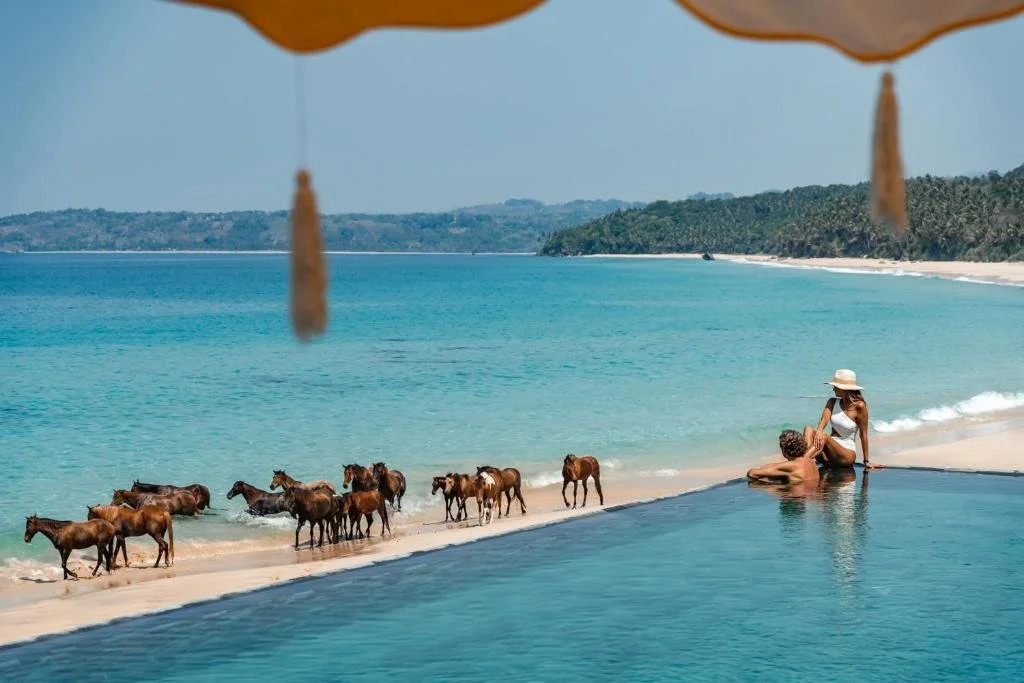
NIHI Sumba
NIHI is the reason most people have heard of Sumba. It started life as a simple surf camp in the late 1980s and grew into one of the most celebrated resorts in the world, twice named the world's best hotel by Travel + Leisure readers.
What makes NIHI special is how much there is to do. You can swim with the resort's horses in the ocean, take a "spa safari" that starts with a guided hike, chase waterfalls inland, or visit the Sumba Foundation, the charity NIHI helped create to support clean water, health and schools on the island. Surfers get access to the famous left-hand break, which is limited to 12 people a day.
Families are well looked after, with the NIHI Wildlings Kids Club for ages 4 to 12 and surf lessons for confident swimmers over eight.
Best for: couples, families and surfers who want the full Sumba experience.
Cap Karoso
Cap Karoso opened in 2023 on a turquoise lagoon at the western tip of Sumba, and it's quickly become NIHI's main rival. It was created by a French couple who settled on the island, and it pairs sleek modern architecture with Sumbanese design, art and handmade ceramics.
It's bigger and more social than NIHI, with studios, suites and around 20 two- and three-bedroom villas with private pools. There are two big pools, a beach club, a kids' club and the Malala Spa in a traditional Sumbanese house.
The food is a real draw. Julang, the fine-dining restaurant, brings in visiting chefs for short residencies, and the resort holds a Michelin Key. Much of the produce comes from its own organic farm nearby.
It's also closer to the airport, about 50 minutes, and usually costs less than NIHI.
Best for: families and food lovers.
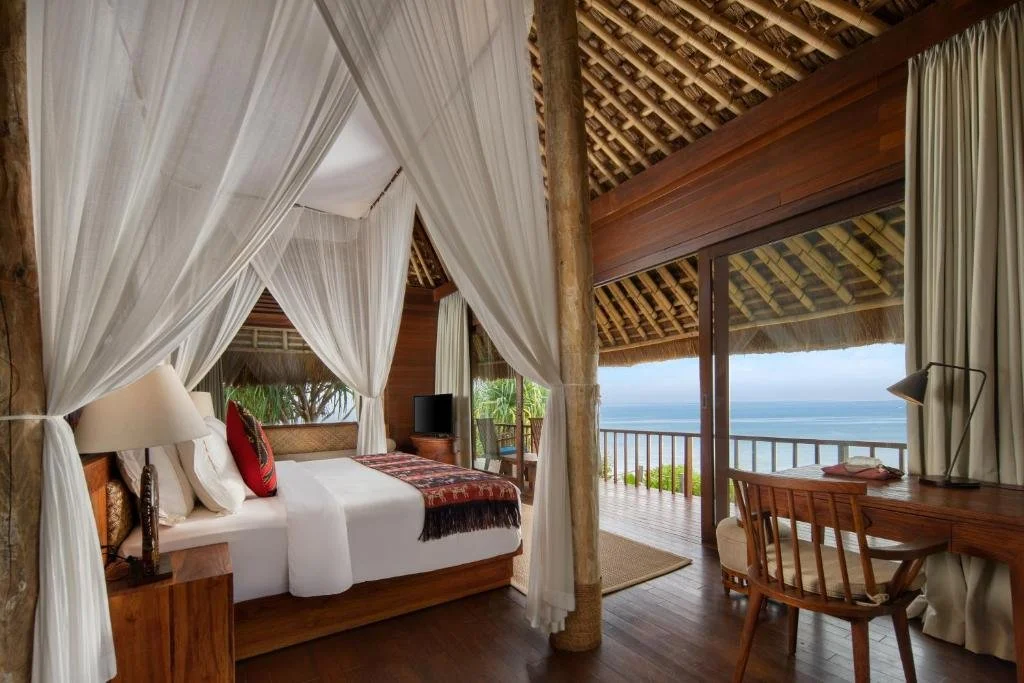
Lelewatu
Lelewatu is a clifftop resort on the southwest coast, close to NIHI near Wanokaka. Its villas take their cue from traditional Sumbanese villages, with tall thatched roofs, natural wood and hand-woven textiles.
It's quieter and more intimate than Cap Karoso, with two restaurants, a spa and sweeping ocean views. For many travelers, it offers the NIHI feel at a lower price.
Best for: couples and small families who want peace and views.
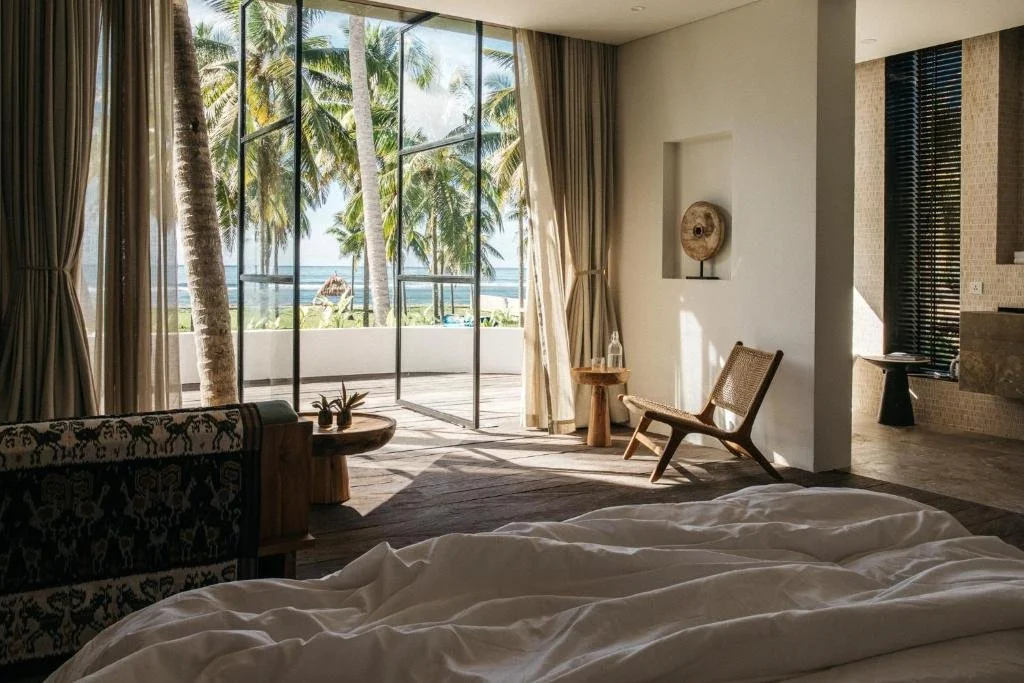
Alamayah
Alamayah is a smaller, newer stay on Sumba with a minimalist, earthy design. It's a calm, stylish option for travelers who want something more intimate than the big-name resorts.
Best for: couples looking for a quieter design stay.
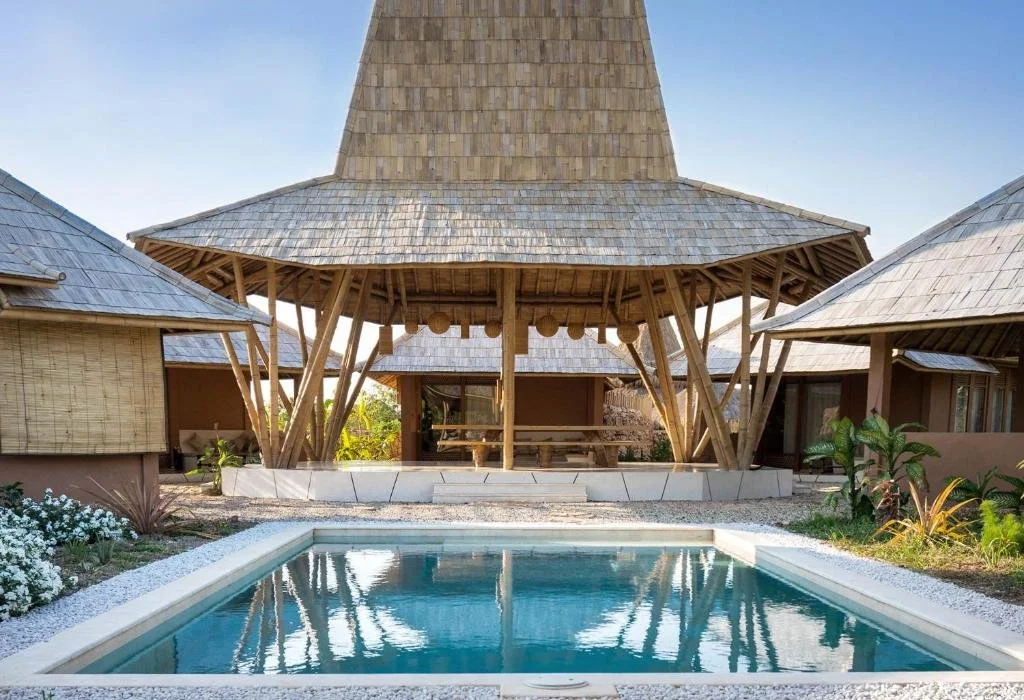
Maringi Sumba by the Sumba Hospitality Foundation
The Sumba Hospitality Foundation runs a small eco-hotel as part of a hospitality school for young Sumbanese. Stays help fund training that leads many graduates into jobs at the island's top resorts, including NIHI and Cap Karoso.
It's simple compared with the others, but it's a meaningful way to support the island, and a good choice for a night or two near the airport.
Best for: travelers who want their stay to give back.
Check rates at Sumba Hospitality Foundation
How to Choose a Hotel in Sumba
If money isn't the deciding factor, book NIHI. It's the original, it has the most to do, and it's the one you'll remember. If you're traveling with kids or care a lot about food, book Cap Karoso, which has more space, a kids' club and an easier transfer. If you want the clifftop views and village-style architecture for less, book Lelewatu.
Many travelers split a week between two resorts, for example NIHI and Cap Karoso. They're far enough apart to feel different but close enough for an easy transfer.
On budget, NIHI sits at the top. Cap Karoso and Lelewatu are a step down. The Sumba Hospitality Foundation is the best value by a wide margin.
Getting to Sumba
Fly from Bali's Denpasar airport to Tambolaka in West Sumba, about an hour. Resorts arrange the transfer from Tambolaka, which takes roughly 50 minutes to Cap Karoso and 90 minutes to NIHI or Lelewatu. NIHI can also book the full journey from Bali, including flights and lounges.
Malaria is present on Sumba, especially inland. Resorts manage mosquitoes carefully, but talk to your doctor about protection before you go.
Best Time to Visit and Book Sumba
The dry season, from roughly April to October, is the best time to visit. Skies are clear, the landscape turns golden and the surf is at its best. It's also high season, with the highest rates and longer minimum stays.
The wet season, from about November to March, brings green hills, afternoon rain and lower rates. Mid-January to March is especially good value.
With so few rooms on the island, book four to six months ahead for the dry season, and earlier for Christmas and New Year.
FAQ
What is the best hotel in Sumba? NIHI Sumba. It's the island's most famous resort, with private-pool villas, a world-class surf break and a long list of experiences.
What is the best resort in Sumba for families? Cap Karoso, with multi-bedroom pool villas, a kids' club and a relaxed beach club. NIHI also has a kids' club for ages 4 to 12.
How much does NIHI Sumba cost? Roughly $1,000 to $2,000 a night and up, with most meals included, plus 21% tax and service. Minimum stays apply.
How do you get to Sumba? Fly from Bali to Tambolaka airport, about an hour, then transfer by road to your resort.
Is Sumba better than Bali? It's very different. Sumba is wild, quiet and remote, with a handful of exceptional resorts. Bali has far more variety, restaurants and things to do.
When is the best time to visit Sumba? The dry season, from roughly April to October.
Is there malaria on Sumba? Yes, especially inland. Speak with your doctor before traveling.