
Where to Stay in Corsica (2026): The Best Hotels on the Island
Corsica is bigger and slower than people expect. It's about 110 miles from Bastia in the north to Bonifacio in the south, and the roads through the middle are mountain roads, which means a drive that looks like two hours is three and a half with a stop. The island is also more Italian than French in feel, which surprises first-timers, and considerably wilder than the Riviera across the water.
Our advice is to pick a coast and stay on it. The classic first trip is the south, flying into Figari. The second trip is the north, flying into Calvi or Bastia. Trying to do both in a week means spending a day of it in the car. If you're weighing this against the mainland, our guide to the best hotels in the South of France covers what you'd be trading, and the France hub has the rest of our French coverage. It also makes for a wonderful addition to a trip to neighboring Sardinia.
Best Hotels in Corsica at a Glance
Best overall: Casadelmar. A design hotel above the bay at Porto-Vecchio, home to the island's only two-Michelin-star restaurant.
Best beach hotel: Grand Hôtel de Cala Rossa. A classic hotel on the best private beach in Corsica, just outside Porto-Vecchio.
Best for groups: Domaine de Murtoli. A 6,000-acre working estate near Sartène, with restored stone shepherd's huts and villas spread across wild coastline.
Best small hotel: A Mandria. Murtoli's ten-room hotel, giving you the estate's magic without renting a whole house.
Best in the north: La Signoria. A quiet, green base near Calvi for a calmer, cheaper side of the island.
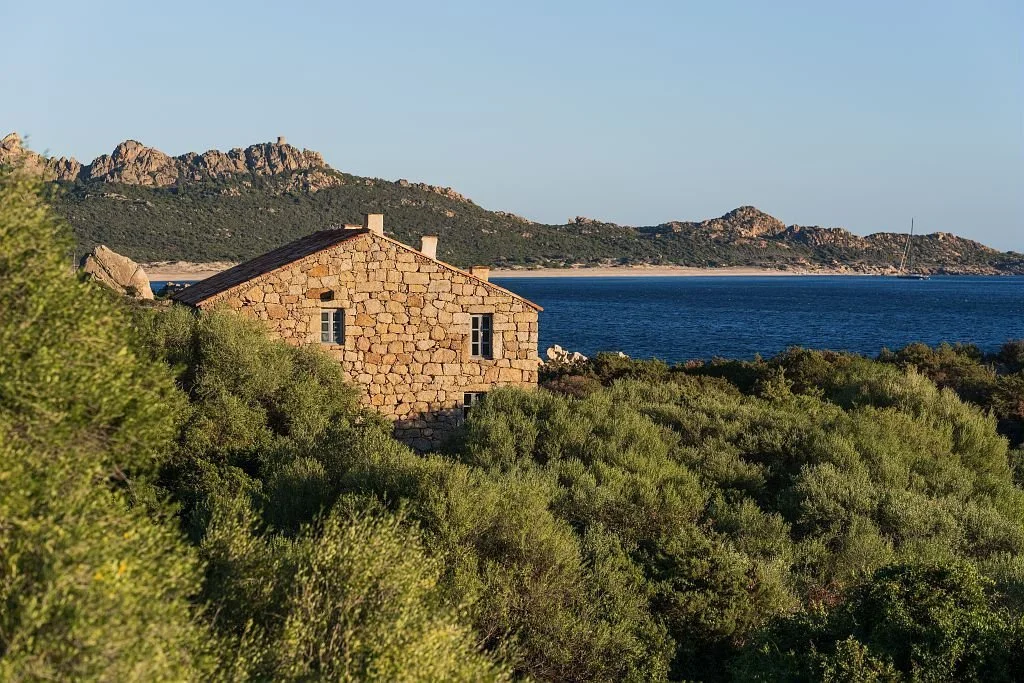
Domaine de Murtoli
Murtoli is a private estate of roughly 6,000 acres on the southwest coast near Sartène, part working farm and part hotel, with accommodation scattered across restored stone shepherd's huts and villas rather than gathered into a building. It's about 25 minutes from Figari airport and 90 minutes from Ajaccio, and the estate is large enough that guests are given a map.
The model is unusual and worth understanding before you book. You're renting a house, often with a private pool, with a chef available and restaurants across the estate rather than one dining room. There's a golf course, private beaches, and a spa built into a cave. It suits groups and families who want space and privacy far more than it suits a couple looking for hotel service.
Book it for: the most distinctive property in the Mediterranean, with a group or a family. Skip it if: you want a concierge desk, a lobby and a set dinner time.
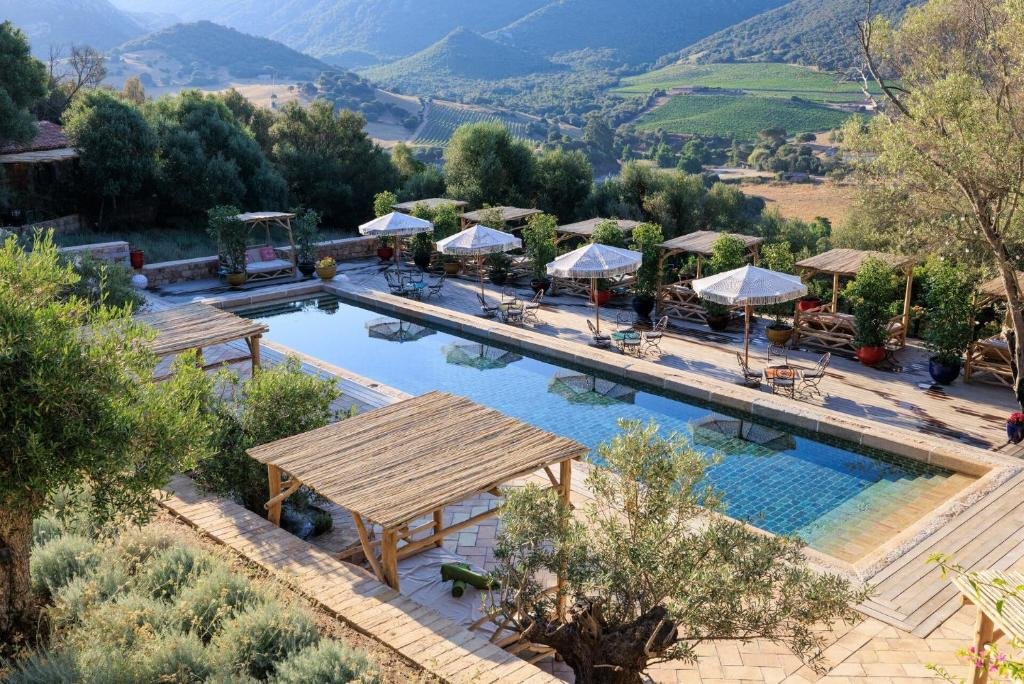
A Mandria di Murtoli
The newest part of the Murtoli family, and the answer for anyone who wants the estate's atmosphere in a conventional hotel. It sits in the Ortolo valley near Sartène and reads like a small stone hamlet: five stone houses, three with private pools, plus a main building holding five rooms, for ten rooms and suites in total. Rooms and suites occupy restored shepherd's huts and barns, and the whole property can be booked in part or in full.
The restaurant seats about thirty, cooks over wood, and sources from the estate farm and local producers. Walking trails link the property down to Erbaju beach, so you get coastal access without being on the coast. It's listed in the Michelin Guide.
This is the hotel to book if Murtoli appeals but the scale of the main estate doesn't.
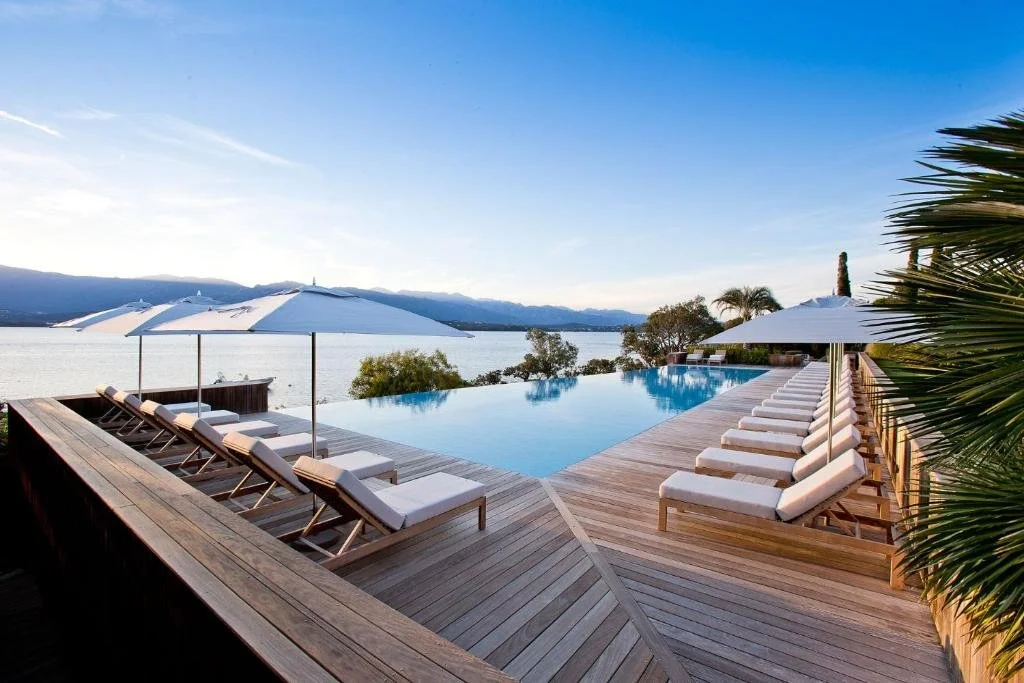
Casadelmar
The design and dining pick, and the closest thing Corsica has to a landmark hotel. Jean-François Bodin's architecture is rigorously modern, with weathered cedar that settles into the hillside rather than announcing itself, and the interiors run to warm tones, bold colour and classic designer furniture. There are 34 rooms and suites plus a private villa, all with terraces over the Gulf of Porto-Vecchio, sitting in roughly three hectares of gardens with a short walk down to a small private beach.
The restaurant is the reason people book. Casadelmar holds two Michelin stars and is the only two-star table on the island. There's also a 25-metre infinity pool, an ESPA spa and a fitness room with the same view.
Worth knowing that it's seasonal, open roughly late April through early October, and that reviews of the two-star restaurant are more divided than the stars suggest. Several guests find the room rate and the dining bill hard to reconcile with the service. Go for the architecture and the view, and treat dinner as optional rather than obligatory.
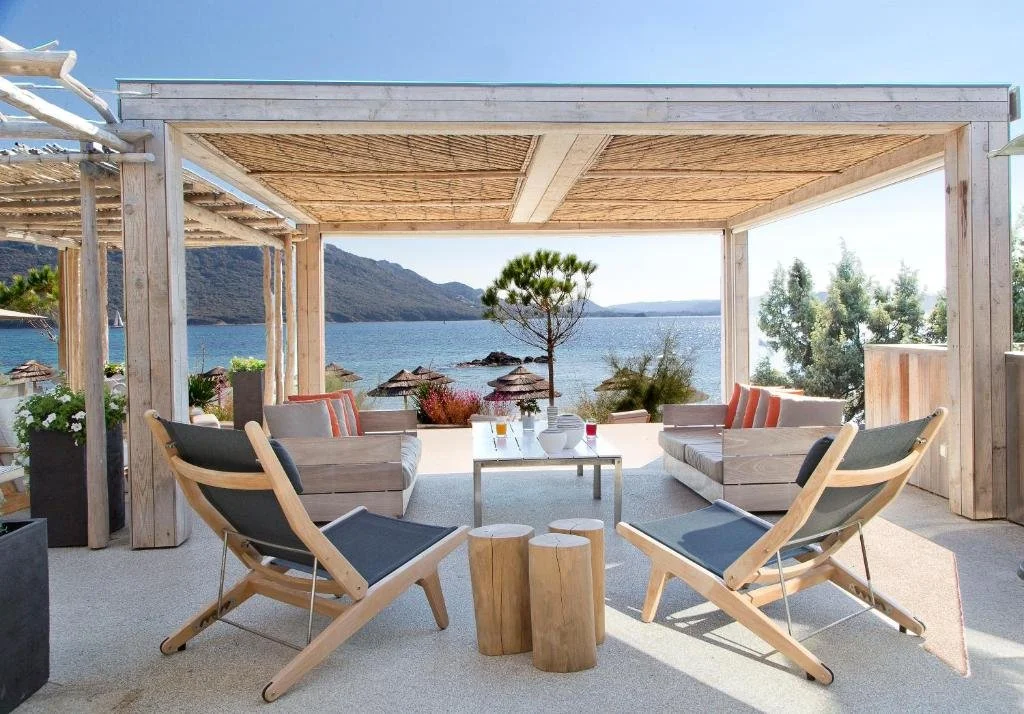
La Plage Casadelmar
The beachfront sibling, and the better choice for most people who want to swim. Same ownership and the same design sensibility, but on the sand rather than up the hill, which changes the shape of the day considerably. If your trip is about the water and long lunches rather than the two-star tasting menu, book this one and go up to Casadelmar for dinner.
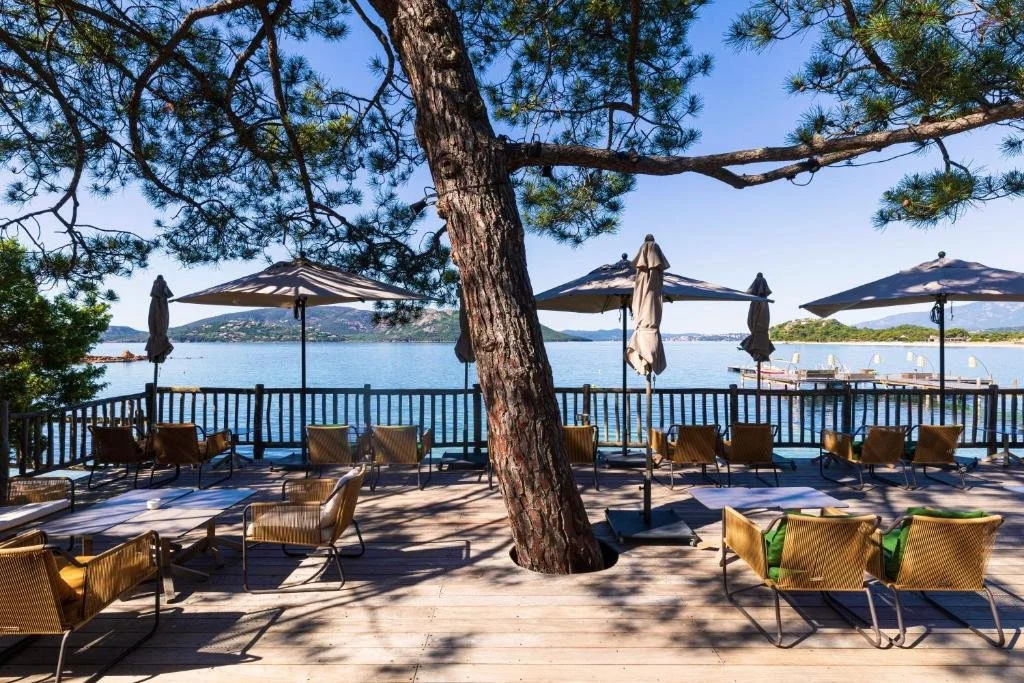
Grand Hôtel de Cala Rossa
The best private beach on the island, and the most family-friendly of the serious hotels. It's a gated estate on white sand in a sheltered cove outside Porto-Vecchio, surrounded by parasol pines, with 32 rooms and suites including a treehouse. The decor runs to whites and sea greens, elegant but far less formal than a Riviera grand hotel. It holds one Michelin Key.
The facilities have grown over the years: a Michelin-starred dining room, a beachfront bar, a heated indoor pool, and a spa offering treatments in a teak treehouse. The comparison people make is Saint-Tropez without the crowds or the photographers, which is roughly right.
It's about 40 minutes from Figari airport, and it's seasonal, closed from early January until early April.
Book it for: a beach-first week where the hotel is the whole plan. Skip it if: you want contemporary design, in which case Casadelmar is up the road.
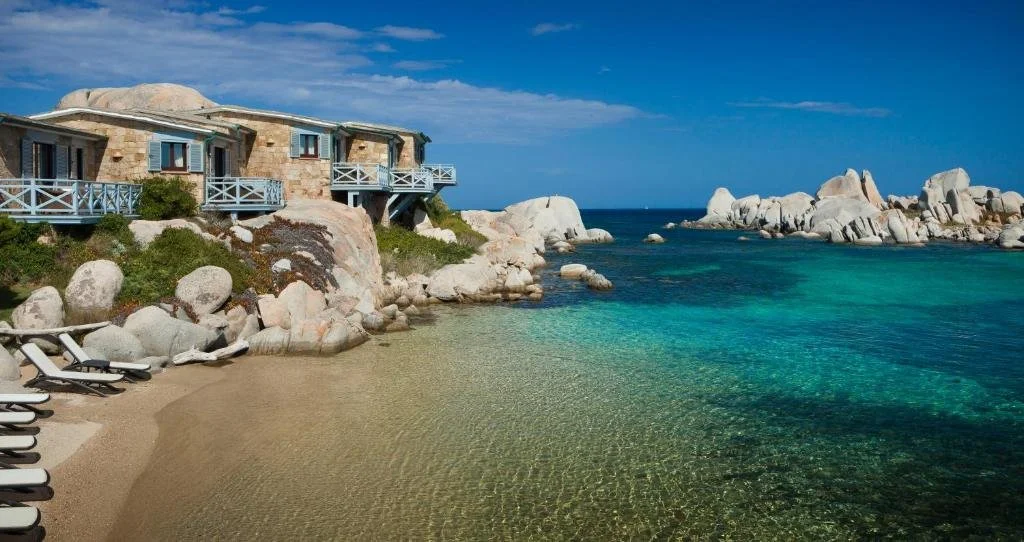
Hôtel and Spa des Pêcheurs, Île de Cavallo
The private island option. Cavallo is a small, privately owned island in the Lavezzi archipelago between Corsica and Sardinia, reached by hotel launch from Bonifacio. The architecture is deliberately low-key, rustic stone and pastel shutters, and suites have terraces suspended over the water and sleep up to four. There's an outdoor pool and sun terrace beside the marina and an indoor pool in the spa.
The appeal is obvious and so is the constraint. You are on a small island with one hotel, which is wonderful for three or four nights and limiting for seven. Most people pair it with a night either side in Bonifacio.
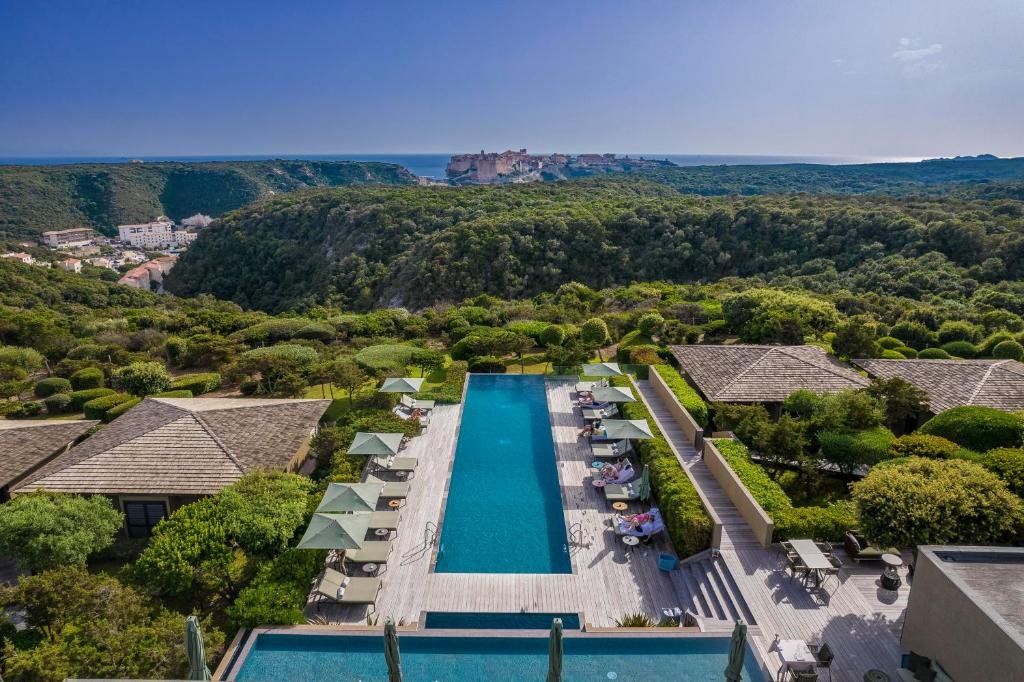
Version Maquis Citadelle
The Bonifacio pick, and the best-value property in the south. It sits in the maquis above the town rather than in it, which means quiet and views instead of the crush of the marina, and it's a short drive down to the citadel.
Bonifacio itself is the most dramatic town in Corsica, a limestone clifftop old town above a narrow harbour, and it's also the busiest in August. Staying just outside is the right call.
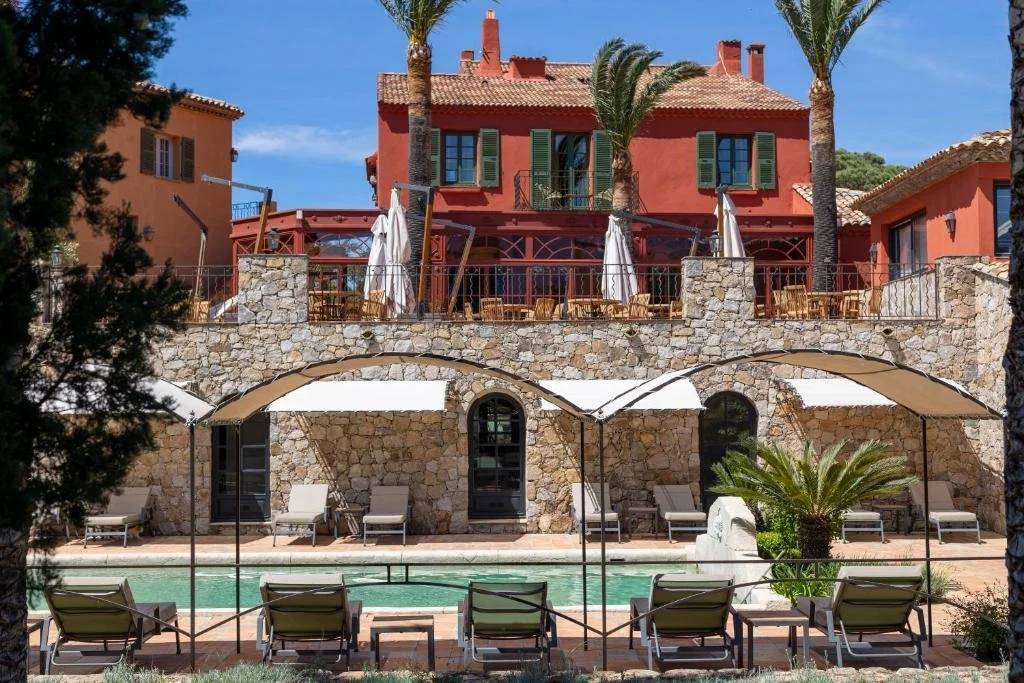
La Signoria
The northern answer, and the one we'd book for a first trip to the Balagne. It's a five-star Relais & Châteaux property set among citrus groves a few minutes inland from Calvi beach, with a spa and a restaurant that both carry real reputations. The appeal is the setting: away from the noise of Calvi's marina, in gardens, with the citadel visible across the bay.
The north of Corsica is the underrated half of the island. Calvi and the Balagne villages are greener, less expensive and less crowded than Porto-Vecchio, and the beaches are excellent without being the postcard white of Palombaggia.
Check rates and availability—>
Also on the shortlist
A handful of others worth knowing, in brief. Misincu sits in Cap Corse at Cagnano, on the wild northern finger of the island, and is the pick for anyone who wants the emptiest coast Corsica has. Le Maquis at Porticcio is the long-standing choice near Ajaccio, useful if you're flying into the capital. Hôtel Marinca is a clifftop property above the bay of Propriano at Olmeto, on the stretch of coast between the two halves of the island. Capo Rosso at Piana looks out over the Gulf of Porto, which is one of the great views in the Mediterranean and a reward after the very narrow roads that get you there. Les Bergeries de Palombaggia puts you above the most photographed beach in Corsica.
How to choose
Start with the coast, not the hotel.
The southeast, around Porto-Vecchio, is where you go for beaches and polish. Palombaggia and Santa Giulia are the famous ones. Casadelmar for design and dining, Cala Rossa for a private beach and children, La Plage Casadelmar if you want the sand without the hillside.
The southwest, around Sartène, is for people who want wilderness with a chef in it. Murtoli if you're a group, A Mandria if you're two.
Bonifacio and the islands are for the drama. Version Maquis above the town, or Cavallo if the idea of a private island is the whole point.
The north, around Calvi and Cap Corse, is for a quieter and cheaper trip in prettier countryside. La Signoria first, Misincu if you want to go further out.
And if you're travelling with children, Cala Rossa is the straightforward answer, with Murtoli the better one if you've got a group and want a house. Our family travel guides go into how we weigh this generally.
Best time to visit Corsica, and when to book
June and September are the balanced months. You get warm sea, open restaurants and hotels, and prices and crowds well below peak.
May is the beauty month. The maquis is in flower, the mountains still hold snow, and the island is at its greenest, though the sea is still cool for swimming and some properties haven't opened yet.
October is the quiet reward. The sea stays warm enough to swim into mid-October, the beaches empty out, and the driving and hiking are at their best. Flight prices also bottom out around September and October.
July and August are the expensive, crowded months, and August is the peak of both. Accommodation, transport, parking and food all run at a premium, roads and beaches fill, and the best properties are gone by spring. If you're going then, book by February.
The seasonality is the thing most people miss. Many Corsican hotels and restaurants close from around November until Easter, and that includes several on this list: Casadelmar runs roughly late April to early October, and Cala Rossa closes from early January to early April. Winter is the cheapest time to come, with rates dropping by as much as half, but the accommodation base shrinks hard and Bastia, Ajaccio and Corte are where you'd find something open.
One practical note that catches people out: if you're bringing a car by ferry from Marseille, Nice, Toulon or Italy, summer crossings book up fast, particularly around weekends and French school holidays. Book the boat before the hotel.
Getting there
Four airports. Figari (FSC) in the far south is the one for Porto-Vecchio, Bonifacio and Murtoli. Ajaccio (AJA) is the most central and the most useful if you're unsure. Bastia (BIA) serves the north and Cap Corse. Calvi (CLY) is the smallest and serves the Balagne.
Ferries run from Marseille, Nice and Toulon on the French side and from Livorno, Savona and Genoa on the Italian, and they're worth it if you want your own car for two weeks. For a week, fly and hire.
You need a car almost everywhere on this island. The exception is Cavallo, where you can't have one.
FAQ
Where should I stay in Corsica for the first time? The southeast around Porto-Vecchio, flying into Figari. It has the best beaches, the strongest hotels and the shortest transfers. Save the north and Cap Corse for a second trip.
What is the best hotel in Corsica? Casadelmar for design and dining, with the only two-Michelin-starred restaurant on the island. Grand Hôtel de Cala Rossa for a private beach. Domaine de Murtoli if you want the most unusual stay in the Mediterranean and have a group to fill a house.
How much do hotels in Corsica cost per night? The good properties generally start in the mid hundreds per night in shoulder season and rise steeply through July and August. Winter rates can fall by as much as half, but most of the best hotels are closed then.
When is the best time to visit Corsica? June and September for the best balance of weather, prices and crowds. May for the landscape and October for empty beaches with warm water. August is the most expensive and most crowded month.
Are Corsican hotels open year-round? Many are not. Seasonal closures typically run from November to Easter, and several of the island's best hotels open only from spring to early autumn. Always check season dates before booking flights.
Do I need a car in Corsica? Almost certainly yes. Distances are longer than they look, mountain roads are slow, and the beaches and villages worth seeing aren't reachable otherwise.
Is Corsica better than Sardinia? Different rather than better. Corsica is wilder, more mountainous and more French in its hotel culture. Sardinia has more resort infrastructure and a longer season. Corsica suits people who want landscape and quiet over polish.
Which airport should I fly into for Corsica? Figari for the south, Bastia for the north, Calvi for the Balagne, and Ajaccio if you want the most central and best-connected option.