
Best Hotels in Barcelona (2026): A Luxury Guide to Where to Stay
Choosing where to stay in Barcelona is more consequential than in most European cities, because the city is genuinely large and its neighborhoods feel completely different from one another. The Eixample — Barcelona's nineteenth-century grid district, full of Modernista architecture and the best restaurants in the city — is a different trip from the Gothic Quarter's medieval lanes, which is a different trip again from the beachfront energy of Barceloneta and the Vila Olímpica. Get the neighborhood right and the hotel decision becomes much easier. Get the neighborhood wrong and you'll spend your stay in taxis.
This guide covers the best luxury hotels in Barcelona organized by neighborhood, with a clear explanation of who each property is best for and what trade-offs come with each. We've been to Barcelona multiple times and covered the city's food and family scene in dedicated guides — for where to eat, see our best restaurants in Barcelona; for families, our Barcelona with kids guide covers the practical details. This guide is focused entirely on hotels and where to stay.
Quick Reference: Best Hotels in Barcelona
Hotel Neighborhood Best For Rates From
Almanac Barcelona Eixample Boutique luxury ~$350/night
Cotton House Hotel Eixample Historic building ~$400/night
Hotel Arts Barcelona Barceloneta Beach access ~$450/night
W Barcelona Barceloneta Design landmark ~$400/night
Hotel 1898 Las Ramblas Central location ~$300/night
El Palace Barcelona Passeig de Gràcia Classic grand hotel ~$500/night
Mandarin Oriental Barcelona Passeig de Gràcia Ultra-luxury ~$700/night
Grand Hotel Central El Born Rooftop infinity pool ~$400/night
Understanding Barcelona's Neighborhoods Before You Book
The single most useful thing we can tell you before you choose a hotel is this: decide what kind of trip you want, and then let that determine the neighborhood.
The Eixample is the best all-around base for most luxury travelers. It's Barcelona's grandest district — the nineteenth-century grid laid out by Ildefons Cerdà, where Gaudí's Sagrada Família, Casa Batlló, and Casa Milà sit alongside the best restaurants in the city and a walkable high street on Passeig de Gràcia. Hotels here put you within walking distance of essentially everything that makes Barcelona worth visiting. The trade-off is that it's not a beach neighborhood — the water is a 20-minute walk or a short taxi ride south.
Barceloneta and the beachfront suit travelers for whom the beach is genuinely the point. The Vila Olímpica hotels are larger, more resort-like, and better positioned for spending mornings in the water and afternoons exploring the city. The trade-off is distance from the Gothic Quarter and Eixample — not far in absolute terms, but far enough to change the rhythm of your days.
El Born and the Gothic Quarter are the most atmospheric neighborhoods in the city — medieval lanes, the Picasso Museum, the best tapas bars — and suit travelers who want to feel immersed in Barcelona's older character rather than its architectural ambition. Hotels here are generally smaller and more boutique, which is a feature rather than a bug for the right traveler.
Gràcia, just above the Eixample, is where Barcelona gets residential. It's quieter, younger, and less touristed — the right choice for travelers who've been to Barcelona before and want to experience a more local version of the city.
The Best Hotels in the Eixample and Passeig de Gràcia
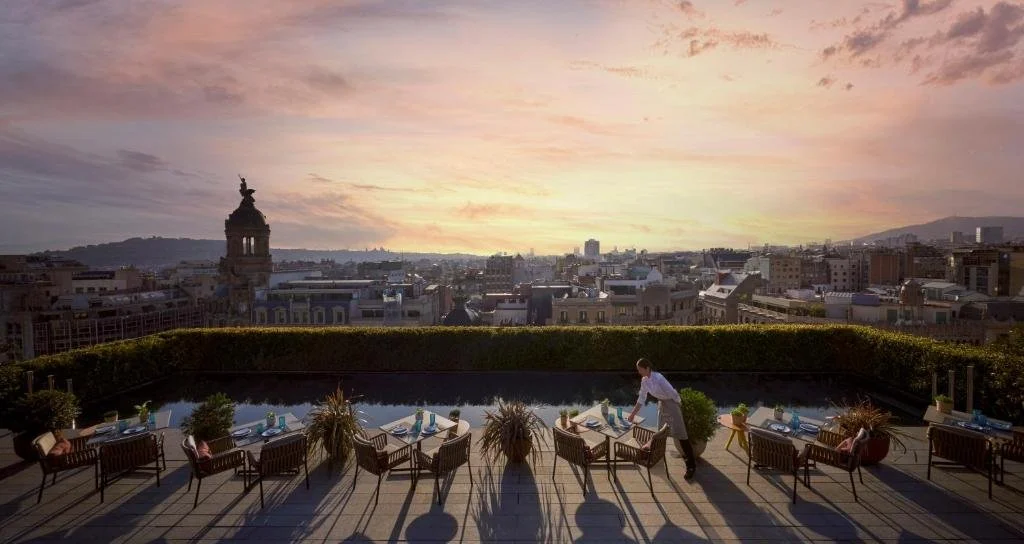
Mandarin Oriental Barcelona — The Pinnacle of Luxury on Passeig de Gràcia
Check Rates at Mandarin Oriental Barcelona →
The Mandarin Oriental occupies a meticulously restored 1950s bank building on Passeig de Gràcia — the most architecturally significant street in Barcelona, where Gaudí's Casa Batlló and Domènech i Montaner's Casa Lleó Morera stand within walking distance. The conversion is extraordinary: the original banking hall now functions as the lobby, with high ceilings, polished stone floors, and the kind of spatial grandeur that most hotel lobbies try to manufacture from scratch. The 120 rooms and suites are among the most beautifully appointed in the city, with clean contemporary design that lets the architecture breathe.
The two-Michelin-starred Moments restaurant, run by chef Carme Ruscalleda and her son Raül Balam, is one of the finest dining rooms in Spain — a proper reservation that warrants advance booking regardless of whether you're staying here. The rooftop Terrat pool and bar are some of the best in the city. And the spa, built into the lower levels of the old bank vault, is quietly extraordinary. For travelers who want Barcelona's best hotel without qualification, this is it.
Best for: Couples on special occasions, design-focused travelers, guests for whom the Michelin dining and spa experience are priorities. Rates from approximately $700/night.
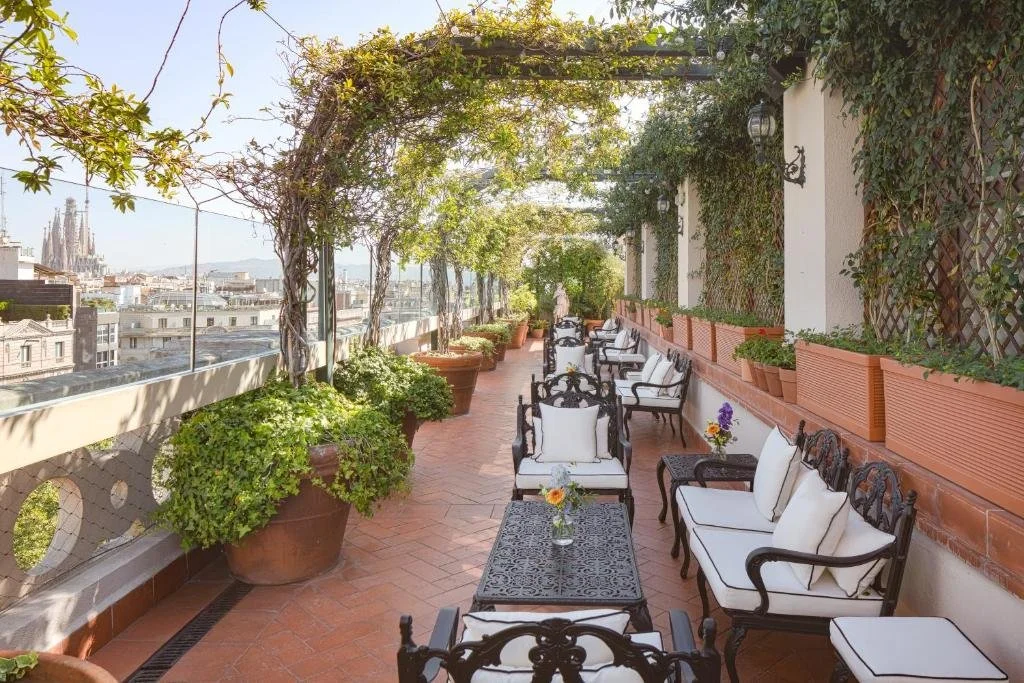
El Palace Barcelona — Grand Hotel Tradition Since 1919
Check Rates at El Palace Barcelona →
El Palace — originally the Hotel Ritz when it opened in 1919, making it Barcelona's oldest luxury hotel — sits on Gran Via de les Corts Catalanes in the heart of the Eixample with the kind of accumulated character that only comes from more than a century of serious hospitality. The Belle Époque interiors are beautifully maintained: marble floors, painted ceilings, crystal chandeliers, and a sense of ceremonial occasion in the public spaces that most contemporary hotels can't replicate. The 125 rooms are large and traditionally elegant, and the rooftop pool added in a later renovation gives the property something the grandest historic hotels often lack: genuine outdoor summer infrastructure.
For travelers who want history and classic grand hotel service in Barcelona — the version of luxury that doesn't require exposed concrete or a DJ in the lobby — El Palace is the most complete answer.
Best for: Travelers who want classical grand hotel atmosphere, couples, special occasions. Rates from approximately $500/night.
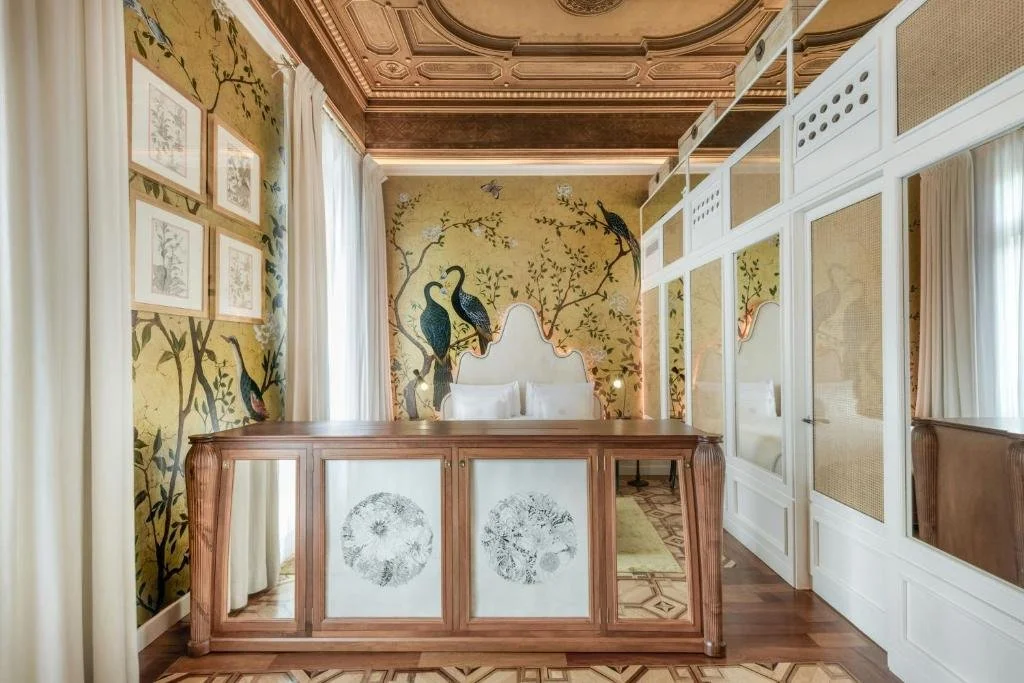
Cotton House Hotel — The Most Beautiful Interior in Barcelona
Check Rates at Cotton House Hotel →
Cotton House occupies a nineteenth-century palace on Gran Via that was originally the headquarters of the Cotton Manufacturers' Guild — and the interior restoration makes the most of that history in a way that's genuinely astonishing. The original library has been preserved as a bar and lounge, with floor-to-ceiling bookshelves, deep leather armchairs, and the kind of afternoon-light-through-tall-windows atmosphere that makes people linger for hours. The 83 rooms are elegant and quiet, most overlooking the interior courtyard rather than the street.
This is the most atmospheric hotel in the Eixample for travelers who value interior design and historical resonance over resort scale. The bar is legitimately one of the best hotel bars in Barcelona — worth visiting even if you're staying elsewhere. (It appears in our best restaurants in Barcelona guide for good reason.)
Best for: Couples, design and architecture enthusiasts, travelers who want a quieter, more intimate Eixample base. Rates from approximately $400/night.
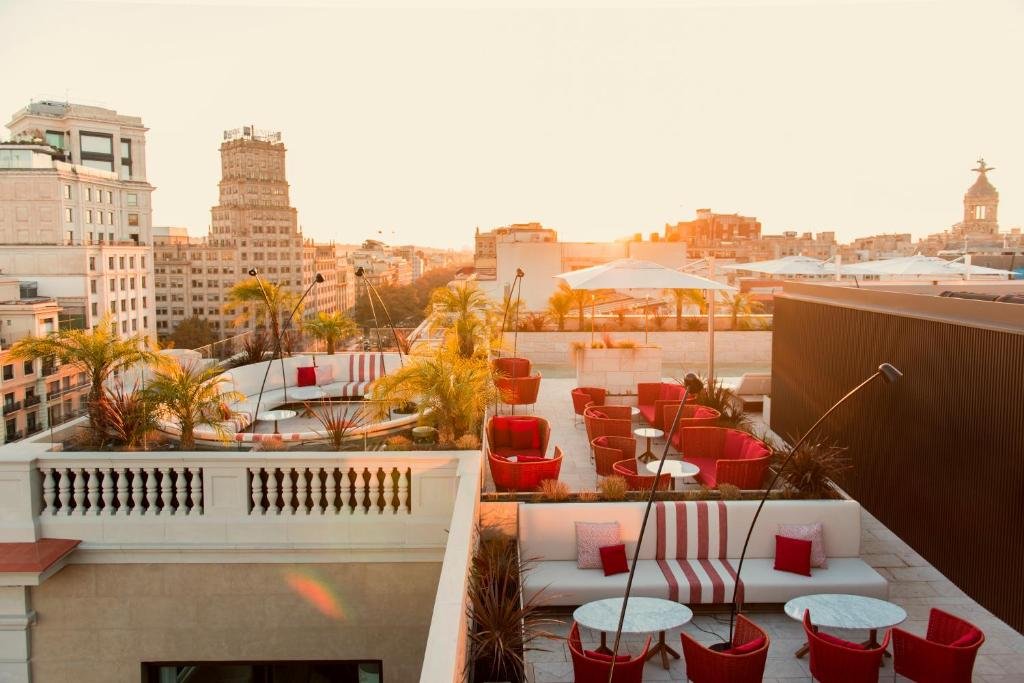
Almanac Barcelona — The Best Rooftop Pool in the Eixample
Check Rates at Almanac Barcelona →
Almanac is the boutique option on Gran Via — a smaller, more contemporary property that threads the needle between design-forward luxury and genuine warmth. The rooms are well-designed and quiet despite the central position, the service is consistently attentive, and the rooftop pool and bar are among the best in a city that takes its rooftops seriously. The Eixample position puts you within walking distance of Gaudí, the Gothic Quarter, El Born, and the city's best restaurants, including most of what appears in our best restaurants in Barcelona guide.
At rates that sit meaningfully below the Mandarin Oriental and El Palace, Almanac is the strongest value proposition in the luxury Eixample tier.
Best for: Couples, solo travelers, design-focused guests who want boutique scale with rooftop infrastructure. Rates from approximately $350/night.
The Best Hotels on the Beachfront
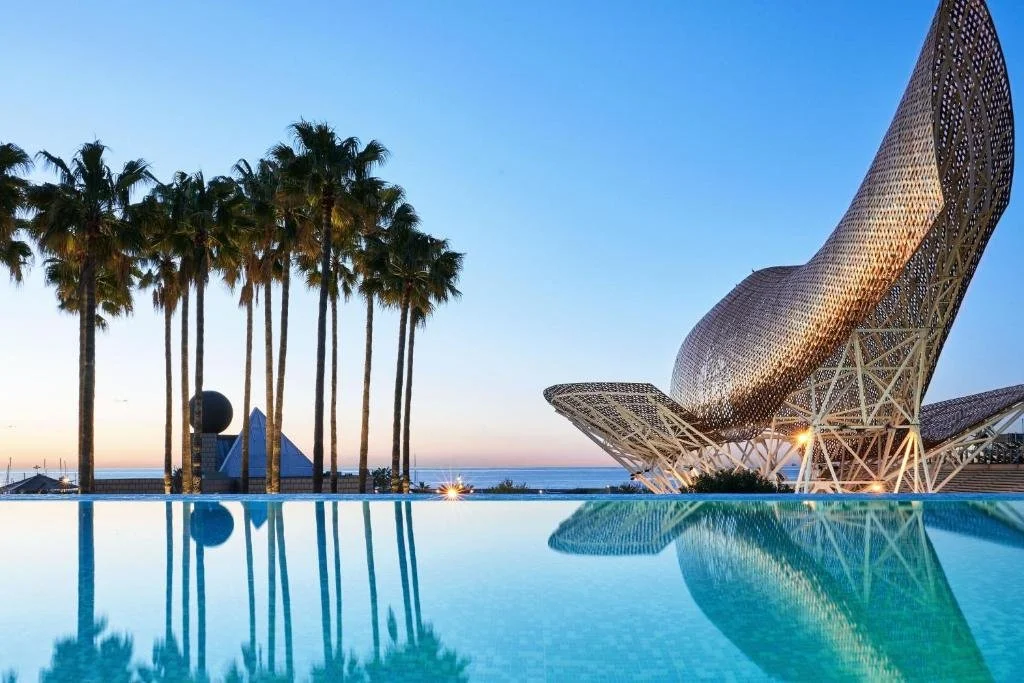
Hotel Arts Barcelona — The Complete Beachfront Luxury Experience
Check Rates at Hotel Arts Barcelona →
Hotel Arts has anchored the Barceloneta beachfront since the 1992 Olympics and has never been seriously challenged for its position as the finest beachfront hotel in the city. The 44-story Ritz-Carlton tower is impossible to miss from the beach, and the rooms on the upper floors — looking out over the Mediterranean in one direction and back over the city toward Montjuïc and the Eixample in the other — offer the most dramatic views of any hotel in Barcelona. The property operates at genuine resort scale: a large outdoor pool deck, four restaurants (including the two-Michelin-starred Enoteca Paco Pérez), a spa, and direct access to the Barceloneta beach.
The trade-off is distance from the Eixample's architecture and the Gothic Quarter's tapas bars — a 15-minute walk or a short taxi, which feels more significant at the end of a long day than it sounds on paper. For travelers for whom the beach is the primary reason to come to Barcelona, this distance is irrelevant. For travelers who want maximum city access, an Eixample base makes more sense.
Best for: Beach-focused travelers, couples, families who want resort amenities alongside city access, anyone for whom the Michelin dining experience is a priority. Rates from approximately $450/night.
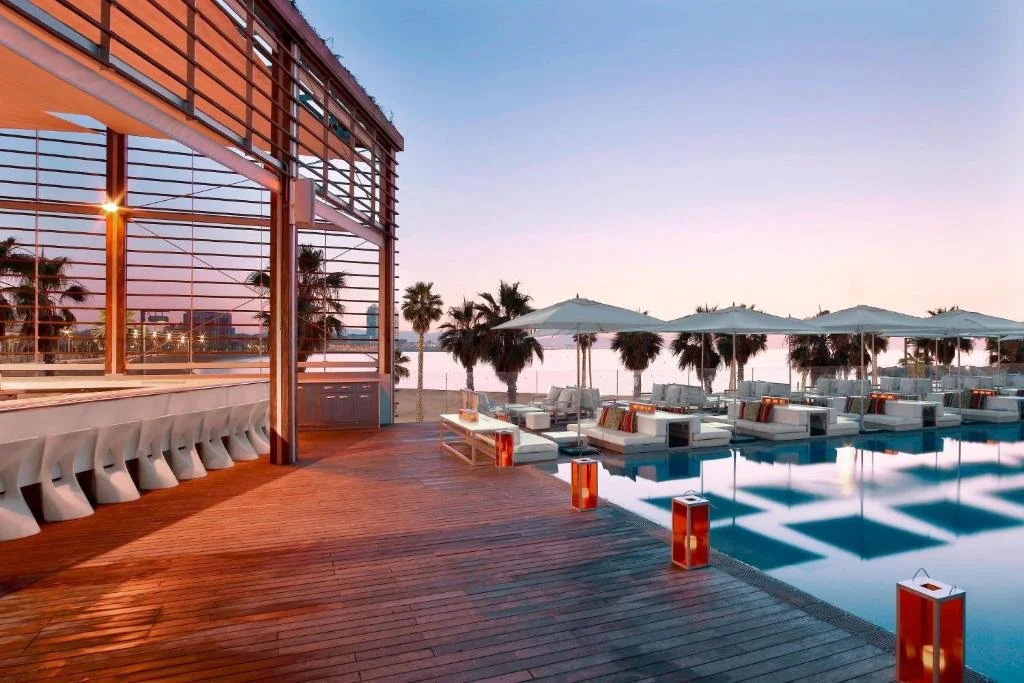
W Barcelona — The Design Landmark at the Harbor Mouth
The W Barcelona — designed by Ricardo Bofill as a sail-shaped tower at the very tip of the Barceloneta peninsula, where the harbor meets the open sea — is the most architecturally distinctive hotel in the city. The position gives it views that no other Barcelona hotel can match: the Mediterranean directly ahead, the harbor and city skyline behind, and the sweep of the beach extending north along the coast. The rooms are large and dramatic, the pool deck is one of the best in the city, and the Eclipse Bar at the top of the tower is the right place for a sunset drink in Barcelona.
The W skews younger and more social than Hotel Arts, with a nightlife-adjacent energy that suits some travelers and deters others. For guests who want design, beach access, and views as the primary criteria — and don't require the Michelin dining infrastructure of Hotel Arts — it's a genuinely excellent hotel at rates that tend to be slightly lower.
Best for: Couples, groups, travelers who want design and views with a more social atmosphere. Rates from approximately $400/night.
The Best Hotels in El Born and the Gothic Quarter
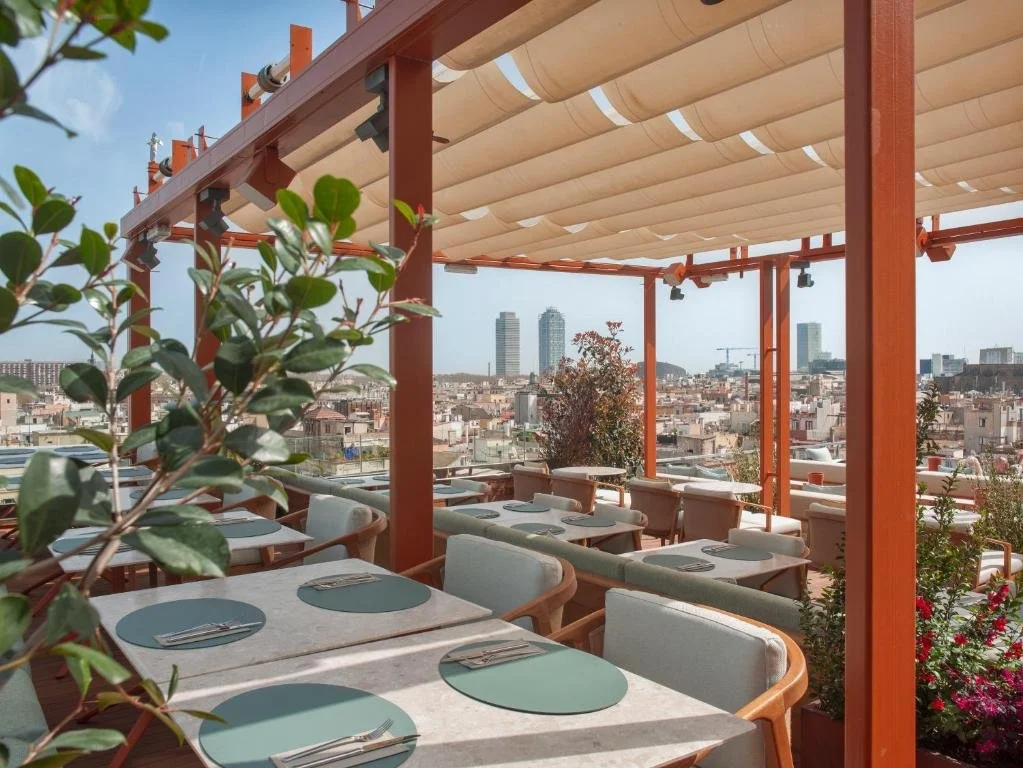
Grand Hotel Central — Rooftop Infinity Pool Over the Gothic Quarter
Check Rates at Grand Hotel Central →
Grand Hotel Central sits on Via Laietana — the broad avenue that separates El Born from the Gothic Quarter — in a beautifully restored early twentieth-century building, and its headline feature is the rooftop infinity pool that appears to hang directly over the rooftops of the medieval city. It's one of the most photographed hotel pools in Spain, and it genuinely lives up to the images. The 147 rooms are elegantly designed and quiet for the central position, the bar is well-run, and the neighborhood — steps from the Picasso Museum, El Born's tapas bars, and the Santa Caterina market — is the most characterful in Barcelona.
For travelers who want to be immersed in the older, more atmospheric Barcelona rather than the Eixample's architectural ambition, Grand Hotel Central is the strongest luxury base.
Best for: Architecture and design travelers, couples, anyone who wants the Gothic Quarter and El Born as their primary neighborhood. Rates from approximately $400/night.
The Best Hotel in Gràcia
Casa Fuster — A Modernista Masterpiece Above the Passeig de Gràcia
Casa Fuster sits at the top of Passeig de Gràcia where it meets Gràcia, in a building that has no serious rival for the title of the most beautiful hotel exterior in Barcelona. Designed in 1908 by Lluís Domènech i Montaner — the architect of the Palau de la Música Catalana and a direct contemporary of Gaudí — the white marble and ornate ironwork facade is a landmark in a city full of them. The interior restoration is careful and respectful: the original architectural character is preserved without museifying it, and the 96 rooms feel genuinely luxurious without the stuffiness that sometimes accompanies historic building conversions.
The terrace café on the ground floor, which spills onto the Passeig de Gràcia pavement, is one of the most pleasant places in Barcelona for a morning coffee. The rooftop bar has views across the Eixample grid toward the sea. And the Gràcia neighborhood immediately above — Barcelona's most village-like district, full of independent restaurants and local squares — is some of the best walking in the city.
This is the hotel we'd book for a first trip to Barcelona that prioritizes architecture and design above beach access.
Best for: Architecture enthusiasts, couples, travelers doing Barcelona for the first time who want the Modernisme experience built into where they sleep. Rates from approximately $500/night.
The Best Hotel Near Las Ramblas
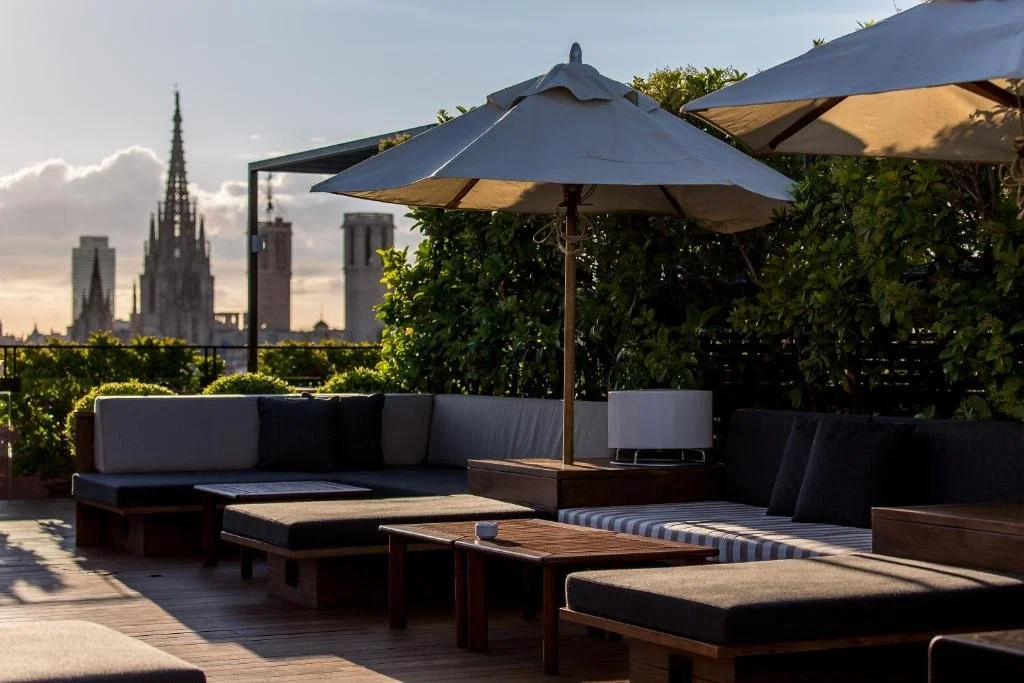
Hotel 1898 — Colonial Grandeur Without the Ramblas Chaos
Hotel 1898 occupies a beautifully restored nineteenth-century tobacco factory on La Rambla itself — which sounds like the wrong place to stay until you realize the hotel turns its back entirely on the Ramblas circus and faces inward to its courtyard and rooftop. The position gives you unbeatable access to the Gothic Quarter, El Born, Barceloneta, and the Boqueria market (which appears in our best restaurants in Barcelona guide at Pintxo) without the visual and acoustic noise of the avenue itself penetrating the rooms.
The 169 rooms are well-designed and quiet, the rooftop pool has a clear view of the city, and the colonial history of the building — it processed tobacco from Cuba and the Philippines in the 1880s — gives the property a story that most Barcelona hotels lack entirely. At rates that come in below most of the Eixample luxury tier, it offers strong value for the central position.
Best for: First-time Barcelona visitors who want maximum access to the city's historic core, travelers who want to be near the Boqueria and Gothic Quarter. Rates from approximately $300/night.
Which Neighborhood Is Right for You?
The question we get most often from Barcelona first-timers is whether to stay in the Eixample or by the beach, and the honest answer is: it depends entirely on what you're coming for.
If you're coming for Gaudí, the food scene, Modernista architecture, and the city's cultural life — stay in the Eixample. Casa Fuster, the Mandarin Oriental, Cotton House, and Almanac are all within walking distance of the Sagrada Família, Casa Batlló, Casa Milà, and the Passeig de Gràcia concentration of excellent restaurants. The beach is 20 minutes away on foot and you'll probably go once.
If you're coming primarily for the beach, and the city sights are secondary — stay at Hotel Arts or the W. Both are exceptional hotels with enough on-property infrastructure to justify not leaving, and Barcelona's architecture is close enough for a full day trip on any given afternoon.
If you've been to Barcelona before and want something more residential and neighborhood-focused — stay in El Born at Grand Hotel Central, or go all the way up to Gràcia at Casa Fuster. Both offer a version of the city that most tourists don't find.
When to Visit Barcelona
Barcelona is a year-round destination, which is genuinely true in a way it isn't for most Mediterranean cities. The shoulder months of April through June and September through October are the best: warm enough to swim, not yet at the suffocating heat and crowd density of July and August, and with hotel rates that drop meaningfully from peak. Restaurant reservations are easier to secure, the Sagrada Família queues are shorter, and the city feels more like itself.
July and August are busy and hot — temperatures regularly exceed 35°C, and the beaches and most-visited sites operate at maximum capacity. That said, August in particular empties Barcelona of many of its residents (who head to the coast), which gives the residential neighborhoods like Gràcia and Sarrià a genuine local-city-on-holiday atmosphere that some travelers specifically seek out.
December through February is Barcelona's quietest period and — for a city that doesn't shut down in winter the way coastal Mediterranean destinations do — an underrated time to visit. Hotels rates are at their lowest, Gaudí sites are walkable without queuing, and the city's restaurant and cultural life continues at full pitch.
Practical Notes for Barcelona
Getting there: Barcelona El Prat Airport (BCN) is 20 minutes from the city center by Aerobus (direct to Plaça de Catalunya, runs every 5-10 minutes) or taxi (around €35). The AVE high-speed train connects Barcelona to Madrid in 2.5 hours and to Paris in around 6.5 hours — both worth considering over flying for those city pairs.
Getting around: Barcelona is one of Europe's most walkable cities. The Eixample, Gothic Quarter, El Born, and Barceloneta are all connected on foot, and most hotel guests find they barely need public transport for the first few days. The Metro is clean, fast, and runs until 2am on weekdays. Taxis and Cabify are reliable and inexpensive by major European city standards.
Language: Catalan and Spanish are both official languages. Catalan is the dominant language on street signs and in local life; Spanish is universally understood. English is widely spoken in hotels and restaurants. A few words of Catalan — gràcies (thank you), bon dia (good morning) — go a long way with locals and are always appreciated.
Booking: Barcelona hotels book out quickly for peak summer (July and August), Semana Santa (Holy Week, March or April), and the Mobile World Congress in late February. For any of these periods, booking three to four months ahead is the minimum. For shoulder season travel, six to eight weeks is generally sufficient for most properties on this list.
Frequently Asked Questions About Hotels in Barcelona
What is the best hotel in Barcelona? The Mandarin Oriental Barcelona on Passeig de Gràcia is the strongest all-round luxury hotel in the city — two-Michelin-starred dining, an exceptional spa, a beautiful rooftop pool, and a perfectly central Eixample position. For travelers who prioritize architectural character over contemporary luxury, Casa Fuster and Cotton House are the strongest alternatives.
What is the best area to stay in Barcelona for first-time visitors? The Eixample, specifically the stretch of Passeig de Gràcia between the Diagonal and Plaça de Catalunya. You'll be within walking distance of Gaudí's three most important buildings, the city's best restaurants, and the Gothic Quarter — and a 20-minute walk from the beach in the other direction.
Is it worth staying at a beachfront hotel in Barcelona? Yes, if the beach is your primary reason to come. Hotel Arts and the W Barcelona are both excellent hotels in their own right, and the Barceloneta beach is genuinely good. If you're coming for the architecture and food first and the beach second, an Eixample base gives you better daily logistics.
What is the best boutique hotel in Barcelona? Almanac Barcelona in the Eixample and Grand Hotel Central in El Born are the two strongest boutique-scale luxury hotels in the city. Cotton House has boutique character in a slightly grander format.
Is Barcelona good for a luxury city break? Emphatically yes — it's one of the finest city break destinations in Europe. The combination of world-class architecture (Gaudí alone would justify the trip), an extraordinary food scene we covered in depth in our best restaurants in Barcelona guide, beaches within the city limits, and a walkable scale that most comparable European cities can't match makes it exceptionally good value for a long weekend or short week.
Is Barcelona good for families? Yes — see our dedicated Barcelona with kids guide for the full picture. For families specifically, Hotel Arts is the strongest hotel pick: resort-scale amenities, direct beach access, and large rooms that work for multi-person configurations.
How does Barcelona compare to Madrid for a luxury hotel stay? Barcelona for first-time visitors to Spain: the architecture, beaches, and food scene offer a more concentrated introduction to what makes Spain extraordinary. Madrid rewards repeat visitors and travelers who prioritize world-class museums, a more local atmosphere, and a nightlife culture that genuinely runs until dawn. See our best hotels in Spain guide for the full country picture.
How many days do you need in Barcelona? Three nights is the minimum for a proper visit — enough for Gaudí, an evening in El Born, one good beach afternoon, and multiple restaurant meals. Four to five nights allows you to slow down, explore Gràcia and the Montjuïc hill, and eat your way through the tapas bars more thoroughly. A full week works well if you're combining Barcelona with a few days in Mallorca or the Costa Brava.