
Best Hotels in Spain (2026): A Luxury Guide to Where to Stay
Spain is one of the most varied luxury travel destinations in the world, and that variety is the thing that catches first-time visitors off guard. You can spend a week on a mountain-backed Mediterranean island without touching the mainland. You can disappear into an Andalusian palace in Seville and feel entirely removed from the country you just flew into. You can eat the best meal of your life in San Sebastián, then drive two hours to Bilbao and find architecture that belongs in a different century altogether. The country rewards travelers who approach it with a genuine itinerary rather than a resort booking and a beach chair.
This guide covers the best luxury hotels in Spain across every major destination — Mallorca, Barcelona, Seville, Madrid, San Sebastián, the Costa del Sol, and Ibiza — organized by region so you can build the right trip for how you actually travel. Every property here earns its place on the merits: the combination of location, design, service, and the specific experience it delivers that nothing else in its city or region can replicate.
We've been traveling Spain for years and have covered the Mallorca cluster in particular depth. For the full island breakdown, see our Mallorca travel guide and where to stay in Mallorca. For families, the Mallorca with kids guide covers everything in detail.
Quick Reference: Best Hotels in Spain by Destination
Hotel City / Region Best For Rates From
Belmond La Residencia Mallorca Deia Views ~$700/night
Jumeirah Port Sóller Mallorca Spa, families ~$500/night
Four Seasons Resort Mallorca at Formentor Families, nature ~$900/night
Serras Barcelona Barcelona Modern port front ~$500/night
Hotel Arts Barcelona Barcelona Beachfront/design ~$450/night
Almanac Barcelona Barcelona Boutique, central ~$350/night
Hotel Alfonso XIII Seville Grand palace ~$600/night
Mandarin Oriental Ritz Madrid Prado-facing ~$900/night
Palacio de los Duques Madrid Palace grandeur ~$550/night
Six Senses Ibiza Ibiza Design, adults ~$600/night
Nobu Hotel Ibiza Bay Ibiza Beach club ~$450/night
Hotel María Cristina San Sebastián Belle Époque ~$400/night
Marbella Club Hotel Marbella Beach glamour ~$700/night
A Note on How to Read This Guide
Spain is large enough that choosing a destination is a more consequential decision than choosing a hotel. The traveler planning a beach-focused trip to Mallorca is making a fundamentally different choice from the one planning a cultural week between Barcelona and Seville, and both are different from the family that wants the Costa del Sol in July. We've organized this guide by region so you can skip to what's relevant, then drill into the individual properties within it.
The Balearic Islands — Mallorca above all, but also Ibiza — account for the largest share of luxury visitors to Spain. The mainland cities, particularly Barcelona and Seville, are among the finest urban destinations in Europe. And the Costa del Sol, despite its reputation, still has a small collection of hotels that deliver real glamour if you know which ones to book.
The Best Hotels in Mallorca
Mallorca is Spain's finest island for luxury travel. The Serra de Tramuntana mountains running along the northwest coast — a UNESCO World Heritage site — produce dramatic scenery that makes the island feel genuinely wild despite its popularity. The restaurant scene around Deià and Sóller is world-class. And the best hotels here, particularly La Residencia in Deià, rank among the finest in Europe.
For the full destination breakdown — towns, beach clubs, restaurants, and the calas worth driving to — see our Mallorca travel guide and our full list of Best Hotels in Mallorca.
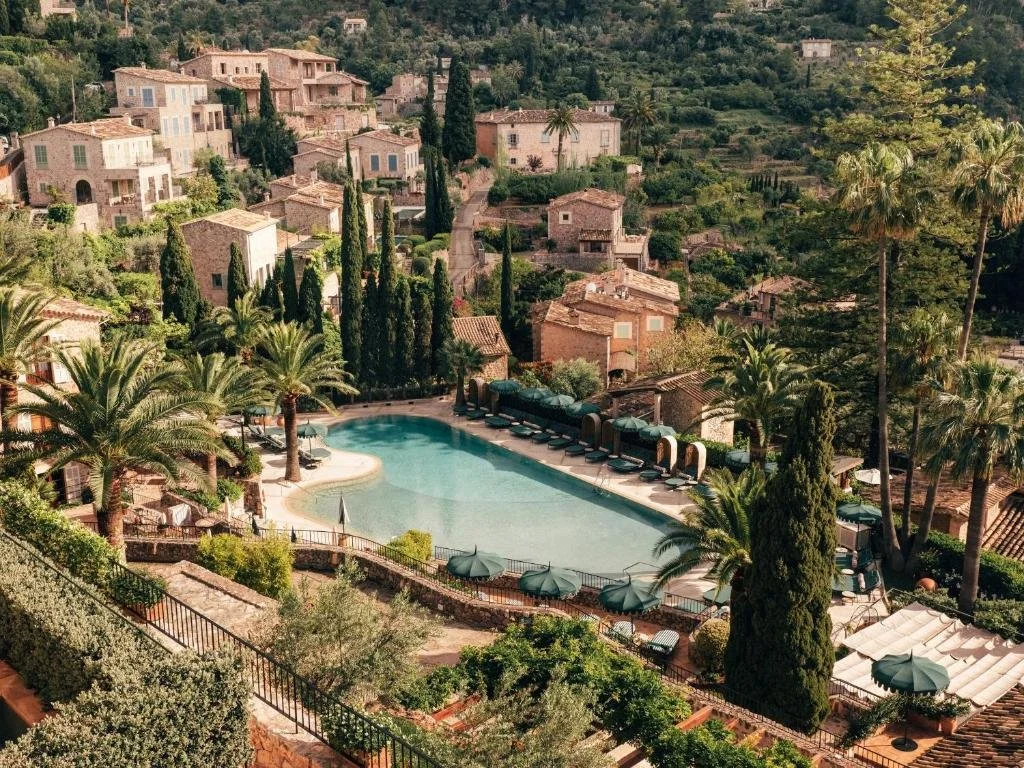
Belmond La Residencia, Deià — The Best Hotel in Spain
There are hotels that are very good at what they do, and then there is La Residencia — a hotel that has shaped what an entire destination means to the people who travel there. Set in two restored sixteenth-century manor houses above the village of Deià, surrounded by olive groves and terraced gardens with views to the sea, it has been attracting artists, writers, and travelers with genuine taste for decades. Richard Branson owned it for years before selling to Belmond, and the transition preserved everything that makes it irreplaceable: the art-hung common rooms, the extraordinary Mediterranean gardens, the sense that you are a guest in someone's exceptional private home rather than a room in a hotel operation.
The 68 rooms and suites are individually decorated, most with terrace or garden access, and the property has two pools — one adults-only, perched above the olive groves with a view that needs no further description. The restaurant El Olivo is one of the best on the island. The spa is excellent. And Deià itself — the most beautiful village in Mallorca, where Robert Graves lived for decades — is a ten-minute walk down the hill.
If you're traveling Spain and can stay at one property, this is the one.
Best for: Couples, design-focused travelers, honeymooners, anyone who wants the definitive Mallorca experience. Rates from approximately $700/night in shoulder season.
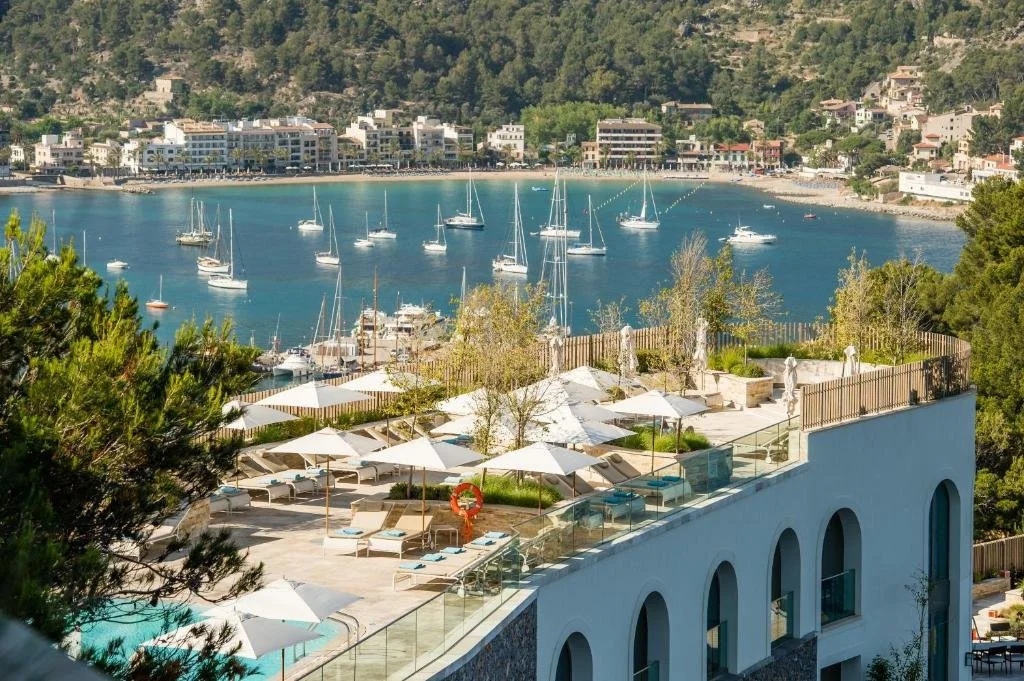
Jumeirah Port Sóller Hotel & Spa — Best for Views and Families
Perched on steep cliffs above the horseshoe bay of Port de Sóller, the Jumeirah delivers something no other hotel on the island can claim: a setting so dramatically positioned above the Mediterranean that it takes a moment upon arrival to confirm the view is real. The infinity pools — there are two — appear to pour directly off the cliff into the sea far below. The spa is the finest on the island. And the ferry-and-tram access from Port de Sóller makes day trips to Palma, Deià, and Sóller straightforward without the driving complications that plague northwest coast navigation in summer.
For families specifically, Jumeirah Port Sóller is the strongest combination of luxury amenities and practical family infrastructure on the island — the beach is a shuttle ride down to the harbor, the pools are extraordinary, and the setting keeps children genuinely occupied in a way that a town-center hotel simply cannot. For the full family breakdown see our Port de Sóller guide.
Best for: Families, couples seeking maximum views and spa access, travelers based in northwest Mallorca. Rates from approximately $500/night in peak season.
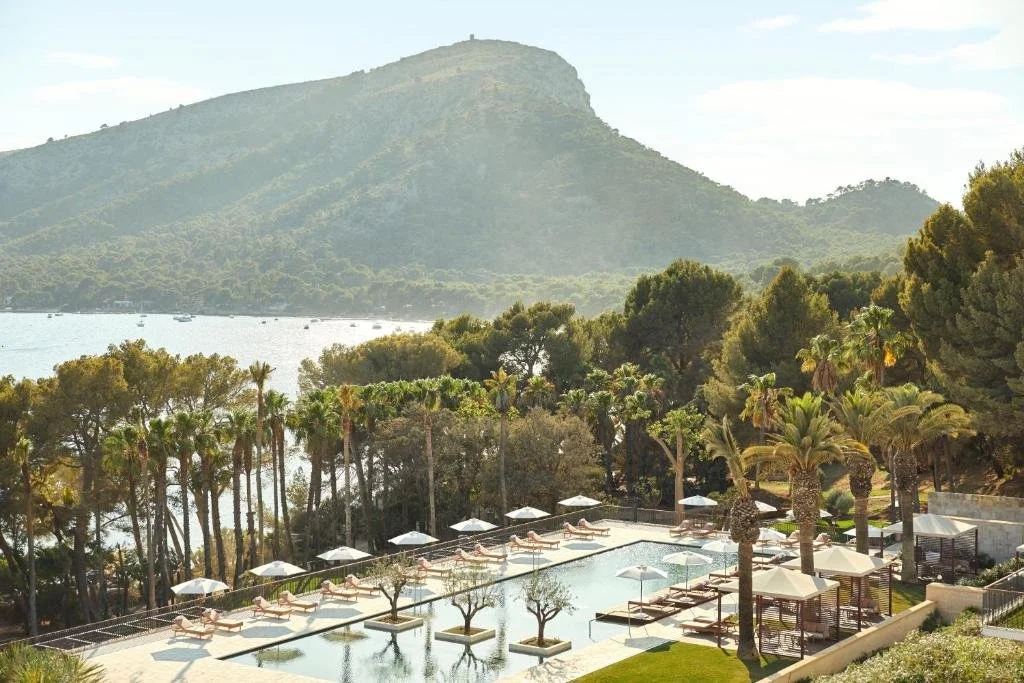
Four Seasons Resort Mallorca at Formentor
Of all the grand openings to reshape Spain's luxury map in recent years, none carries quite the history of Four Seasons Resort Mallorca at Formentor. The property began life in 1929 as Hotel Formentor, the dream of Argentine art patron Adan Diehl, and for decades it drew the likes of Winston Churchill, Grace Kelly, and Audrey Hepburn to the wild northern tip of the island. After a long restoration, Four Seasons reopened it in full in March 2025, and the result is one of the most compelling reasons to point a Mallorca trip north rather than toward the busier southwest. The setting alone justifies the journey: some 40 hectares of pine-forested private estate near the tip of the Cap de Formentor, with its own working vineyard and a golden-sand beach curving along the Bay of Formentor.
The 110 rooms and suites all open onto private terraces, and the better categories add plunge pools angled toward the gardens, the pines, or the sea. The mood is calm and organic rather than ornate, with glass walls that fold back, neutral palettes, and indoor and outdoor living that blur into one another.
There is a spa built around local botanicals, multiple pools including an adults-only option, a tennis court, yoga decks, and easy access to sailing, snorkelling, hiking, and boat excursions out to the island's hidden coves, plus a Kids For All Seasons programme that makes this as much a family option as a honeymoon one. The trade-off is seclusion: this is not the resort for nightlife, for dining beyond the estate, or for quick access to Palma, and it runs seasonally, so it is always worth confirming opening and closing dates before you commit.
Best for: a nature-driven luxury beach resort with full Four Seasons service
Other Strong Mallorca Options
Can Bordoy Grand House & Garden, Palma — A beautifully restored historic mansion in Palma's old town, with a rooftop pool and the quiet intimacy of a boutique property. The right choice for travelers who want city access with design-forward accommodation. Check Rates →
Sant Francesc Hotel Singular, Palma — On one of the most picturesque squares in Palma's old town. Beautifully restored, with a rooftop pool and the kind of independent boutique character that the larger resort properties lack. Check Rates →
Es Moli, Deià — A quieter, more affordable alternative to La Residencia in the same village, with sea views, two pools, and a genuinely peaceful atmosphere. Check Rates →
The Best Hotels in Barcelona
Barcelona is Europe's most complete city for a luxury short break — architecture, food, beaches, nightlife, and museums at the level of any capital, compressed into a city that is genuinely walkable and navigable in a way that Paris and London are not. The hotel landscape reflects its confidence: from Modernista landmarks reimagined as boutique hotels to contemporary design properties that anchor the beachfront.
We've covered Barcelona in depth in dedicated guides. For a full breakdown of where to stay across every neighborhood — Eixample, beachfront, El Born, and Gràcia — see our best hotels in Barcelona. For where to eat, our best restaurants in Barcelona covers everything from classic tapas to Michelin-starred rooms. For families, our Barcelona with kids guide covers the logistics and family-friendly hotels in detail. The three hotel picks below are our top recommendations for a luxury stay.
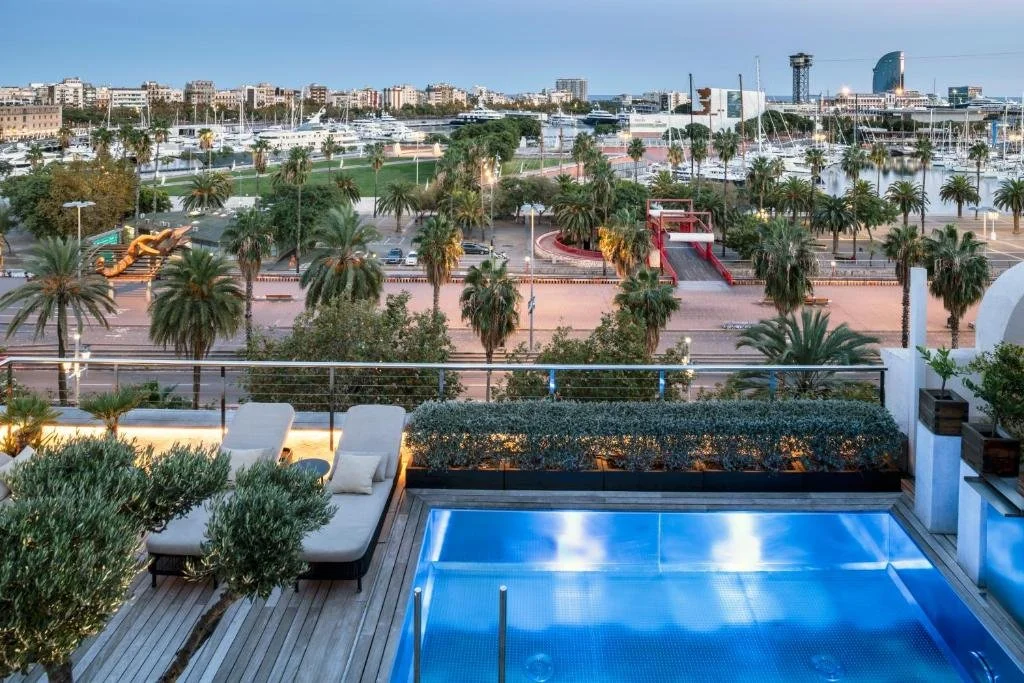
Serras Barcelona
This 28-room boutique sits on the Passeig de Colom, where the Gothic Quarter spills onto the Port Vell marina, in the building that housed Pablo Picasso's first studio in 1896. Crisp contemporary interiors by Eva Martínez and warm, personal service set the tone, while soundproofed rooms open onto balconies over the marina or the medieval rooftops of Ciutat Vella. The showpiece is the rooftop, where a marina-facing pool, the Informal restaurant, and a cocktail bar make one of the best sundowner perches in the city, and the hotel holds a Michelin Key for the quality of the experience. Walkable to the cathedral, El Born, and the Picasso Museum, it is an ideal first-timer's base; for where to eat once you have dropped your bags, see our guide to the best restaurants in Barcelona.
Best for: Couples, travelers who want design and culture near the port. Rates from approximately $500/night.
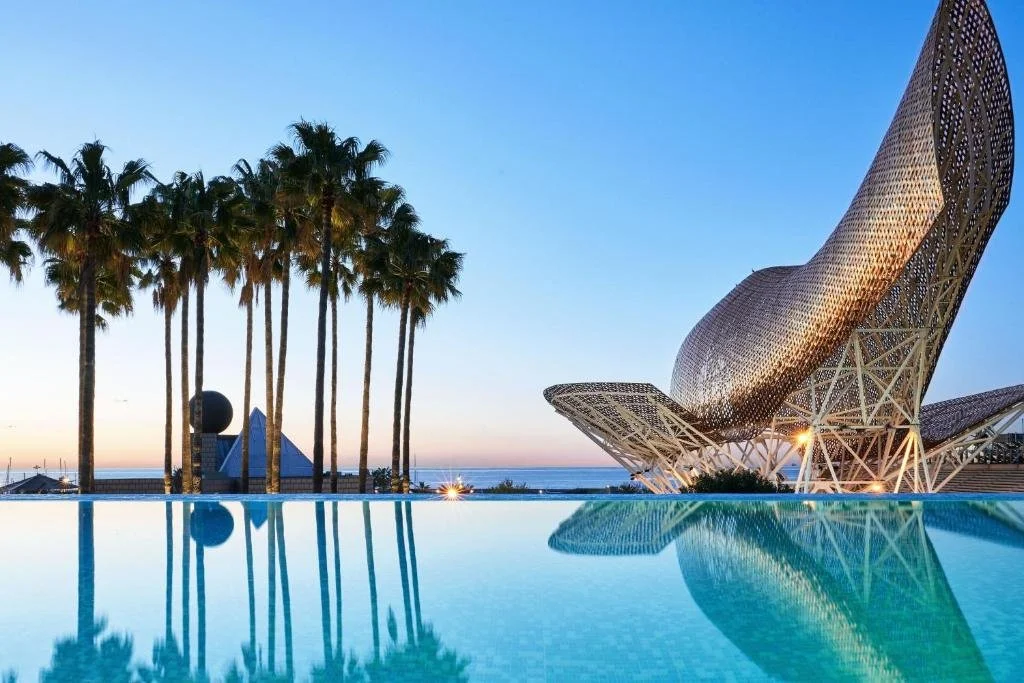
Hotel Arts Barcelona — The Beachfront Benchmark
Hotel Arts is the anchor of the Barceloneta beachfront — a 44-story Ritz-Carlton property built for the 1992 Olympics that has held its position as the premier luxury beachfront hotel in the city ever since. The rooms are large, the views from the upper floors out over the Mediterranean and back toward Montjuïc are extraordinary, and the combination of genuine beach access, three restaurants including the Michelin-starred Enoteca, and a pool setup that feels like a resort despite being fifteen minutes from the Gothic Quarter makes this the most complete luxury hotel in Barcelona. For travelers who want the beach as a genuine part of their stay rather than an afterthought, this is the right call.
Best for: Travelers combining beach and city, couples, anyone who wants the most complete luxury resort experience Barcelona offers. Rates from approximately $450/night.
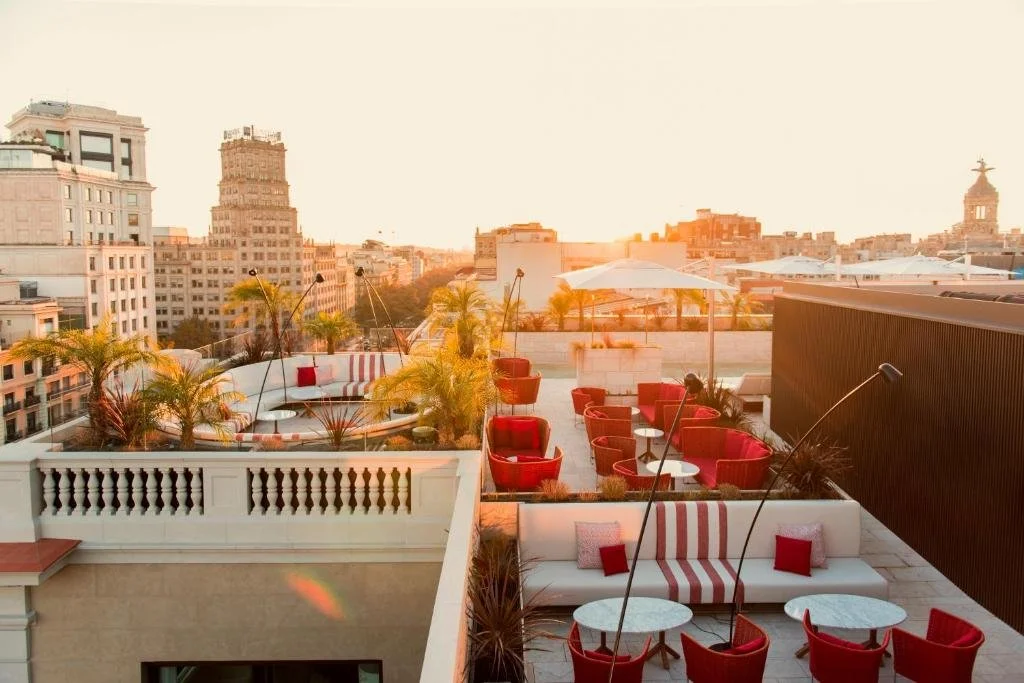
Almanac Barcelona — The Boutique Option in Eixample
Almanac sits on Gran Via de les Corts Catalanes in the Eixample, a sleek contemporary hotel in a beautifully restored modernist building that threads the needle between boutique intimacy and full-service amenity. The rooftop pool and bar are genuinely excellent — one of the better rooftop experiences in the city — and the position in the Eixample puts you in Barcelona's most walkable neighborhood with Gaudí, Montjuïc, and the Gothic Quarter all reachable on foot.
Best for: Couples, travelers who want boutique scale without sacrificing service, design-focused stays. Rates from approximately $350/night.
The Best Hotels in Seville
Seville is the most beautiful city in Spain that most travelers visit without sufficient time. It rewards slowness — the Alcázar at dawn, the tapas bars of Triana that only get going after 9pm, the cathedral whose scale becomes more extraordinary the longer you sit with it. The luxury hotel landscape is dominated by one property that earns its reputation entirely, and supported by a new wave of openings in 2026 that are genuinely worth knowing about.
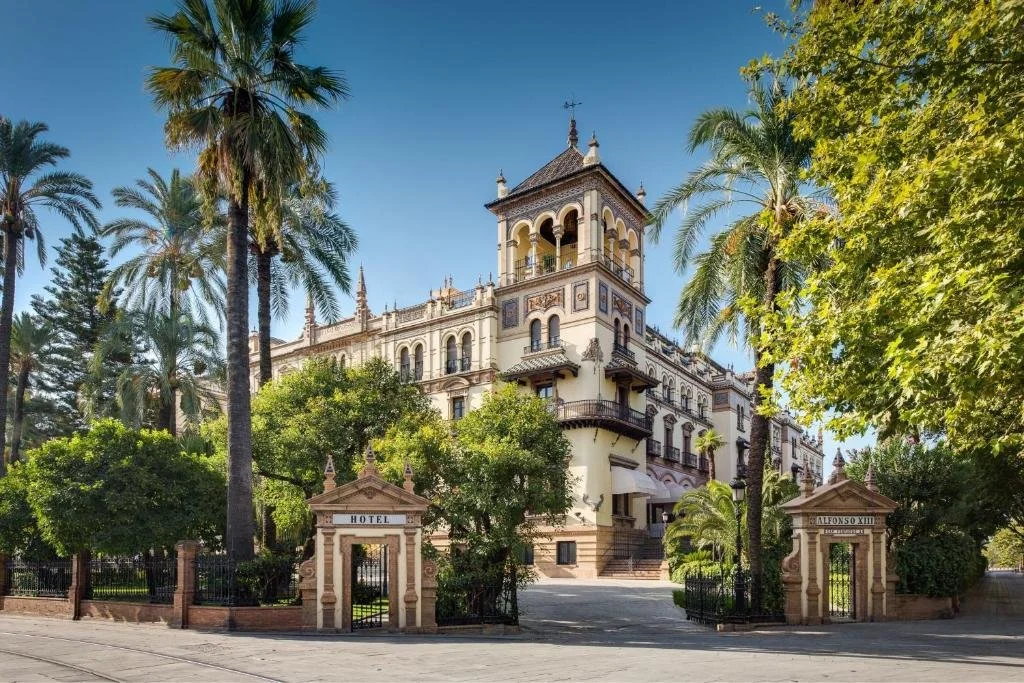
Hotel Alfonso XIII — The Definitive Seville Hotel
Hotel Alfonso XIII was built in 1929 for the Ibero-American Exposition and has operated continuously since as Seville's most celebrated address. The building is a masterwork of Mudéjar Revival architecture — Moorish-influenced tilework, carved plasterwork, a central courtyard with a fountain that feels transported from the Alhambra, all at a scale that announces civic ambition without tipping into ostentation. A Marriott Luxury Collection property now, it has managed the transition without losing the sense of historic occasion that makes it genuinely irreplaceable in Seville's hotel landscape.
The 151 rooms and suites are among the most spacious in the city, the pool terrace is a genuine luxury in a city that gets very hot in summer, and the San Fernando restaurant is one of the best hotel dining rooms in Andalusia. The position near the cathedral and the Alcázar puts every major Seville sight within walking distance.
Best for: First-time visitors to Seville, couples on special occasions, travelers who want the most historically resonant stay in the city. Rates from approximately $600/night in peak season.
What's New in Seville in 2026
Two notable openings are reshaping Seville's luxury landscape in 2026. Hyatt's debut in the city — a historic Modernist building converted into 100 rooms with a rooftop bar — makes Seville the most compelling new hotel destination in Spain this year. The property, expected to open mid-2026, sits in an architecturally striking location that positions Seville as a serious competitor to Barcelona for design-conscious travelers. A boutique property steps from the Seville Cathedral with three dining venues and a rooftop pool also opened in spring 2026, the most intimate luxury option in the city center. Both are worth tracking for 2026 travel — check current availability and rates as openings confirm.
The Best Hotels in Madrid
Madrid is underrated as a luxury destination, which means its best hotels are easier to book and more competitively priced than comparable properties in Barcelona — with one notable exception. The Mandarin Oriental Ritz, the most storied hotel in Spain, sits directly opposite the Prado in the city's Golden Triangle of Art and operates at a level that competes with the finest hotels in Europe. Beyond it, the city has a strong supporting cast of grand hotel and boutique options, one of the finest art collections in the world, and a nightlife culture that keeps restaurants buzzing until midnight and beyond.
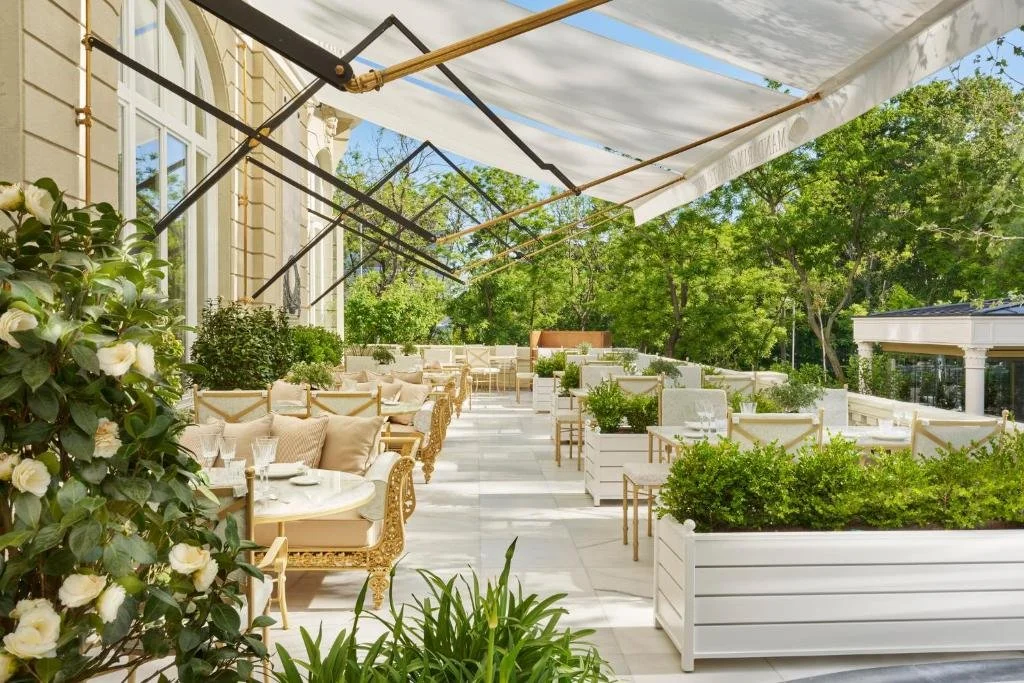
Mandarin Oriental Ritz, Madrid — The Most Prestigious Address in the City
The Mandarin Oriental Ritz has been Madrid's defining luxury hotel since King Alfonso XIII commissioned it in 1910 — conceived specifically to introduce the Spanish capital to the grand hotel standard he had experienced across Europe. A painstaking restoration completed in 2021 brought the Belle Époque palace fully into the modern era without disturbing any of what made it irreplaceable: the celebrated Palm Court, crowned by a spectacular glass dome under which sunlight pours over palm trees and marble columns, remains the most beautiful room in Madrid. The 153 rooms and suites are dressed in soft neutral palettes by Parisian designers Gilles & Boissier, with several looking directly over the Prado Museum facade and the Plaza de la Lealtad.
Best for: Couples on special occasions, cultural travelers, art museum itineraries, anyone for whom Michelin dining and historic grandeur are the priorities. Rates from approximately $900/night.
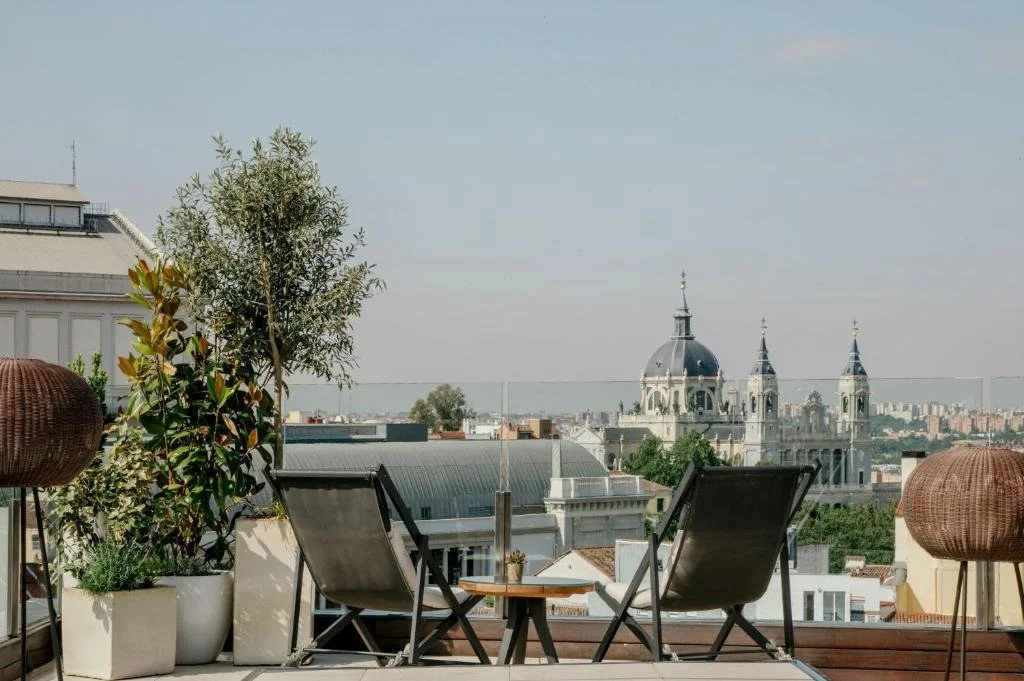
Gran Meliá Palacio de los Duques — Palace Grandeur in the Centro
The Gran Meliá Palacio de los Duques occupies a nineteenth-century palace near the Royal Palace and the Teatro Real, in the Santo Domingo neighborhood that sits between the Malasaña and Opera districts. The hotel delivers genuine grandeur — high ceilings, painted frescos, the kind of architectural seriousness that most Spanish luxury hotels only approximate — along with Meliá's reliably polished service and a rooftop pool that looks across Madrid's rooftops toward the Sierra de Guadarrama mountains on a clear day.
Best for: Couples, cultural travelers, special occasions, anyone who wants Madrid's equivalent of Seville's Alfonso XIII. Rates from approximately $550/night.
Also Notable in Madrid
The Rosewood Villa Magna — One of Madrid's most polished luxury hotels on the Paseo de la Castellana, with the full Rosewood service calibration and one of the best positions in the city for the business and art districts. Check Rates →
The Best Hotels in Ibiza
Ibiza's luxury hotel landscape has matured considerably beyond its club-tourism origins. The northern and interior parts of the island — finca estates, hilltop retreats, boutique hotels in Santa Gertrudis — now offer genuinely distinguished stays for travelers with no particular interest in Pacha or DC-10. The south and San Antonio still cater primarily to the scene, but the full island picture is more interesting than Ibiza's reputation suggests.
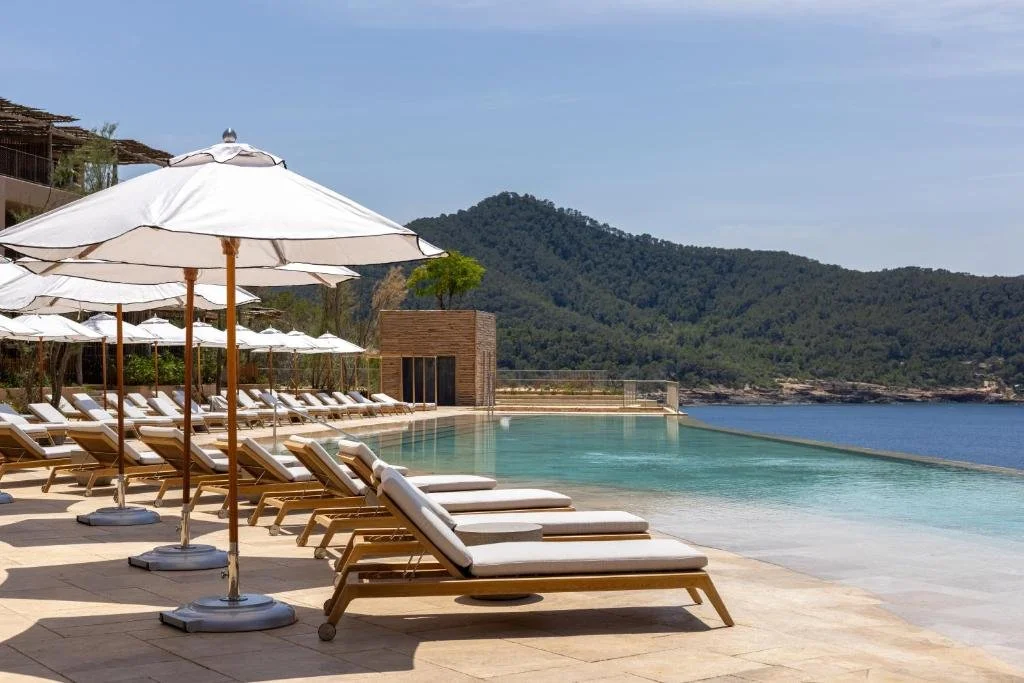
Six Senses Ibiza
For travellers who want Ibiza's beauty without its nightlife, Six Senses Ibiza is the most compelling address on the island, set on the crystalline Cala Xarraca on the untamed northern tip, a world away from the southern clubs. Since opening in 2021 it has become Ibiza's wellness anchor, named one of the World's 50 Best Hotels and built as the first BREEAM-certified resort in the Balearics, with 137 accommodations that run from suites to cave rooms carved into the cliff above the water. Wellness is the headline: the spa houses RoseBar, a longevity club overseen by functional-medicine doctor Mark Hyman, alongside a hammam, a sea-view yoga shala, and farm-to-table dining drawn from the resort's own organic farm. A serious kids' club and family pools make it a multigenerational stay as much as a couples' retreat.
Best for: wellness, longevity, and the quiet, bohemian north of the island
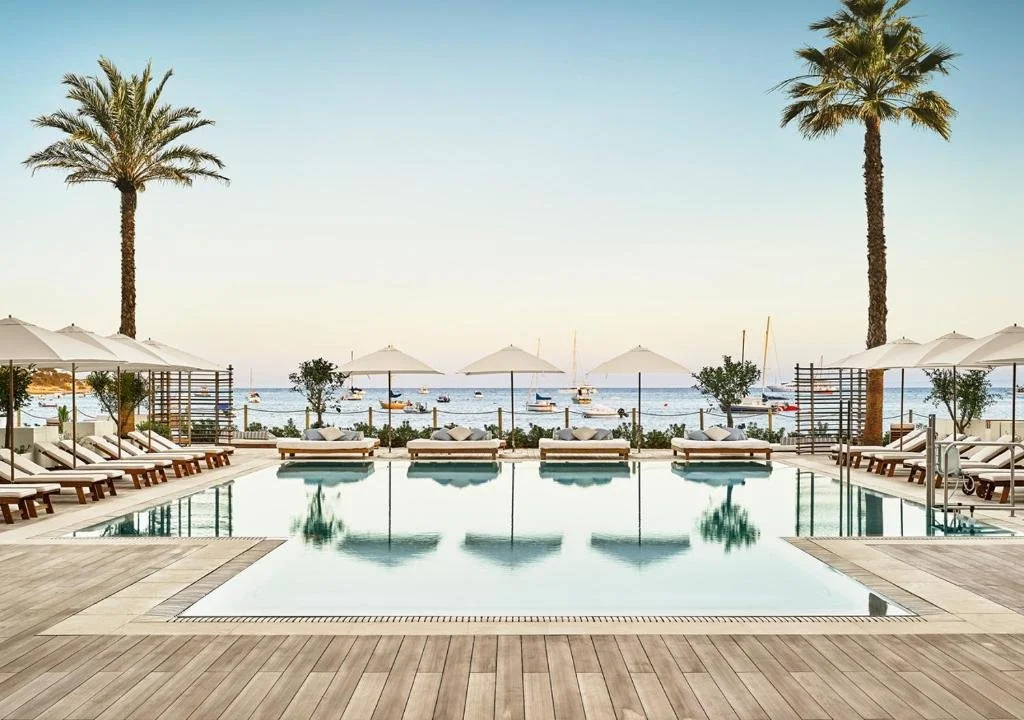
Nobu Hotel Ibiza Bay — Beach Club and Contemporary Luxury
Nobu Hotel Ibiza Bay sits directly on Talamanca Bay north of Ibiza Town, with a private beach, the Nobu restaurant, and the kind of contemporary design and service calibration that the Nobu brand reliably delivers at its best properties. This is the more social option — the beach club is genuinely excellent and the hotel attracts a fashion and entertainment crowd — but at a level of quality and restraint that makes it feel more like a serious hotel with a beach club than a beach club with rooms.
Best for: Couples and groups who want beach access, the Nobu restaurant, and a social atmosphere without full party-Ibiza exposure. Rates from approximately $450/night in peak season.
The Best Hotels in San Sebastián
San Sebastián is perhaps the most underrated luxury destination in Spain — a Basque coastal city with more Michelin stars per capita than almost anywhere on earth, one of the most beautiful city beaches in Europe in La Concha, and an old town (Parte Vieja) whose pintxos bars represent the finest bar-food culture in the world. It is also reliably less crowded than Barcelona or Madrid, and the hotels are priced accordingly.
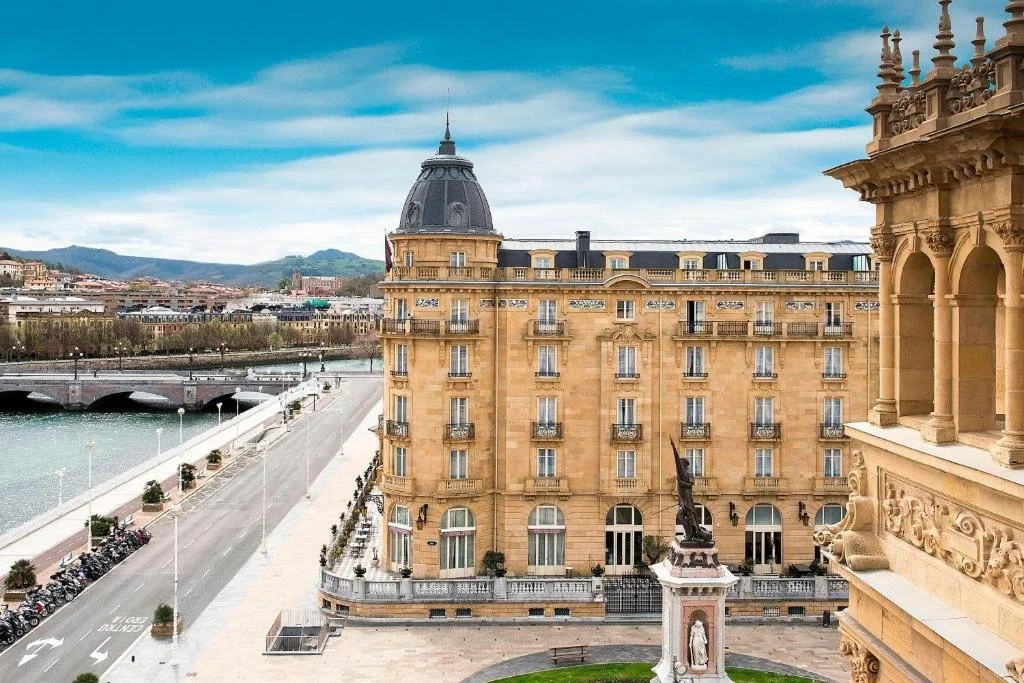
Hotel María Cristina — The Grand Dame of La Concha
Hotel María Cristina opened in 1912 and has occupied its position above the Urumea River as the city's defining luxury address ever since. A Luxury Collection property with Belle Époque architecture, high-ceilinged rooms, and the kind of ceremonial front-of-house that befits a hotel that has welcomed film stars and royalty throughout its history — it becomes the headquarters of the San Sebastián International Film Festival every September, which tells you something about the caliber of its guest list. The position near La Concha beach and the old town is excellent.
Best for: Food-focused travelers, couples, cultural visits, Film Festival attendance in September. Rates from approximately $400/night in shoulder season.
The Best Hotels on the Costa del Sol
The Costa del Sol earned a reputation it has spent the last two decades trying to recover from — mass tourism, package hotels, and an overbuilt coastline that obscures the genuine beauty that attracted the original glamour crowd in the 1950s and 1960s. The good news is that the original glamour still exists in specific pockets, and the hotels that deliver it are among the most characterful in the country.
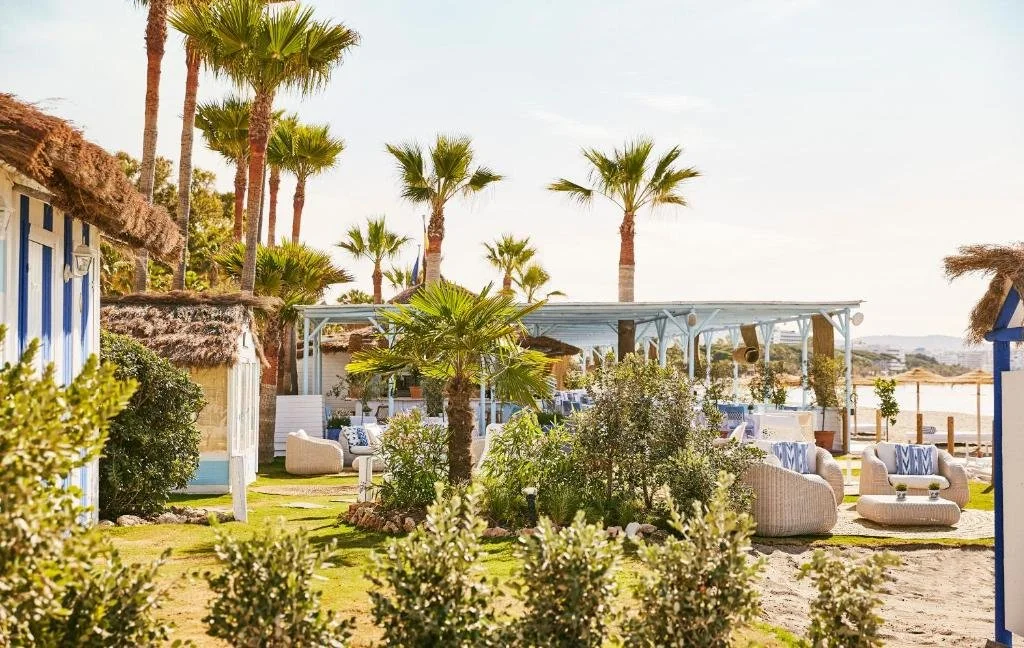
Marbella Club Hotel — The Original
The Marbella Club was founded in 1954 by Prince Alfonso von Hohenlohe as a private beach club for his friends, and became the defining address of the European jet set throughout the 1960s and 1970s. Cary Grant, Audrey Hepburn, and the Duke and Duchess of Windsor were among its early guests. The property has been updated carefully through successive decades without losing the bungalow-village layout, the subtropical gardens, or the sense of occasion that has kept it relevant across seventy years of changing tastes.
The rooms and bungalows are spread across the grounds rather than stacked in a tower, the beach club is genuine and well-run, and the overall atmosphere — relaxed, elegantly informal, definitively not a resort chain — makes it the single most characterful hotel on the Costa del Sol. There’s also one of the best kid’s club in Europe.
Best for: Couples, history-conscious travelers, guests who want the original Marbella experience rather than the contemporary resort version. Rates from approximately $700/night in peak season.
When Is the Best Time to Visit Spain?
The honest answer depends entirely on where in Spain you're going, because the climate varies more dramatically across the country than most travelers expect.
Mallorca and the Balearic Islands are best in late May through June and again in September through early October. July and August are fully beautiful but heavily crowded — particularly in the northwest towns like Deià and Port de Sóller, which attract a design-and-arts crowd that makes summer feel more like a festival than a holiday. Shoulder season delivers the same scenery and warmth with considerably more space.
Barcelona and Madrid are excellent year-round but best in April through June and September through October. August in both cities sees the local population depart en masse for the coast, which makes the cities navigably quiet but also reduces the restaurant and nightlife energy that makes them worthwhile.
Seville operates on a different logic: spring (Semana Santa in March or April, the Feria de Abril in April or May) is when the city is most alive and most itself. It is also peak season and the hottest season for accommodation. Summer in Seville — July and August particularly — is brutal in terms of heat, with temperatures regularly exceeding 40°C. The optimal Seville visit is April or May, or October when crowds thin and the heat relents.
San Sebastián is excellent from June through September, with the Film Festival in the third week of September representing the most concentrated version of everything the city does well.
How to Get Around Spain
Spain's high-speed rail network — the AVE — is the best in Europe for connecting its major cities, and the most practical way to move between Madrid, Barcelona, Seville, and Málaga. The Madrid-Barcelona journey is around two and a half hours; Madrid-Seville is two and a half hours; Madrid-Málaga is under three. Book trains in advance through Renfe, particularly for peak season.
For Mallorca and Ibiza, flights from the mainland are the only option — Palma de Mallorca Airport (PMI) and Ibiza Airport (IBZ) both have frequent connections from Madrid and Barcelona, with journey times under an hour.
A rental car is essential for proper exploration of Mallorca beyond Palma, for the Costa del Sol beyond Marbella, and for any Andalusia itinerary that takes in the countryside between Seville, Granada, and Córdoba. In the cities themselves, cars are a complication rather than a convenience.
Frequently Asked Questions About Hotels in Spain
What is the best hotel in Spain? Belmond La Residencia in Deià, Mallorca is the property that most consistently earns that designation — extraordinary setting, exceptional service, decades of design investment, and a village that is itself among the most beautiful in the Mediterranean. On the mainland, Mandarin Oriental Ritz, Madrid is the strongest single hotel — opened in 1910, meticulously restored, with a two-Michelin-starred restaurant and the finest location in the city opposite the Prado. Hotel Alfonso XIII in Seville and Hotel María Cristina in San Sebastián are the most historically significant grand hotels in Andalusia and the Basque Country respectively.
What is the most luxurious hotel in Spain? La Residencia and Mandarin Oriental Ritz, Madrid compete for that title. La Residencia delivers it through setting, design, and decades of accumulated character in one of the most beautiful villages in the Mediterranean. The Mandarin Oriental Ritz delivers it through historic grandeur, Michelin-starred cooking, and the finest spa in Madrid. Hotel Alfonso XIII in Seville and the Marbella Club on the Costa del Sol round out the top tier.
What is the best area of Spain for a luxury vacation? Mallorca for a beach and scenery focused trip. Barcelona for a city break. Seville for Andalusian culture and architecture. San Sebastián for food. The Costa del Sol if you specifically want the original Mediterranean glamour rather than a fully contemporary hotel experience.
Is Spain better than Italy for a luxury vacation? They deliver genuinely different experiences. Italy's strength is depth — Rome, Florence, Venice, the Amalfi Coast, and Puglia within a manageable country represent an extraordinary concentration of world-class destinations. Spain's strength is variety: you can move from urban architecture to mountain scenery to beach island within a single trip in ways that Italy's geography doesn't allow. For first-time European luxury travelers, Italy edges ahead on sheer concentration of exceptional experiences; for travelers who have done Italy and want something equally compelling but less visited, Spain is the right answer. Both countries have strong hotel clusters — see our guide to the best hotels on the Amalfi Coast for the Italy comparison.
Is Mallorca worth it for a luxury trip? Without qualification. The combination of Belmond La Residencia, the Tramuntana coast, the restaurant scene in Deià and Sóller, and the calas along the south and east coasts makes Mallorca one of the finest island destinations in Europe. See our full Mallorca travel guide and where to stay in Mallorca for the complete picture.
Is Barcelona or Madrid better for a luxury hotel stay? Barcelona for first-time visitors to Spain — the combination of architecture, beaches, food, and the sheer walkability of the Eixample and Gothic Quarter is difficult to match anywhere. Madrid rewards repeat visitors and travelers who prioritize museums, food culture, and a more local atmosphere over tourist infrastructure. Both cities have excellent hotel options at every tier.
Can you combine Spain and France in the same trip? Easily, and it's a natural pairing. Barcelona to the French Riviera is a short flight or a scenic train journey. For our South of France hotel recommendations to pair with a Barcelona or Mallorca trip, see our best hotels in the South of France guide.
What's the best boutique hotel in Spain? Belmond La Residencia in Deià operates at boutique scale (68 rooms) with grand hotel service. Urso Hotel & Spa in Madrid and Almanac Barcelona both deliver excellent boutique experiences on the mainland. Can Bordoy Grand House & Garden in Palma is the finest boutique option in the Balearics outside of La Residencia itself.