
Best Hotels in Scotland (2026): 14 Stays Worth the Drive
Best Hotels in Scotland at a Glance
Best overall: Gleneagles. An 850-acre Perthshire resort with its own train station and enough to do that the whole family can skip the car.
Best for art lovers: The Fife Arms. A Victorian coaching inn in Braemar filled with real art, from Picasso to Lucian Freud, and holding two Michelin Keys.
Best on Skye: Kinloch Lodge. A remote island hotel, voted the top hotel in Scotland in the 2025 Condé Nast Traveller Readers' Choice Awards.
Best in Edinburgh: Gleneagles Townhouse. The smartest city stay in the capital, with a Michelin Key and a central location.
Best for wild landscapes: The Torridon. A lodge on the dramatic west coast, best for hikers and anyone who loves a fire-lit winter stay.
Where to base yourself first
Four broad choices. Edinburgh is the obvious start and the only place where you genuinely don't need a car. Perthshire is the softest introduction to the Highlands, an hour from both cities, with the best concentration of food-led hotels in the country. The Cairngorms and Royal Deeside give you the big mountain landscape with proper villages and better weather than the west. The west coast and islands are the most dramatic and the most demanding, and they're where the midges live.
First-timers should do Edinburgh plus one rural base. Three nights in each, and leave everything else is a second trip.
Gleneagles
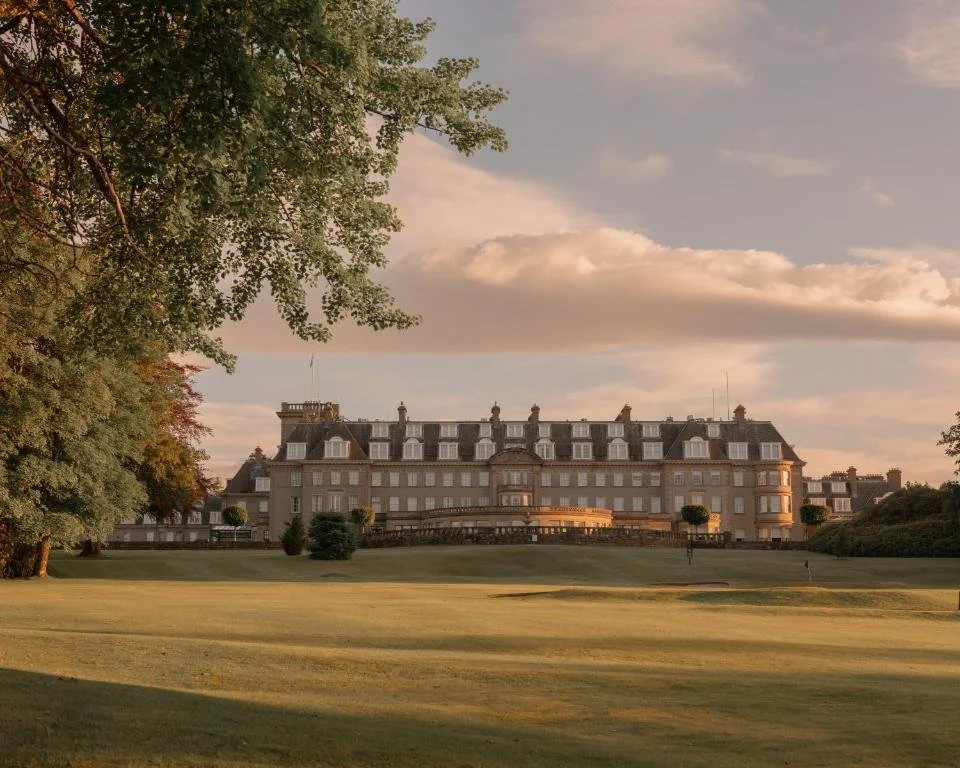
The one everyone has heard of, and it holds up. The estate runs to 850 acres of Perthshire, with its own railway station, roughly five hours by train from London and about an hour by car from both Edinburgh and Glasgow. There are 232 rooms and 27 suites, and it's been open since 1924.
What makes it work is that it's a resort in the proper sense rather than a hotel with a golf course attached. The Sporting Club covers equestrian, tennis, climbing and padel, there's shooting and falconry, and the spa is one of the largest in Scotland. The golf is the headline, but plenty of guests never pick up a club.
Book it for: a whole trip in one place, with kids or without. Skip it if: you want somewhere small, or you came to Scotland for solitude.
The Fife Arms
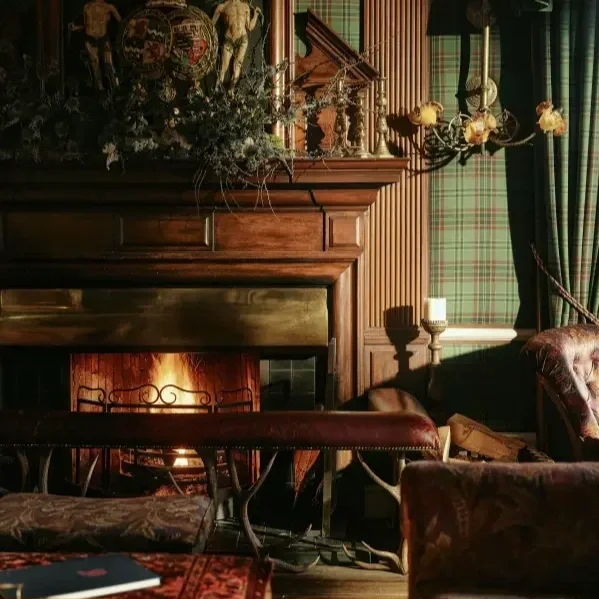
The most interesting hotel in Scotland, in our not-so-humble-opinion. The Hauser & Wirth gallery family bought a Victorian coaching inn in Braemar and poured serious money into it, and the art collection is the reason to come. There's a Picasso, a Bruegel and a Lucian Freud. Each of the 46 bedrooms has its own story, named for a Scottish poet, monarch or member of the Fife clan. It holds two Michelin Keys.
Braemar is the gateway to the eastern Cairngorms, with Balmoral next door and some of the best walking in the country on the doorstep. The Flying Stag bar is where the village actually drinks, which is rarer than it sounds at this price point.
Better rooms run past £600 a night.
Book it for: the single most memorable hotel interior in Britain. Skip it if: you find theatricality exhausting.
Kinloch Lodge
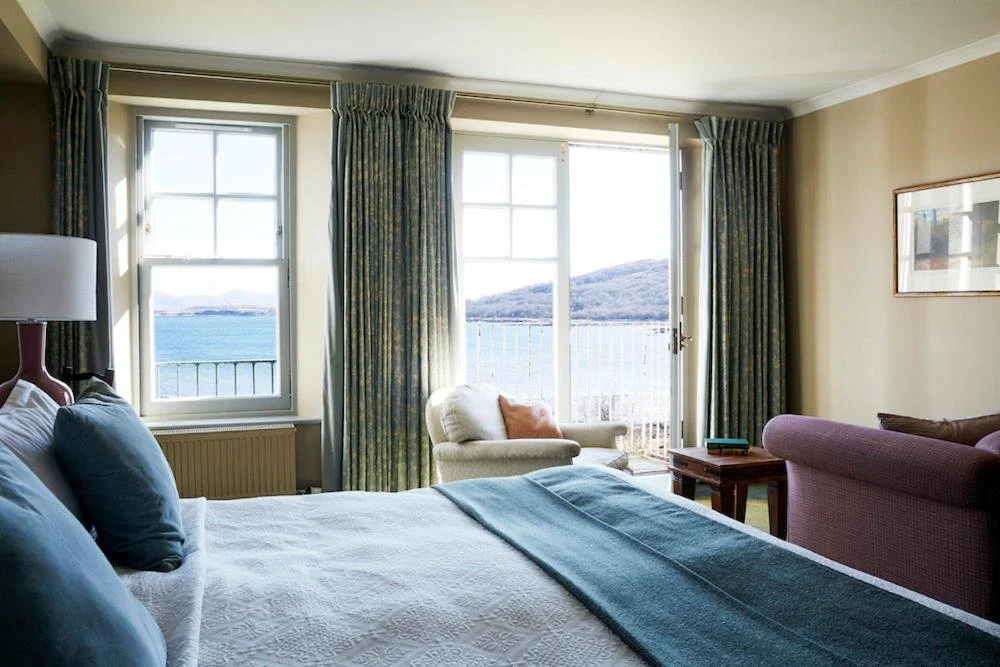
The Skye pick. Kinloch Lodge took the number one spot for Scotland in the 2025 Condé Nast Traveller Readers' Choice Awards and holds a Michelin Key. The Macdonald family have been taking guests since the 1970s, and Isabella now runs it, having designed all 18 rooms herself.
Location is the quiet advantage. It sits at the end of a long drive on the shores of Loch na Dal in Sleat, which is the quietest of Skye's peninsulas. That matters enormously in July, when the Trotternish loop and the Fairy Pools are effectively unusable. Sleat is the part of Skye where you can still hear something.
Fires in every public room make it a good winter booking in addition to summer.
Check rates at Kinloch Lodge—>
The Torridon
The most dramatically sited hotel in Scotland. A Victorian shooting lodge on the edge of a sea loch in Wester Ross, with its own herd of Highland cattle and a whisky bar holding over 365 bottles. The 1887 restaurant has a Michelin star and a Green Star.
What sets it apart is the activity centre. Canoeing on the loch, gorge scrambling, archery, clay shooting across the bay, all run daily. There are 18 rooms in what is one of the most scenically dramatic settings in Britain. The Stables building holds more contemporary rooms if Victorian grandeur isn't your thing.
Book it for: an outdoors-first Highland week with serious food at the end of each day. Skip it if: you're going in August and hate being bitten.
Killiehuntly Farmhouse
The design pilgrimage. Killiehuntly is part of Wildland, a Danish-Scottish conservation project covering 200,000 acres of the Highlands, and the aesthetic is Nordic rather than tartan: whitewashed walls, sheepskins, Hans Wegner chairs. Five rooms in and around the 19th-century farmhouse near Kingussie, plus two self-catering cottages, with communal dinners built on foraged estate ingredients.
Wildland's ecosystem restoration work means the wildlife is exceptional, with red squirrels, golden eagles and pine martens around the property. This is the Cairngorms at its slowest: walks, wild swimming in the Spey, reading by a fire.
Glenapp Castle
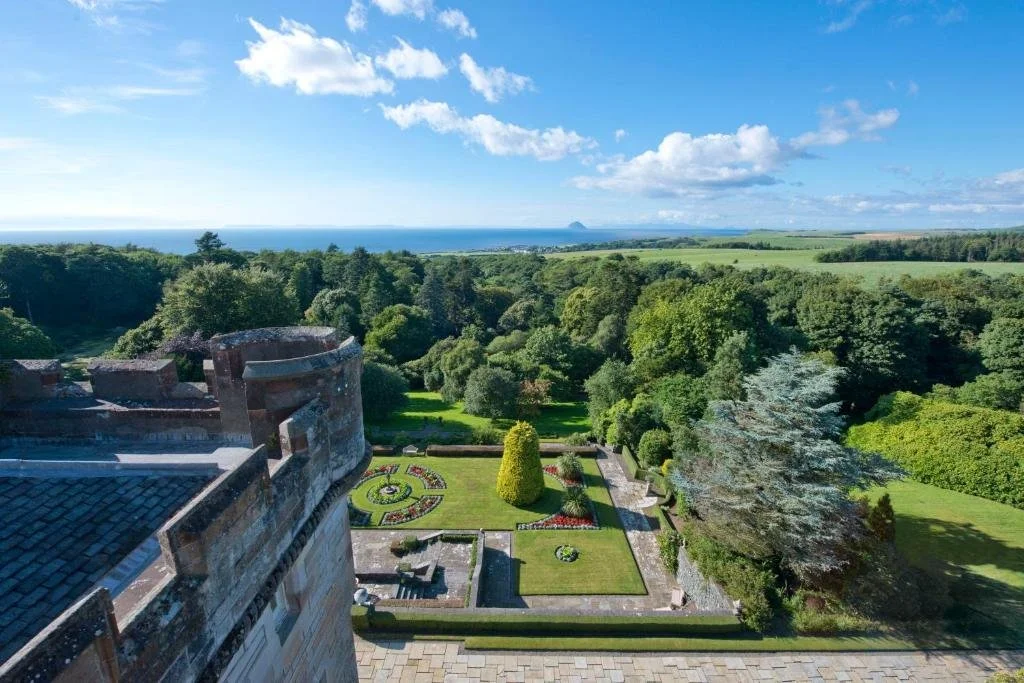
The southern option, and the one people forget. A five-star castle hotel in Ayrshire with period interiors, gardens and forest running down to sea views, plus a 4,500 square foot four-bedroom Castle Penthouse Suite. The hotel runs its own boat for trips out to the Hebridean islands, which is a genuinely unusual thing to be able to book from a hotel lobby.
The practical argument is Glasgow Prestwick and the Ayrshire golf coast. If you're combining Turnberry or Troon with a castle stay, this is the base.
Check rates at Glenapp Castle—>
Ardbeg House
The most interesting new opening in Scotland. Owned by Ardbeg Distillery, part of LVMH, and designed by Russell Sage Studio, it's a 12-room hotel in the middle of Port Ellen on Islay's south coast. The interiors are properly eccentric: peat-smoked tones, kilted lampshades, taxidermy puffins, a snug that reads like a Hebridean attic. The bar holds what's probably the world's most serious Ardbeg collection.
The distillery geography is the point. Laphroaig, Lagavulin and Ardbeg sit along the same coastal road, with Bowmore, Bruichladdich and Kilchoman within reach.
Worth knowing that Islay is a ferry from Kennacraig or a short flight from Glasgow, and summer sailings book out well ahead.
The Pierhouse
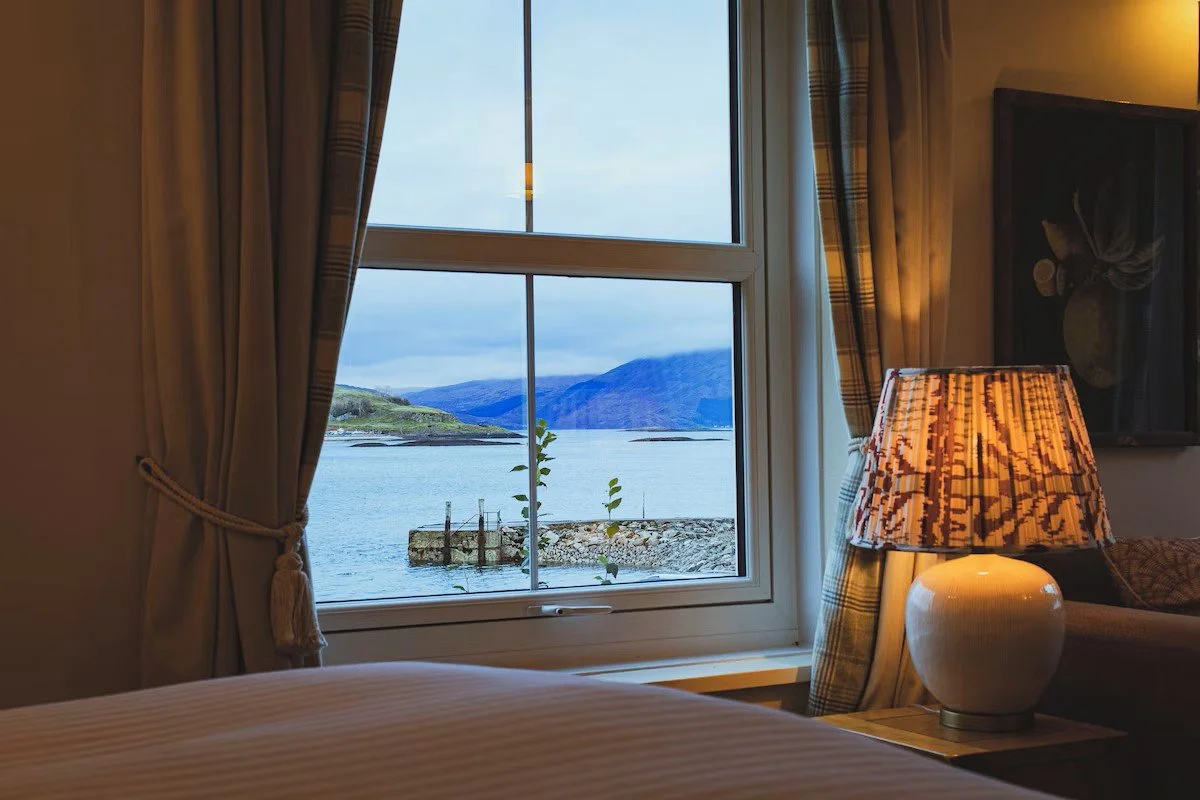
The best value on the west coast. It sits on a stone pier on Loch Linnhe in Argyll, looking across to Lismore and the mountains behind. The Michelin Guide put it among the twelve best restaurant views in the UK and Ireland. Twelve bedrooms, refurbished in calm coastal tones, and the water-view ones are worth the upgrade.
The kitchen runs on what comes off the boats: Loch Linnhe langoustines, Lismore oysters, Mull scallops. Glencoe and Oban are both within easy reach, which makes it a smart one-night stop on a west coast route rather than only a destination.
Check rates at The Pierhouse—>
Killiecrankie House
For anyone whose trip is really about dinner. Five bedrooms above a restaurant that Tom and Matilda Tsappis took over in 2022. They were voted Scotland's best restaurant and hotel in 2025, and picked up their first Michelin star in 2026.
The tasting menu is Scottish-Japanese kaiseki built on Perthshire produce. Book the chef's table and go straight upstairs afterwards. Five rooms means this books further ahead than almost anything else on the list.
The Grandtully Hotel
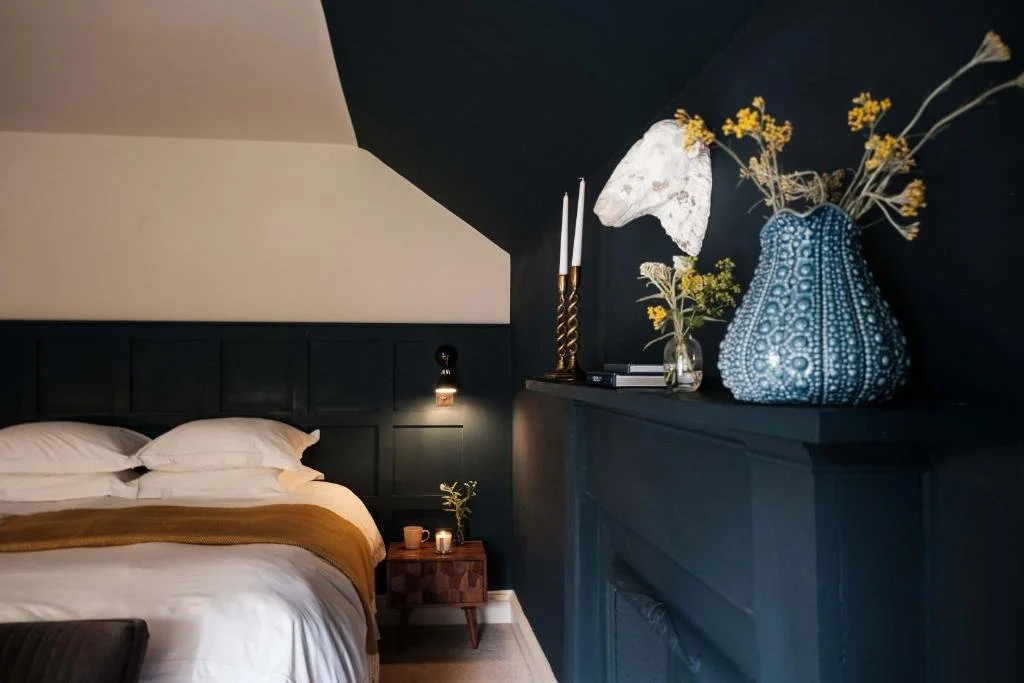
The other Perthshire food stay, and the more relaxed of the two. Part of the Ballintaggart group, with eight bedrooms above a restaurant holding a Michelin Key for two years running and two AA Rosettes. The look is deliberately un-tartan, with a press-for-whisky button in the library and hyper-local sourcing.
Grandtully sits on the Tay, near Aberfeldy, twenty minutes from Dunkeld. It's the right base for a Perthshire long weekend that isn't Gleneagles.
The Balmoral
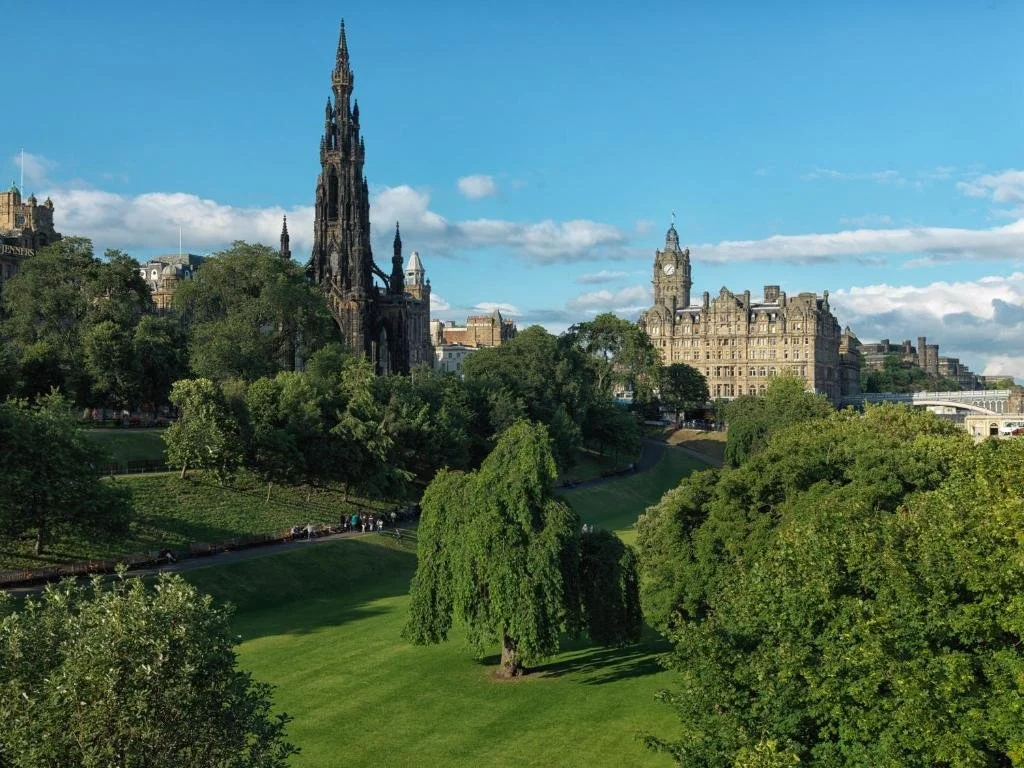
Edinburgh's grand dame, and still the address. A former railway hotel at No. 1 Princes Street, open since 1902, now 167 rooms and 20 suites, all individually styled by Olga Polizzi with Scottish fabrics, botanical prints and marble bathrooms.
The spa is unusually large for a European city hotel, with an indoor pool, Finnish sauna and five treatment rooms, and the SCOTCH bar carries more than 500 drams. Waverley Station and the main shopping streets are five minutes' walk.
Gleneagles Townhouse
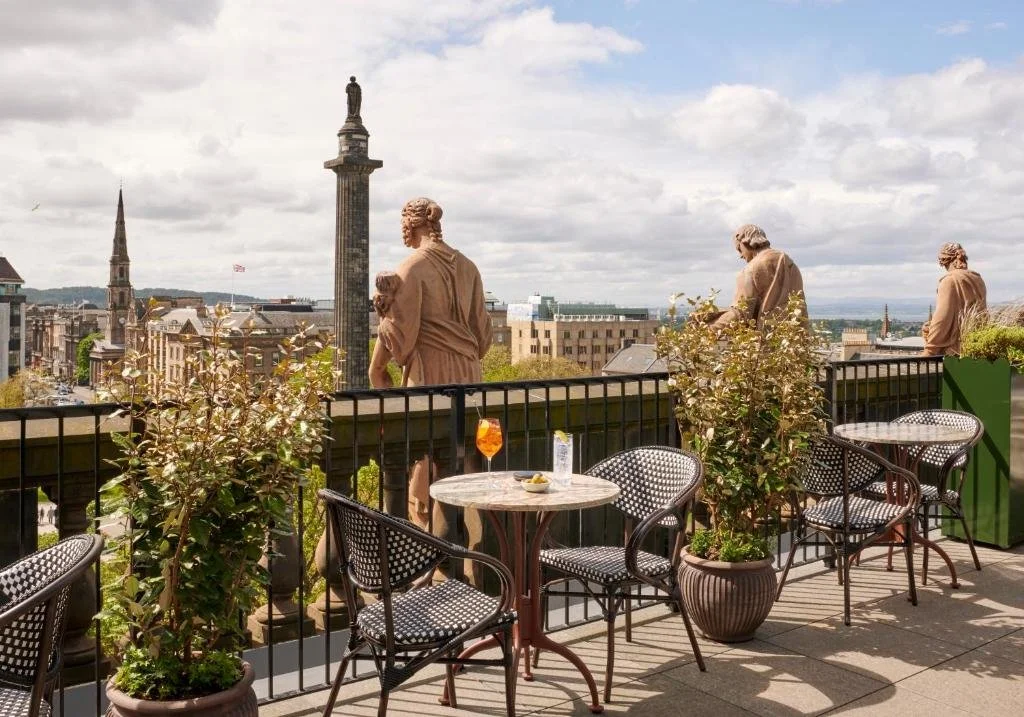
The smarter Edinburgh booking if you want somewhere with a point of view. It opened in 2022 as the city sibling of the Perthshire resort, in a Grade A-listed former bank on St Andrew Square, with 33 bedrooms, a rooftop bar called Lamplighters and a restaurant, The Spence, that won Luxury Restaurant of the Year at the 2025 Scottish Hospitality Awards. The members' lounge is open to hotel guests. St Andrew Square puts you five minutes from the Royal Mile, Princes Street and the National Galleries. For a two- or three-night city stay, this is the one we'd book first.
Prestonfield
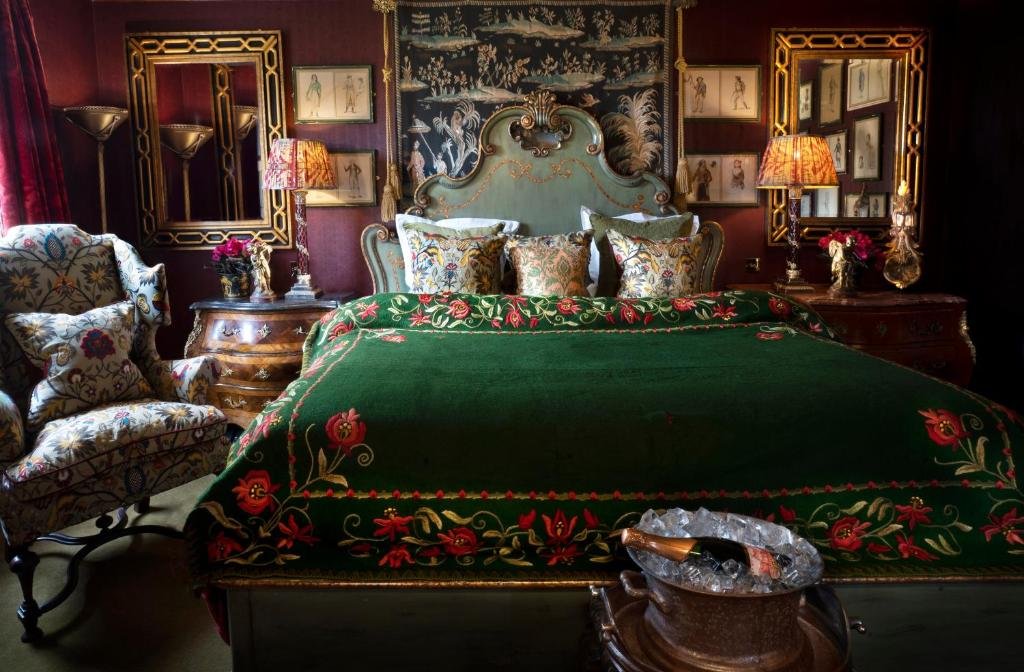
The maximalist option, and the most fun. Named the Good Hotel Guide's best hotel in Scotland for 2025 and holding a Michelin Key, it's a 1687 house by Sir William Bruce sitting in 20 acres at the foot of Arthur's Seat, with peacocks, Highland cattle and a resident cat. The 23 bedrooms and suites run to baroque excess: velvet-upholstered walls, four-posters, heavy panelling. It's two miles from the Royal Mile but reads as a country house in a different century. Better rooms can pass £600.
Book it for: a romantic Edinburgh stay with no interest in minimalism. Skip it if: you want to walk everywhere.
The Hoxton, Edinburgh
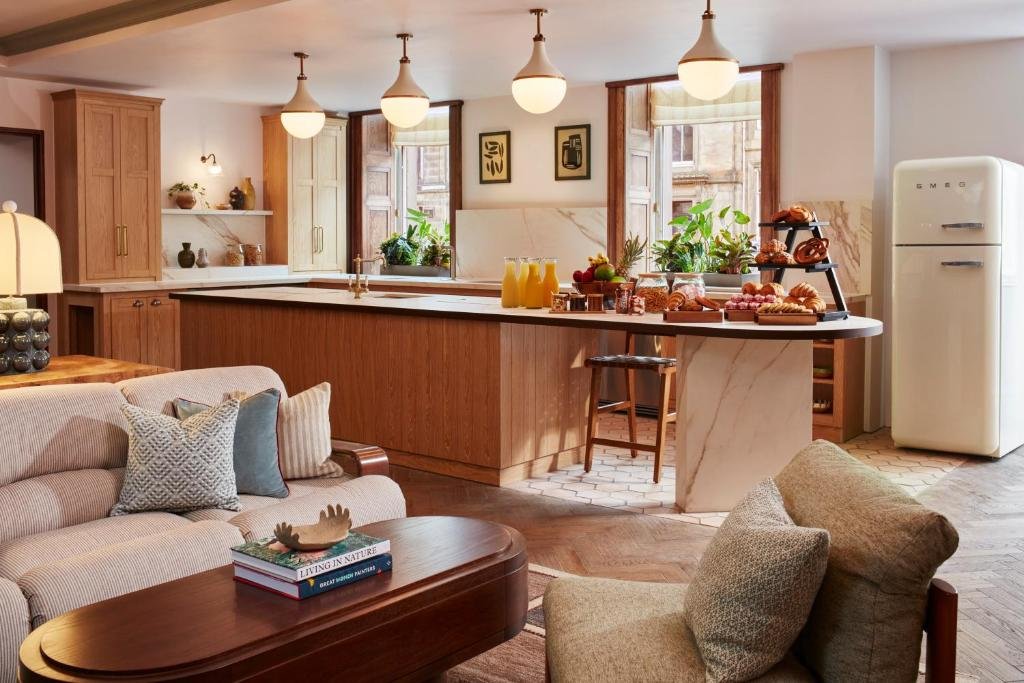
The value answer, and a genuinely good one. It opened in Haymarket in June 2025 across a run of Georgian townhouses, with 214 rooms designed by AIME Studios, an Italian restaurant called Patatino that's become a destination in itself, a gallery space showing Scottish artists, and Bromptons for guests. Rooms start around £160, which for Edinburgh is a real number.
Haymarket is west of the centre, about fifteen minutes' walk to Princes Street, with its own station on the airport tram line.
Opening soon
Three worth watching, and worth timing a trip around.
Islay House, the 1677 Georgian mansion at the head of Loch Indaal, is reopening as a full-service hotel with thirteen rooms, a restored Victorian kitchen, a walled garden and a whisky bar. Between that and Ardbeg House at the other end of the island, Islay becomes the most interesting hotel destination in Scotland.
Hope, Wildland's third Scottish property, is an 1870s shooting lodge in remote north-west Sutherland designed by Cécile & Boyd, with seven bedrooms plus a separate two-bedroom forest cabin with a wood-fired hot tub.
The Birnam Hotel, from the team behind The Taybank, is bringing a Scots Baronial landmark back across the bridge from Dunkeld, with fourteen bedrooms in phase one.
How to choose
Start with the trip.
If you want one place that handles everything, including children, it's Gleneagles. Nothing else in Scotland combines that much to do with that little driving.
If the trip is about landscape, go west or north and accept the trade. The Torridon for drama and activity, Kinloch Lodge for Skye without the Skye crowds, Killiehuntly for the Cairngorms at walking pace.
If it's about food, Perthshire is the answer and it's an easy one. Killiecrankie House for the full tasting-menu occasion, The Grandtully for something looser over two or three nights.
If it's about whisky, build the trip around Islay and book Ardbeg House.
And for Edinburgh, the ranking is roughly: Gleneagles Townhouse for a considered two-night stay, The Balmoral for the grand hotel experience and the spa, Prestonfield for romance and theatre, The Hoxton if you'd rather put the money into dinner. For more on how we approach travelling with kids, our family travel guides go into it.
Best time to visit Scotland, and when to book
May is the month. It's statistically among the sunniest and driest months, especially on the east coast, the days are long, crowds are low, and crucially the midges haven't emerged yet.
September is the close second. Shoulder season can save 30 to 50 per cent on accommodation, the light is better for photography, and the Highlands are at their most beautiful.
June is the best of summer if you need the long days. You get the longest daylight and the festival build-up without August's crush, with midges only just starting.
August is the one to think hard about. Edinburgh is transformed and packed by the Fringe, accommodation across the country books up months ahead, and prices climb steeply in the capital, on Skye and along the North Coast 500. Edinburgh rates can roughly triple and want booking three to six months out. And in the Highlands and on the west coast, July and August are the worst months for midges.
On booking windows: the small design-led properties want three to six months for weekends, and anything with five or fewer rooms wants longer. Summer CalMac and NorthLink ferry sailings also book well ahead, especially with a vehicle, which catches people out on Skye, Islay and the Outer Hebrides.
Winter is underrated for the fire-lit country hotels. The Torridon and The Fife Arms are arguably better in January than July.
Getting there and getting around
Edinburgh and Glasgow both have good long-haul connections and are about an hour apart. Inverness is the practical gateway for the north and the NC500. Gleneagles has its own station, about five hours by train from London, which makes Perthshire the one rural region you can reach without a car.
Everywhere else, hire one. Single-track roads with passing places are the norm in the west and north, and the driving takes longer than any map suggests.
FAQ
What is the best hotel in Scotland? It depends on the region. Kinloch Lodge on Skye was voted number one in Scotland in the 2025 Condé Nast Traveller Readers' Choice Awards. For a full-service resort it's Gleneagles, and for sheer originality it's The Fife Arms in Braemar.
How much does a luxury hotel in Scotland cost per night? Around £160 at The Hoxton in Edinburgh, £300 to £450 for properties like Kinloch Lodge and The Pierhouse, from £495 a night at the remote full-board lodges, and past £600 for the better rooms at The Fife Arms and Prestonfield. Shoulder season can cut 30 to 50 per cent off peak rates.
When is the best time to visit Scotland? May and September. May gives you long dry-ish days, low crowds and no midges, and September gives you autumn colour with shoulder-season pricing.
Are midges really that bad? In the west Highlands and on the islands, yes. July and August are the worst months. They're worst at dawn and dusk in still, damp conditions near water. The east coast and the Cairngorms are far less affected, which is one reason Braemar and Royal Deeside are the safer summer bet.
Do I need a car in Scotland? For Edinburgh, no. For Perthshire, not necessarily, since Gleneagles has its own station. For the west coast, the islands or the NC500, absolutely yes.
Which Scottish hotels hold a Michelin Key? Scotland currently has fifteen. Those on this list include The Fife Arms with two Keys, plus Gleneagles Townhouse, The Grandtully, Kinloch Lodge and Prestonfield. Killiecrankie House holds a Michelin star for its restaurant, and The Torridon's 1887 holds a star and a Green Star.
How many nights do I need in Scotland? Seven is the working minimum for Edinburgh plus one rural base. Ten if you want Skye or Islay in the same trip. Anything shorter and you'll spend it driving.
Which Scottish hotel is best for families? Gleneagles, comfortably. The activity programme is built for mixed ages and the estate is large enough that nobody has to sit still. The small Highland lodges, with communal dinners and five bedrooms, are the opposite of family-friendly.