
Cusco Travel Guide: A Luxury Guide to Peru's Imperial Capital (2026)
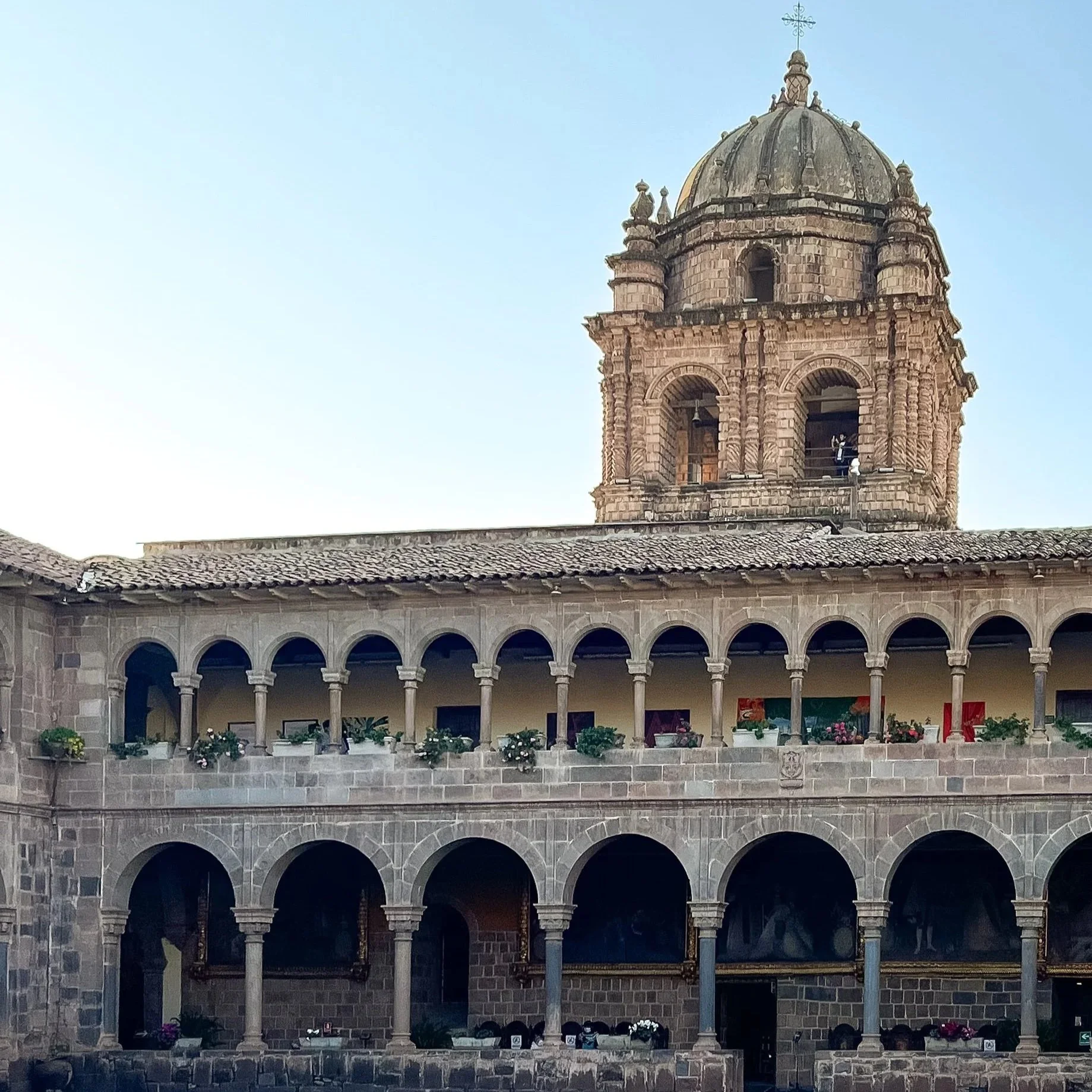
Cusco is the part of Peru that rewards everyone in the family differently. For parents, it's a city of Inca stone and Spanish baroque stacked on top of each other in the most architecturally legible way the Americas can offer — the kind of place where a single eight-block walk passes a 14th-century temple wall, a 16th-century Jesuit church, and a contemporary Peruvian restaurant earning Michelin attention. For children, it's a small, walkable mountain city full of llamas in plazas, chocolate workshops, baby alpacas in hotel lobbies, and ruins they can climb on. For both, it's the gateway to Machu Picchu and the Sacred Valley — but it is also, increasingly, a destination in its own right, and we think it deserves more than the customary 36-hour stopover.
The Cusco Context
The structural fact about Cusco that shapes every visit is altitude. Cusco sits at 11,150 feet (3,400 meters) — higher than the Sacred Valley, higher than Machu Picchu, higher than most travelers have ever been before. The architecturally dense old city sits at the top of this altitude curve, which is why we've consistently recommended in our Peru with kids guide that families enter Peru through the Sacred Valley first and only ascend to Cusco after two or three nights of acclimatization. We're saying it again here because it's the single most important variable in a successful Cusco trip with children, and it's the one most itineraries get wrong.
The second fact about Cusco is that it punches well above its size editorially. The historic center is a UNESCO World Heritage Site, the old Inca capital was deliberately designed in the shape of a puma, the food scene rivals Lima's at the upper tier, and the artisan workshops in San Blas produce some of the best textile, silver, and ceramic work in South America. For families with curious children, Cusco offers a density of meaningful encounter you don't get in most Andean cities. For parents, it offers some of the best hotel architecture in the Americas — three of the world's great Belmond and Relais & Châteaux properties sit within a four-block radius.
How Many Days in Cusco
For most families, two to three nights in Cusco is the right amount. Less than two and the altitude doesn't fully resolve before you're back on the road; more than three and the cobblestones start to push back on small legs. The structure we recommend:
Day 1: Arrive from the Sacred Valley (already acclimatized). Light afternoon — Plaza de Armas, the Cathedral, a slow walk to dinner.
Day 2: The main archaeological circuit (Qorikancha, Sacsayhuamán, and either Q'enqo, Puca Pucara, or Tambomachay), lunch in San Blas, an afternoon at the San Pedro Market or a chocolate workshop.
Day 3: A half-day extension or day trip — Rainbow Mountain (intense), Maras and Moray (gentler and arguably more interesting), or the Pisac market and ruins (if not done from the Sacred Valley).
Families with older children or strong travelers can absolutely stretch to four nights with the addition of a more ambitious day trip. Families with younger children should consider keeping Cusco short and weighting more time at the Sacred Valley.
Where to Stay in Cusco: Five Luxury Hotels
The good news for families is that Cusco's luxury hotel scene is genuinely competitive at the top, with multiple historic properties — palaces, convents, and colonial mansions — converted with serious craft. The properties below sit within a few blocks of each other in the historic center and represent the editorial top of what Cusco offers. None is the "best overall" — the right choice depends on what kind of trip you want.
Belmond Hotel Monasterio — for grand historic immersion
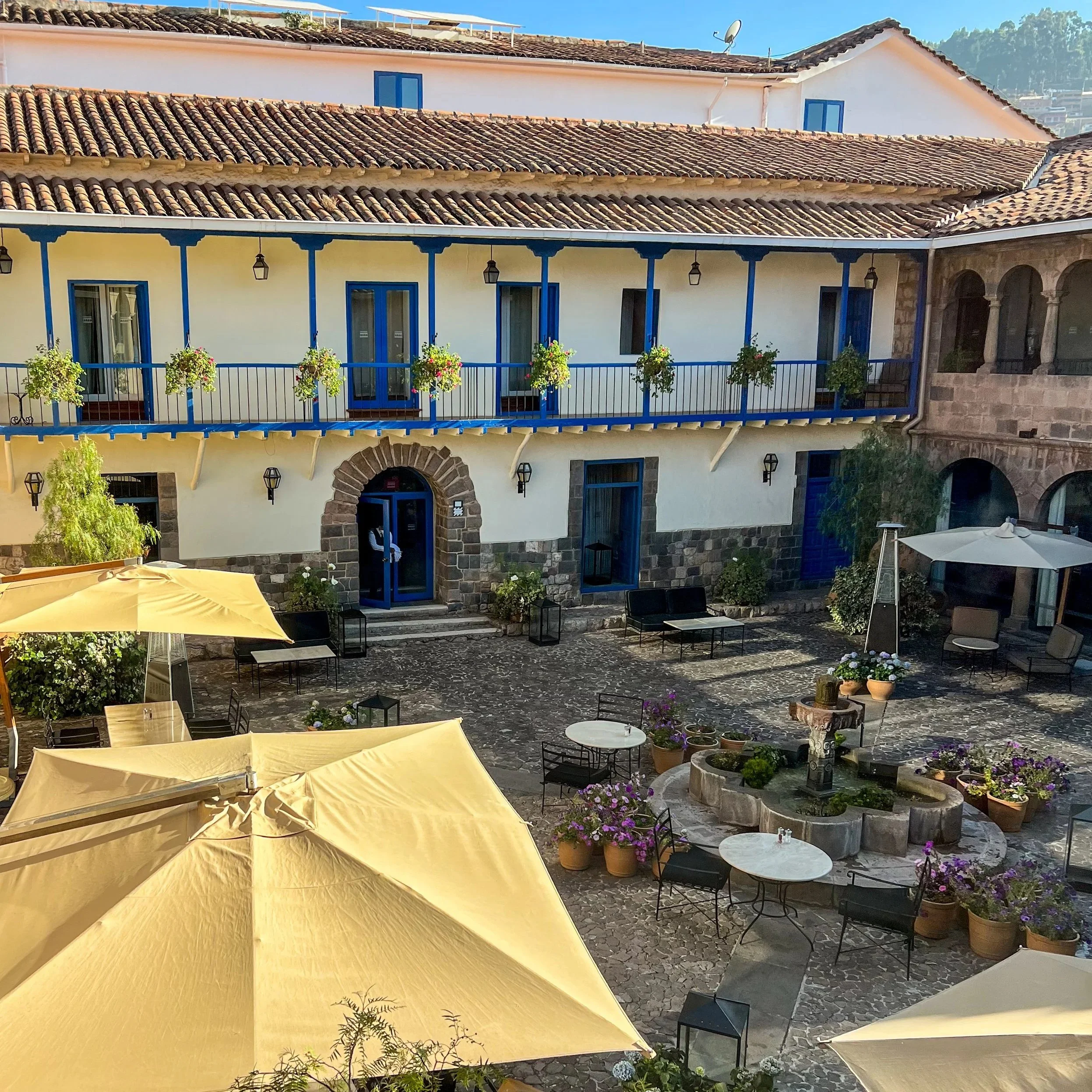
Belmond Hotel Monasterio is the centerpiece of Cusco's luxury hotel scene and the property that defines the genre. Housed in a former 1592 monastery, the hotel is built around a symmetrical courtyard anchored by a 300-year-old cedar tree, with cloistered passageways, hand-painted ceilings, and the kind of architectural gravity that genuinely earns its rate. The property sits two blocks from the Plaza de Armas in a quiet pocket of the historic center, and it offers oxygen-enriched rooms — a meaningful comfort at this altitude, particularly for sensitive sleepers and children.
The experience of staying in a centuries-old monument is exactly the kind of memory that lands with kids in a way a standard luxury hotel doesn't, and Belmond's operational consistency is what you'd expect from the brand. One child aged 12 or younger stays free when sharing existing bedding with parents, which is a generous policy at this rate point. The on-site restaurant Illariy and the more casual Tupay both work for families, and the hotel arranges Sacred Valley excursions and Machu Picchu transfers as standard.
The honest framing: Monasterio is dignified rather than playful. The architecture does the entertaining, the staff is uniformly excellent, and the experience is one of being inside a working monument rather than at a hotel. For families with kids 7+ who'll appreciate the gravity of the space, it's unrivaled. For families with toddlers, the JW Marriott (below) is operationally easier.
Belmond Palacio Nazarenas — for the all-suite alternative
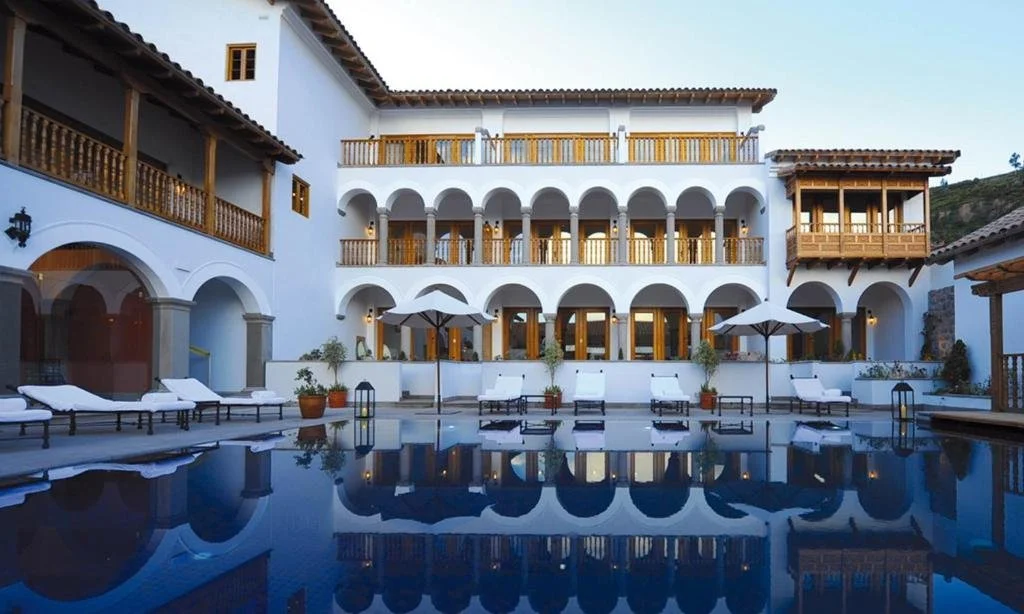
Belmond Palacio Nazarenasis Monasterio's sister property, located one block away on Plazoleta Nazarenas, and structurally the better choice for families. The property occupies a 17th-century former convent built on Incan foundations, with carved colonial frescoes, gold-framed paintings, and 55 all-suite accommodations across categories from Junior Suite through the Nazarenas Suite. The signature feature is the oxygen pumped into rooms through the air conditioning system upon request — an operational detail you don't appreciate until you've spent a night at altitude without it.
The food program is the genuine editorial story here. Mauka, the hotel's restaurant, is run by Pía León — the two-time World's Best Female Chef and partner of Virgilio Martínez of Central. Pía León's cuisine is Peru's most exciting contemporary food, and the fact that Mauka is operationally inside a Belmond hotel rather than a freestanding restaurant means you can have a serious food experience without leaving the property — useful when traveling with children. The spa includes treatment rooms with glass floors revealing the original Inca walls beneath, and treatments use Peruvian ingredients including pink Andean salt, purple corn, and coca.
For families specifically: one child aged 7 or younger stays free when sharing existing bedding with parents; children 8 and older can stay in extra beds at $77/night per child. The outdoor heated pool is a meaningful asset (rare in Cusco luxury hotels — most palazzo conversions don't have pools at all), and the iPads preloaded with a Cusco city guide are a small touch that older kids notice. This is, on balance, the strongest all-around family pick in Cusco.
Inkaterra La Casona — for the smallest, quietest, and most Relais & Châteaux
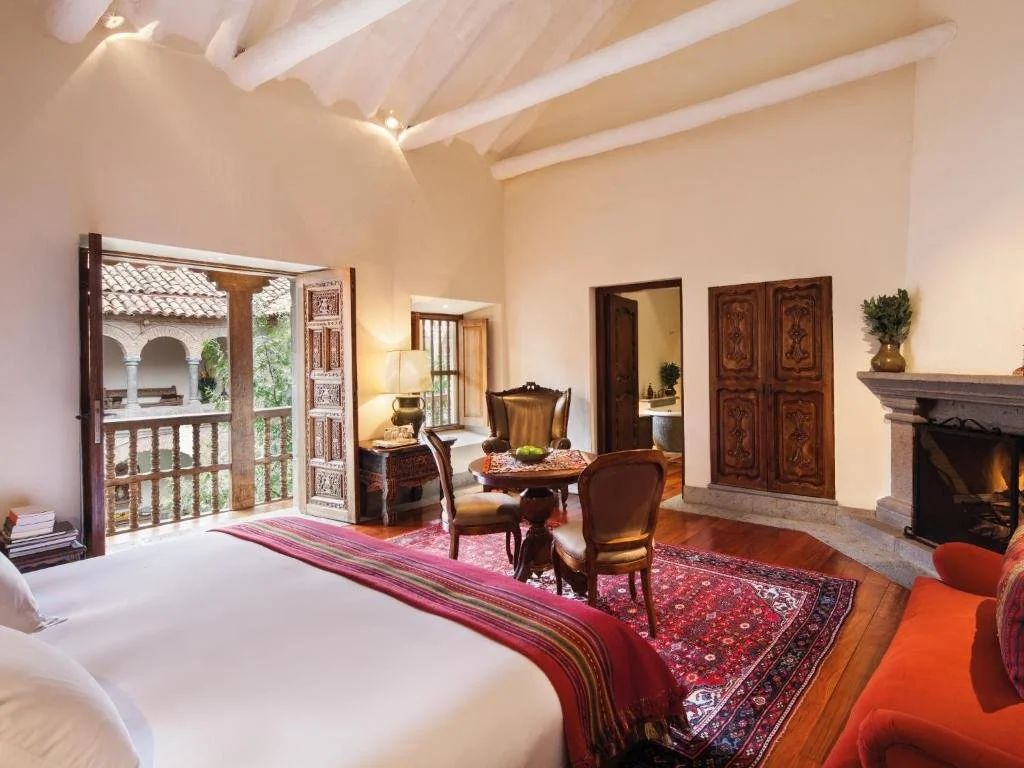
Inkaterra La Casona was the first Relais & Châteaux property in Peru (joined the network in 2010), the first boutique hotel in Cusco, and a National Geographic Unique Lodge of the World. It is also the smallest of the city's luxury options — just 11 suites — which is the entire point. The property occupies a 16th-century colonial mansion on Plaza de las Nazarenas (the same plaza as Belmond Palacio Nazarenas, directly across), built on land that was once an Inca elite military training ground and that has housed two of the most consequential figures in South American history: conquistador Diego de Almagro in the 1530s, and Simón Bolívar in the 1820s.
The aesthetic is genuinely museum-grade: antique chandeliers, marble fireplaces, baroque columns, hand-painted ceilings, pre-Columbian textiles, and original colonial murals. Each of the 11 suites has its own marble fireplace, heated floors, and extra-large bathtub. The dining room serves an excellent contemporary Peruvian menu in a single-seating setup; the Yacu therapy room runs spa treatments using local ingredients including Maras salt and cat's claw extracts. Service is intentionally European in temperature — discreet, attentive, and quiet.
For families, La Casona is the hardest of the five picks. The 11-room scale means that any disruption is felt across the property, and the aesthetic is calibrated for adult travel. It accepts children — guests have brought kids of various ages successfully — but it works best for families with one well-traveled child old enough to enjoy a formal hotel environment. For couples or families with one teenager, it's the most editorially distinctive Cusco stay; for families with multiple small children, choose one of the larger properties below.
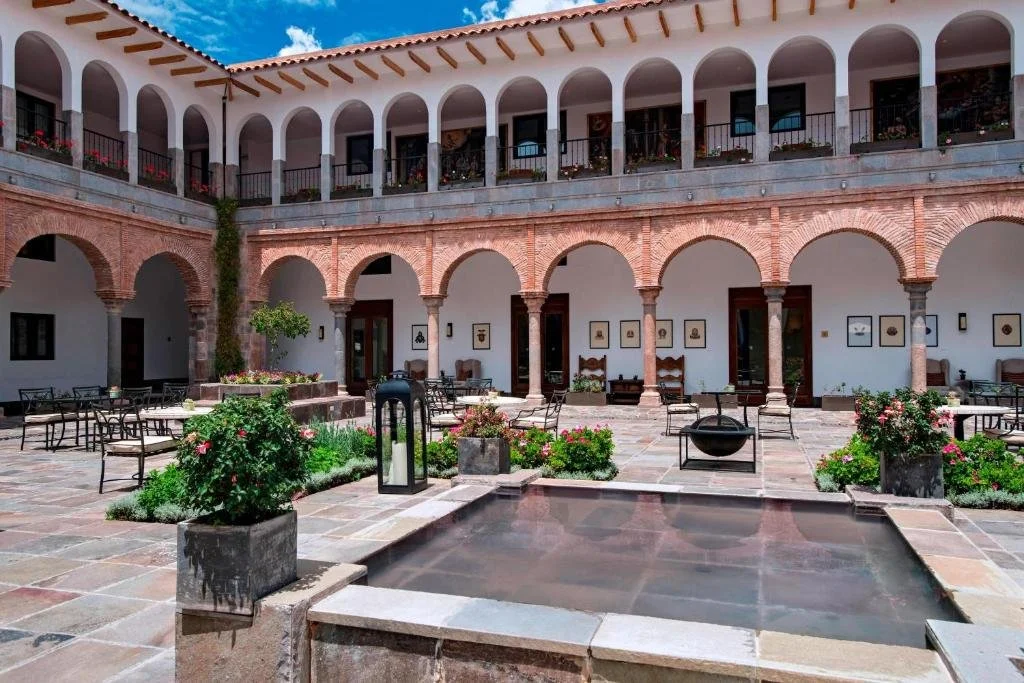
JW Marriott El Convento Cusco — for the operationally family-friendly luxury
JW Marriott El Convento Cusco is the most practically family-positioned of Cusco's luxury hotels. The property is built around a restored 16th-century convent on Esquina de la Calle Ruinas, with exposed Inca walls in the lobby (an actual stone wall of the pre-Hispanic Amarucancha palace runs through the hotel) and 153 rooms across multiple categories — meaningfully more inventory than the Belmond properties, which translates to more interconnecting room options and better availability during peak season.
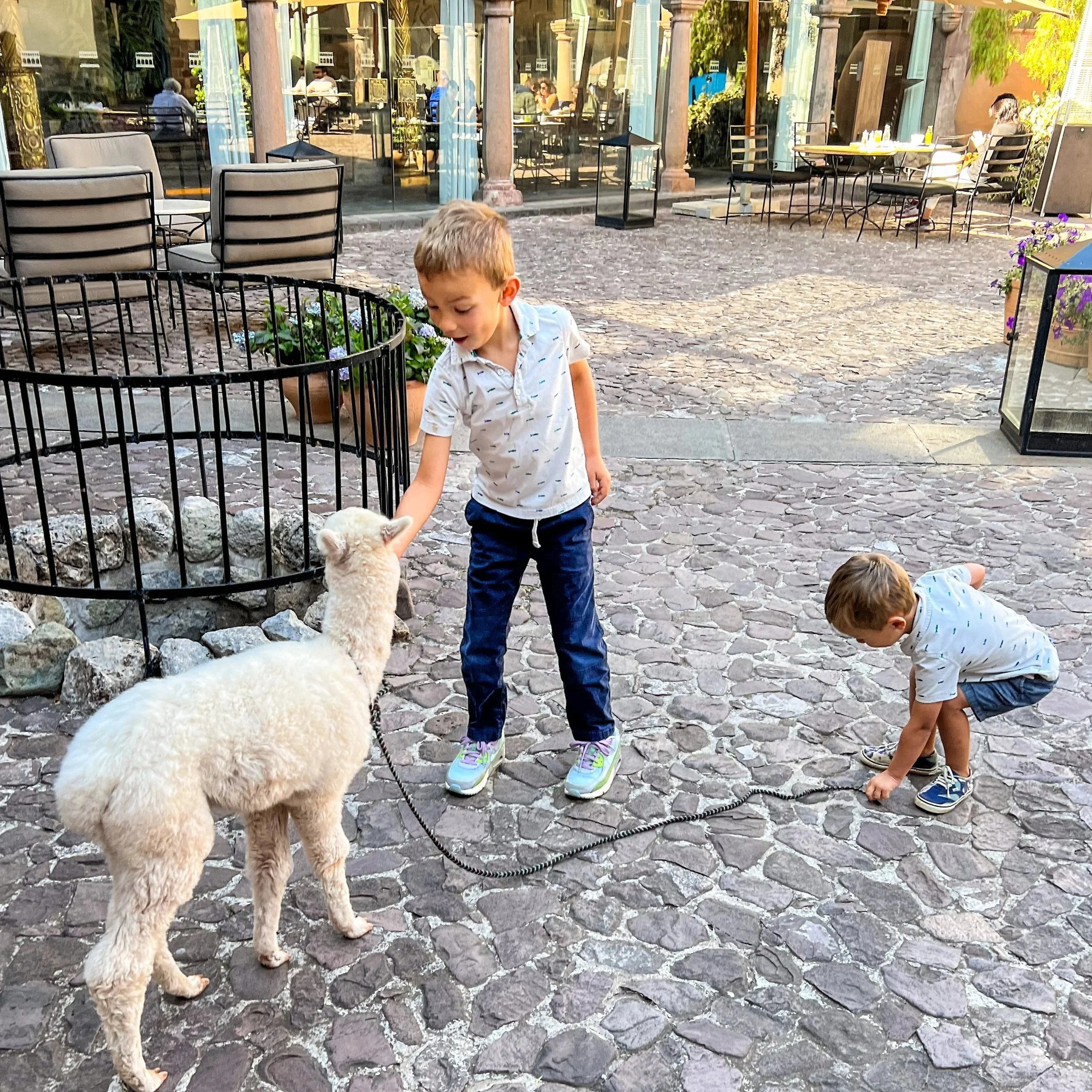
The operational advantages for families are real: a proper indoor pool, a full spa, a fitness center, and the operational consistency of a global brand running a Latin American flagship. The daily 6 p.m. historical tour of the hotel — short, free, conducted by an in-house historian — is short enough for children and surprisingly compelling. The on-site restaurant Pirqa serves a Peruvian-international menu that works for adult palates and accommodates children gracefully. And yes, there is a resident baby alpaca that appears in the lobby. This is not a small thing for a six-year-old.
Rooms are oxygen-enriched. The hotel sits one block from the Plaza de Armas. For families with multiple small children or families wanting the easiest possible Cusco stay, this is the answer.
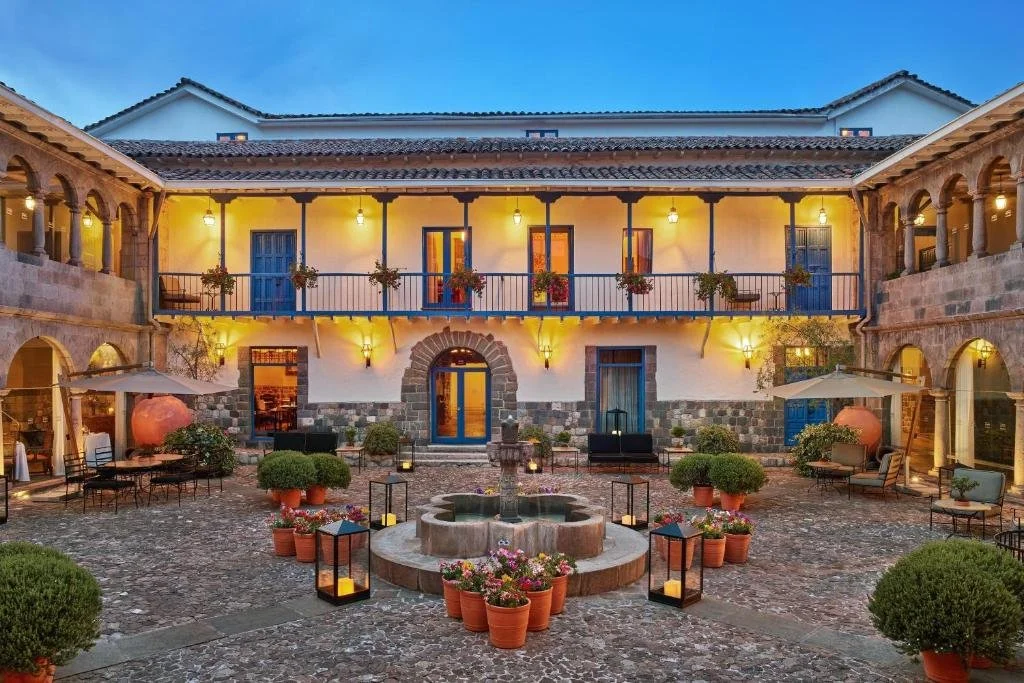
Palacio del Inka, a Luxury Collection Hotel — for the value-luxury alternative
Palacio del Inka sits in a 500-year-old mansion across from the Qorikancha (the Temple of the Sun, the most important Inca religious site in Cusco), and is generally the most accessible of the five hotels in this guide on rate. The property is a Marriott Luxury Collection member, with 203 rooms across categories including a Colonial Family Suite with two bedrooms — useful for families of four or five wanting more space than interconnecting rooms provide.
The building is itself a historic landmark — once known as Casa de los Cuatro Bustos (Home of the Four Busts) and at various points the home of Gonzalo Pizarro (brother of Francisco Pizarro), the first mayor of Cusco, and a series of subsequent Spanish dignitaries. The property holds 195 antiquities and pre-Inca art pieces in its permanent collection, and the lobby's glass ceiling brightens the original stone columns and walls in the way only a serious restoration budget makes possible. There is an indoor swimming pool (for an extra fee), a full spa with hammam, sauna, hot tub, and Turkish bath, and the inner courtyard hosts daily happy hours, cooking classes, and a baby alpaca visit from a local handler each morning.
The location across from Qorikancha is meaningfully different from the Plaza de Armas/Nazarenas cluster — slightly removed from the heaviest tourist foot traffic, marginally quieter, and walking distance to everything. For families wanting to be central but with a touch more breathing room, this is a strong pick. Children of all ages are welcome; children 12 and above are charged as adults.
Things to Do in Cusco
The good news for parents is that Cusco's most editorially significant sights — the ones worth your time even with limited days — are clustered tightly enough to be walkable for children. The list below organizes them by what they actually deliver, not by guidebook ranking.
Qorikancha and the Convento de Santo Domingo is the single most architecturally fascinating site in the city. The Spanish built the Convent of Santo Domingo directly on top of the Inca Temple of the Sun, fusing the two structures into a single building where you can stand inside a colonial Catholic cloister and see Inca walls — the perfectly fitted, mortarless stone that has survived earthquakes that destroyed the colonial construction above. For children, the visual lesson here is unforgettable, and the audio guide is age-appropriate. Allow 60–90 minutes.
Sacsayhuamán is the Inca fortress on the hill above Cusco — massive, walkable, and the kind of ruin children can run around in. The famous zigzag walls use stones weighing up to 200 tons, fitted without mortar so precisely a knife blade can't fit between them. Combine it with Q'enqo (a smaller ceremonial site nearby) and Tambomachay (the ritual baths) for a full half-day archaeological circuit. Most families do this with a private guide; the standard tourist ticket (boleto turístico) covers all four sites.
The Cathedral of Santo Domingo on the Plaza de Armas is the colonial counterweight to the Inca sites. The cathedral's Last Supper painting features cuy (guinea pig) as the central dish — a small detail that delights children and makes the colonial-Andean cultural fusion legible in a single image. Allow 45–60 minutes.
San Pedro Market is the cultural and culinary heart of working Cusco. Bring children for the fruit aisle, the chocolate vendors, and the juice bar; skip the meat hall if your kids are squeamish. A guided market tour with a chef (often arranged through your hotel concierge) is one of the best activities you can do in Cusco — kids choose ingredients, get a quick lesson in Andean food, and the day ends in a small cooking class or lunch.
ChocoMuseo Cusco in the historic center is a hands-on chocolate-making workshop pitched explicitly at families. Kids grind cacao beans, learn the history of chocolate from Mesoamerica to modern Peru, and leave with their own bars. It's touristy and it works — a reliable middle-of-the-day activity for a six-year-old.
Museo de Arte Precolombino (MAP) on Plaza de las Nazarenas is the city's strongest art museum and a serious editorial inclusion — Inca and pre-Inca ceramics, textiles, and gold work presented with museographic discipline. The on-site MAP Café is excellent for an adult lunch; kids tolerate the museum better than expected if you keep it under 90 minutes.
Inca Planetarium Cusco is the unexpected pick — a small private observatory on a hill above Cusco running 90-minute evening sessions on Inca astronomy, complete with constellation viewing through telescopes. It's exceptionally well done, the guides speak fluent English, and it's the kind of activity older children (8+) remember as the highlight of the trip.
Favorite Cusco Neighborhoods
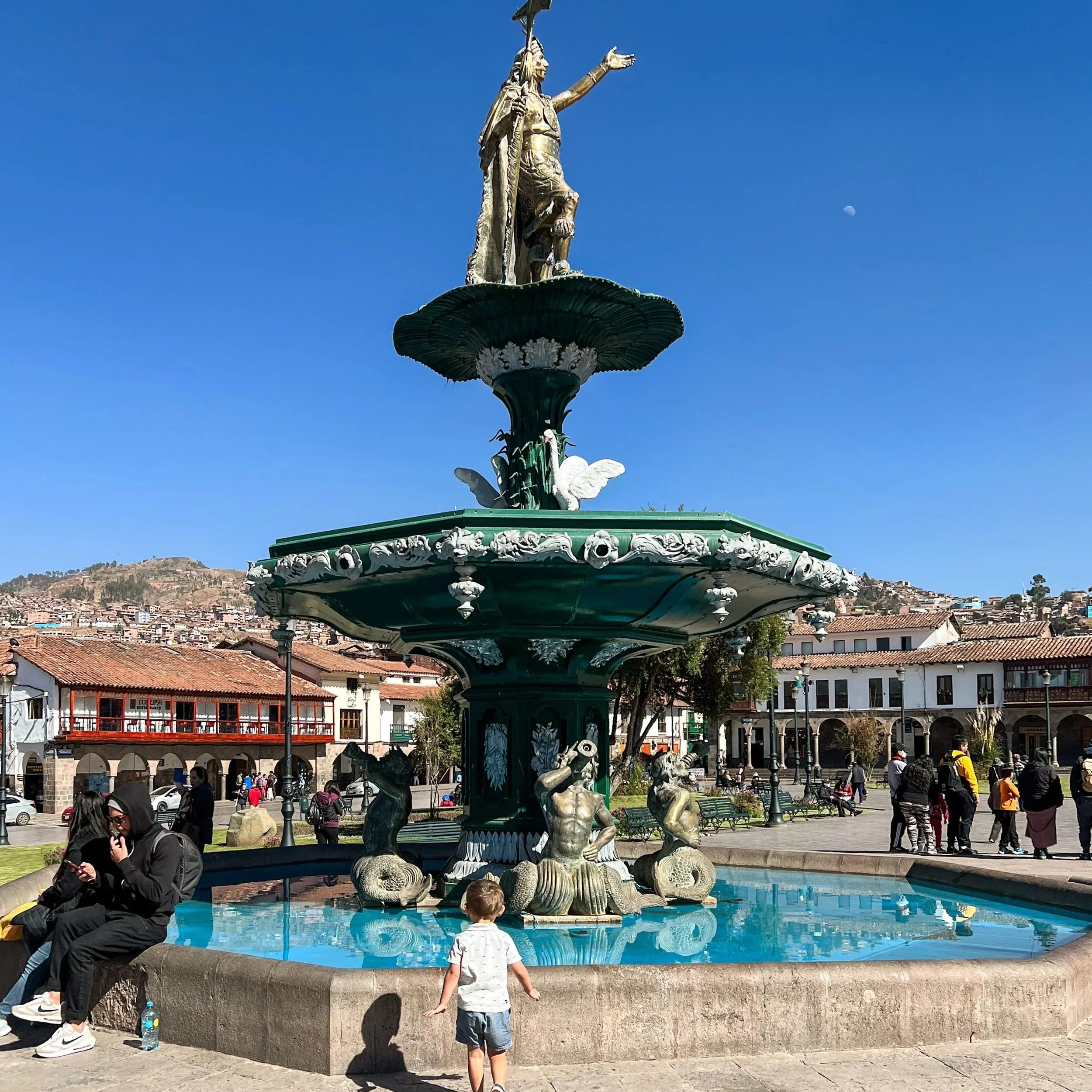
Plaza de Armas and the historic center is where most families base themselves and where most of the named sites cluster. Five blocks in every direction from the plaza covers the cathedral, the Jesuit church (La Compañía), Qorikancha, the Inca Roca walls (with the famous 12-angled stone), and the main artisan markets. All five hotels in this guide sit within this radius.
San Blas is the artisan quarter — uphill, steep, cobblestoned, full of textile workshops, silver workshops, ceramics studios, and the kind of cafés that produce social-media-grade photography. The walk up from the historic center is short but uphill, which matters at altitude with small children. The plaza at the top has a small church, several restaurants, and views back down across the city. Spend an afternoon here on day two or three, not on arrival day.
San Pedro is the working-Cusco neighborhood centered on the San Pedro Market — less polished than the historic center, more genuinely Peruvian, and an essential half-day if you want to understand the city beyond its tourist surface.
San Cristóbal and the upper neighborhoods above the historic center deliver the city's best viewpoints, particularly at sunset. The walk up to the white Cristo Blanco statue is short but steep; many families take a taxi up and walk down.
Where to Eat in Cusco
Cusco's food scene has matured considerably in the last decade. The standout dinners include:
Mauka at Belmond Palacio Nazarenas (Pía León's restaurant) is the city's strongest fine-dining experience and a serious destination meal even if you're not staying at the hotel. Reserve well in advance.
MAP Café inside the Museo de Arte Precolombino is the best museum-attached restaurant in Cusco, with a tasting menu format that works for adults and an à la carte option for families with children.
Cicciolina is the long-running Italian-Peruvian hybrid that everyone recommends because it's genuinely excellent and reliably handles families gracefully. The pasta is made in-house; the bar is good. Two blocks from the Plaza de Armas.
Limo Cocina Peruana specializes in Peruvian fish dishes (ceviche, tiradito) and serves them in a balcony space overlooking the Plaza de Armas — the location alone earns it a reservation.
Marcelo Batata is the steady mid-tier choice — Peruvian cuisine reliably well-prepared, an extensive pisco menu, and a rooftop terrace that works for an early family dinner.
Pacha Papa in San Blas is the casual pick: courtyard seating, traditional Andean food (the cuy roasted in clay ovens is the most child-friendly way to introduce the city's signature dish, if you're going to introduce it at all), and a guitarist most evenings.
Day Trips From Cusco
For families who've based in Cusco, the four day trips worth considering, in order of family-appropriateness:
Maras and Moray is the gentlest and most editorially interesting. Moray is the circular Inca agricultural terracing — a series of concentric rings carved into the earth, used as a microclimate laboratory by Inca engineers. Maras is the working salt evaporation pans, three thousand small pre-Inca salt pools cascading down a hillside. Together they're a half-day from Cusco, mostly by car with short flat walks, and the photography is among the best in the Sacred Valley.
Pisac is the market town and ruin combination — the Pisac ruins above the town are extensive and physically demanding, and the Sunday market in the town below is a Sacred Valley standard. Pisac is also easy to combine with a Cusco-to-Sacred Valley day if you're not basing in the valley first. (Note: if you've already followed the Peru with kids itinerary and stayed in the Sacred Valley before Cusco, you've likely already done Pisac.)
Rainbow Mountain (Vinicunca) is the dramatic Instagram pick — a striated geological formation at 17,000 feet that has become one of Peru's most-photographed sites in the last decade. It is a real ask: 3+ hours each way by van, then a serious uphill hike at extreme altitude. For families with children under 12, we don't recommend it. For families with older teens and serious altitude tolerance, it's worth the day.
Humantay Lake is the alternative high-altitude lake — turquoise water, a glacier backdrop, less crowded than Rainbow Mountain but a similar full-day physical commitment. Same family caveat applies.
Cusco With Kids: The Specifics
If you're traveling with children, a few Cusco-specific notes worth flagging:
Altitude management is the single biggest variable. Re-read the altitude section of our Peru with kids guide; the protocol applies fully here. Enter Cusco from the Sacred Valley, not directly from Lima. Hydrate aggressively. Move slowly on day one. Choose hotels with oxygen-enriched rooms — Monasterio, Palacio Nazarenas, JW Marriott El Convento, and Palacio del Inka all offer this.
Cobblestones, hills, and uneven surfaces define the historic center. Strollers struggle here; soft carriers are far more useful. Sturdy walking shoes with grip are non-negotiable for children. The walks within Cusco are short (most sites are within 10 minutes of the Plaza de Armas) but cumulatively physical at altitude.
Sun exposure is brutal. The UV at 11,150 feet is significantly higher than at sea level even when it's overcast. Reapply sunscreen aggressively. Wide-brimmed hats for kids. Sunglasses for everyone.
Food precautions matter. Stick to bottled water everywhere, including for tooth-brushing. Restaurants in the hotels above and in the historic center are uniformly safe; market food is generally fine if cooked and served hot in front of you. Be cautious with uncooked vegetables outside trusted restaurants. Coca tea is offered everywhere and is safe for children in moderation — useful for mild altitude symptoms.
Children's programming varies by property. Among our five hotels, JW Marriott El Convento has the most operational family setup (pool, kids' menus, family rooms in inventory). Palacio Nazarenas has the most genuine family-priced policy (one child 7 or under free with parents). Monasterio is the most child-welcoming of the genuinely historic palaces. La Casona is the least family-programmed and best suited to families with one older child.
Practical Information
When to Go. The dry season (May through September) is the right window for Cusco. June through August is peak — drier, busier, more expensive. May and September are the editorial sweet spots: meaningfully fewer crowds, still reliably dry, more flexible pricing. Avoid January and February, when rainfall can disrupt the Inca Trail (closed in February) and the train to Machu Picchu is occasionally affected.
Getting There. Cusco's Alejandro Velasco Astete International Airport (CUZ) sits about 10 minutes' drive from the historic center. Most international travelers connect through Lima. The flight from Lima to Cusco is roughly 90 minutes. As we recommend in our Peru with kids guide, do not fly directly into Cusco from Lima on day one — transit to the Sacred Valley first, then ascend.
Getting Around. The historic center is walkable. Taxis are cheap and abundant; use registered hotel taxis or apps rather than street-hailed cars. Most luxury hotels arrange private transfers, day excursions, and Machu Picchu logistics through their concierges — strongly recommended over independent booking for families.
Money. Peruvian sol is the currency. Most luxury hotels and restaurants accept credit cards; smaller artisan workshops, market vendors, and taxis are cash-only. ATMs are reliable in the historic center.
Health. Talk to a travel medicine specialist 4–6 weeks before departure. Hepatitis A and typhoid are standard recommendations. Yellow fever vaccination is required only for the Amazon. Bring a small kit with children's pain reliever, anti-nausea medication, oral rehydration salts, and any altitude-specific medication your pediatrician has prescribed.
Tipping. Standard practice in Peru is 10% at restaurants where not included, $5–$10 per day for hotel housekeeping, $20–$50 per day for private guides, and $5–$10 per bag for porters.
Frequently Asked Questions
How many days do you need in Cusco? Two to three nights is the right amount for most families. Two if you're tight on time; three if you want to do a day trip from Cusco (Maras and Moray is the family-friendly pick). Less than two leaves the altitude unresolved before you're back on the road; more than three starts to push small legs past the limit on the cobblestones.
Is Cusco safe for families? Yes, with standard precautions. The historic center is well-policed and visibly safe day and night. Stick to registered taxis. Be vigilant about pickpockets in the San Pedro Market and on busier streets. Tap water is not safe to drink — use bottled water for everything including tooth-brushing. The most significant risk in Cusco is altitude, not safety.
Should you stay in Cusco or the Sacred Valley? Both, ideally. As we cover in detail in our Peru with kids guide, the strongest family itinerary enters Peru through the Sacred Valley (lower altitude, gentler acclimatization, more family-friendly hotels), then ascends to Cusco for the historic city experience. For a short Peru trip where you have to choose just one, the Sacred Valley is the better family base; Cusco is the better cultural and architectural experience.
Do you need a guide in Cusco? For families, yes — at least for the half-day archaeological circuit (Qorikancha, Sacsayhuamán, and the upper ruins). A private guide adds dramatically to the experience for children, who get a curated narrative rather than a generic walking tour. Your hotel concierge will arrange this; expect to pay $80–$200 for a half-day private guide depending on group size.
What is the boleto turístico? The Cusco tourist ticket — a multi-site pass covering Sacsayhuamán, Q'enqo, Puca Pucara, Tambomachay, Pisac, Ollantaytambo, and several other archaeological and museum sites. The full ticket is valid for 10 days; partial tickets cover smaller circuits. Buy at the first site you visit or at the official tourist office on Avenida El Sol. Required to enter most of the city's archaeological sites; Qorikancha and Machu Picchu are separate.
What's the food in Cusco like? Excellent. Cusco's food scene is the second-strongest in Peru after Lima, with a contemporary fine-dining cohort (Mauka, MAP Café, Cicciolina) sitting alongside traditional Andean cooking (Pacha Papa, Marcelo Batata). The classic dishes — cuy (guinea pig), alpaca, rocoto relleno, aji de gallina, anticuchos — are widely available; pasta, grilled fish, and chicken alternatives are on every menu for less adventurous eaters. Coca tea is everywhere.
Can you visit Machu Picchu as a day trip from Cusco? Logistically yes, practically no — at least for families. The day-trip version means a 5 a.m. train, a long visit on minimal sleep, and a late return. We strongly recommend at least one overnight in Aguas Calientes (Machu Picchu Pueblo) for any family visit, as covered in our Peru with kids guide.
A Final Note
Cusco rewards travelers who treat it as a destination, not a transit stop. The combination of altitude, architecture, and density — Inca walls, Spanish baroque, contemporary Peruvian food, artisan workshops, and the most editorially serious cluster of historic hotels in the Americas — gives the city more depth than the standard one-night Peru itinerary allows. Two to three nights, in one of the hotels above, with the right pacing for altitude and the right balance of structured guiding and free wandering, makes Cusco one of the most memorable city stays a family can do in South America.
The Boujist Collection is built on stays we've paid for ourselves, in full, with no hosted nights or comped rooms. Our recommendations come from our own travel and from research, never from arrangements with hotels. If you book through the affiliate links in this guide, we earn a small commission at no cost to you — this is how the publication funds itself while maintaining editorial independence.