
Peru With Kids: A Luxury Family Travel Guide to the Sacred Valley, Machu Picchu, Lima and the Amazon
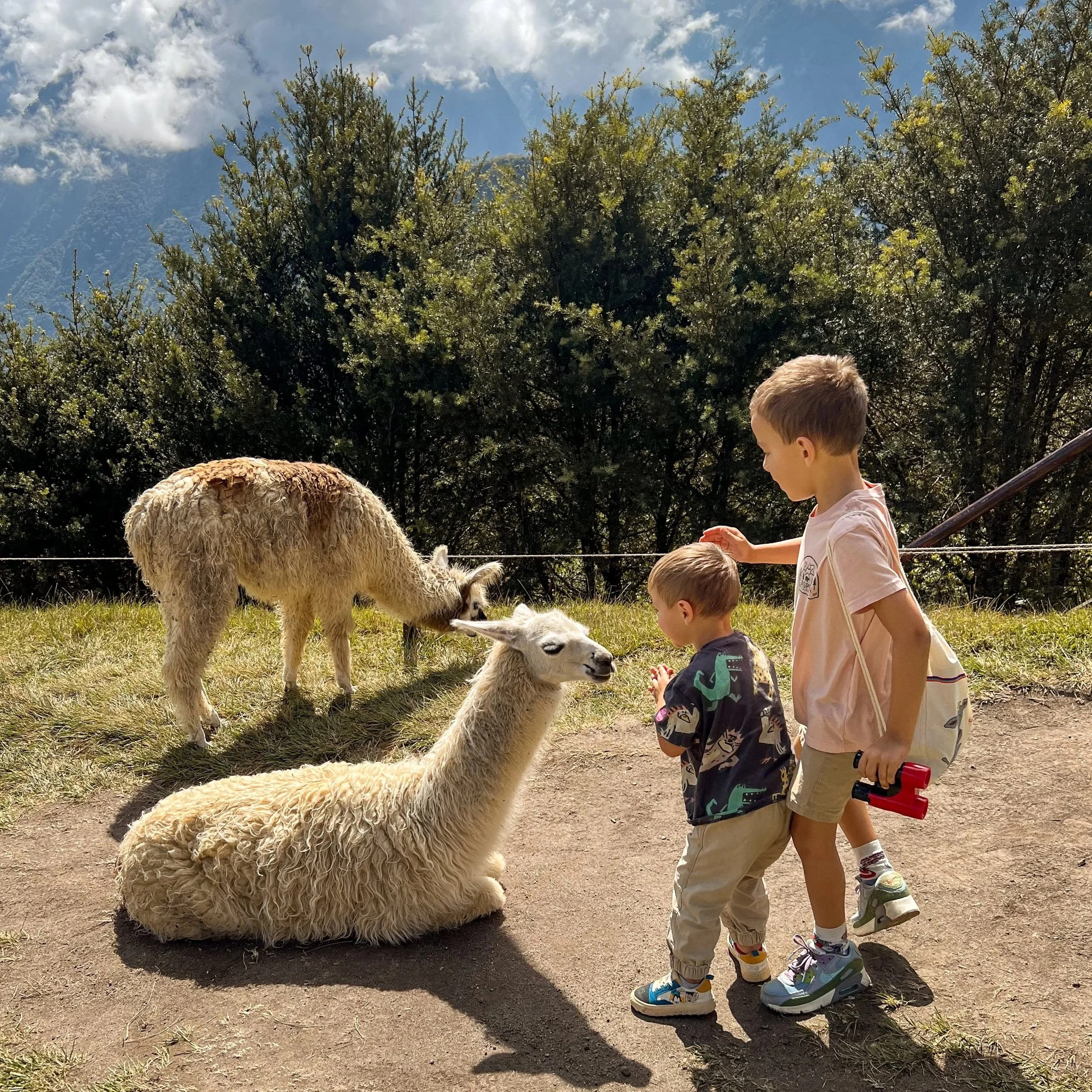
There is a moment, somewhere between the third bite of lomo saltado and the first sighting of a baby alpaca wandering through a hotel lobby, when even the most travel-skeptical child concedes that Peru is, in fact, the trip. The Sacred Valley unfurls in shades of green you didn't know mountains could produce. Machu Picchu appears through cloud as though someone backstage decided to draw a curtain just for you. In Lima, a ceviche lunch ends in a paper bag of churros con manjar eaten with sandy fingers on the Miraflores cliff path.
Peru with kids is not a soft trip. It rewards planning, slow pacing, and a willingness to think about altitude in a way you've probably never had to think about altitude. But for families with curious children — particularly the kind who like ruins, river rafts, llamas, and food that tastes nothing like dinner at home — there are few destinations in the world that punch above their weight quite like this one.
This is our complete guide to Peru with kids: where to stay, how to structure the itinerary so altitude doesn't derail it, which hotels actually want your children there, and the small, specific details that turn a logistically complex country into one of the most memorable family trips you'll ever take.
Why Peru Works for Families
Peru hits a sweet spot that's surprisingly rare in long-haul family travel. The food is among the best in the world, but it's also forgiving — grilled meats, rice, potatoes, fresh juices, and tropical fruit live alongside the cuy and anticuchos on every menu. The history is genuinely thrilling for kids who've spent any time on Greek mythology or ancient Egypt; the Incas, the conquistadors, and the unfinished archaeology of Machu Picchu are easy to make legible to a seven-year-old. And the country is set up for travelers in a way that more remote South American destinations are not: private guides, hotel transfers, oxygen-enriched rooms, and family programming at the major properties are all standard rather than luxe extras.
The two real considerations for families are altitude and pace. Cusco sits at 11,150 feet. The Sacred Valley, depending on where you base yourself, ranges from 9,200 to 9,800 feet. Machu Picchu, despite its dramatic perch, is actually lower at 7,970 feet. We'll get into the implications of all of this in a moment — the short version is that smart itineraries enter Peru through the Sacred Valley rather than Cusco, and the difference is significant for children.
How to Structure a Peru Itinerary With Kids
The standard mistake is to fly into Cusco and try to sightsee on day one. Don't. Cusco is the highest point in a typical Peru itinerary, and arriving directly from sea level is the fastest way to put a child to bed with a headache and a queasy stomach. Instead, fly into Cusco, drive directly down to the Sacred Valley (about an hour), and spend your first two or three nights at lower altitude. The valley acclimatizes you gently, and the activities there — horseback riding, salt flats, market mornings, lazy hotel pools — are exactly the kind of low-effort programming jet-lagged children can handle.
After the Sacred Valley, take the train to Machu Picchu (lower still, at 7,970 feet, so even gentler on small bodies). Return to Cusco for a night or two only after everyone has fully acclimatized. End in Lima — sea level, oysters, sand — for a soft landing before the flight home.
A seven-to-ten-night version of this looks like:
3 nights Sacred Valley
1–2 nights Machu Picchu (or a day trip with one night in Aguas Calientes)
2 nights Cusco
2–3 nights Lima
Families with more time should add an Amazon extension out of Puerto Maldonado, which is the most family-friendly way to do the rainforest and sits at low altitude.
The Sacred Valley: Where to Stay With Kids
The Sacred Valley is where the trip lives or dies. Choose well here and the rest falls into place. These are the properties worth your money, presented by the kind of family they suit best.
For families who want a true country estate
Rio Sagrado, A Belmond Hotel, Sacred Valley is the Sacred Valley property most explicitly built around family luxury, The hotel funds its on-site school for Sacred Valley children through its foundation, which is the kind of thing parents notice and the kind of thing children, with the right framing, find meaningful. The restaurant in incredible and the activities are abundant.
For families who want the only private train to Machu Picchu
Tambo del Inka, a Luxury Collection Resort & Spa sits along the Urubamba River and is the only hotel in Urubamba with its own private train station, which is the kind of logistical convenience you don't appreciate until you've herded children, suitcases, and a stroller through a public terminal. The heated indoor pool — invaluable when you have small children and Andean evenings — is a real differentiator from the more rustic valley properties. Rooms are oxygen-enriched, which matters for sensitive sleepers. Of the major-brand options in the Sacred Valley, this is the one that genuinely earns the rate.
For families who want eco-luxury with a 100-acre playground
Inkaterra Hacienda Urubamba is set across a hundred acres of working farmland and emerald foothills, with 24 casitas spaced out from the main hacienda for privacy. The property's "earth to table" kitchen sources almost everything from its own organic garden, and the in-house excursions — bird walks, stargazing nights, a tea-time ritual — are pitched at families without being saccharine. Inkaterra is one of the few hotel groups in the world certified climate-positive, which is worth knowing if sustainability is part of your travel decision-making. Children of all ages are welcome, and casitas have wood-burning fireplaces that, on a cold Andean night, do something irreplaceable to a tired family.
Machu Picchu With Kids: Where to Stay
You have three options for Machu Picchu: stay at the ruins (one property only, and it's expensive), stay in Aguas Calientes/Machu Picchu Pueblo (the town at the base), or day-trip from the Sacred Valley. For families, we strongly recommend at least one night in Machu Picchu Pueblo so you can do a sunrise visit without an arduous pre-dawn train ride.
For families who want to be inside the cloud forest
Inkaterra Machu Picchu Pueblo Hotel occupies a twelve-acre private reserve at the edge of the village, with eighty-something whitewashed casitas tucked into a working cloud forest. The property has registered 315 bird species on its grounds, including the iconic Andean cock-of-the-rock, and houses the world's largest native orchid collection at 372 species. For kids, this translates into a nightly stargazing walk through the gardens with candle-lit lanterns, a complimentary excursion the hotel runs that genuinely qualifies as a core memory. Children under 12 stay free when sharing with parents — an unusually generous policy at this level — and the hotel runs a family-oriented programming track that includes a treasure hunt, an "Inkaterra Mini Guide" kit, and cooking classes.
For families who want to stay at the ruins themselves
The Belmond Sanctuary Lodge is the only hotel located at Machu Picchu itself, immediately adjacent to the citadel entrance. It is famously expensive and books out far in advance. Its value proposition for families is genuinely unique — sunrise at the ruins without the 5 a.m. bus from Aguas Calientes — but it is not a property built around children, and most families find Inkaterra a better overall experience for one or two nights.
Cusco With Kids: Where to Stay
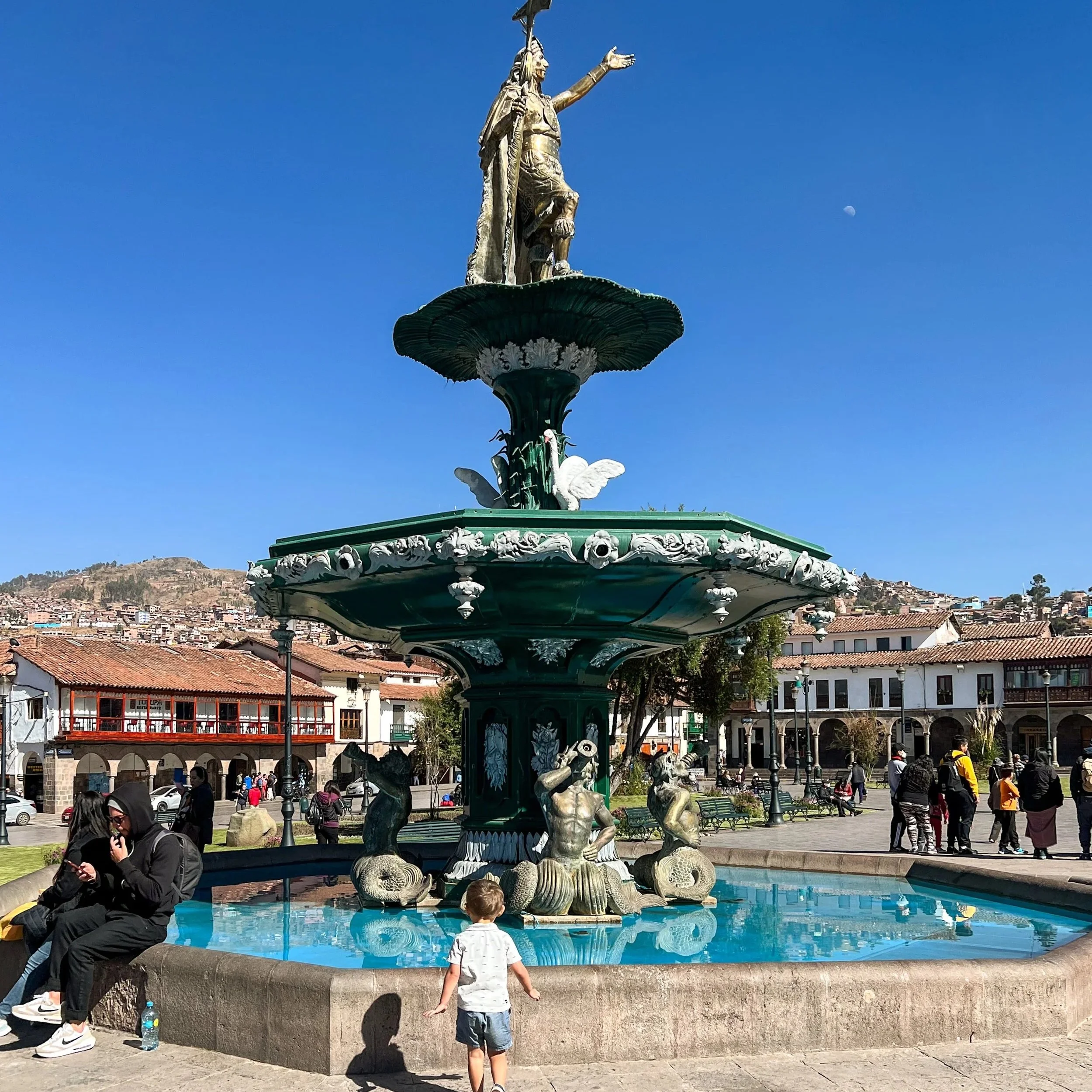
Cusco is the highest, oldest, and most architecturally dense stop on a Peru itinerary, and it's where a half-day of cobblestone walking with kids is genuinely lovely and a full day can be punishing. Plan light. Two nights is usually enough.
For families who want the historic centerpiece
Monasterio, A Belmond Hotel is housed in a 1592 monastery two blocks from the Plaza de Armas, built around a symmetrical courtyard anchored by a 300-year-old cedar tree. The property offers oxygen-enriched rooms — a meaningful comfort at 11,150 feet, particularly for children — and the experience of staying inside a centuries-old monument is exactly the kind of memory that lands with kids in a way a standard luxury hotel doesn't. One child aged 12 or younger stays free when sharing with parents. The hotel is dignified rather than playful, but the architecture does the entertaining.
For families who want a hotel with a pool and a baby alpaca
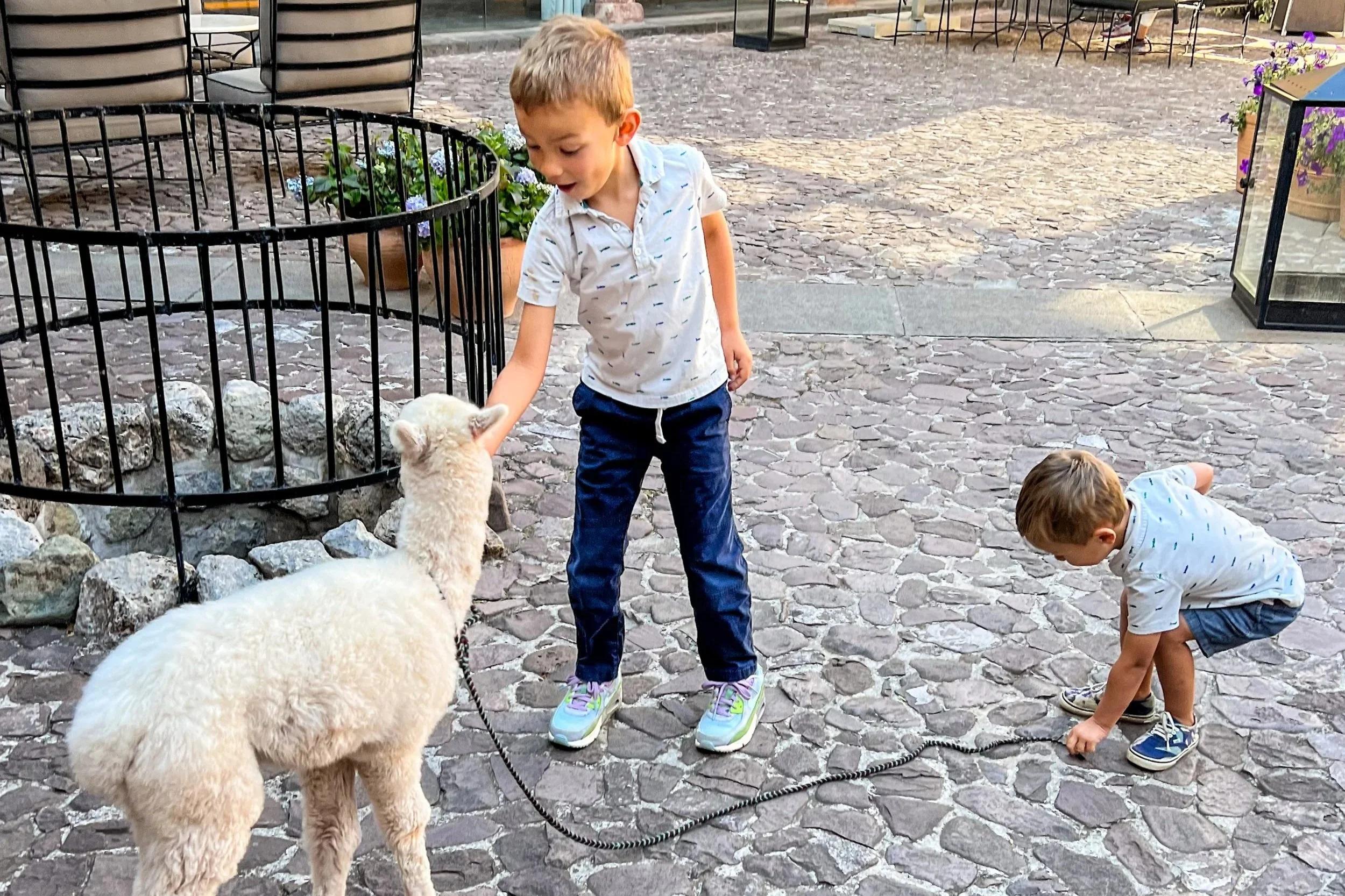
JW Marriott El Convento Cusco is the most child-friendly of Cusco's luxury hotels in practical terms — a proper indoor pool, a spa, a fitness center, and the kind of operational consistency you get from a global brand running a Latin American flagship. The property is built around a restored 16th-century convent with exposed Inca walls in the lobby, and the daily 6 p.m. historical tour of the hotel is short enough for children and surprisingly compelling. Yes, there is a resident baby alpaca that appears in the lobby. This is not a small thing for a six-year-old.
Lima With Kids: Where to Stay
End in Lima. The capital is at sea level, the food is extraordinary, and after a week of altitude and ruins, the change in pace is restorative. Stay in Miraflores or Barranco — both are walkable, safe, and oriented toward the cliffs above the Pacific.
For families, Miraflores is the more practical base. The cliff-top parks — Parque del Amor, Parque Kennedy, the long promenade running along the bluffs — are designed for outdoor afternoons with children, and the neighborhood is dense with the kind of casual but extraordinary restaurants that make Lima the gastronomic capital of South America. La Mar (Gastón Acurio's flagship ceviche restaurant) is essential, lunch only, and accommodates children gracefully. Plan accordingly: book ahead and go early.
Look for properties on or near the malecón — the cliff path — so kids can walk off long meals. Miraflores Park (a Belmond property) and Country Club Lima Hotel (a Leading Hotels of the World member with an old-world garden setting) are the standout luxury options, both consistently well-rated for families.
The Amazon Extension: Worth It With Kids?
Yes — but only the right way. Peru's Amazon access splits into two main entry points: Iquitos (in the north, jungle-river focused, more expeditionary) and Puerto Maldonado (in the south, easier to combine with Cusco, more lodge-comfortable). For families, Puerto Maldonado is the answer.
Inkaterra Reserva Amazónica is the standout family-oriented option here — accessible by short flight from Cusco, a 45-minute boat transfer to the lodge, and a programmed slate of guided walks, canoe trips, and night excursions calibrated for children. Three nights is the minimum to make the journey worthwhile; four is better.
This extension adds roughly $2,500–$5,000 per family to a Peru trip depending on lodge and length of stay. Whether that's worth it depends entirely on your children: the rainforest is wet, buggy, and physically active, and the wildlife sightings — while real — require patience.
Practical Information
When to Go With Kids
The dry season runs roughly May through September and is the right window for first-time families. June through August is the peak — drier, busier, more expensive, and lined up with northern hemisphere summer holidays. May and September are the sweet spots: meaningfully fewer crowds, still reliably dry, and often more flexible pricing. Avoid January and February, when rainfall can disrupt the Inca Trail (closed in February for restoration) and the train to Machu Picchu is occasionally affected by mudslides.
Altitude With Children: What to Actually Do
Altitude is the single most important variable in a Peru trip with kids, and it is widely under-discussed. A few practical notes:
Enter through the Sacred Valley, not Cusco. This bears repeating because most itineraries get it wrong.
Hydrate aggressively from the moment you land. Children dehydrate faster than adults and dehydration amplifies altitude symptoms.
Coca tea is widely served and helpful for mild symptoms. It is safe for children in moderation.
Move slowly for the first 24 hours. No hiking, no climbing, no full-day excursions.
Talk to your pediatrician about Diamox before you go. Whether prophylactic use makes sense depends on your child's age, weight, and medical history.
Choose hotels with oxygen-enriched rooms in Cusco. This is a real feature, not a marketing claim. Monasterio and JW Marriott El Convento Cusco both offer this.
Packing Notes for Peru With Kids
Layered clothing is non-negotiable. The Andes go from 75°F in the sun to 35°F at night, sometimes within an hour. Pack fleece and a packable down or insulated layer for each child, plus a waterproof shell. Sturdy walking shoes with grip — Machu Picchu's stones are uneven and often wet. A reusable water bottle per person. Sunscreen (the UV at altitude is brutal even when it's overcast). And, for younger children, a soft carrier is more useful than a stroller in nearly every location.
Health and Vaccines
Talk to a travel medicine specialist 4–6 weeks before departure. Hepatitis A and typhoid are standard recommendations. Yellow fever vaccination is required only if you're going to the Amazon. Bring a small kit with children's pain reliever, anti-nausea medication, oral rehydration salts, and any altitude-specific medication your pediatrician has prescribed.
How Long Should a Peru Trip With Kids Be?
Ten nights is the sweet spot. Seven nights works but feels rushed — you'll be reluctant to give up Lima at the end, and Cusco genuinely deserves more than a quick stopover. Fourteen nights opens up the Amazon extension comfortably. Less than seven nights, and the cost-to-experience ratio starts to look unfavorable given the flight time and the altitude acclimatization required.
Peru With Kids: Frequently Asked Questions
What's the best age to take kids to Peru? Seven and up is the comfortable answer. Younger children can absolutely do Peru, and many families travel here with toddlers successfully, but the altitude and the long walking days at the ruins are easier on slightly older bodies. Teenagers tend to find Peru genuinely thrilling — the food, the history, the photography, the relative novelty of a country most of their peers haven't been to.
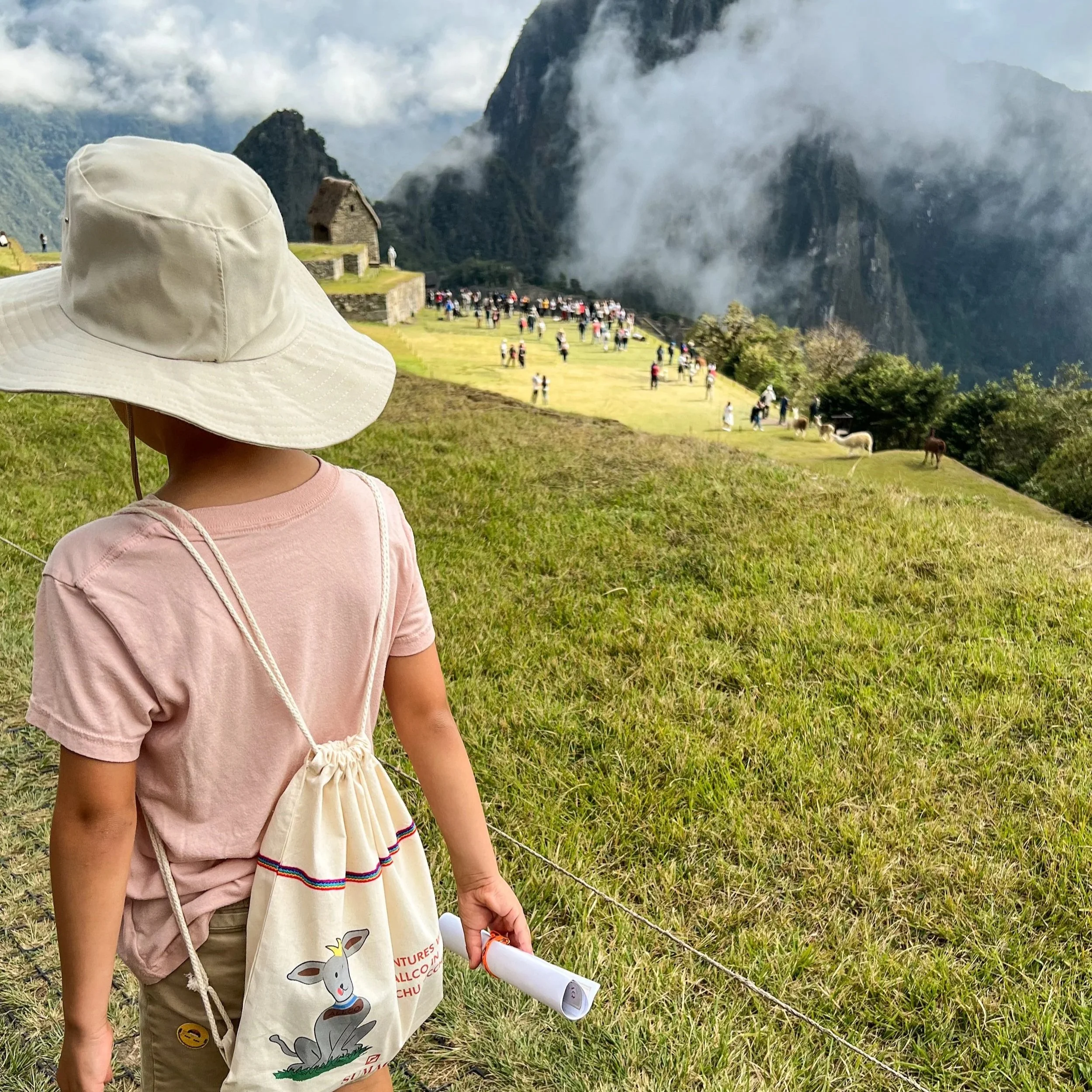
Is Machu Picchu safe and accessible for children? Yes, with reasonable care. The terrain is uneven, the paths are narrow in places, and there are unfenced drops, so children need to stay close to adults. Strollers are not permitted at the citadel. Plan on three to four hours on site with kids, with a guide who is briefed that you're traveling with children and will adjust the pace.
Do you need a guide for Machu Picchu? Officially, yes — visitors are required to enter with a licensed guide, and the rules around routes and timing have tightened in recent years. For families, a private guide is well worth the cost: better pacing, better narrative, and someone who can carry water and snacks and call audibles when a child needs a break.
Is the food in Peru safe for kids? Restaurants in Lima, Cusco, and the Sacred Valley luxury hotels are uniformly safe and excellent. Stick to bottled water everywhere. Be cautious with street food and uncooked vegetables outside trusted restaurants. Peruvian food is generally mild — children who eat at home will eat in Peru.
How much should a luxury Peru family trip cost? For a family of four staying at the properties named above, budget $1,200–$2,200 per night for accommodations during the dry season, plus internal flights ($150–$300 per person per leg), private guides ($300–$600 per day), train tickets to Machu Picchu ($150–$500 per person round-trip depending on class), and meals. A ten-night trip lands roughly between $25,000 and $50,000 for a family of four, depending heavily on hotel selection and whether you're chartering private transfers.
A Final Note
Peru rewards parents who plan and underwhelms parents who wing it. The country is set up for travelers, but it's also a place where altitude, distance, and infrastructure can punish improvisation. Build the itinerary slowly, enter through the Sacred Valley, choose hotels that genuinely want children there, and give yourself an extra day everywhere you can. The trip will repay you many times over.
The Boujist Collection is built on stays we've paid for ourselves, in full, with no hosted nights or comped rooms. Our recommendations come from our own travel and from research, not from arrangements with hotels. If you book through the affiliate links in this guide, we earn a small commission at no cost to you — this is what keeps the publication editorially independent.
Related Reading
Best Luxury Family Resorts in Mexico
Best Hotels in Greek Islands for Families
Hôtel Crillon le Brave: A Provence Family Review