

Mljet is where you go to do almost nothing, beautifully. The greenest and one of the quietest of Croatia's large islands, its western third is a national park built around two connected saltwater lakes, with a 12th-century monastery on an islet in the middle of the larger one. There are no party harbors here, no yacht scene, barely any hotels — just pine forest, clear water, cycling paths, and a stillness that the busier Dalmatian islands traded away years ago. After the energy of Hvar or the polish of Dubrovnik, Mljet is the exhale.
This is our honest guide to Mljet — the national park, where to stay, what to do, and how to plan a visit to Croatia's most tranquil island.
Day trip or stay the night?
This is the first decision. Mljet is close enough to Dubrovnik that many people visit on a long day trip, and you can see the national park's highlights — the lakes, the monastery, a swim — in a single busy day. But the island's whole character is its calm, and that only really reveals itself once the day boats leave. If you can spare the time, two or three nights lets you cycle the lakes at dawn, find the quiet eastern beaches, and experience the version of Mljet that day-trippers never see. We'd stay.
Where to stay on Mljet
Be clear-eyed about this: Mljet has essentially one full-service hotel, and the rest is apartments, guesthouses, and villas. That scarcity is part of the island's appeal — you don't come to Mljet for resort luxury, you come for the quiet. The main decision is location.
Pomena is the village right at the national park entrance — the most convenient base if the lakes are your priority, walkable to the park, with a small harbor lined with restaurants. Polače, a sheltered bay nearby, is a quieter alternative still close to the park. Saplunara, at the island's far eastern tip, is the choice for Mljet's rare sandy beaches and total seclusion — but it's a 40-kilometer drive from the park, so you'll want a car.
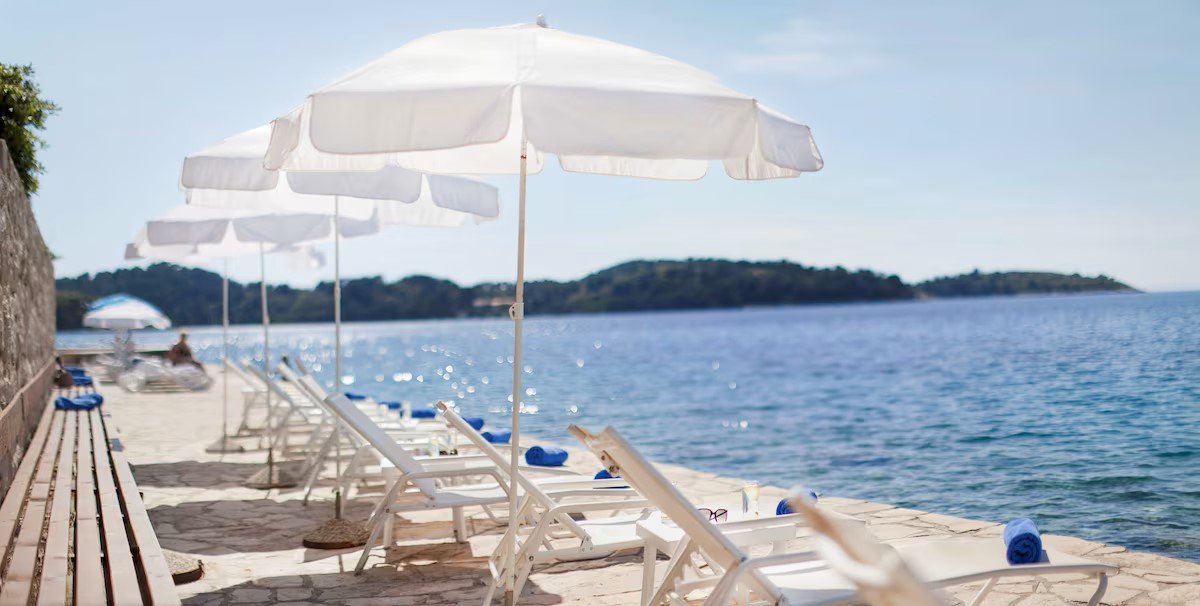
Hotel Odisej (Pomena) — the island's only hotel
Set within the pine and oak forest of the national park, right on Pomena Bay, the Odisej is Mljet's one classic full-service hotel — comfortable air-conditioned rooms, many with sea- or parkland-facing balconies, a spa with sauna and treatments, a sea-water children's pool, restaurants with terrace views over the harbor, and a beach bar on the pier. It won't compete with the heritage palaces of Korčula or Hvar, and it isn't trying to; what it offers is the most convenient, comfortable base for the park, steps from the trails and the boat to St. Mary's. For most visitors who want a hotel rather than an apartment, this is the choice.
Beyond the hotel: the best stays on Mljet are often well-chosen apartments and villas — in Pomena and Polače for park access, or in Saplunara for the beaches and quiet. For groups and longer stays, a villa with a car is the way to do the island properly.
Our take: Hotel Odisej for the easiest park-side hotel stay; an apartment in Pomena or Polače to be near the lakes; a villa in Saplunara if sandy beaches and seclusion matter more than park access.
Mljet National Park
The park is the reason to come, and it's genuinely special. Two saltwater lakes — Veliko Jezero (the Big Lake) and Malo Jezero (the Small Lake) — sit connected to the sea and to each other by narrow channels, ringed by forest and laced with walking and cycling paths. The water is warm, sheltered, and astonishingly clear, and the whole area is built for slow, active days outdoors.
Visit St. Mary's Islet. In the middle of Veliko Jezero sits a tiny island with a 12th-century Benedictine monastery, reached by a small park boat that runs regularly across the lake (the return trip is included with park admission). Wander the monastery and the grounds, have a coffee or a swim off the islet's shores, and soak in one of the most peaceful spots in the Adriatic.
Cycle the lakes — but consider an e-bike. Renting a bike is the classic way to experience the park, and the paths right around the lakeshores are flat and shaded, with swims wherever the water tempts you. One honest warning, though: venture beyond the immediate lake loop and the island gets genuinely hilly. We consider ourselves fit, and the ride was hard — properly hilly and tougher than we expected. Unless you're in great shape, spend the little extra on an e-bike; you'll cover more of the island, enjoy it far more, and not arrive at lunch wrecked. A morning circuit before the day boats arrive is the best of Mljet.
Kayak or swim. Kayaks and canoes rent from Mali Most, the little bridge where the two lakes meet, and paddling the calm water is a lovely, quiet way to see the park from a different angle. Or simply pick a spot and swim — the sheltered lakes are warmer than the open sea.
Hike to a viewpoint. Trails climb to lookouts like Montokuc, with sweeping views over the lakes and the forested island. A short, rewarding climb.
A practical note: park tickets in 2026 run roughly €15 in low season and €25 in high season, and admission covers the trails, viewpoints, and the boat to St. Mary's. Check the official park website close to your visit, since prices and boat timetables shift by season.
Beyond the park
Mljet has more than its famous lakes. Saplunara, at the eastern end, has some of the only true sandy beaches in this part of Croatia — idyllic, low-key, and worth the drive. The Odysseus Cave near Babino Polje is a dramatic sea cave you can swim into on a calm day, tied to the legend that Odysseus was shipwrecked here. And the small villages — Polače with its Roman ruins, Babino Polje, the harbor at Sobra — offer a glimpse of unhurried island life and traditional stone houses.
Where to eat on Mljet
Dining on Mljet is simple and seafood-driven — small family konobas and harbor restaurants serving whatever the local boats brought in. In Pomena and Polače, waterfront restaurants do fresh fish, grilled seafood, and black risotto with views over the bay. Look for island specialties like makaruli — homemade macaroni with goat cheese and fried garlic — and the traditional cake prandispanj. The restaurant on St. Mary's Islet is a pleasant spot for a coffee or a cold drink mid-visit. This isn't a fine-dining island, and that's rather the point: honest food, fresh fish, a glass of local wine, and a view of the water.
Best time to visit Mljet
May, June, and September are the ideal windows — warm enough to swim in the lakes, the park and restaurants fully open, and the island at its tranquil best before and after the summer peak. July and August bring the most day-trippers and the warmest weather, though even at its busiest Mljet stays calmer than Hvar or Dubrovnik. Outside roughly April to October the island winds down, ferry and boat schedules thin, and many places close, so Mljet is firmly a warm-season destination.
How to get to Mljet
Mljet is reached by sea, most commonly from Dubrovnik. Passenger catamarans run to Pomena and Polače on the park side of the island, while car ferries dock at Sobra further east, with a drive across the island from there. In summer there are also day-trip boats and seasonal links from other islands. If you're bringing a car — useful for reaching Saplunara and the eastern beaches — you'll need the Sobra car ferry; if you're focused on the park and staying in Pomena, the passenger catamaran is simpler. Check schedules carefully, as they're seasonal and less frequent than for the busier islands.
Frequently asked questions
Is Mljet worth visiting? Yes, especially if you want nature and quiet. Mljet is Croatia's greenest, most tranquil large island, built around a beautiful national park with two saltwater lakes, a 12th-century island monastery, forest cycling paths, and clear, sheltered swimming. It's the antidote to the busier Dalmatian islands — choose it for calm over nightlife.
Should you visit Mljet as a day trip or stay overnight? You can see the national park's highlights on a long day trip from Dubrovnik, but Mljet's real character — its stillness — only emerges once the day boats leave. If you can, stay two or three nights to cycle the lakes at dawn, find the quiet eastern beaches, and experience the island at its most peaceful.
Where should you stay on Mljet? Mljet has essentially one full-service hotel, the Hotel Odisej in Pomena, right by the national park entrance. Otherwise it's apartments, guesthouses, and villas. Stay in Pomena or Polače to be near the lakes, or in Saplunara at the eastern tip for sandy beaches and seclusion — though Saplunara is a long drive from the park and needs a car.
What is there to do in Mljet National Park? Visit the 12th-century Benedictine monastery on St. Mary's Islet in the Big Lake (reached by a park boat included with admission), cycle or walk the shaded paths around the two saltwater lakes, kayak from Mali Most where the lakes meet, swim in the warm sheltered water, and hike to viewpoints like Montokuc. Park tickets in 2026 run roughly €15–25 depending on season.
Should you rent a regular bike or an e-bike on Mljet? Unless you're in great shape, go for the e-bike. The paths right around the lakes are flat, but the rest of the island is genuinely hilly — we consider ourselves fit and found the ride harder than expected. An e-bike lets you cover more of Mljet, enjoy it far more, and not arrive at lunch exhausted. It's worth the small extra cost.
How do you get to Mljet? By sea from Dubrovnik. Passenger catamarans run to Pomena and Polače on the park side; car ferries dock at Sobra further east. Bring a car via Sobra if you want to reach Saplunara and the eastern beaches; for a park-focused stay in Pomena, the passenger catamaran is simpler. Schedules are seasonal, so check ahead.
When is the best time to visit Mljet? May, June, and September offer warm water, an open national park, and the island's signature calm without the summer day-trip crowds. July and August are the warmest and busiest, though Mljet stays quieter than the party islands. Outside April to October much of the island closes down.