
The Best Restaurants in Mexico City (2026)
Quintonil is the best restaurant in Mexico City and one of the best in the world, ranked third globally in 2025. Pujol is the famous one, across the street, with the same two Michelin stars. Both open reservations on a rolling two-month window and the good tables go in under fifteen minutes, so the booking matters more than the choosing. Contramar is the lunch everyone tells you about and has a months-long wait, but its sister Entremar in Polanco serves nearly the same menu and you can usually get in. And a suadero taco from the right cart will cost you a dollar fifty and be among the best things you eat all week. Nothing here is sponsored.
Mexico City has two of the fifty best restaurants in the world, the only two-Michelin-star restaurants in the country, and taco stands that will ruin every taco you eat afterwards. The problem isn't finding good food. It's getting a table at the handful of places where that's genuinely hard, and knowing that the $250 tasting menu and the $1.50 taco are both worth doing. And be sure to read our best hotels in Mexico City before your stay.
How to actually get into Pujol and Quintonil
Both run a rolling two-month window. If you want a table on October 15, you log in on August 15. Log in at 9am Mexico City time on the release day. Friday and Saturday evening slots are gone in under fifteen minutes. Sunday lunch at Pujol is almost as difficult.
If you missed it, three things work. Weekday lunches are often available with one or two weeks' notice and cost less. Cancellations get released immediately rather than held, so check daily and check again around 10am, which is when same-day releases tend to appear. And if you only have one splurge in you, take the one you can get, because they are close enough in quality that the difference is preference rather than ranking.
Quintonil
The best restaurant in the city. Jorge Vallejo and Alejandra Flores have been quietly overtaking their more famous neighbour for years, and in 2025 Quintonil was ranked third in the world. The cooking is rooted in Mexican produce and technique without the theatre. Stone crab, pibil duck tamale, escamoles when they're in season, and a cactus and coconut dessert that sounds wrong and isn't. Service is warmer and better paced than at Pujol, which is the main reason we'd send you here first.
The honest caveat: it's expensive, and if you're not already someone who enjoys long tasting menus, two hours of eleven courses is a commitment rather than a treat. Book it because you want that, not because it's on a list.
Pujol
The restaurant that changed how the world thinks about Mexican food. Enrique Olvera's mole madre has been continuously reheated and added to for thousands of days and is served as a single circle of sauce with nothing in it, which is the most confident thing on any menu anywhere. The taco omakase bar is the better booking if you can get it. Ten seats, a counter, and a sequence of tacos built like courses.
The honest caveat: it's the harder table and the more talked-about room, which means a proportion of the dining room is there to have been there. Service can feel processed at peak times.
Rosetta
Elena Reygadas cooks Mexican produce through an Italian lens in a crumbling Porfirian townhouse in Roma Norte, and it was ranked forty-eighth in the world in 2025. She was also named the world's best female chef. The building is half the experience. Tiled floors, a plant-filled stairwell, and dining rooms that feel like someone's slightly grand house.
The honest caveat: the consensus among people who eat here a lot is that Panadería Rosetta, her bakery around the corner, is the better experience. That's a real view and worth knowing. The guava roll is one of the best pastries in the world and it costs about two dollars.
Contramar
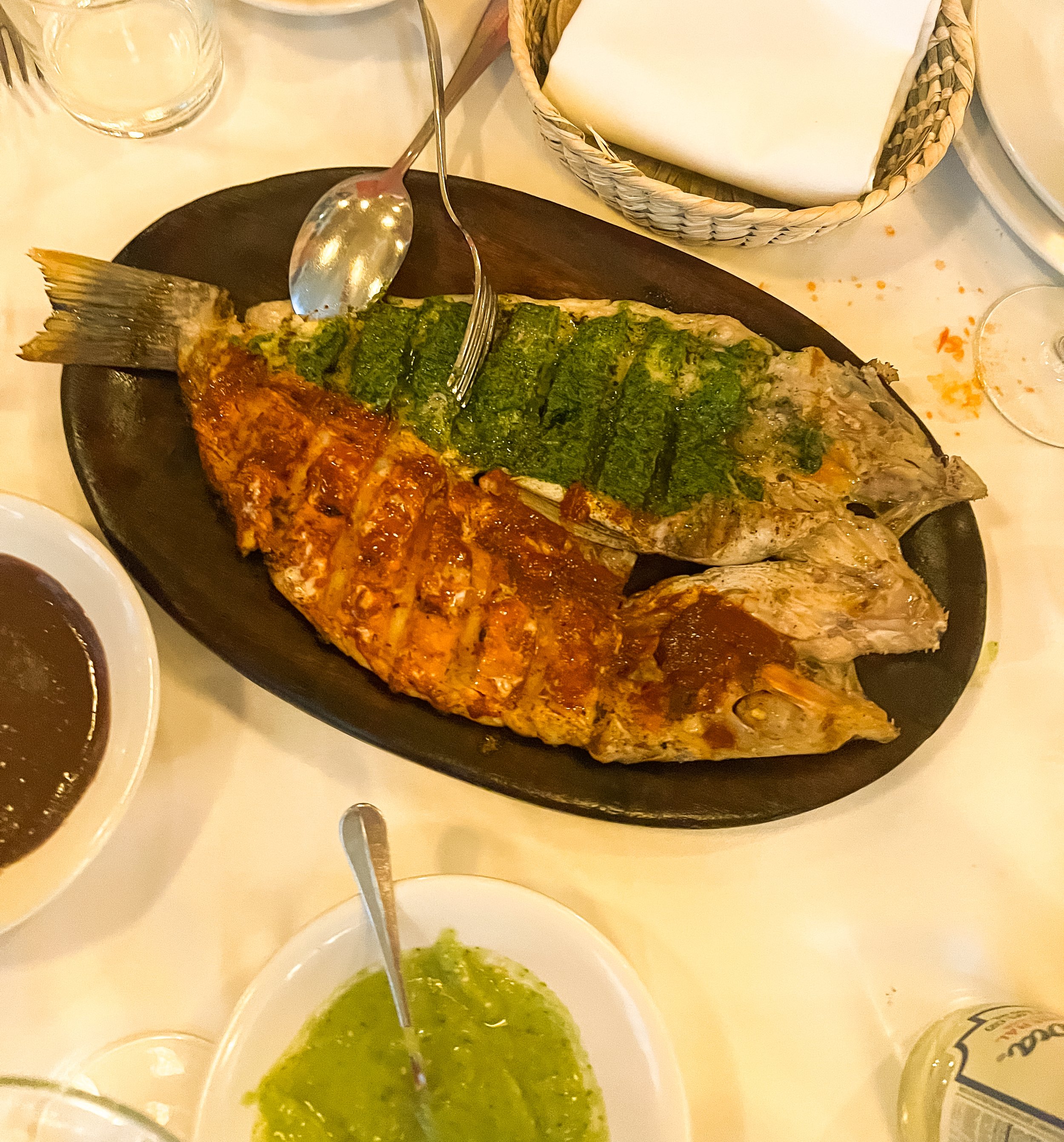
The best lunch in town. Contramar has been the same room since 1998: white tiles, loud, packed, and open only for the middle of the day, which makes a Contramar lunch a two-hour commitment that ends somewhere in the afternoon. Order the tuna tostadas and the pescado a la talla, a whole fish split and grilled with red chilli on one side and green parsley on the other. Everyone orders both because everyone should.
The honest caveat: the wait list runs months. The workaround is Entremar in Polanco, the same team with nearly the same menu, where you can usually get a table within a week. Contramar is more of a scene. Entremar is more of a meal. If you're solo, the bar at Contramar sometimes opens up.
Máximo
Eduardo García's restaurant, and the one locals name when they want something excellent that isn't on a global list. Market-driven, French-influenced, in a small room in Roma. Easier to book than anything above and, on the right night, just as good.
El Califa de León
A taco stand with a Michelin star. It's about three metres wide, it has been there since 1968, it serves four things, and in 2024 it became the first taquería in the world to be recognised by Michelin.
The gaonera, a thin cut of beef with nothing on it but salsa, is the one to order. It costs a few dollars. There is now a queue, which there wasn't before, and it's still worth it.
Los Cocuyos
A stall on Bolívar in the Centro, open until the early hours, serving suadero from a vat of bubbling fat. Bourdain came here and the queue has never really gone away. Suadero is the cut between the ribs and the skin, slow-cooked until the edges crisp. Order it, order a longaniza, and eat standing up.
El Tizoncito
Claims to have invented tacos al pastor in 1966, which is contested and probably close enough to true. The trompo, the vertical spit of marinated pork with a pineapple on top, is the thing to watch and the thing to eat. Reliable, open late, and a good first-night meal.
Panadería Rosetta
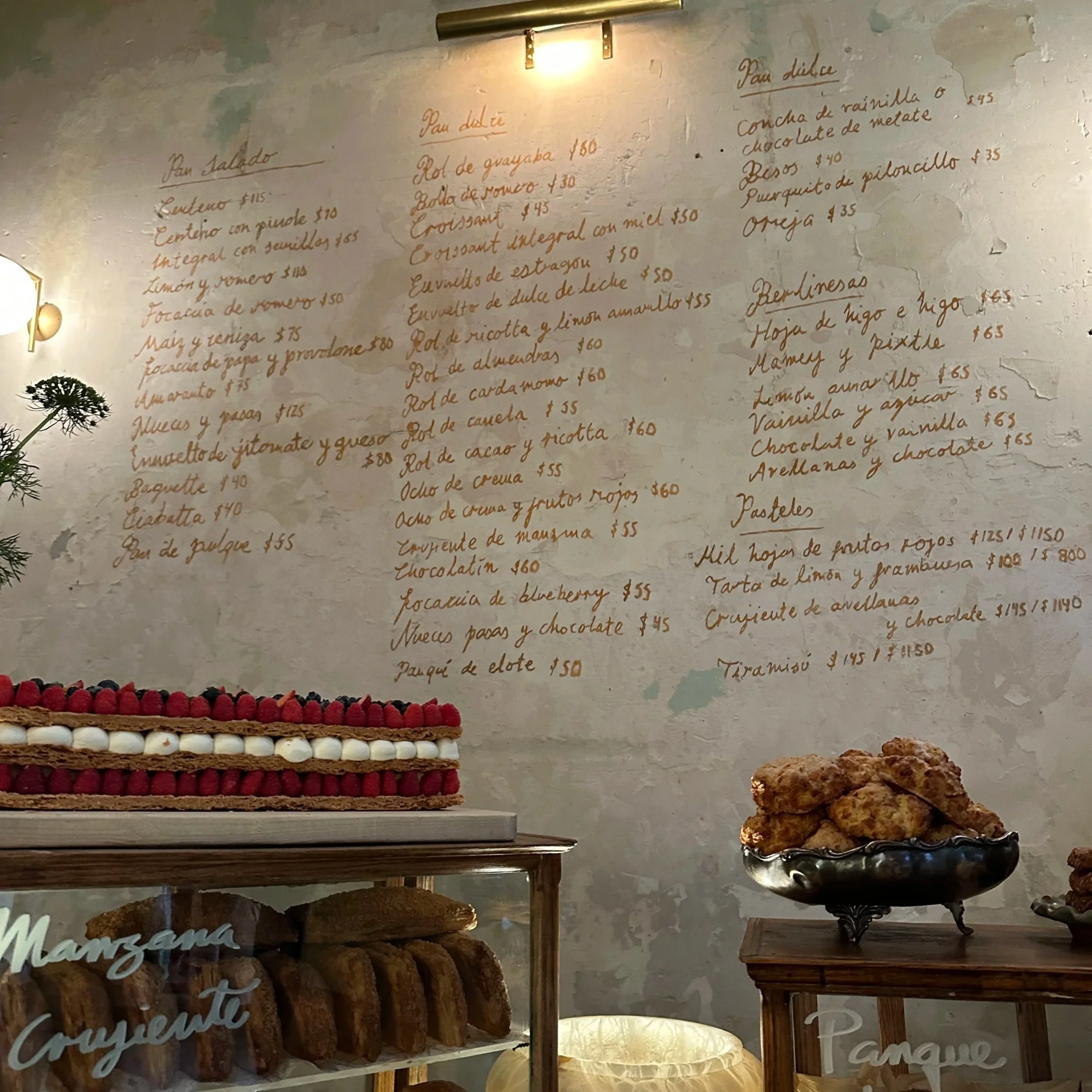
The bakery, and possibly the best single reason to get up early in Mexico City. Elena Reygadas's pastries, a guava roll that people fly in and buy by the box, and coffee that's better than it needs to be. There is almost always a line, but it moves quickly.
El Cardenal
Breakfast, and an institution. Hot chocolate whisked at the table, sweet breads brought round on a tray, and a version of Mexican breakfast that hasn't changed in decades. The Centro location is the one, in a colonial building near the Zócalo.
Masala y Maíz
Indian, Mexican and East African cooking on the same plate, from Norma Listman and Saqib Keval, and the most interesting restaurant in the city that isn't chasing a list placement. It sounds like fusion and it isn't. The connection between the three cuisines is historical and the cooking makes the argument.
Nicos
Traditional Mexican cooking done seriously, a long way north of where most visitors go, and worth the drive. Sopa seca de natas, a chinicuil salsa if it's the season, and a tableside guacamole that has been made the same way for decades. The kind of restaurant that reminds you the fine dining scene grew out of something.
Where to drink
Handshake Speakeasy in Juárez was named the best bar in the world, and getting in requires a reservation and a code. It deserves the ranking.
Licorería Limantour in Roma is the more relaxed alternative and has been on the world's best bars list for years.
Fifty Mils at the Four Seasons is the hotel bar that locals actually drink in.
And for something older, the cantinas in the Centro, Salón Ríoja and Bar Mancera among them, serve free botanas with your drinks and have not changed in a century.
How to plan the eating
Two or three places a day is the right pace, mixing one serious meal with casual ones. A realistic week looks like one tasting menu, two or three upscale dinners, and the rest tacos, markets and fondas.
The geography matters because of traffic. Polanco holds Pujol, Quintonil and Entremar. Roma and Condesa hold almost everything else and are walkable between. The Centro is where the oldest and cheapest eating is. Where you stay determines how much time you spend in a car, which is covered in our guide to the best luxury hotels in Mexico City.
What it costs: $200 to $250 a head at Pujol or Quintonil, $80 to $150 at the upscale places, $50 to $90 at casual restaurants, and $5 to $20 for a full meal of street food. A week of eating extremely well, mixing all four, runs around $800 to $1,000 per person. The same week in New York would cost three times that.
WHEN TO GO AND PRACTICAL NOTES
November through April is the dry season and the best time to be here generally. March and April bring the jacarandas.
The altitude matters at dinner. Mexico City sits at 7,350 feet and alcohol hits noticeably harder than at sea level. Go carefully on the mezcal for the first night, which is advice most people ignore once and never again.
Timing. Lunch is the main meal and runs from about 2pm to 5pm. Dinner starts late, from 8:30pm, and booking a 7pm table means eating in an empty room.
Tipping is 10 to 15 percent and often not included. Cards are accepted almost everywhere except street stalls, which are cash only.
Book the restaurants before the hotel if a specific table is why you're coming. Hotels in Mexico City have availability. Quintonil on a Saturday does not.
FAQ
What is the best restaurant in Mexico City? Quintonil, ranked third in the world in 2025 and holding two Michelin stars. Pujol is the more famous alternative with the same stars, across the street.
How do you get a reservation at Pujol or Quintonil? Both release tables on a rolling two-month window. Log in at 9am Mexico City time on the day exactly two months before you want to eat. Prime slots go in fifteen minutes. Weekday lunches are far easier.
What if Contramar is full? Go to Entremar in Polanco. Same team, nearly the same menu, and you can usually get a table within a week. Contramar is the scene, Entremar is the meal.
How much do restaurants in Mexico City cost? Around $200 to $250 a head at the two-star restaurants, $80 to $150 at upscale places, and $5 to $20 for a full meal of street food. Extraordinary value at every level.
Is there a Michelin-starred taco stand in Mexico City? Yes. El Califa de León in the Centro became the first taquería in the world to receive a Michelin star in 2024. Order the gaonera.
Where should I eat in Roma Norte? Contramar for lunch, Rosetta for dinner, Máximo if you want something excellent and bookable, and Panadería Rosetta for the guava roll.
What time do people eat in Mexico City? Lunch from 2pm to 5pm and it's the main meal. Dinner from 8:30pm. Book a 7pm table and you'll eat alone.
Do you need to book restaurants far ahead in Mexico City? Only a handful. Pujol, Quintonil and Contramar are genuinely hard. Almost everything else takes a booking within a week or a walk-in.