
Where to Stay in Sicily (2026)
The Short Answer
Stay in Taormina if it's your first trip to Sicily, where San Domenico Palace, a Four Seasons in a 14th-century Dominican convent, is the island's most sought-after address. Stay on Mount Etna for wine and landscape, where Monaci delle Terre Nere is the best small hotel in Sicily. Stay in Ortigia for the most beautiful small city in Italy, in Noto for baroque architecture and the best value at the top tier, and in Palermo for food, markets and chaos, where Villa Igiea is the grande dame. Sicily is far bigger than people expect, so pick two or three regions and drive between them rather than trying to base once. A car is essential everywhere except Palermo and Ortigia.
Sicily is the largest island in the Mediterranean, and the difference between the baroque southeast and the Arab-Norman northwest is bigger than the difference between most European countries. People plan it like a week in Puglia and then spend the week in a car.
The east coast around Taormina and Etna is the classic first trip, with the Greek theatre, the volcano and the best-known hotels. The southeast, through Syracuse, Noto, Modica and Ragusa, is the baroque belt, rebuilt after the 1693 earthquake in golden limestone, and it's where the food and the value are best. Palermo and the northwest are rougher, louder and more African, with the best street food in Italy. The southwest has the Greek temples at Agrigento and a quiet coastline. And then there are the offshore islands, which are separate trips again.
This guide is organised by region, with the hotels worth booking in each. If you want the polished Italian coastline instead, our Amalfi Coast guide covers a very different kind of trip, and the Positano guide goes deeper on that stretch.
Taormina first, because that's where most people start.
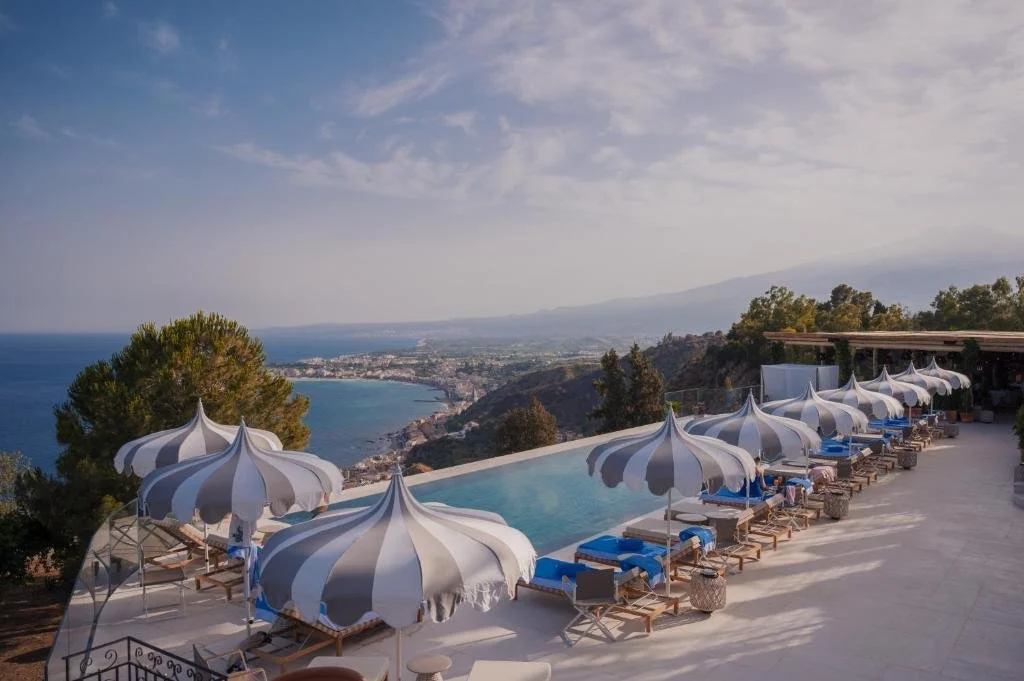
San Domenico Palace
A 14th-century Dominican convent on the cliff above Taormina, restored and reopened by Four Seasons in 2021, and immediately the most talked-about hotel in Italy after it appeared as the setting for the second series of The White Lotus. The cloister is intact, the gardens run along the cliff edge, and the infinity pool looks straight at Etna and the Ionian.
There are 111 rooms and suites, some with private terraces and plunge pools, a Michelin-starred restaurant in Principe Cerami, and a spa. The service is Four Seasons rather than Italian-grand-hotel, which is either the appeal or the criticism depending on your taste.
It is expensive in a way that Sicily otherwise isn't, and the television association means crowds gather at the gate. Book it for what it is, which is one of the great hotel buildings in Europe.
Best for: Milestone trips, first-time visitors who want the definitive Taormina address.
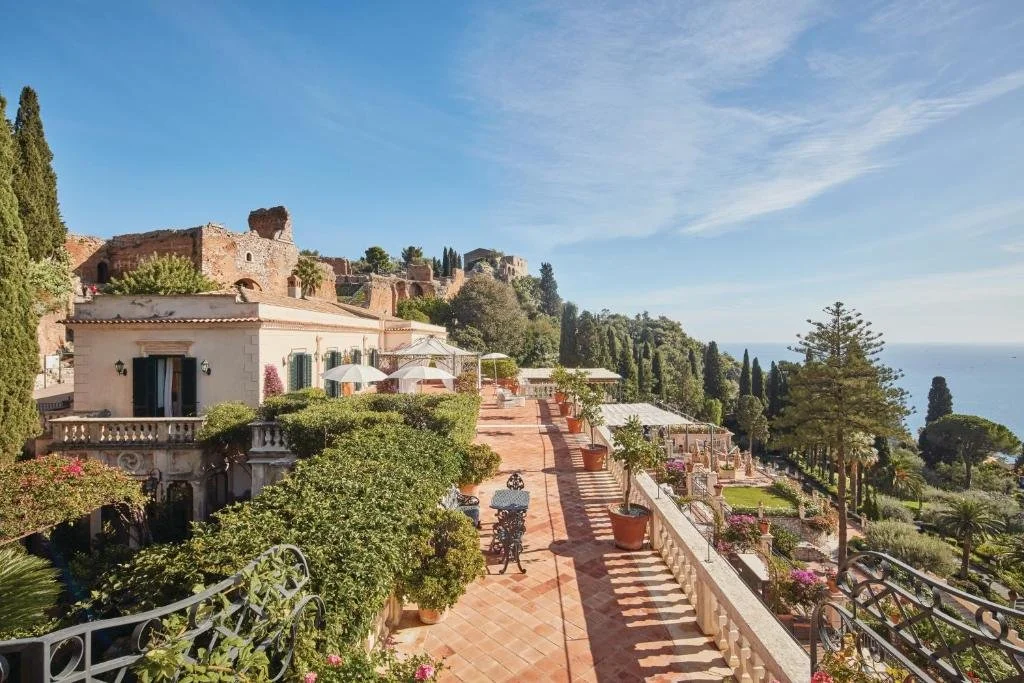
Grand Hotel Timeo
The Belmond property directly beside the Greek theatre, and the older claim to Taormina's throne. It has been operating since 1873, the terrace bar has one of the best views in Italy, and the gardens are genuinely beautiful. It feels more like a hotel Sicily made than one that arrived from outside.
Guests can use the facilities at its sister property down in Mazzarò via a free shuttle, which effectively gives you a hilltop hotel and a beach hotel on one booking.
Best for: Travelers who want classic Italian grand-hotel character rather than international five-star.
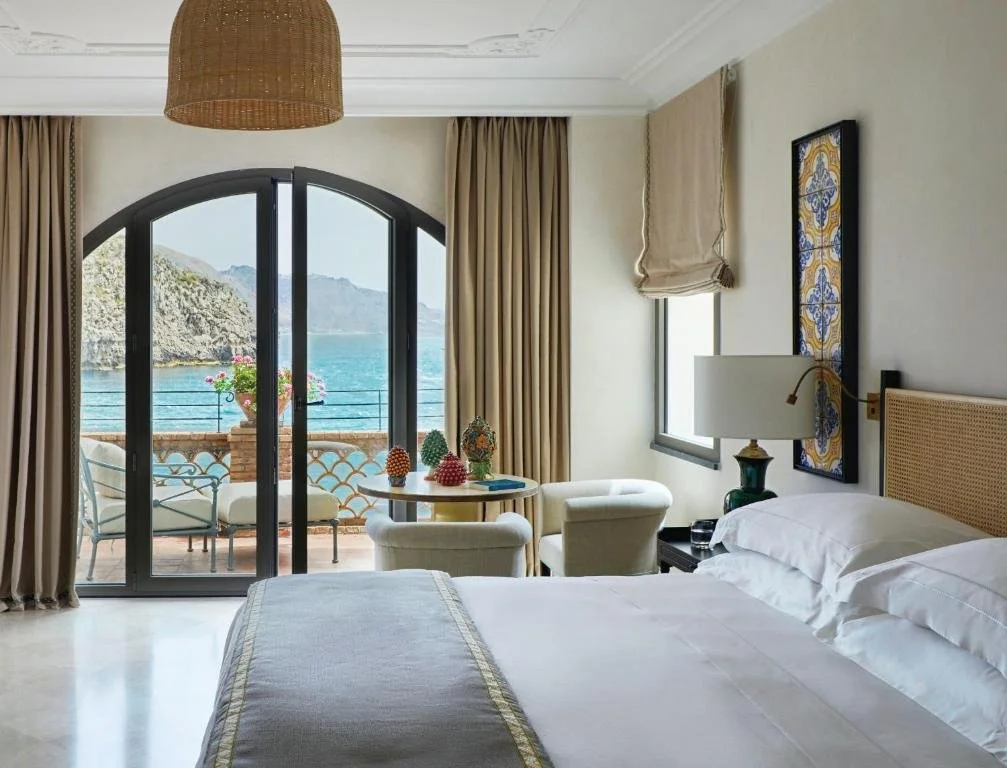
Villa Sant'Andrea
The Timeo's sister, on the bay at Mazzarò below Taormina, in a converted early-19th-century villa with direct access to a private beach. It's quieter, greener and more domestic than anything up on the hill, with wrought-iron balconies, Baroque artwork and a terrace restaurant on the water.
There's a kids' club and a watersports programme, which makes it the better of the two Belmond properties for families. The cable car and the shuttle both connect you to Taormina town in minutes.
Best for: Families, beach-first stays, travelers who want Taormina without living in it.
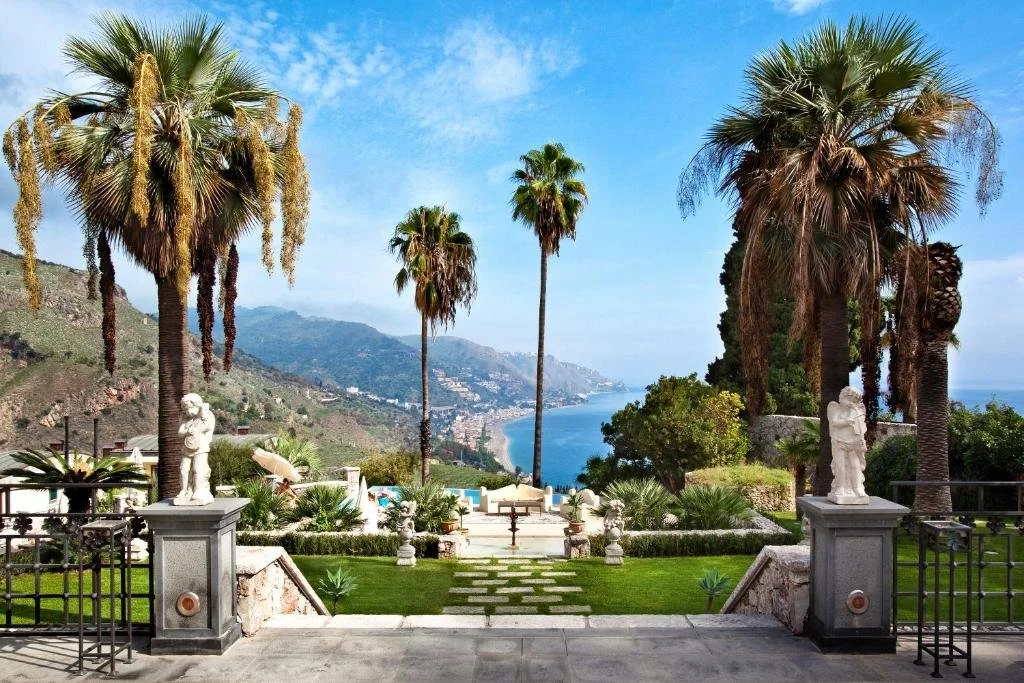
The Ashbee
A Leading Hotels of the World property in a 1908 villa on the edge of Taormina town, smaller and more personal than the big three, with terraced gardens and a pool looking out over the coast. It's the sensible alternative when San Domenico and the Belmonds are either full or out of budget.
Best for: Couples, shoulder-season stays, travelers who want Taormina at one tier down.
Monaci delle Terre Nere
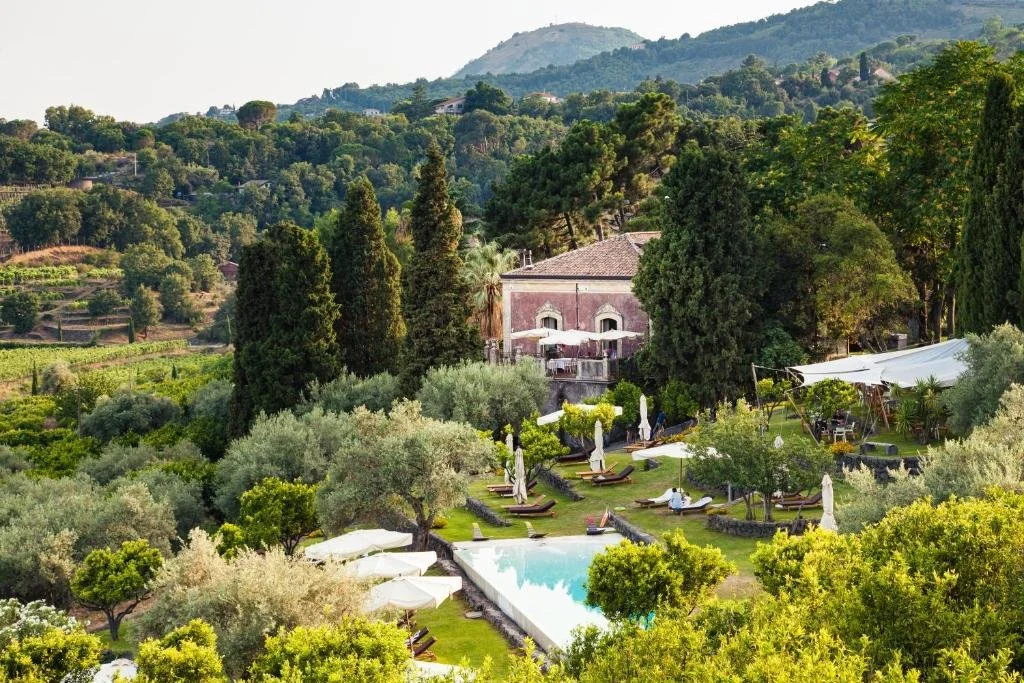
The best small hotel in Sicily, and the one to book if you only book one. It sits at around 500 metres on the eastern slopes of Etna outside Zafferana Etnea, an 18th-century villa and a scatter of houses across a 25-hectare working estate of vineyards, orchards and lava terraces. A Relais & Châteaux member since 2019.
Rooms range from beamed spaces in the historic building to lava-stone estate suites and freestanding villas with pools, all with terraces facing the volcano or the sea. Locanda Nerello, the restaurant, is a Slow Food member cooking almost entirely from the estate's own gardens, and the Etna wines are made on site.
Etna wine has become one of the most interesting regions in Italy over the last fifteen years, and this is the best base for it. The coast is twenty minutes away when you want it.
Best for: Wine travelers, couples, anyone who wants the version of Sicily that isn't a coastline.
Zash Country Boutique Hotel
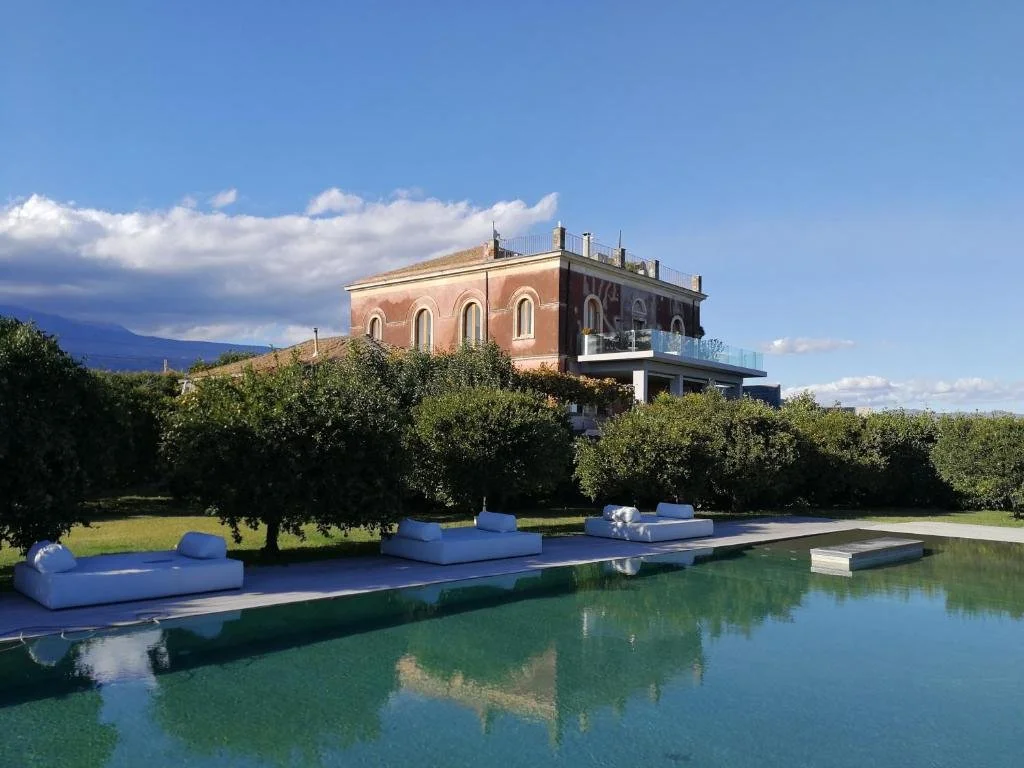
A former winery east of Etna near Riposto, converted into a design hotel with a Michelin-starred restaurant in a stone-vaulted former cellar. Rooms are clean-lined and contemporary against the old structure, and there's a pool villa set apart in a citrus grove.
It's smaller and more design-driven than Monaci, and closer to the coast and to Catania airport.
Best for: Food travelers, design-led stays, short trips flying into Catania.
Ortea Palace
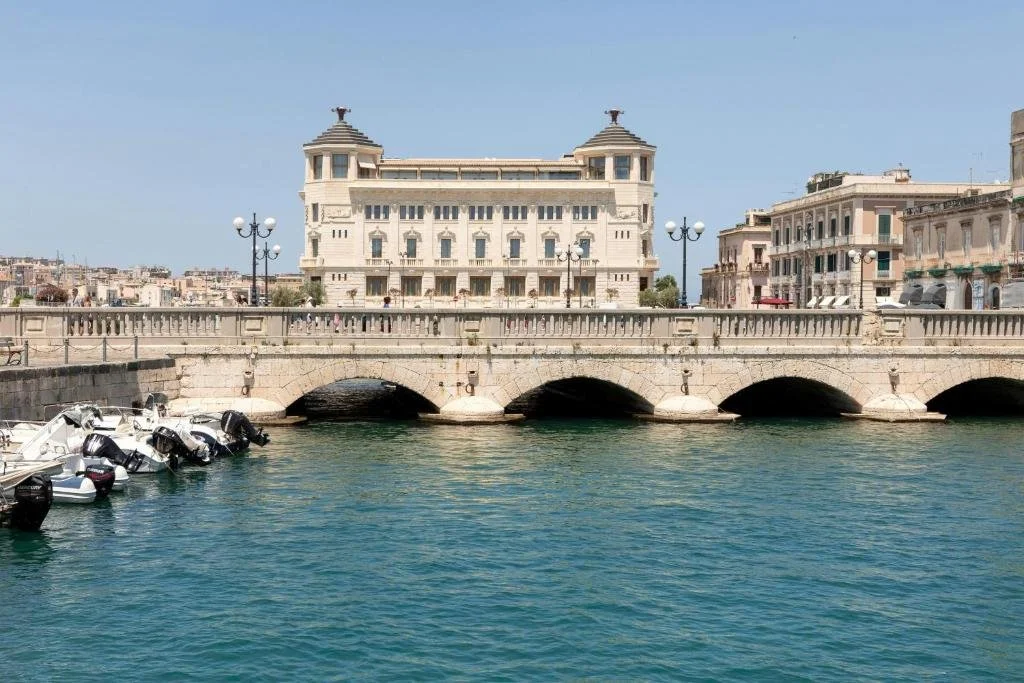
In Ortigia, the island that forms the old city of Syracuse and arguably the most beautiful small urban centre in Italy. Ortea Palace is an Autograph Collection property in a restored early-20th-century palazzo on the waterfront, with a rooftop pool and bar looking across the harbour.
Ortigia itself is the reason to come. Greek temple columns built into a baroque cathedral, a fish market, sea swimming off the rocks in the middle of the city, and a compact old town you can walk end to end in twenty minutes. This is the one place in Sicily where you genuinely don't need a car.
Best for: City stays, walkable trips, travelers who want to swim and sightsee in the same afternoon.
Algilà Ortigia Charme Hotel
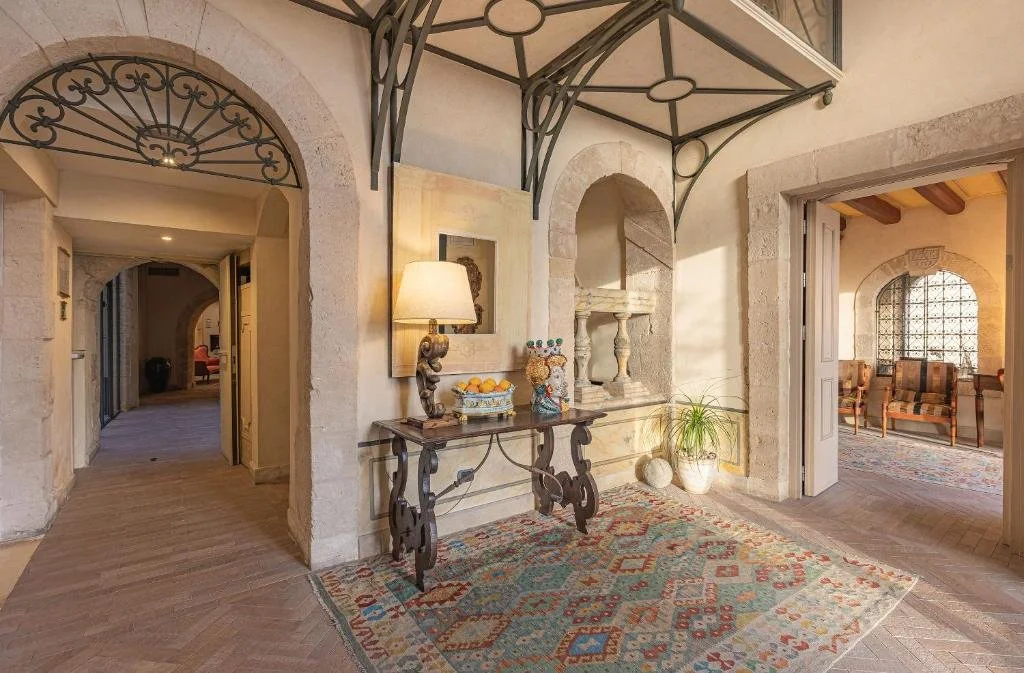
The characterful alternative in Ortigia, a restored medieval palazzo in the Giudecca quarter with Sicilian ceramic tiling, exposed stone and a courtyard. Smaller, more traditional and less polished than Ortea Palace, and consistently one of the highest-rated hotels on the island.
Best for: Couples, travelers who want the old city rather than the waterfront.
Check rates at Algila Ortigia Charme Hotel—>
Seven Rooms Villadorata
Seven suites inside Palazzo Nicolaci in Noto, which is the most extravagant baroque palace in a town made entirely of them. The restoration left the frescoed ceilings and original floors and dropped restrained contemporary furniture underneath, and the result is one of the most distinctive places to stay in Sicily.
Noto is the centre of the Val di Noto, the UNESCO-listed group of towns rebuilt in golden limestone after the 1693 earthquake. It's also where the best restaurants in Sicily have been concentrating over the last decade.
Best for: Architecture travelers, couples, two- and three-night stops on a driving trip.
Check rates at Seven Rooms Villadorata—>
Dimora delle Balze
A restored 19th-century masseria in the countryside outside Noto, with high vaulted rooms, a long pool and views over almond and olive terraces toward the coast. It's the country-house version of a Noto stay, and it's calmer and cheaper than anything comparable in Tuscany or Puglia. You will want a car, and the ten-minute drive into Noto for dinner is part of the pleasure.
Best for: Slow stays, couples, travelers who want the countryside with the town in reach.
Check rates at Dimora delle Balze—>
Eremo della Giubiliana
A fortified 15th-century monastery outside Ragusa, converted into a hotel by the family that has owned it for generations, set in a large agricultural estate with its own airstrip. The rooms are austere in the good sense, thick stone walls and simple furnishing, and the restaurant cooks from the estate.
Ragusa Ibla, the lower old town, is one of the great baroque sights in Italy and considerably less visited than Noto.
Best for: History-led trips, quiet countryside stays in the deep southeast.
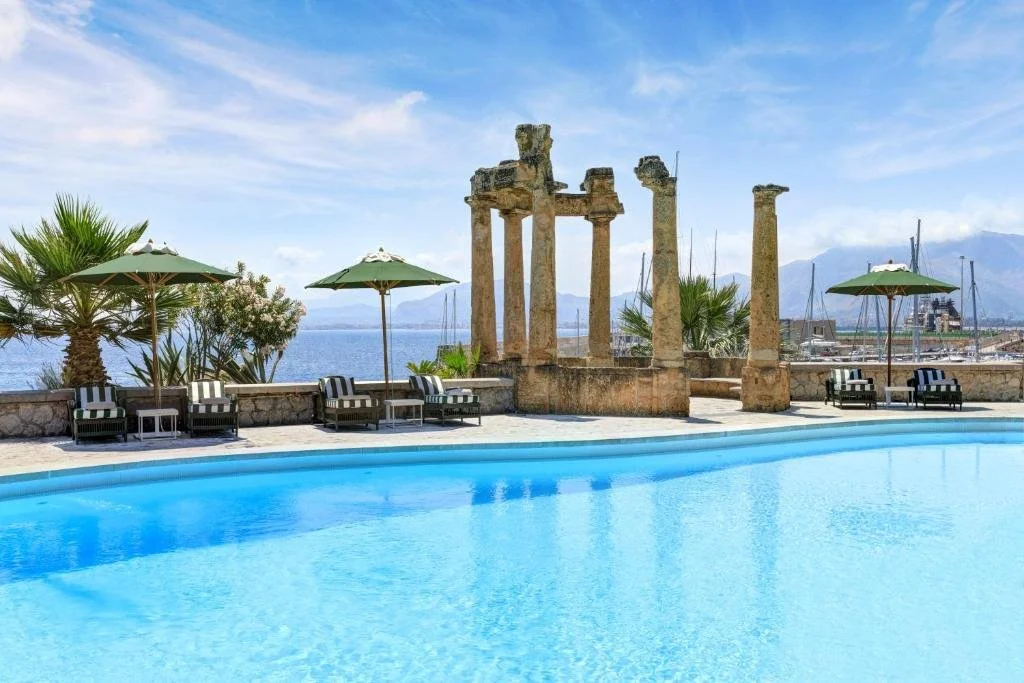
Villa Igiea
The grande dame of Palermo, a Rocco Forte property in an Art Nouveau villa on the bay at Acquasanta, north of the centre. It was built for the Florio family at the turn of the last century, and the recent restoration brought back the Basile interiors along with the gardens and the sea-facing pool.
Palermo is not a beautiful city in the way Ortigia is. It's dense, loud, layered with Arab, Norman, Spanish and Baroque history, and it has the best street food in Italy. Villa Igiea gives you a calm base slightly outside it, which most people find is the right arrangement.
Best for: Palermo stays, food trips, travelers who want grandeur with a garden.
Le Calette
On the coast at Cefalù, an hour east of Palermo, spread across gardens that run down to a private cove with sea access off the rocks. Cefalù has a Norman cathedral, a good beach and a compact old town, and it's the easiest coastal base on the north coast.
Best for: Beach stays near Palermo, families, shorter trips.
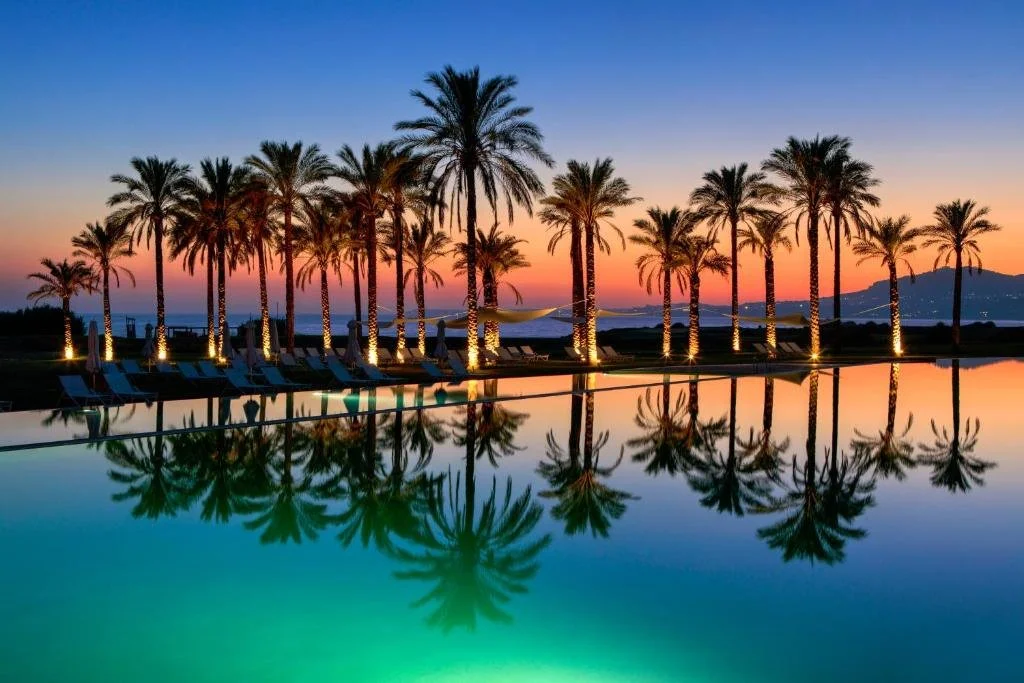
Verdura Resort
Rocco Forte's other Sicilian property, on 230 hectares of coastline near Sciacca on the southwest coast, with two 18-hole golf courses, a very large spa and about a mile and a half of private shoreline. Rooms are low-slung and sea-facing, and the whole thing is built horizontally rather than up.
It's the only genuine full-service resort on this list, and it functions as a destination rather than a base. Agrigento and the Valley of the Temples are about an hour away.
Best for: Families, golfers, travelers who want a resort week rather than a driving trip.
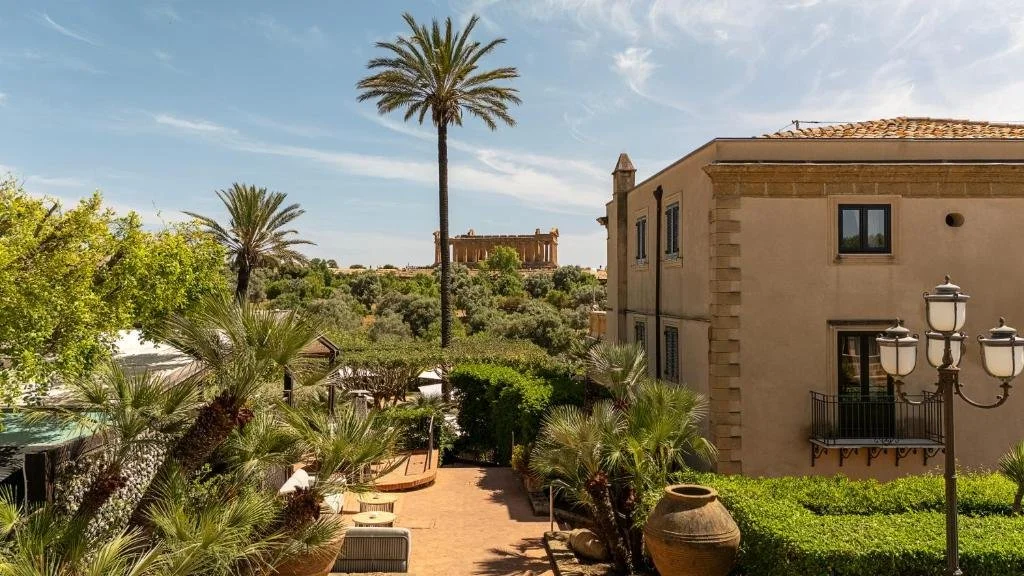
Villa Athena
In Agrigento, inside the archaeological park, with the Temple of Concordia lit up directly in front of the terrace. The hotel itself is a converted 18th-century villa and it's good rather than exceptional. You are paying for the single best hotel view in Sicily, and it is worth one night.
Best for: One-night stops on a driving itinerary, temple-focused trips.
Capofaro
On Salina in the Aeolian Islands, a Malvasia wine estate owned by the Tasca d'Almerita family, with rooms scattered through the vineyards around a lighthouse and views across to Stromboli. It's the most elegant stay in the archipelago and one of the best wine hotels in Italy.
Salina is the green Aeolian, quieter than Lipari and far quieter than Panarea in August. Ferries run from Milazzo.
Best for: Wine travelers, couples, second legs of a longer Sicily trip.
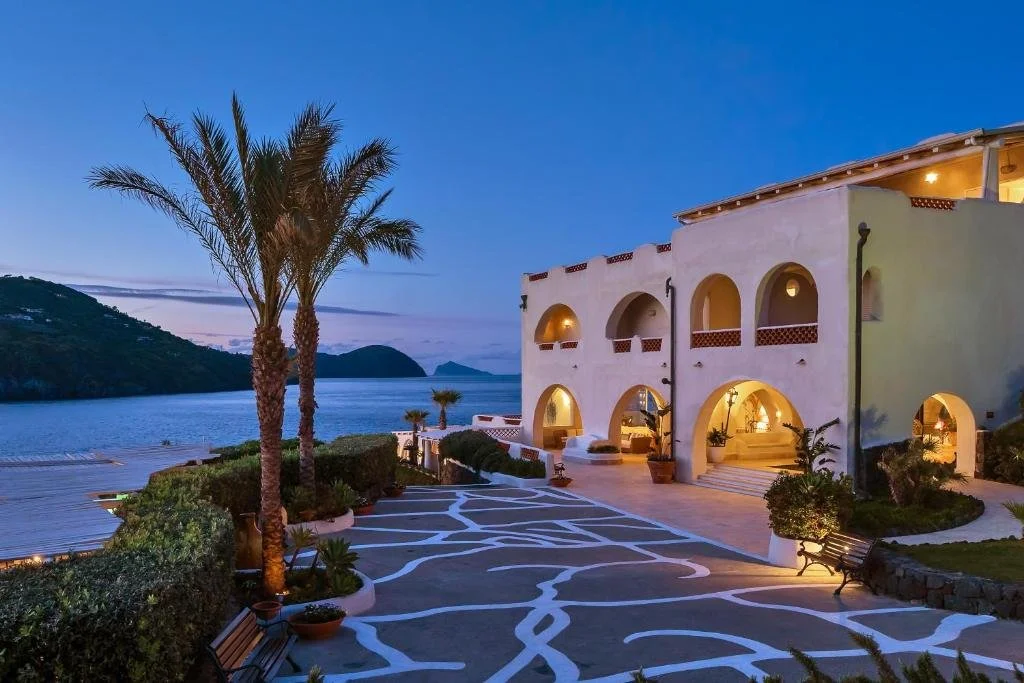
Therasia Resort
On Vulcano, looking across to Lipari, with terraced buildings stepping down toward the sea, two pools and a Michelin-starred restaurant. It's the most conventionally luxurious hotel in the Aeolians and the easiest to reach, since Vulcano is the first stop on the ferry from Milazzo.
Best for: Aeolian stays with full hotel service, sunset views, shorter island trips.
Check rates at Therasia Resort—>
When to Go, and When to Book
Sicily has a longer season than most of Italy and a summer that is genuinely difficult.
April through June is the best stretch. Wildflowers, green interior, comfortable temperatures for walking the temples and the baroque towns, and the sea warm enough to swim by late May. Easter is worth planning around if you want it, since the Holy Week processions in Trapani and Enna are among the most extraordinary religious events in Europe.
July and August are hot to the point of limiting what you can do. Inland temperatures regularly pass 40°C, the archaeological sites are punishing by midday, and Taormina, the Aeolians and the beaches fill with Italian holidaymakers. August is the single most expensive and most crowded month. If you must travel then, stay coastal and plan around the middle of the day.
September and October are the quiet favourite. The sea is at its warmest in September, the harvest is on around Etna and in the west, the crowds thin after the first week, and rates drop sharply from mid-September. This is when most people who know Sicily go.
November through March is off-season for the coast, with many seaside hotels and the Aeolian properties closing entirely. Palermo, Catania, Ortigia and the baroque towns stay open and are excellent in winter, and Etna has a small ski season. Almond blossom around Agrigento in February is a real thing and almost nobody goes.
On rates and logistics: Sicily is one of the better-value luxury destinations in Italy, with the significant exception of Taormina, where San Domenico Palace and the Belmond properties price at Amalfi levels and above in high season. The baroque southeast is where the value is, with properties that would cost half again as much in Tuscany. Shoulder season cuts rates across the board, often by a third or more.
Book the car with the room. Sicily rewards driving and the rental fleet at Catania and Palermo sells out in summer. Flights go into Catania for the east and Palermo for the west, and choosing the wrong one adds three hours to your first day.
How to Choose
First trip, one week. Fly into Catania. Three or four nights on the east coast, split between Taormina and Etna, then three in the southeast around Ortigia or Noto. That's San Domenico Palace or Villa Sant'Andrea, Monaci delle Terre Nere, and Ortea Palace or Seven Rooms Villadorata. It covers the Greek theatre, the volcano, the baroque towns and the best food without a punishing amount of driving.
Ten days or more. Add Palermo and the west. Fly into Catania and out of Palermo, or the reverse, and don't double back.
If you want to stay in one place. Verdura Resort, which is the only property here built for a full week without moving. Otherwise Taormina, which has the most to do within walking distance.
If food is the point. The southeast. Base in Noto or Ortigia and eat your way through the Val di Noto.
If wine is the point. Etna, at Monaci delle Terre Nere, with a few days on Salina at Capofaro if you have the time.
If you're travelling with kids. Villa Sant'Andrea or Verdura Resort. Both have beach access and programming, which most Sicilian hotels don't.
If you have a long weekend. Ortigia. It's the only place in Sicily that works without a car, and three days there is a complete trip rather than a compromised one.
If you want the offshore islands. The Aeolians are a separate trip and need at least four nights to justify the ferries. Pantelleria, closer to Tunisia than to Sicily, is a different island again and a different kind of holiday.
Frequently Asked Questions
Where is the best place to stay in Sicily?
Taormina for a first trip, with the Greek theatre, Etna views and the island's best-known hotels. Ortigia in Syracuse for the most beautiful small city and the only car-free base. Noto and the Val di Noto for baroque architecture and the best food and value. Palermo for markets, street food and Arab-Norman history. Most travelers should combine two or three of these.
What is the best hotel in Sicily?
San Domenico Palace, Taormina, A Four Seasons Hotel is the best-known and most sought-after hotel in Sicily, set in a restored 14th-century Dominican convent above the Ionian. Monaci delle Terre Nere on Mount Etna is the best small hotel on the island, and Villa Igiea is the grande dame of Palermo.
How many days do you need in Sicily?
Seven at minimum, and ten is better. Sicily is far larger than most visitors expect, with three hours of driving between the main regions, so a short trip means either seeing one corner properly or spending the week in a car.
Do you need a car in Sicily?
Yes, almost everywhere. Ortigia and central Palermo are the exceptions and work without one. The Valley of the Temples, Mount Etna, the Val di Noto and every countryside property require driving. The Aeolian Islands and Pantelleria are reached by ferry or plane instead, and you do not want a car on them.
Should you fly into Catania or Palermo?
Catania for Taormina, Etna, Syracuse, Noto and the southeast. Palermo for the capital, the north coast, Cefalù and the west. Choosing the wrong one adds around three hours of driving to the start of the trip. Open-jaw itineraries flying into one and out of the other work well for longer stays.
When is the best time to visit Sicily?
April through June and September through October. July and August are extremely hot inland, crowded on the coast and the most expensive. Winter is quiet and excellent for the cities and baroque towns, though many coastal and island hotels close.
Is Sicily expensive?
Less than mainland Italy at the same quality level, with Taormina as the exception. The baroque southeast in particular offers properties at a fraction of what equivalent hotels cost in Tuscany or on the Amalfi Coast. Food and wine are consistently inexpensive relative to quality.
Which Sicilian islands are worth visiting?
The Aeolians for volcanic landscape and boat days, with Salina the most elegant and Vulcano the easiest to reach. Pantelleria, much further southwest and closer to Africa, for black rock, Zibibbo vines and a completely different culture. Both need a dedicated leg rather than a day trip.