
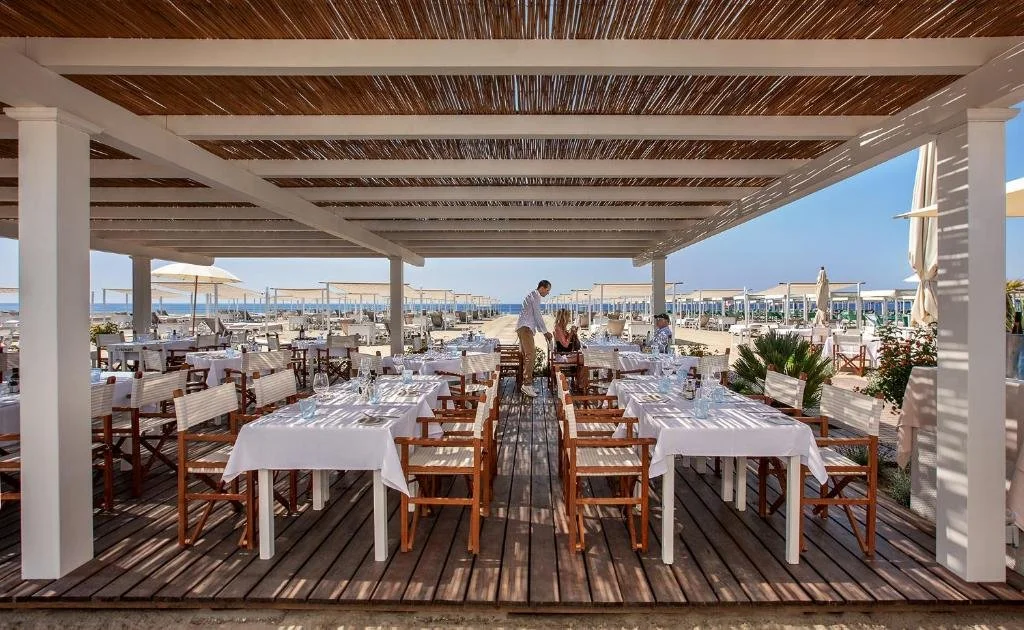
The best beach clubs on the Tuscan coast sit in three distinct pockets. Forte dei Marmi and the wider Versilia coast hold the famous ones, where a private tent and a cabin replace the umbrella row and a day can run anywhere from €200 to €1,500. Bagno Alpemare, Bagno Piero and Twiga are the headliners. Monte Argentario is the quieter, prettier alternative, anchored by Isolotto Beach Club in Porto Ercole. And the Maremma coast around Castiglione della Pescaia and Punta Ala is where you go if you want pine forest, Blue Flag water and a bill that doesn't require a conversation. Book August weeks by early summer. Everything else you can usually walk into midweek.
Italians do not go to the beach. They go to a beach club, the same one, at the same time, for thirty years running. On the Tuscan coast that place is called a bagno or a stabilimento, and the whole culture of the summer is built around it. You pay for a spot, and what you're really buying is a base of operations for the day: a lounger or a tent, a cabin to change in, hot showers, someone bringing you a spritz, and a kitchen that is often better than it has any right to be.
That's the part travelers get wrong. A Tuscan beach club is not a party. A few of them are, but most are closer to a private club that happens to sit on sand. Knowing which is which is the difference between a great day and an expensive misunderstanding.
Here's where we'd actually book, working north to south. If you want to stay on the water rather than drive to it, our guide to the best hotels on the Tuscan coast covers the properties with their own beach clubs attached. For the wider region, the best hotels in Tuscany covers the inland stays, and our Tuscany road trip guide covers how to string the coast together with the wine country.
Forte dei Marmi and the Versilia Coast
This is the famous stretch, roughly an hour from Pisa and ninety minutes from Florence. The sand is fine and pale, the water shelves so gently that small children can wade for ages, and the Apuan Alps sit behind you like a stage set. It is also the most expensive beach real estate in Italy.
One thing to understand before you book. The top Forte clubs have largely abandoned umbrellas in favor of draped tents, each with a private cabin. That's why the day rates look the way they do. Reported figures put a standard day tent at the leading bagni somewhere between €200 and €600, with king-size and imperial tents at the very top clubs reaching €1,200 to €1,500 in high season. Most clubs don't publish tariffs, so treat all of this as reported rather than quoted, and confirm when you call.
Bagno Alpemare
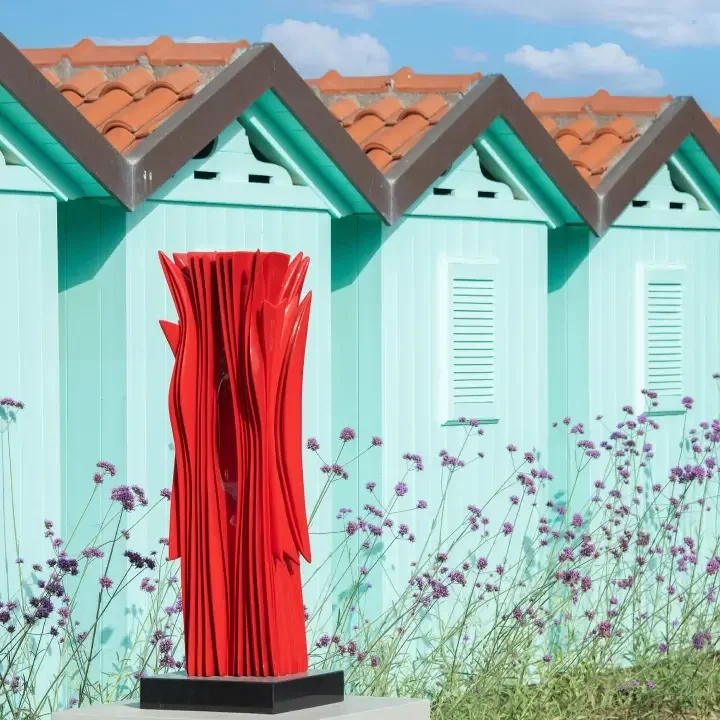
The Bocelli family bought this stretch in 2017 and rebuilt it into something no other bagno on the coast has attempted: a beach with no umbrella rows at all. Around 120 tents, each backed by its own cabin with a safe, USB ports and fresh towels, set behind a garden of century-old pines at Vittoria Apuana, just north of the center. A national beach club guide named it the best in Italy for 2025.
The cooking is biodynamic and genuinely good, the evenings run to aperitivo and the occasional live concert rather than a dance floor, and the crowd skews quieter and older. Reported day rates land around €400 to €600. Worth knowing: the front rows are effectively inherited, rebooked by the same families every August, so a first-timer should expect the middle of the grid in peak weeks.
Bagno Piero
If you asked us to pick one, this is it. The Santini family has held this beach since 1933, and it still operates as a club rather than a performance of one. Wooden cabins with terracotta roofs, a seawater pool, and regulars from Milan and Lugano who have had the same umbrella for three generations. The kitchen sends out a grilled orata for under €30 and nobody is looking at your phone.
Seasonal tents here reach five figures, which tells you something about the waiting list. It's also the hardest of the top clubs to walk into on an August Saturday without a booking. Walkable from the central piazza.
Twiga
The loud one, and the only club on this list where that's the point. Twiga sits on the border between Marina di Pietrasanta and Forte dei Marmi, and it changed hands in 2025 when Leonardo Maria Del Vecchio's LMDV Hospitality bought it from Flavio Briatore. The papier-mâché giraffes are gone. In their place is a full Dolce & Gabbana redesign built around a banana-leaf print, running from the cabanas and loungers straight through to the restaurant, plus a D&G pop-up store on site.
Reported high-season rates run about €400 for a sea-view tent and up to €1,500 for an imperial. The restaurant is now Vesta, and it is not cheap: secondi in the €30 to €70 range, €20 for a beer, and a Beluga caviar line for anyone keeping score. Evenings bring international DJ sets and live bands. It's the closest thing Versilia has to nightlife on sand. Note that Twiga closes for winter and reopens around Easter.
Augustus Lido
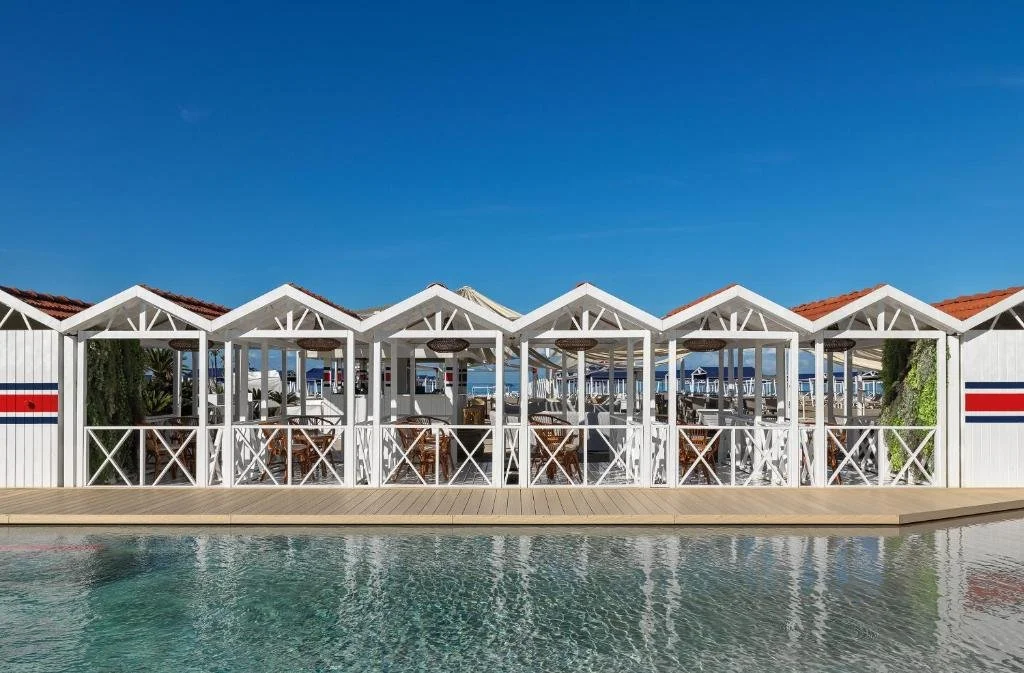
The old-money answer. Augustus is reached from its hotel by a private tunnel that runs under the coast road and out onto the sand, which is exactly as good as it sounds. It sits in Roma Imperiale, the exclusive cluster north of the center, alongside Annetta and Santa Maria. There's no scene here and no interest in creating one. Quiet, expensive, and unbothered.
Bagno Roma Levante
Our value pick in Forte, and where we'd send anyone who doesn't want to think too hard about it. Sand groomed to the same standard as Twiga's at roughly half the fare, a modestly priced ristorantino doing honest Tuscan cooking, and walk-ins seated on weekdays without fuss. Simpler bagni along this same beach rent a shelter with loungers for around €80 a day, and the sea is identical.
Tala Beach
New for the 2026 season and worth watching. Daniela Santanchè, formerly a Twiga co-owner, opened this one at Marina di Pietrasanta in late May 2026, aiming squarely at the premium end: equipped tents, DJ sets, cocktail bar, valet parking and pools. We haven't been, so we're not ranking it. But if you want the newest thing on the Versilia coast, that's where it is.
Monte Argentario and Porto Ercole
Two hours south of Forte and a completely different proposition. Argentario is a rocky peninsula tethered to the mainland by two sand spits, with pine hillsides, fortress harbors and water that is noticeably clearer than the Versilia shallows. Rome is about ninety minutes away, which makes this the easy coastal add-on to a city trip.
Isolotto Beach Club
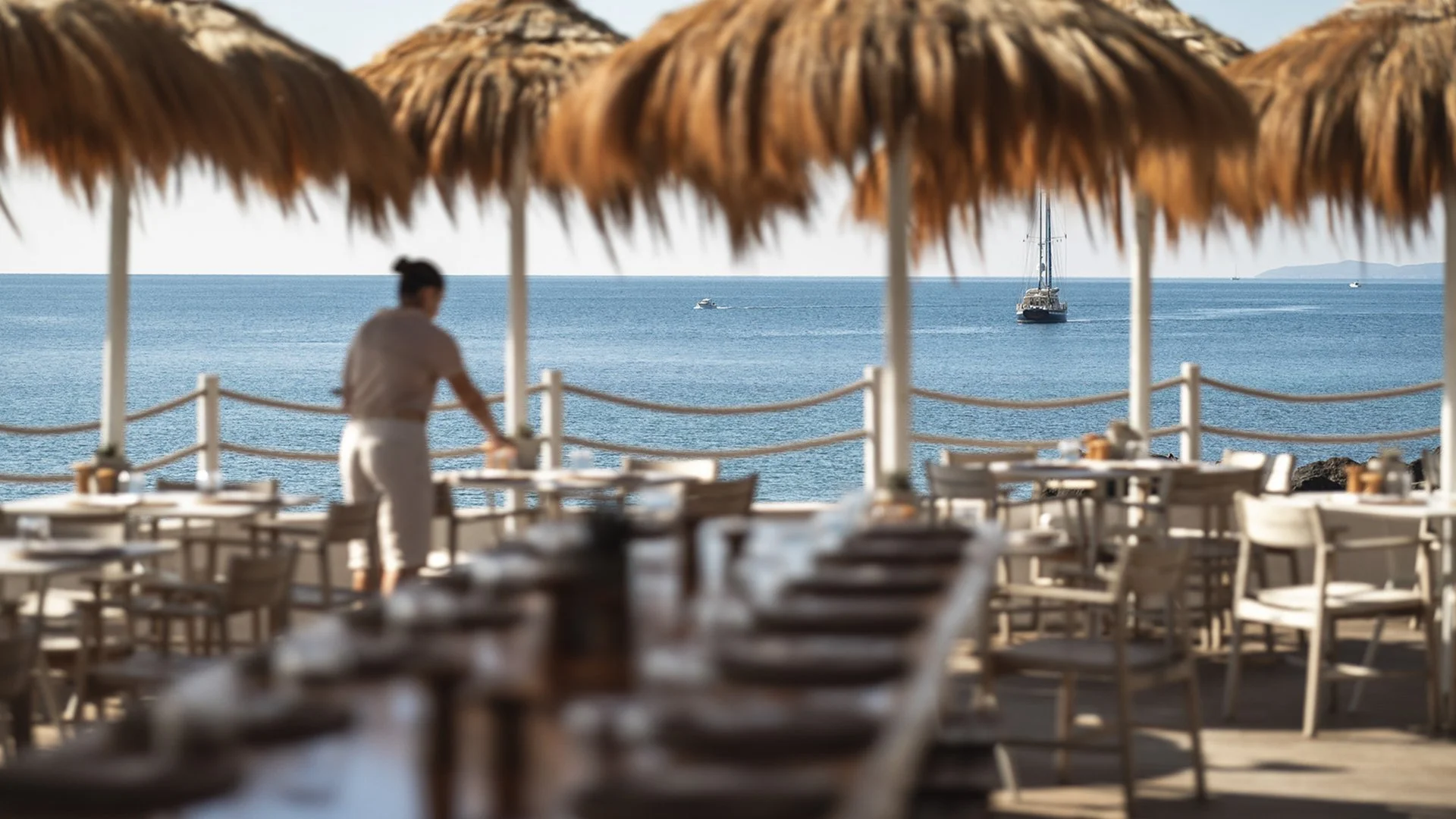
Owned and run by La Roqqa, the boutique hotel above Porto Ercole, and set on a small bay framed by rocks with a view out to the Isolotto islet. It's a five-minute walk or a two-minute electric shuttle from the hotel, and it's the only sandy beach in town.
The setup is loungers on separated terraces rather than one packed grid, so you get a pocket of space with friends. There's a cocktail bar, two restaurants and a menu built around local fish, raw plates and a grill. Hotel guests get a reserved area with service at the umbrellas, plus two loungers and a parasol included in the rate. Outside visitors are welcome, but August here is genuinely busy, so book. Evenings occasionally turn into dinners with live music by the water.
Il Pellicano
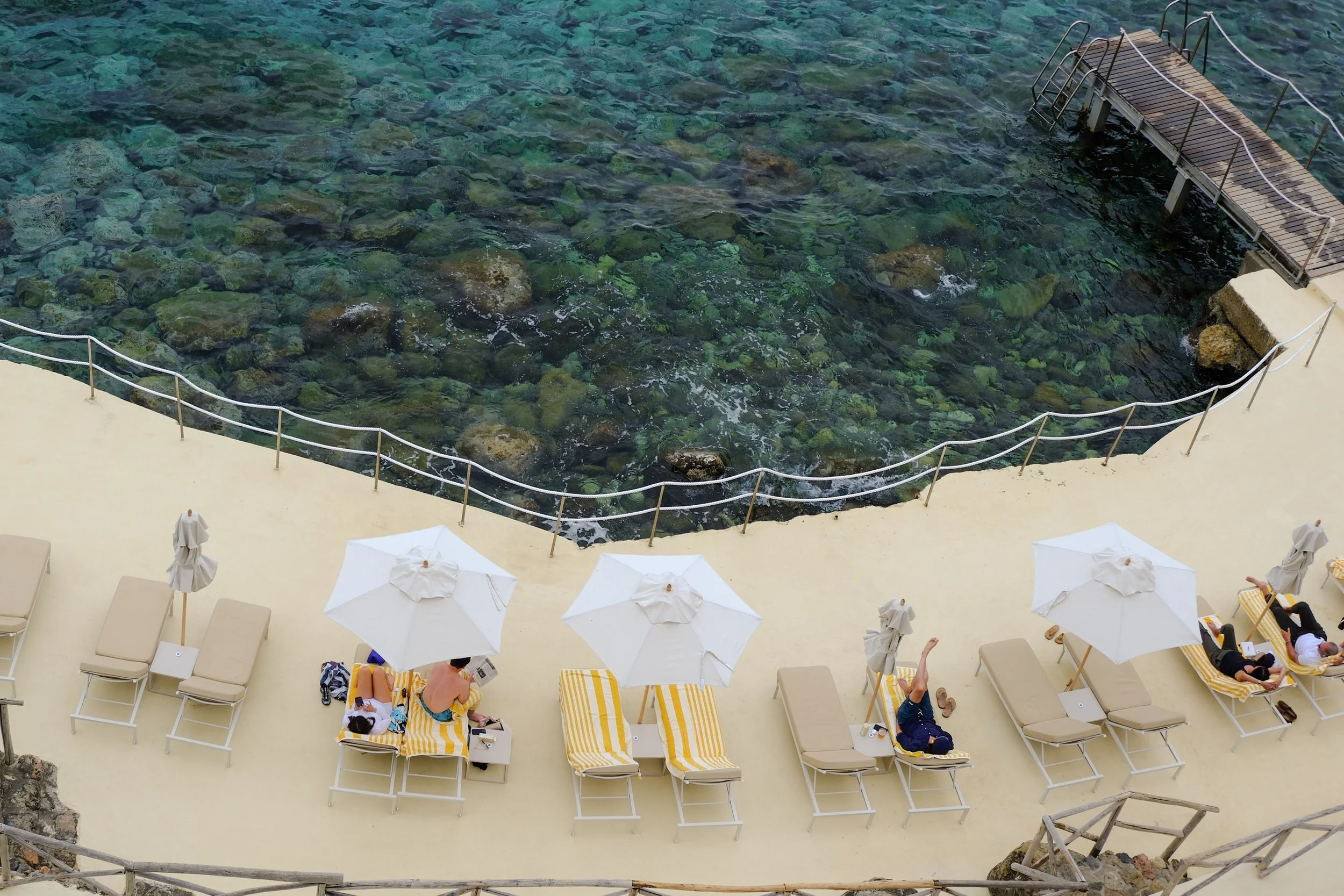
Not a beach club in the strict sense, and worth being clear about since the photographs mislead people: there is no beach at Il Pellicano. What there is instead is a rocky platform stepping down the cliff to the water, a seawater pool cut into the rock, and terraces where you lie out and jump straight into the sea. It has been doing this since 1965, and it more or less invented the Slim Aarons version of Italian seaside glamour.
Access is essentially for hotel guests, so this is a stay rather than a day trip. Our full Il Pellicano review covers what works, what doesn't at these rates, and whether we'd go back.
The Maremma: Castiglione della Pescaia, Rocchette and Punta Ala
The southern Tuscan coast, and the one we'd point families toward. Blue Flag water, pine forest running right down to the sand, and a per-day cost that isn't in the same conversation as Versilia. Castiglione della Pescaia itself is a preserved medieval borgo with a fortress on the hill, so there's something to do when the sun gets punishing.
Bagno Alessandro
At Rocchette, ten minutes north of Castiglione, tucked into the pines. Stylish loungers, a bar, a casual seafood kitchen and a boho, unhurried feel. The water here is clear and the promontory to the right of the club is the photograph everyone comes for. Skews younger and more design-minded than its neighbors.
La Capannina
Right next door to Alessandro and the family answer to it. Good facilities, plenty of shade, and hiking trails nearby if anyone in the group has had enough of lying down.
La Valletta
In the pine forest at Capezzolo, just outside Castiglione. Proper loungers, private cabanas, seaside dining and a cocktail bar, on a Blue Flag stretch. It works equally well as a long lazy couples day or a family base.
Bagno Belmare
The top of Punta Ala's offer, set in one of the wildest private pinewoods on the coast with very fine sand out front. Restored throughout, with spacious bathing huts, hot showers, a proper children's playground, an electric shuttle and a relaxed restaurant. Punta Ala also has the golf and the marina, which makes it the most self-contained base on this stretch.
Best Time to Visit and When to Book
The Tuscan beach club season runs roughly from Easter through September, with most clubs fully staffed from late May. July and August are peak, and August is peak-peak: Ferragosto week in the middle of the month is when Italy relocates to the coast en masse.
Our pick is early June or the first two weeks of September. The water is warm, the tents are available, the restaurants are still running full menus, and you can pair the coast with the wine country without melting. Late September is lovely but some clubs start shutting down.
For booking, the rule scales with ambition. If you want a specific tent at Alpemare, Piero or Twiga in August, be calling by May at the latest, and understand that front rows are largely spoken for regardless. For Argentario and the Maremma, a week or two ahead in high season is usually enough, and midweek walk-ins are realistic outside August.
Two habits worth stealing from the locals. First, the best position isn't the front row, it's the second row in the late afternoon once the morning crowd has cleared and the direct sun is off the water. Some clubs quietly drop the rate after 3pm, so it's worth asking. Second, if what you actually want is the lunch rather than the tan, book the restaurant and skip the beach entirely. Most of the serious kitchens at the Forte bagni will seat non-bathing guests on their seaward terraces, and the view is identical for a fraction of the money.
How to Choose
If you want the scene, the shopping and the mythology, book Forte dei Marmi and pick your club by temperament: Alpemare for polish, Piero for tradition, Twiga for noise, Augustus for discretion, Roma Levante if you'd rather spend the money on dinner.
If you want clear water and fewer people, go to Argentario. Isolotto is the club, La Roqqa is the stay, and Rome is close enough to bolt on. Several of the clubs here belong to hotels, so the simplest version of this trip is to book a property that comes with the beach attached. We've laid out the options in the best hotels on the Tuscan coast.
If you're traveling with kids or you'd like the day to cost less than the flight, go to the Maremma. Punta Ala and Rocchette give you the same Tyrrhenian sea, more shade, and a family-run feel that the Versilia clubs traded away years ago.
And if the beach is one chapter of a bigger Tuscan trip, our guides to the ten best wineries in Tuscany, the best hotels in Florence and where to eat in Florence will fill in the rest.
Frequently Asked Questions
What is a beach club in Tuscany actually called? A bagno or a stabilimento balneare. They're privately managed concessions on public sand, and there are thousands of them along the Italian coast. You pay a day rate for a lounger, umbrella or tent, plus a cabin, showers and service. All Italian beaches are technically public land, so there's always a free stretch, called a spiaggia libera, somewhere nearby.
How much does a beach club cost on the Tuscan coast? It depends entirely on where. Simpler bagni in Forte dei Marmi rent a shelter with loungers for around €80 a day. Standard day tents at the top clubs are reported at €200 to €600, and king-size or imperial tents at Twiga and Alpemare reach €1,200 to €1,500 in high season. In the Maremma, expect a fraction of those figures. Most clubs don't publish tariffs, so call to confirm.
Which is the best beach club in Forte dei Marmi? Bagno Alpemare took the national title for 2025 and is the most polished. Bagno Piero is our own pick for atmosphere and consistency. Twiga is the one to book if you want DJs, a pool and an evening scene rather than a quiet day.
Do you need a reservation at Tuscan beach clubs? For July and August at the top Forte dei Marmi clubs, yes, and well in advance. Elsewhere on the coast, a few days ahead is usually fine in high season, and midweek walk-ins work outside August.
Are Tuscan beach clubs good for families? The Maremma clubs are excellent for it: shade, gentle water, playgrounds and prices that don't punish a family of four. Forte dei Marmi has famously shallow, calm water that suits small children, but the cost at the marquee clubs is hard to justify with kids in tow. Punta Ala and Castiglione della Pescaia are the better call.
Which Tuscan beach clubs allow dogs? Some do, including Alpemare, but most don't. Policies change season to season, so confirm directly before you book rather than assuming.
Is there a beach club at Il Pellicano? Not in the usual sense. Il Pellicano has no sand at all. Guests use a rocky platform and terraces at the water's edge plus a seawater pool carved into the cliff, and access is for hotel guests. For a proper sandy club on Argentario, go to Isolotto in Porto Ercole.
When does the beach club season start and end in Tuscany? Roughly Easter through September, with most clubs at full service from late May to mid-September. Twiga closes over winter and traditionally reopens at Easter. Some smaller bagni run a shorter June-to-August season.
Related Articles
The Best Hotels on the Tuscan Coast (2026)
The Best Hotels in Tuscany: 8 Luxury Stays for 2026
Hotel Il Pellicano Review: Tuscany's Iconic Cliffside Hotel
The Perfect Tuscany Road Trip: Florence to Rome (2026)
The 10 Best Wineries in Tuscany (2026 Guide)
The Best Hotels in Florence (2026)