
The 10 Best Wineries in Tuscany (2026 Guide)
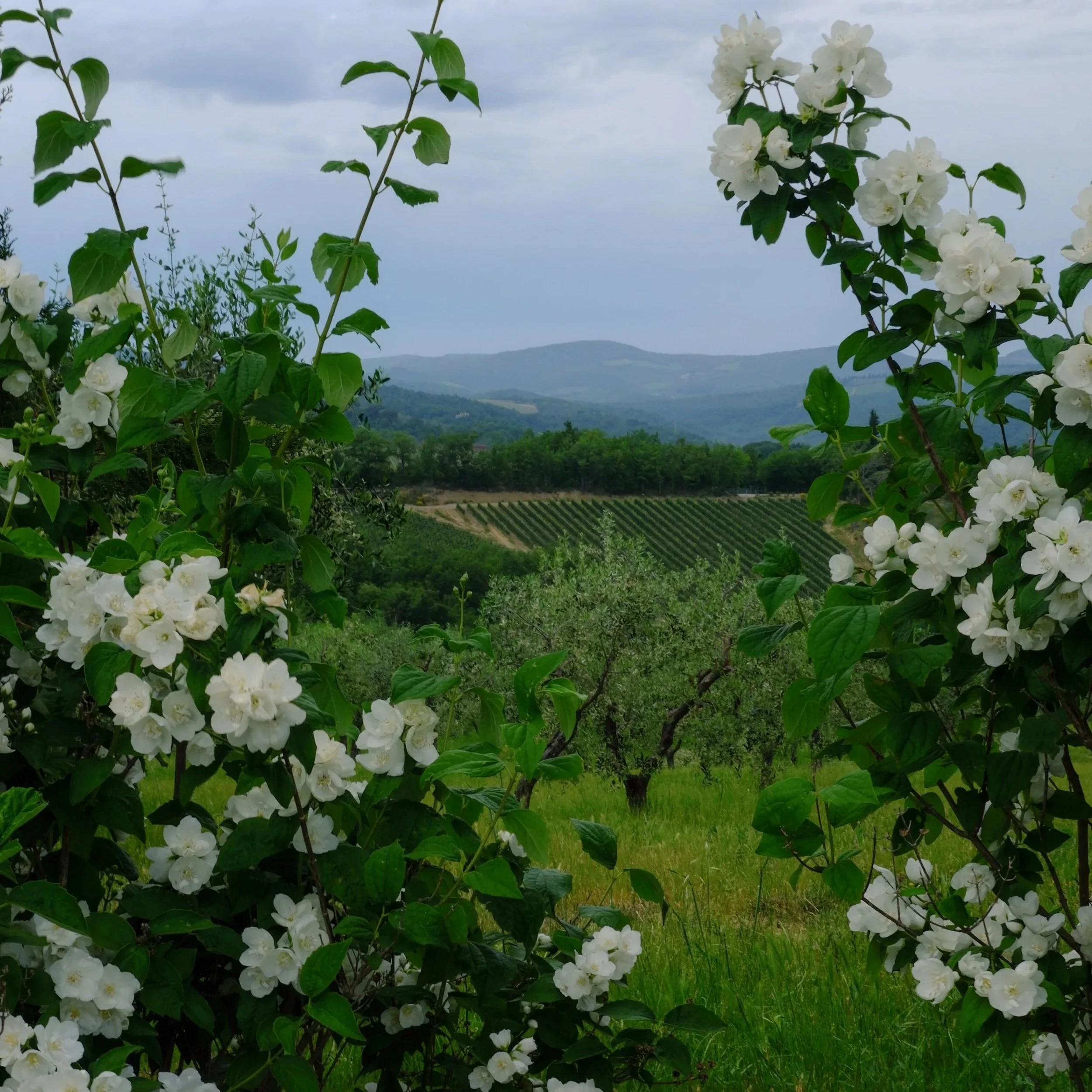
This is a guide to the Tuscan estates worth building a trip around. Some are biodynamic ateliers producing a few thousand bottles a year; others are castle resorts with thermal spas and Michelin-starred dining. All of them deliver the kind of experience our readers travel for. We've organized them by region, from coastal Maremma, the Val d'Orcia and Montalcino Brunello country, the rolling heart of Chianti Classico, and the prestige strip of Bolgheri so you can build a route that flows.
Plan your wine route: Most of these estates require booking tastings in advance, and a handful sit deep in the countryside where having a car (or a private driver) matters. We've flagged where to stay nearby and how to reserve each experience.
Maremma: Tuscany's Wild Coastal Frontier
The Maremma is where Tuscany loosens its tie. Less manicured than Chianti, closer to the sea, and home to some of Italy's most ambitious modern wines, it rewards travelers who like their luxury with a little salt air. Read our full list of best hotels on the Tuscan coast here.
1. Monteverro
Tucked beneath the medieval hill town of Capalbio on Tuscany's southern edge, Monteverro is one of the most quietly serious estates on the coast. The vineyards run down toward the Tyrrhenian Sea catching a constant breeze that keeps the fruit fresh despite the Maremma sun. German founder Georg Weber assembled an internationally renowned winemaking team (the legendary Michel Rolland among them) to craft elegant Bordeaux-style blends of Cabernet Sauvignon, Cabernet Franc, Merlot, and Petit Verdot, alongside excellent Chardonnay and Vermentino.
The cellar is partly built into the hillside and run on gravity flow, designed to tread as lightly on the land as possible. Tastings are by appointment and feel genuinely personal — typically a guided walk through the vineyards and cellar followed by a sit-down flight of several wines paired with Tuscan cheeses and salumi.
Don't miss: The flagship Monteverro, a polished Bordeaux blend that ages beautifully.
Where to stay: Il Pelicano in nearby Porto Ercole — a classicly charming coastal hotel about twenty minutes away — makes the ideal base. Read our full hotel review here.
2. Tenuta Il Quinto
A short drive inland, in the hills of Magliano in Toscana, Tenuta Il Quinto is the most architecturally striking newcomer on this list. Reborn under new ownership in 2016, the estate spreads across roughly 70–80 hectares of woodland, olive groves, and organically farmed vineyards, with Monte Amiata to the north and the Argentario coast to the south.
The cellar itself is the draw: designed by Ubik Architecture, it rises from the ground in ribbons of local stone and Corten steel that read almost as part of the road network — a building that hides in the landscape rather than dominating it. In the cellar, winemaking happens across steel, wood, concrete, and amphora, producing a thoughtful range: a Vermentino and Fiano white, a rosato, a Morellino di Scansano, and structured reds like the Cabernet–Petit Verdot "Quinto."
Don't miss: The panoramic tasting room window framing the vineyards and, on clear days, the sea.
The experience: Choose between a classic cellar tour-and-tasting or a 4x4 "wine safari" through the vineyards with local-product pairings.
Val d'Orcia & Montalcino: The Brunello Heartland
If you drink one wine in Tuscany, make it Brunello di Montalcino — 100% Sangiovese, aged for years, capable of extraordinary finesse. This UNESCO-listed corner of the region is also where wine tourism meets serious hospitality.
3. Castello di Velona
For readers who want to stay inside a working winery, Castello di Velona is the headline act. This eleventh-century fortress, restored into a five-star resort, sits on a hilltop with 360-degree views over the Val d'Orcia about 8 km from Montalcino. It produces its own Brunello and Rosso di Montalcino from the surrounding vineyards, plus organic olive oil and a small, guests-only allocation of its top bottlings you won't find in shops.
The wellness offering is exceptional: a 1,500-square-meter spa fed by one of the hottest thermal springs in Tuscany, with private thermal suites in the top rooms. Dining spans gourmet Tuscan restaurants, and the resort's "Dine Around" program even extends to nearby Michelin-starred kitchens.
Don't miss: A vineyard tour and Brunello tasting followed by an afternoon in the thermal pools.
Where to stay: The castle itself — book a UNESCO View Suite with a private thermal pool for the full experience.
Best for: Couples and honeymooners who want wine, spa, and a view in one place.
4. Stella di Campalto
At the opposite end of the spectrum sits Stella di Campalto, one of the most sought-after names in Montalcino. From her Podere San Giuseppe estate near the abbey of Sant'Antimo in Castelnuovo dell'Abate, Stella farms a small clutch of Sangiovese vineyards organically (since the mid-1990s) and biodynamically (since 2002), producing pure, ethereal Rosso and Brunello in tiny quantities.
These are not the dense, oaky Brunellos that dominated the early 2000s; they're transparent, vibrant, and deeply terroir-driven, treating each vineyard plot as its own cru. Visits are strictly by appointment and intimate by nature — this is a pilgrimage for serious wine lovers rather than a drop-in tasting room.
Don't miss: Tasting Rosso and Brunello side by side to understand how one grower expresses a single hillside.
The catch: Production is small and allocations are limited, so book your visit well ahead and don't expect a polished resort experience — expect soul.
Chianti Classico: The Rolling Heart of Tuscany
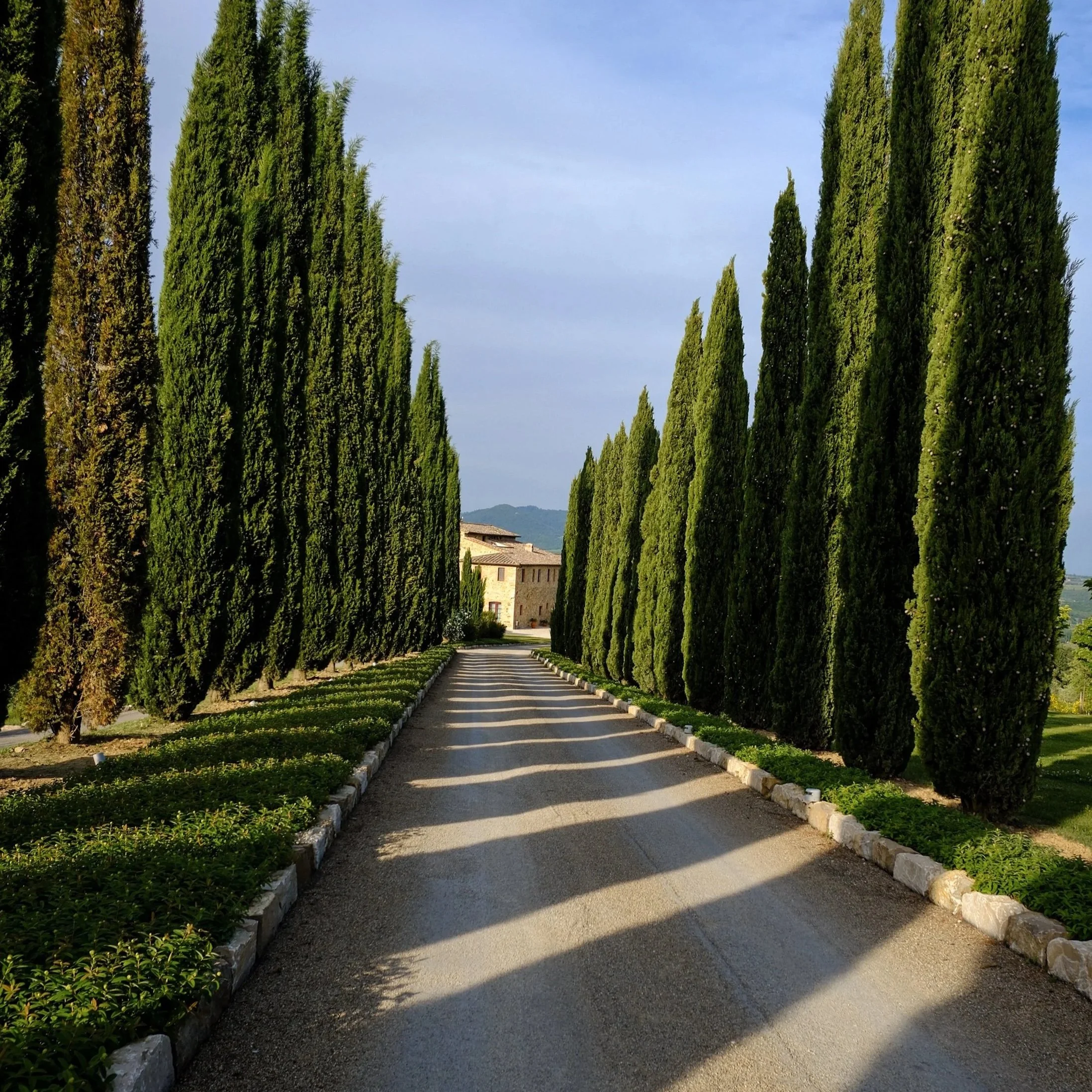
The postcard Tuscany with cypress-lined drives, stone villas, and the Black Rooster seal on every bottle. Chianti Classico has reinvented itself in the last decade, and these estates show it at its most refined.
5. Villa Le Corti (Principe Corsini)
Just outside Florence in San Casciano in Val di Pesa, Villa Le Corti is the Chianti estate of the noble Corsini family, who have made wine and olive oil here for over six centuries. The Renaissance villa and its cellars — designed in the 1600s by painter-architect Santi di Tito — descend three levels beneath the building and surrounding lawn, and the gardens alone are worth the visit.
Production is organic and partly biodynamic, spanning the full Chianti Classico hierarchy up to the Gran Selezione "Don Tommaso." Several guided tours are offered by appointment, each ending with a tasting; there's also an osteria for traditional Tuscan dishes and a cooking class held in the villa's historic kitchens.
Don't miss: The Gran Selezione tasting paired with the estate's own extra-virgin olive oil.
Best for: A half-day trip from Florence — close, grand, and easy to combine with the city.
6. Vallepicciola
Near Pievasciata, just fifteen minutes from Siena, Vallepicciola is one of Chianti Classico's most impressive modern wineries. The Bolfo family restored the ruins of an old monastery into a 265-hectare estate (107 under vine), with a striking contemporary cellar spread over three levels, two of them underground.
Alongside benchmark Sangiovese-based Chianti Classico, they grow Pinot Noir, Merlot, Cabernet, and Chardonnay, and even produce sparkling wine. The experiences lean immersive — vineyard walks, a jeep "Wine Safari," the Collectors' Experience — and crucially, the same family owns the five-star Hotel Le Fontanelle nearby, making this one of the easiest luxury estates to turn into an overnight stay.
Don't miss: The Wine Safari through the vineyards followed by a guided cellar tasting.
Where to stay: Hotel Le Fontanelle, the family's five-star property minutes away.
7. Antinori nel Chianti Classico
No Tuscan wine list is complete without the Antinori family, winemakers for more than 600 years. Their flagship Antinori nel Chianti Classico winery in San Casciano is a destination in its own right and a feat of contemporary architecture half-buried in the hillside, with terracotta-toned curves, a spiral staircase, a museum, and a rooftop restaurant overlooking the vines.
It's more polished and higher-volume than the boutique estates above, which makes it ideal for first-time visitors who want a guaranteed, professionally run experience with serious wines (the Tignanello and Solaia heritage looms large here).
Don't miss: The guided tour ending at the rooftop Rinuccio 1180 restaurant for lunch with a view.
Bolgheri & the Etruscan Coast: Home of the Super Tuscans
A narrow coastal strip south of Livorno that produces some of the most coveted wines in Italy. Bookings here can be competitive, so plan early.
8. Tenuta San Guido (Sassicaia)
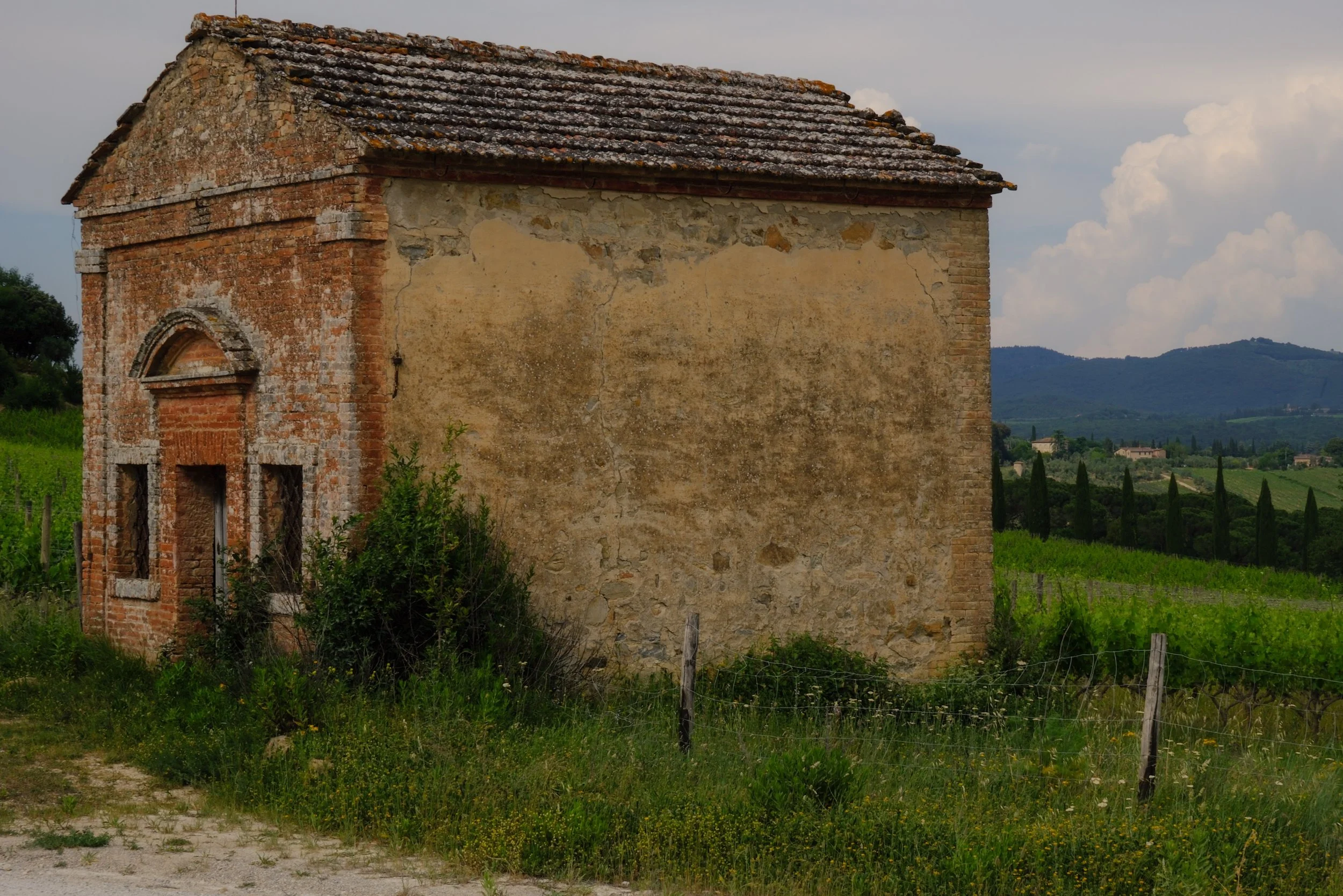
Tenuta San Guido is the birthplace of Sassicaia, the Cabernet-based wine that launched the entire Super Tuscan movement and earned Bolgheri its own DOC. Visits are limited and prestigious, centered on the estate's history and its iconic cypress avenue immortalized in poetry. For collectors, this is hallowed ground.
Best for: Serious oenophiles and bucket-list tastings.
9. Tenuta dell'Ornellaia
A neighbor and rival in prestige, Ornellaia pairs world-class Bordeaux blends with a strong contemporary-art program (its "Vendemmia d'Artista" project commissions a new artist each vintage). Tastings are elegant, by appointment, and often include vertical flights of the flagship Ornellaia and the Merlot-driven Masseto from nearby.
Don't miss: A vertical tasting to taste how the wine evolves across vintages.
10. Castello Banfi
Back toward Montalcino but worth including for its scale and hospitality, Castello Banfi wraps a major Brunello producer around a restored castle that houses a luxury hotel, a glass museum, and a fine-dining restaurant. It's the easiest big-name Montalcino estate to combine wine, history, and an overnight stay.
Where to stay: Castello Banfi – Il Borgo.
How to Plan the Perfect Tuscan Wine Trip
A few notes from experience to make your route flow:
Always book ahead. Almost every estate on this list requires reservations for tastings, and the boutique producers (Stella di Campalto, San Guido, Ornellaia) have genuinely limited availability.
Don't try to do it all in one base. Maremma, Bolgheri, Montalcino, and Chianti are spread out. Pick one or two regions per trip — Chianti + Montalcino pairs naturally; the coast (Maremma + Bolgheri) is its own loop.
Hire a driver for tasting days. Italian drink-driving limits are strict and the roads are winding. A private driver turns the day from logistics into pleasure.
Stay inside a winery at least once. Castello di Velona, Vallepicciola's Hotel Le Fontanelle, and Castello Banfi all let you wake up among the vines — the single best upgrade to a wine trip.
Frequently Asked Questions
What are the best wineries to visit in Tuscany? For a luxury experience, the standouts span every style: Monteverro and Tenuta Il Quinto on the coastal Maremma, Castello di Velona and the cult biodynamic producer Stella di Campalto in Montalcino, Villa Le Corti, Vallepicciola, and Antinori nel Chianti Classico in Chianti, and Tenuta San Guido (Sassicaia) and Ornellaia in Bolgheri. The "best" depends on what you want — intimate artisan tastings, modern architecture, or a castle resort you can sleep in.
Which Tuscan wineries let you stay overnight? Castello di Velona is a five-star thermal-spa resort and working Brunello winery in one. Vallepicciola is owned by the same family as the five-star Hotel Le Fontanelle nearby, and Castello Banfi has its own hotel, Il Borgo. These are the easiest estates to turn into a multi-day wine stay.
Do I need to book Tuscan winery tastings in advance? Yes. Nearly all the estates in this guide operate by appointment, and the boutique producers and Super Tuscan names (Stella di Campalto, Tenuta San Guido, Ornellaia) have very limited availability. Reserve as far ahead as possible, especially from May through October.
What's the difference between Brunello, Chianti Classico, and Super Tuscan wines? Brunello di Montalcino is 100% Sangiovese from the Montalcino area, aged for years and known for finesse. Chianti Classico is Sangiovese-based (with the Black Rooster seal) from the hills between Florence and Siena. Super Tuscans — like Sassicaia and Ornellaia from Bolgheri — are often Bordeaux-style blends of Cabernet and Merlot that broke from traditional appellation rules and now command some of Italy's highest prices.
When is the best time to visit Tuscan wineries? Late spring (May–June) and early autumn (September–October) are ideal — pleasant weather, vines in full leaf, and harvest energy in September. Summer is beautiful but hot, and many top estates get busy, so book early. Winter visits are quieter and more intimate but some smaller producers reduce their tasting hours.
How many wineries can I visit in one day in Tuscany? Two to three is the sweet spot. Tastings are leisurely (often 1.5–2 hours), distances between estates add up, and you'll enjoy each one more without rushing. Hire a driver so you can taste freely.
Related Articles
Best Hotels in Puglia: Luxury Masserias & Boutique Stays (2026)