
The best hotel on the Tuscan coast is Il Pellicano in Porto Ercole, a cliffside property on Monte Argentario with a seawater pool, a Michelin-starred restaurant, and rates starting around €750 in shoulder season. For families, Roccamare near Castiglione della Pescaia offers a private pine forest and beach without the formality. For the classic Italian beach club experience, Forte dei Marmi on the Versilia coast delivers rows of striped umbrellas and hotels like Augustus and Principe. Monte Argentario is the most beautiful stretch, Versilia is the most social, and the Maremma is the quietest.
Tuscany's reputation was built inland. Cypress rows, hilltop towns, Brunello, the golden light over the Val d'Orcia. That is the Tuscany most people book, and it is genuinely wonderful. But it means the coastline stays comparatively quiet, and that is where we have found some of the best hotels in Italy.
The Tuscan coast runs roughly 240 kilometres from the marble hills above Forte dei Marmi down to the wild Maremma near the Lazio border. It is not one destination. Versilia in the north is a summer scene, all beach clubs and aperitivo and Milanese families who have been coming to the same umbrella for three generations. The Maremma in the south is scrubby, empty, and slightly feral, with long dune beaches and cattle ranches behind them. Monte Argentario sits in between, a rocky peninsula tethered to the mainland by two sandbars, and it is the most beautiful part of the whole coast.
We have organised this by stretch of coastline rather than ranking one to thirteen, because the honest answer to "which is best" depends entirely on whether you want a beach club or a pine forest. If you are building a trip that pairs the sea with vineyards and hill towns, our guide to the best hotels in Tuscany covers the inland half of that itinerary.
Il Pellicano
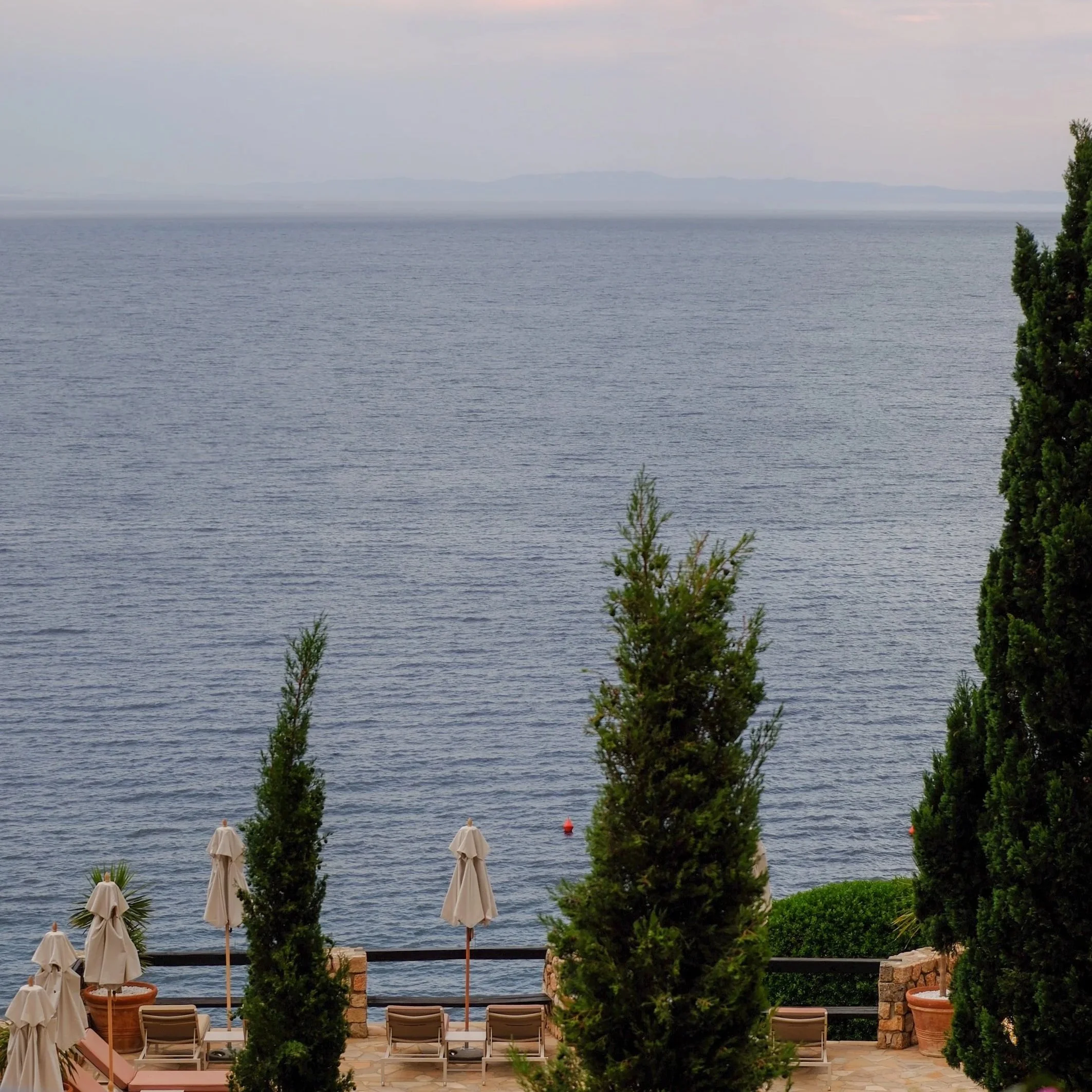
This is the one. Il Pellicano sits on a cliff above Porto Ercole on Monte Argentario, and it has been the aspirational Italian coastal hotel since the 1960s, when it was a private house that filled up with the sort of people Slim Aarons photographed. The Sciò family bought it in 1979 and Marie-Louise Sciò now runs it, and the current version manages the rare trick of being genuinely stylish without feeling like it is trying.
The property is a main house plus a scatter of cottages through terraced gardens, so you walk down through bougainvillea to a seawater pool cut into the rock, and then further down to a rocky bathing platform with a lift back up. There is no sand, which surprises people. The Michelin-starred restaurant is very good and very expensive, and Pelligrill upstairs is the one we would eat at more often, with sea views and a shorter menu.
Two caveats. First, Il Pellicano only welcomes children aged eight and over, which rules it out for a lot of our readers. Second, the value proposition is genuinely stretched at peak. Starting rates from around €750 in April and October are defensible for what you get. July and August rates north of €1,400 are a different conversation, and we would rather spend three nights here in late September than five in August.
The hotel runs seasonally, roughly early April through late October.
Rate anchor: From approximately €750 per night in shoulder season, rising past €1,400 in July and August.
Read our full Il Pellicano review for room-by-room detail and what we would book differently.
La Roqqa
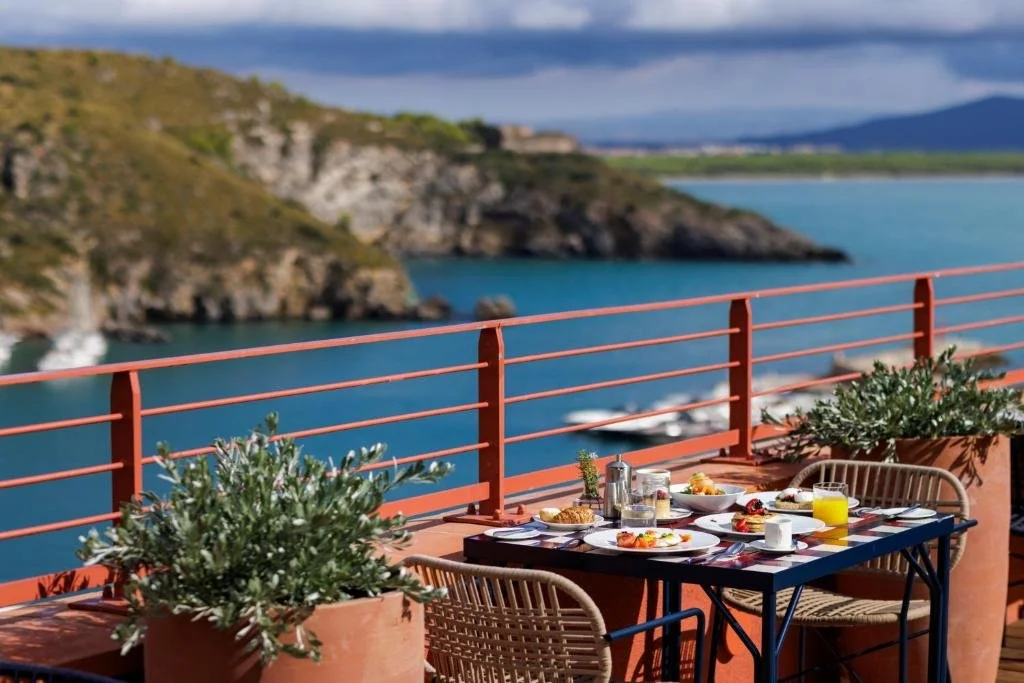
La Roqqa opened in Porto Ercole in September 2023 and it changed the town. Before it, Porto Ercole had Il Pellicano at the very top and a considerable gap underneath. La Roqqa fills that gap with 55 rooms above the harbour, a rooftop restaurant, and a beach club called Isolotto about ten minutes' walk away with a free electric shuttle because the route is steep.
The design is the appeal. Gaetano Pesce furniture, a lot of warm terracotta and green, and a rooftop that catches the sunset over the harbour. Rates include beach club access with an umbrella and two loungers, which is a meaningful inclusion given what Italian beach clubs charge.
The caveat is that it is a town hotel, not a resort. You are above the port rather than on the water, and the walk down into Porto Ercole is charming but the walk back up is not. If your idea of a beach holiday is stepping from your room to a lounger, this is not that. The beach club is genuinely lovely, but it requires a shuttle.
Open roughly mid-April to early November.
Rate anchor: From approximately €430 per night, with high summer typically €500 to €600.
Torre di Cala Piccola
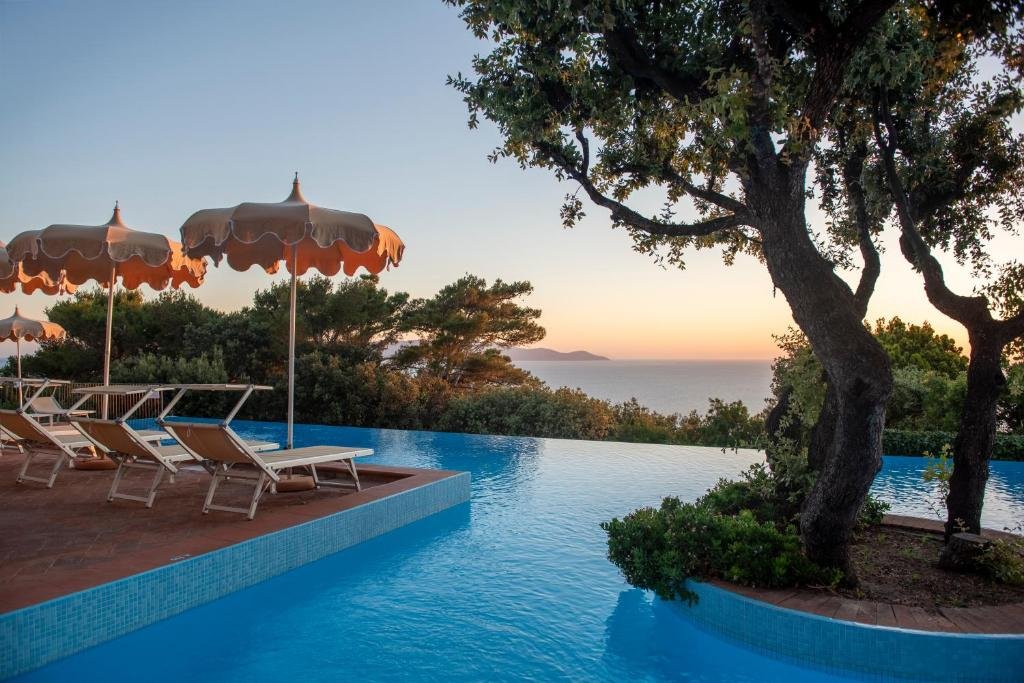
On the far western side of Monte Argentario, above Porto Santo Stefano, Torre di Cala Piccola is built around a sixteenth-century Spanish watchtower on a cliff. The views are the best on the peninsula, straight out to Giglio and Giannutri, and the sunsets from the pool terrace are the reason people book.
It is a simpler proposition than the Porto Ercole hotels. Rooms are comfortable rather than designed, and the food is good without being a destination. What you are paying for is position, and the position is extraordinary. There is a small rocky cove below reached by a steep path, which is beautiful and not for everyone.
We would pick this over La Roqqa if the view matters more than the room, and over Il Pellicano if the budget is the constraint.
Argentario Golf & Wellness Resort
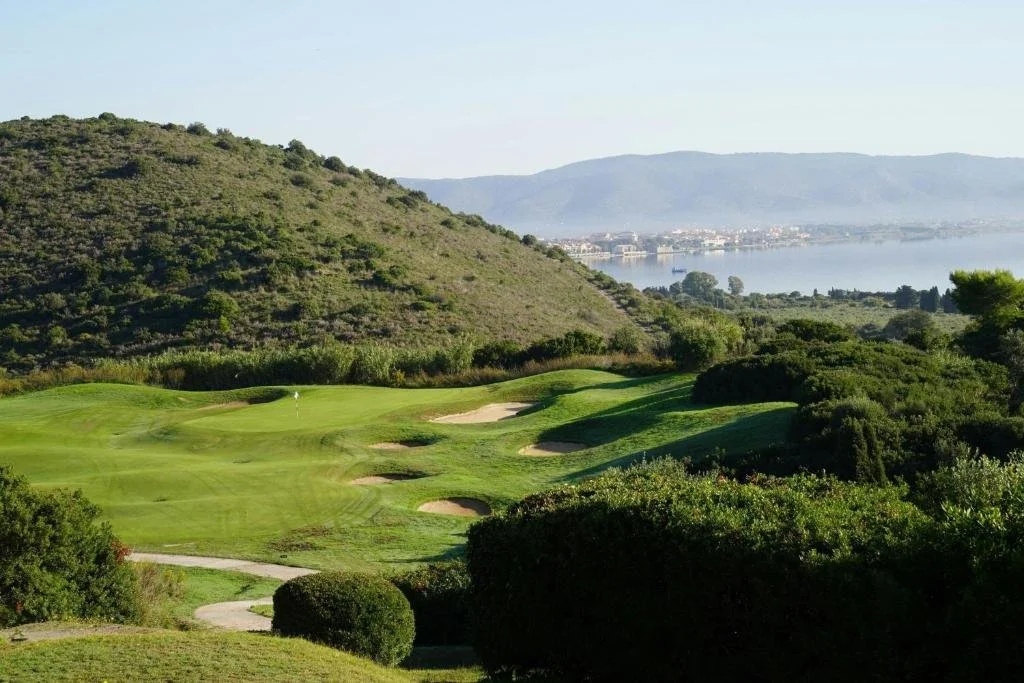
This one sits inland on the sandbar side of the peninsula rather than on the water, surrounded by an eighteen-hole course and a large spa. It is the most conventionally resort-like option on Argentario, with the most consistent service and the most predictable experience.
It is also the one we would recommend for families travelling with younger children, because there is space, a proper pool, and nobody minds. The trade-off is that you drive to the sea, and the drive over the ridge to Porto Ercole takes fifteen minutes on a road with a lot of switchbacks.
L'Andana
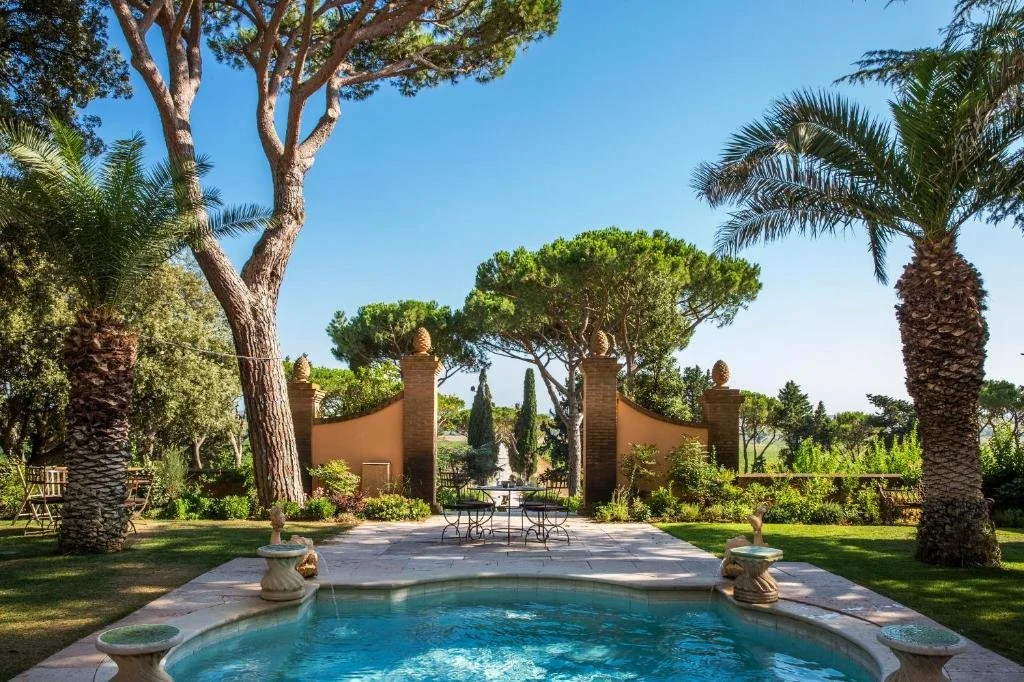
L'Andana occupies the old hunting estate of the Grand Duke of Tuscany near Castiglione della Pescaia, 500 hectares of vineyard and olive grove with 47 rooms in the restored villa. Ettore Mocchetti of Architectural Digest did the interiors. Enrico Bartolini runs the food. There is an ESPA spa, a cooking school, a golf driving range, and a kids club.
The thing to understand is that it is not on the beach. The sea is about nine kilometres away, which is a ten-minute drive to Castiglione della Pescaia. For some travellers that ruins it. For us it is the point, because you get the Maremma countryside and the coast in the same booking, and the Maremma countryside is one of the last genuinely uncrowded corners of Tuscany.
It runs seasonally, roughly April to November, and the Bartolini restaurant has a shorter window still, generally mid-May to early October. Book around the restaurant if the food is why you are going.
Rate anchor: From approximately €350 per night in shoulder season, with an average closer to €540 and high summer higher.
Roccamare Resort
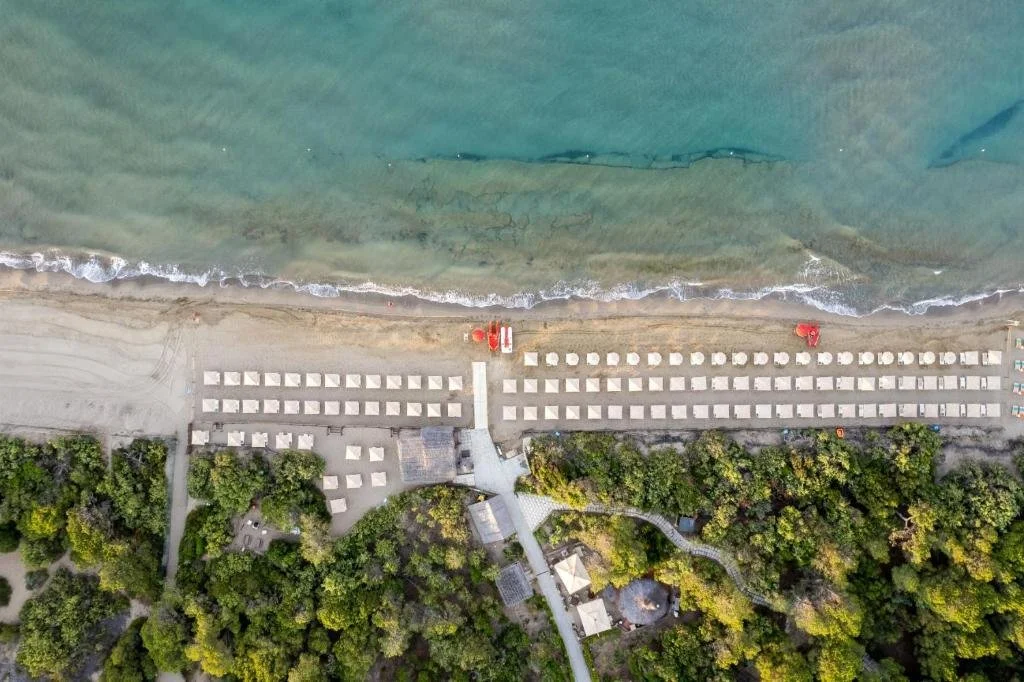
If we were booking the Tuscan coast with our own children and no particular interest in being seen, this is where we would go. Roccamare is a collection of houses and apartments set inside a private pine forest at Castiglione della Pescaia, with a private beach at the bottom of the woods and almost nothing else.
It is not luxury in the Pellicano sense. It is a beach club with accommodation, run for Italian families who come for a fortnight and know each other. The rooms are plain. The appeal is that children can disappear into the pines for three hours and come back for lunch, which is a kind of freedom that is very hard to buy elsewhere on this coast.
The caveat is significant: it books out to repeat Italian guests months ahead for July and August, and the minimum stays in peak are long. Aim for June or September.
Gallia Palace
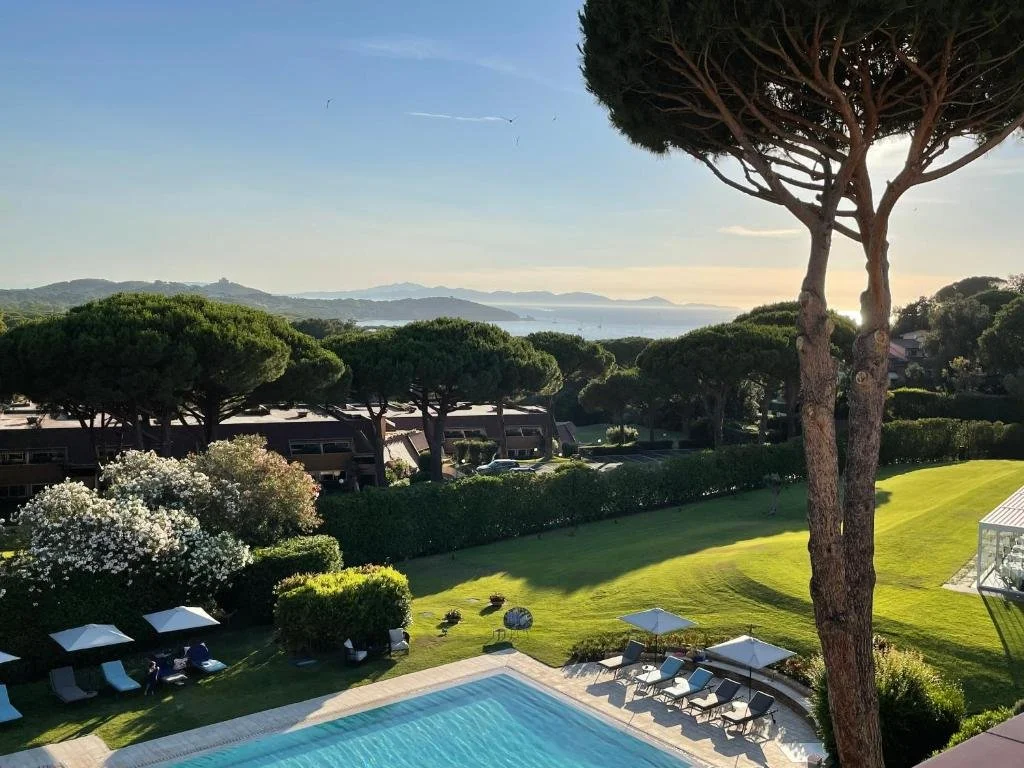
Punta Ala is a purpose-built resort headland north of Castiglione della Pescaia, quiet and green and heavily wooded, with a marina and a well-regarded golf course. Gallia Palace is the anchor hotel, a low white building in gardens with a private beach club reached by shuttle.
It is old-school in a way we find appealing. Long lunches, proper service, guests who have been coming for decades. It has also been steadily renovated, so it does not feel dated in the wrong ways.
Punta Ala's honest weakness is that it has no town. There is a small marina cluster with a few restaurants and that is it. If you want to walk out for dinner somewhere different every night, this is the wrong headland.
Cala del Porto Punta Ala
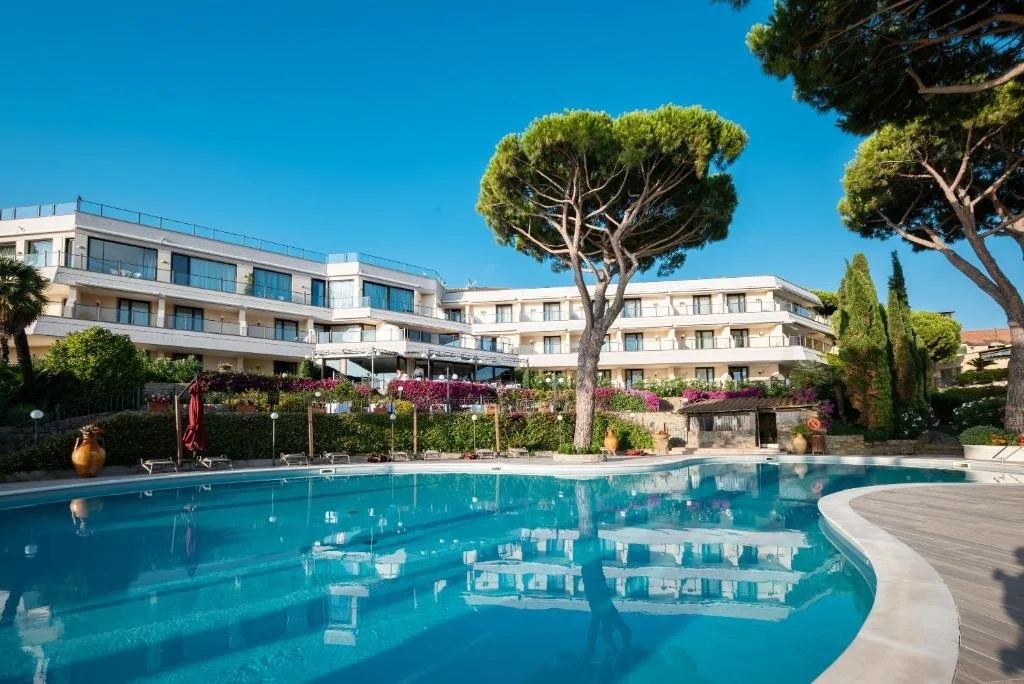
The other Punta Ala option, above the marina with a hillside position and a private beach below. Slightly more contemporary than Gallia Palace and slightly more expensive, with better sea views from the rooms and a pool terrace that looks out over the harbour toward Elba.
Same caveat as above regarding the lack of a town. The two Punta Ala hotels are a choice between traditional and contemporary rather than between meaningfully different holidays.
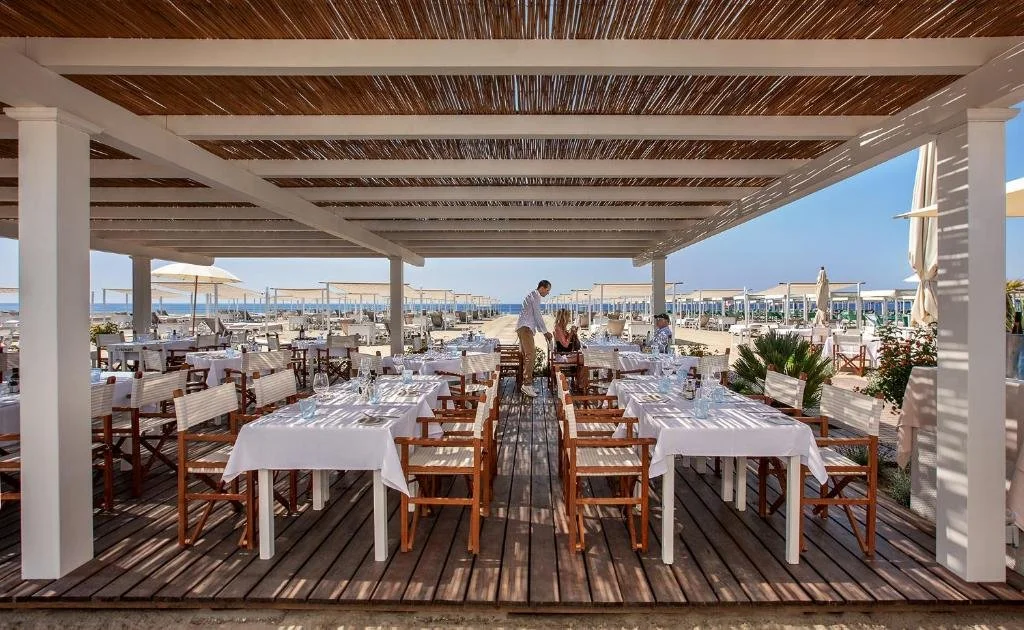
Hotel Principe Forte dei Marmi
Forte dei Marmi is the Tuscan coast's social capital, a grid of villas behind a long flat sandy beach divided into numbered bagni, each with its own colour of umbrella and its own regulars. It has been fashionable since the 1920s and the fashion has not lapsed, which is unusual.
Principe is the most polished hotel in town. It is small, about 28 rooms, with a rooftop spa, a very good restaurant in Lux Lucis, and a private beach club a short walk away. Service is the strongest we have found in Versilia.
The caveat is price. Starting rates in the high season regularly exceed €800 per night, and Forte dei Marmi is not a place where you save money once you arrive. Beach clubs, restaurants, and the shopping on Via Carducci are all priced for the clientele.
Rates: From approximately €780 per night, frequently higher in July and August.
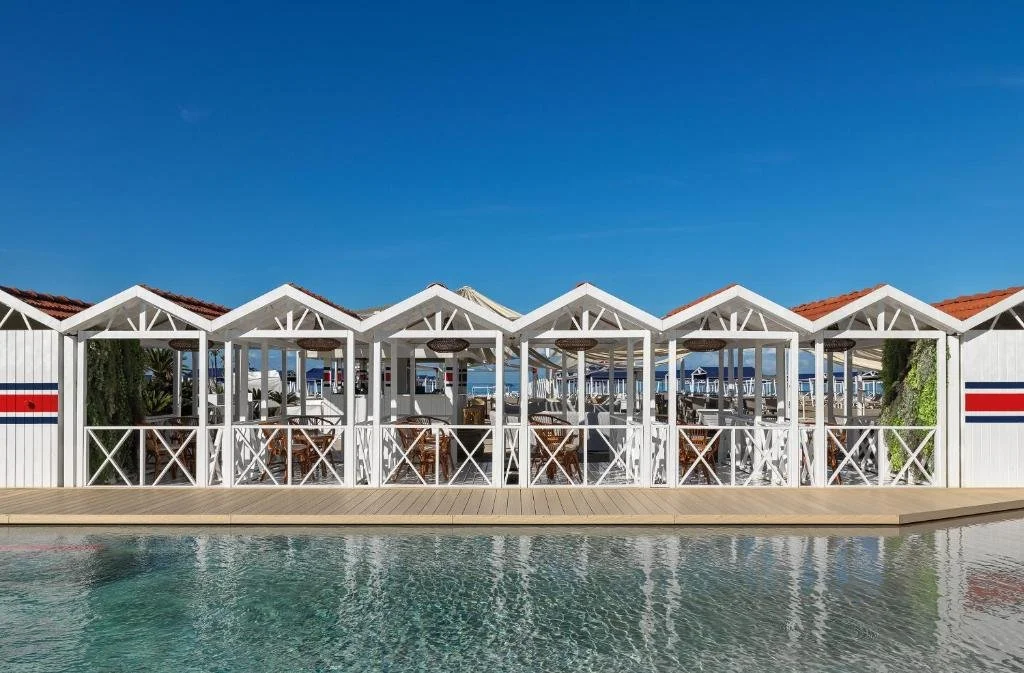
Augustus Hotel & Resort
Augustus is the Forte dei Marmi hotel with the most interesting bones. It is built around two Agnelli family villas in a large park, with rooms spread through the grounds and a tunnel that runs under the seafront road directly to its private beach club. That tunnel is a genuinely useful piece of infrastructure and it is the reason we would book here with children.
The park is the other reason. Most Forte hotels are on residential streets. Augustus has proper grounds, which makes it feel like a resort rather than a town hotel.
Rooms vary considerably depending on which building you land in, so this is one where the room category matters more than usual. The villa rooms are lovely. Some of the standard rooms in the newer sections are noticeably plainer for the money. The beautiful beach club is also featured in our list of best beach clubs on the Tuscan coast.
Rates: From approximately €350 per night in shoulder season, rising substantially in peak.
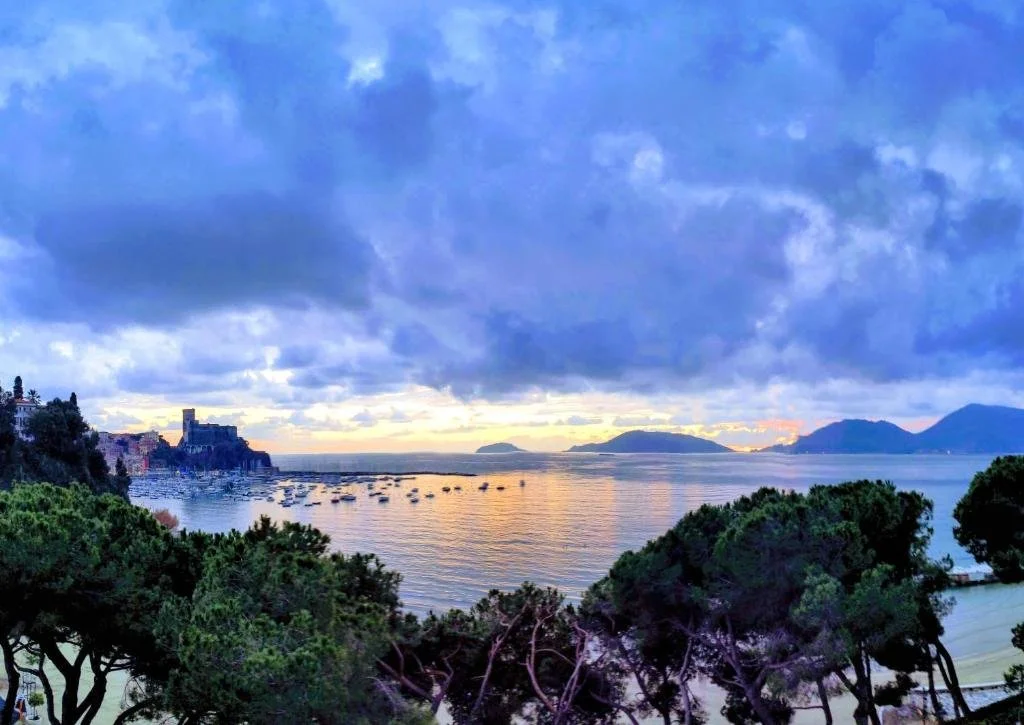
Hotel Byron
Byron is a five-star on the waterfront in the residential end of Forte dei Marmi, two converted villas with a garden, a pool, and an art gallery. It is quieter than Principe and less sprawling than Augustus, and it has a rooftop terrace that is one of the nicer places in town for a drink.
It sits closest to what we would call the sweet spot in Forte dei Marmi, meaning it is genuinely five-star without the Principe price. The beach is across the road rather than through a tunnel.
Rates: From approximately €590 per night.
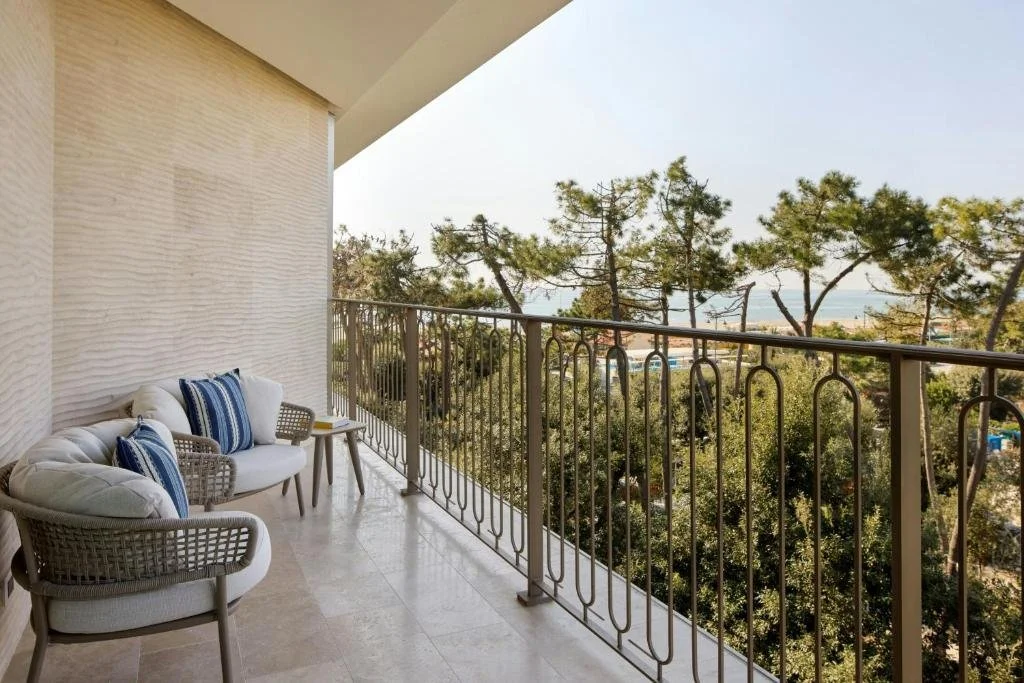
Principessa Forte dei Marmi
An Autograph Collection property and the newest serious hotel in town, which makes it the pick for anyone who wants contemporary rooms and Marriott points in the same booking. Guest ratings since opening have been exceptional.
It is inland from the beach by a few minutes on foot, and it does not have the history of the Agnelli villas or the Principe's kitchen. What it has is consistency, and on a coast where a lot of five-stars are converted houses with wildly variable rooms, consistency is worth something.
Rate anchor: From approximately €520 per night.
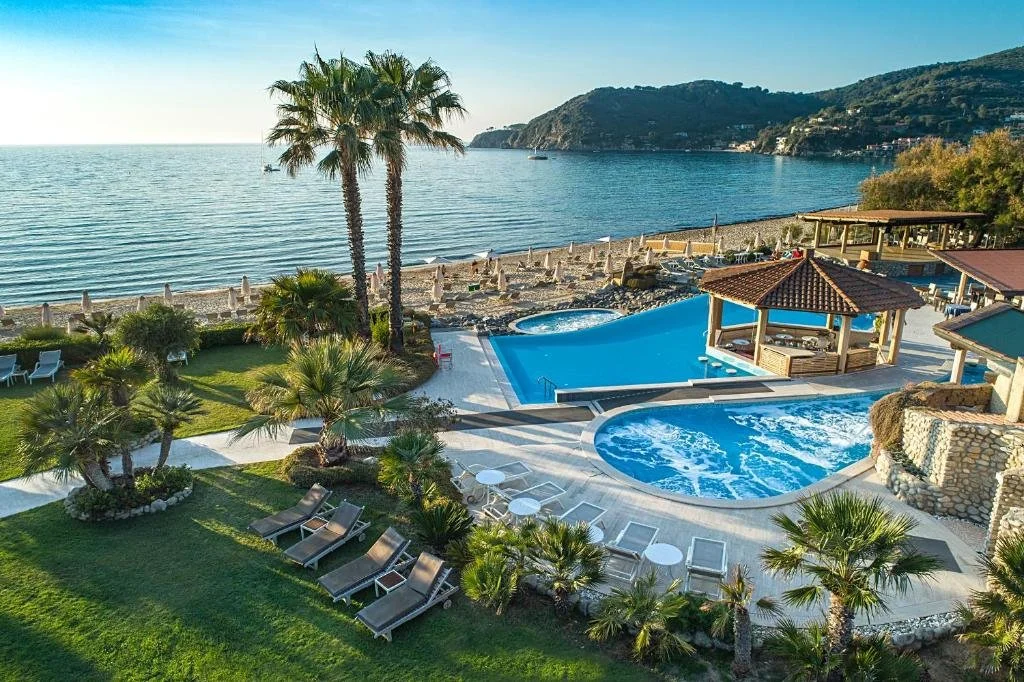
Hotel Hermitage
Elba is technically the Tuscan coast and is routinely ignored in coverage of it, which is a mistake. It is an hour by ferry from Piombino, it has better swimming than the mainland, and it is dramatically cheaper.
Hermitage sits on the Bay of Biodola on the north coast, with a private sand beach, three pools, and a golf course. It is the island's most established resort and it is comfortably the easiest place to book on Elba if you want full-service.
The honest caveat is that Elba requires commitment. The ferry adds half a day at each end, August ferry bookings for cars need to be made well in advance, and the island's roads are slow. It works beautifully as a week. It does not work as a two-night add-on.
Which Stretch of Coast to Pick
If you want the most beautiful setting and you are travelling as a couple, go to Monte Argentario. It has the drama, the best hotel on the coast, and two proper harbour towns in Porto Ercole and Porto Santo Stefano. It is also the most convenient from Rome, roughly ninety minutes.
If you want a social summer holiday with beach clubs, shopping, and a scene, go to Forte dei Marmi. It is the least Tuscan-feeling part of Tuscany and it is unapologetic about that.
If you want space, empty beaches, and to spend less, go to the Maremma around Castiglione della Pescaia and Punta Ala. This is where we would take a family for a fortnight.
If you want the best swimming, go to Elba and accept the ferry.
Best Time to Visit the Tuscan Coast
The season runs from roughly mid-April to the end of October, and most of the hotels in this piece close entirely outside it. That closure is worth planning around, because a November trip to the Tuscan coast means the good hotels are shut and the beach clubs are boarded up.
June and September are the two months we would book. The sea is warm from mid-June onward and stays swimmable through September. Rates in both months sit well below peak, and the coast is busy without being unpleasant.
July is hot and expensive. August is the month to avoid unless you have no choice, because Italy goes on holiday and the entire coast fills with Italian families, prices peak, restaurants require booking days ahead, and the beaches at Forte dei Marmi in particular become genuinely crowded. Ferragosto in mid-August is the absolute peak.
May and October are lovely for everything except swimming. The sea is cold in May and cooling fast in October, but the countryside behind the coast is at its best and the hotels are at their cheapest.
Frequently Asked Questions
Does Tuscany have good beaches? Yes, though they are different in character from Sardinia or the Amalfi Coast. The Versilia coast around Forte dei Marmi has long flat sandy beaches that are almost entirely divided into private beach clubs. The Maremma has wide dune beaches backed by pine forest, much of it free to access. Monte Argentario is mostly rocky with small coves. Elba has the clearest water and the best variety.
What is the most beautiful part of the Tuscan coast? Monte Argentario. It is a rocky peninsula with two harbour towns, connected to the mainland by two sandbars that enclose a lagoon. The drive around the western side toward Cala Piccola is one of the best coastal roads in Italy.
How far is the Tuscan coast from Florence? Forte dei Marmi is about an hour and forty minutes by car. Castiglione della Pescaia is roughly two and a half hours. Monte Argentario is about two hours and forty-five minutes. From Rome, Monte Argentario is closer at around ninety minutes, which is why it fills with Romans rather than Florentines.
Is Il Pellicano worth the money? In April, May, late September and October, yes. In July and August the rate roughly doubles and the value case becomes much harder to make. It also does not accept children under eight, which is a real constraint for family travellers.
Which Tuscan coast hotels are best for families? Roccamare at Castiglione della Pescaia for the private pine forest and beach, Augustus in Forte dei Marmi for the beach tunnel and grounds, and Argentario Golf & Wellness for space and a proper pool. L'Andana has a kids club but is not on the sea.
Do you need a car on the Tuscan coast? Yes, in almost every case. The train line runs along the coast and serves Forte dei Marmi and Castiglione della Pescaia reasonably well, but Monte Argentario, Punta Ala and the Maremma beaches all require driving. Elba requires a car booked onto the ferry in advance during summer.
When do Tuscan coast hotels open and close? Most run from around mid-April to late October or early November. Il Pellicano's 2026 season is 2 April to 26 October. L'Andana runs April to November with a shorter window for its main restaurant. Always confirm before booking shoulder-season dates.