
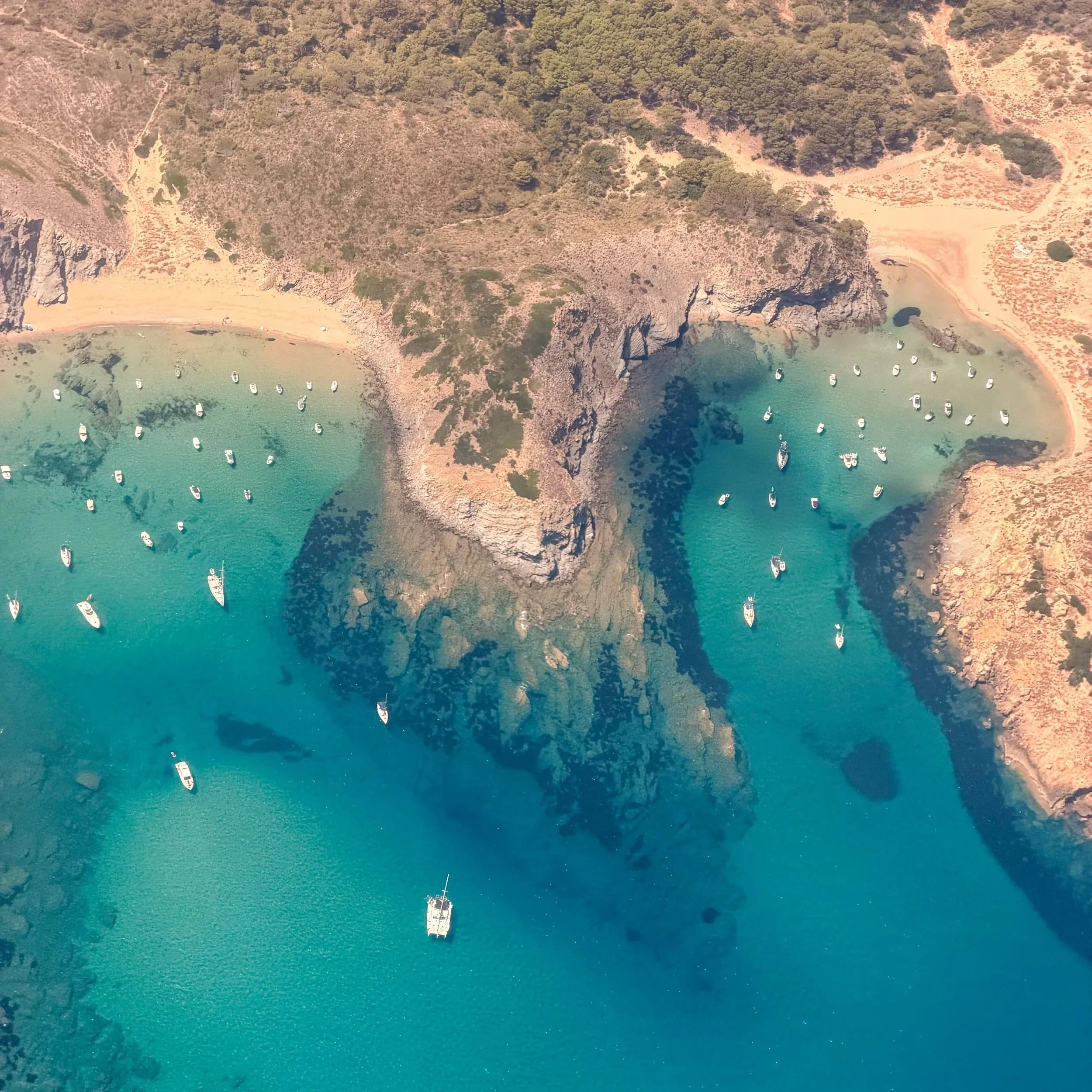
The verdict: Menorca has the best beaches in the Balearics—more of them than Mallorca and Ibiza combined, and most left blissfully undeveloped thanks to the island's protected Biosphere Reserve status. The south coast holds the postcard calas: Macarella, Turqueta, and Mitjana, with white sand and Caribbean-turquoise water. The north is wilder and redder, led by Cala Pregonda and Cavalleria. For families, Son Bou and Es Grau are the beaches that actually work, with gentle water and restaurants on the sand. And on beach clubs, the honest answer: Menorca doesn't really do true beach clubs, and that's part of its charm—what it has instead is a superb collection of beach bars and chiringuito restaurants, from Es Bruc on the sand at Sant Tomàs to sunset drinks in the cliff caves of Cova d'en Xoroi.
Everything here comes from our own trips to Menorca, paid for by us. No tourism board, no sponsored anything, just the beaches and bars we'd send our friends to. Be sure to also check out our favorite hotels in Menorca.
How Menorca's Beaches Work
Understanding Menorca's coastline saves you a lot of trial and error. The south coast is the classic one: a string of white-sand coves (or calas) cut into pine-covered limestone, with water in shades of turquoise that look retouched and aren't. The north coast is a different island entirely: rust-red and golden sand, wilder landscapes, fewer people, and more wind. Crucially, the island's Biosphere Reserve protections mean the most beautiful beaches have no development at all which keeps them pristine and means you pack in what you need. The developed beaches, meanwhile, are where the restaurants and chiringuitos live, and with kids, that trade-off matters more than the postcard.
The other thing to know: the famous virgin calas are reached by a walk from inland parking areas, and those lots fill by mid-morning in July and August. Go at 9 a.m. or go at 5 p.m.; the middle of a summer day is when everyone else goes.
The Postcard Calas: Macarella, Macarelleta, Turqueta, and Mitjana
These are the beaches on every Menorca cover, and they earn it. Cala Macarella is the flagship, a deep, sheltered horseshoe of white sand backed by pines, with water so clear that anchored boats appear to float on air. Its smaller sibling, Cala Macarelleta, is a short clifftop walk further and even prettier, though it's tiny and fills fast. Cala Turqueta delivers the same south-coast formula slightly less famously, which in August is worth a great deal, and Cala Mitjana, near Cala Galdana, pairs a gorgeous main cove with cliff-jumping ledges that older kids and teenagers consider the highlight of the island. None of these have any services, so bring water, snacks, and shade. They're best done as a morning mission: arrive early, swim in the calm before the boats arrive, and be back at a restaurant-equipped beach by lunch.
The Wild North: Cala Pregonda and Cavalleria
The north coast is Menorca's moodier, emptier side, and it produces the island's most distinctive beaches. Cala Pregonda is the standout with reddish-gold sand, sculpted rock islets offshore, and a Mars-meets-the-Mediterranean palette you won't find anywhere on the south coast. It's a 20-to-30-minute walk in from parking, which filters the crowds beautifully. Platja de Cavalleria, beneath the lighthouse cape of the same name, is broader and easier to reach, with dramatic red cliffs and space to spread out even in peak season. The north takes more wind than the south—check the forecast, because a north-wind day up here is a south-coast day in disguise—but on a calm evening, Pregonda at golden hour is the single most beautiful place on the island.
The Family Beaches That Work: Son Bou and Es Grau
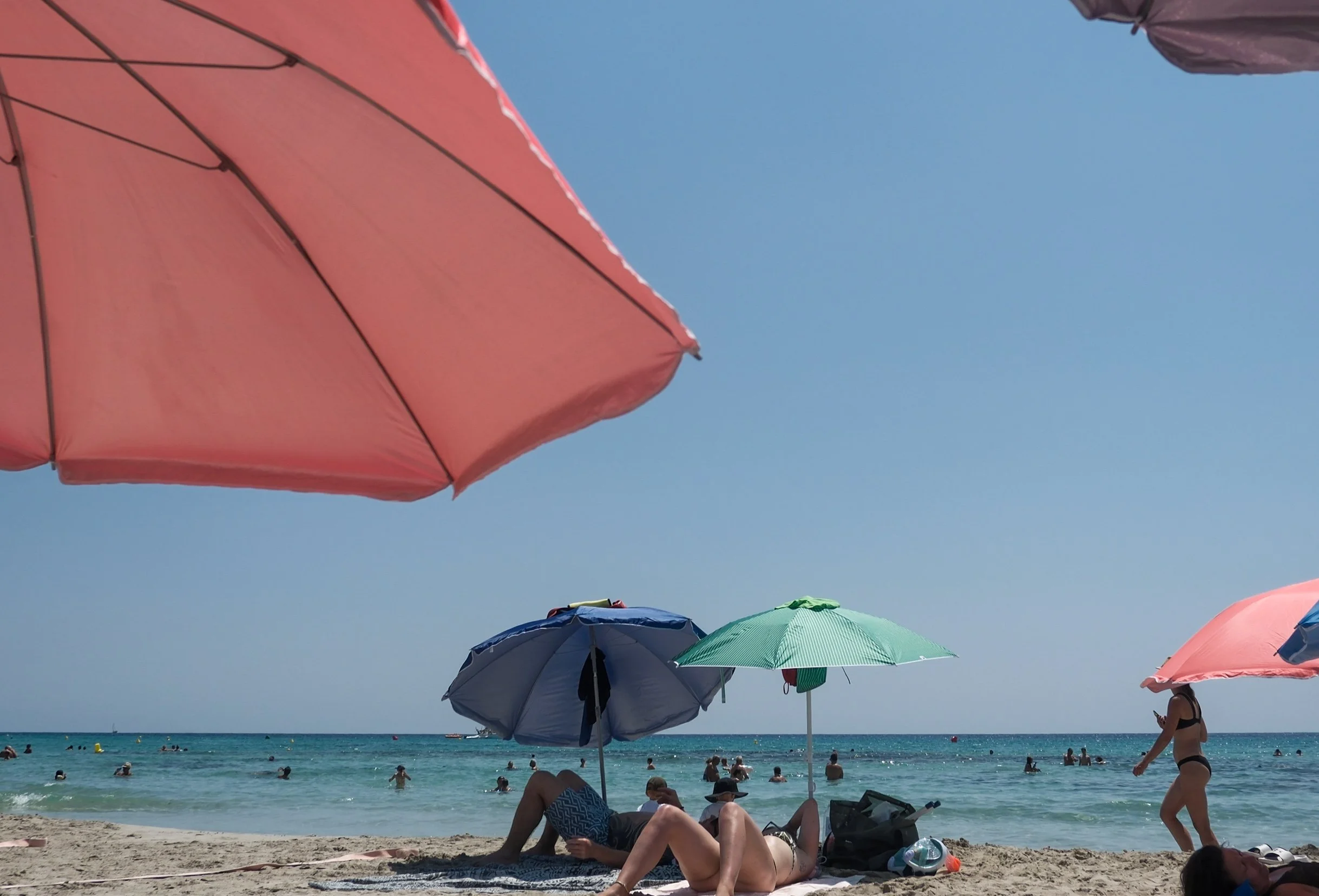
Postcards are one thing; a functioning beach day with children is another. From our family trips, two beaches do the job better than anywhere else on the island. Son Bou is Menorca's longest beach—a huge, sandy, gently shelving stretch on the south coast where kids can swim and dig for hours, with casual restaurants right on the sand so lunch never requires packing up the camp. Walk west for space; stay east for food and facilities. Es Grau, on the east coast inside the S'Albufera des Grau natural park, is the gentle one: a shallow, sheltered horseshoe where the water stays calm and waist-deep seemingly forever, with a whitewashed village of relaxed waterfront restaurants directly behind the beach. Read our full guide to a perfect day on Es Grau.
The Easy All-Rounders: Cala Galdana, Sant Tomàs, and Binibèquer
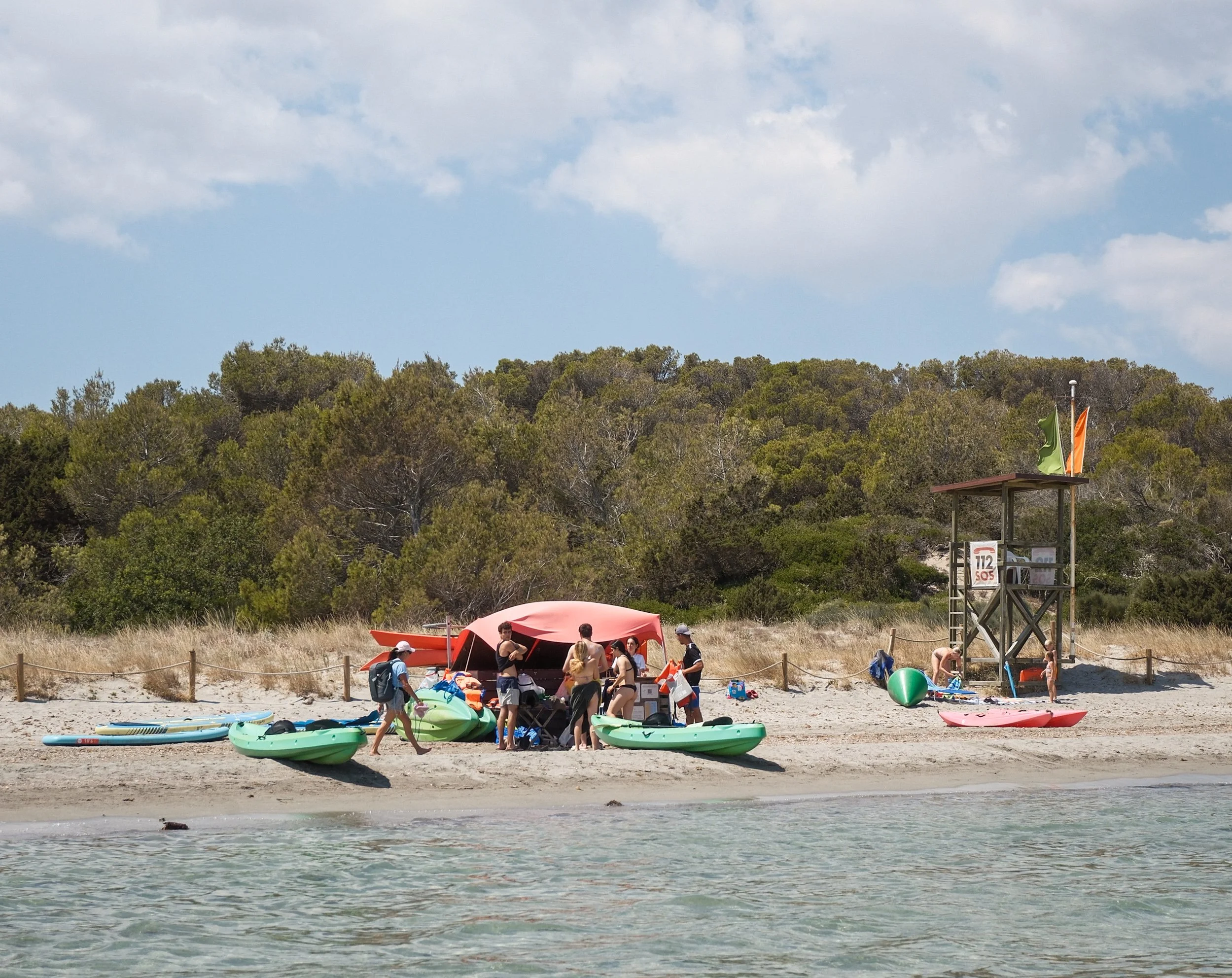
A few more earn their place for specific reasons. Cala Galdana is the island's most developed beauty with a deep, dramatic bay with hotels and restaurants around it, which purists dislike and parents appreciate; it's also the launch point for the walks to Mitjana and Macarella. Sant Tomàs is a long, handsome south-coast beach whose great advantage is its chiringuitos (more on those below) and its walking access to the wilder Binigaus next door. And Binibèquer, near the famous whitewashed fishing village of Binibeca Vell, pairs a pretty cove with one of the island's most photogenic detours. Come for the morning swim, stay for a wander through the village lanes.
The Best Beach Clubs in Menorca
Here's the honest version you won't get from listicles: Menorca doesn't really do beach clubs. There's no Ibiza-style scene of daybeds, bottle service, and DJs on the sand. The island's protections keep buildings off the best beaches entirely, and the culture here runs to long lunches rather than long afternoons behind a velvet rope. What Menorca has instead is arguably better: a collection of beach bars and chiringuito restaurants, some rustic and some genuinely polished, where the sea is the amenity and nobody charges you for a lounger by the hundred.
Es Bruc, on the sand at Sant Tomàs, is the island institution, a beloved chiringuito-turned-proper-restaurant where grilled squid and seafood arrive with the waves practically at your feet. Lunch is first-come, first-served in summer and the wait is real; treat it as part of the ritual. Cova d'en Xoroi, built into cliff caves above Cala en Porter, is the closest Menorca comes to a scene: a spectacular warren of terraces carved into the rock face, best at sunset with a drink in hand, shifting to DJs and dancing after dark. It's a bar rather than a beach club so no sand, and no swimming, but it's the island's essential sundowner and worth booking ahead. Susy, the chiringuito at Cala Macarella, deserves mention simply for existing where it does: simple food and cold drinks at one of the most beautiful coves in the Mediterranean. Isabella, near Binibeca on the southeast coast, is the most beach-club-adjacent of the lot. It’s stylish and sceney by Menorcan standards, with sushi and cocktails and a sunset orientation. And up north near Fornells, the rustic Xiringuito Tirant on Platja de Tirant is the barefoot classic: no scene at all, just paella, cold beer, and a quiet beach.
The casual restaurants on the sand at Son Bou and behind the beach at Es Grau make family beach days work with good food, good drinks, sea view, sandy feet and bathing suits.
Practical Notes
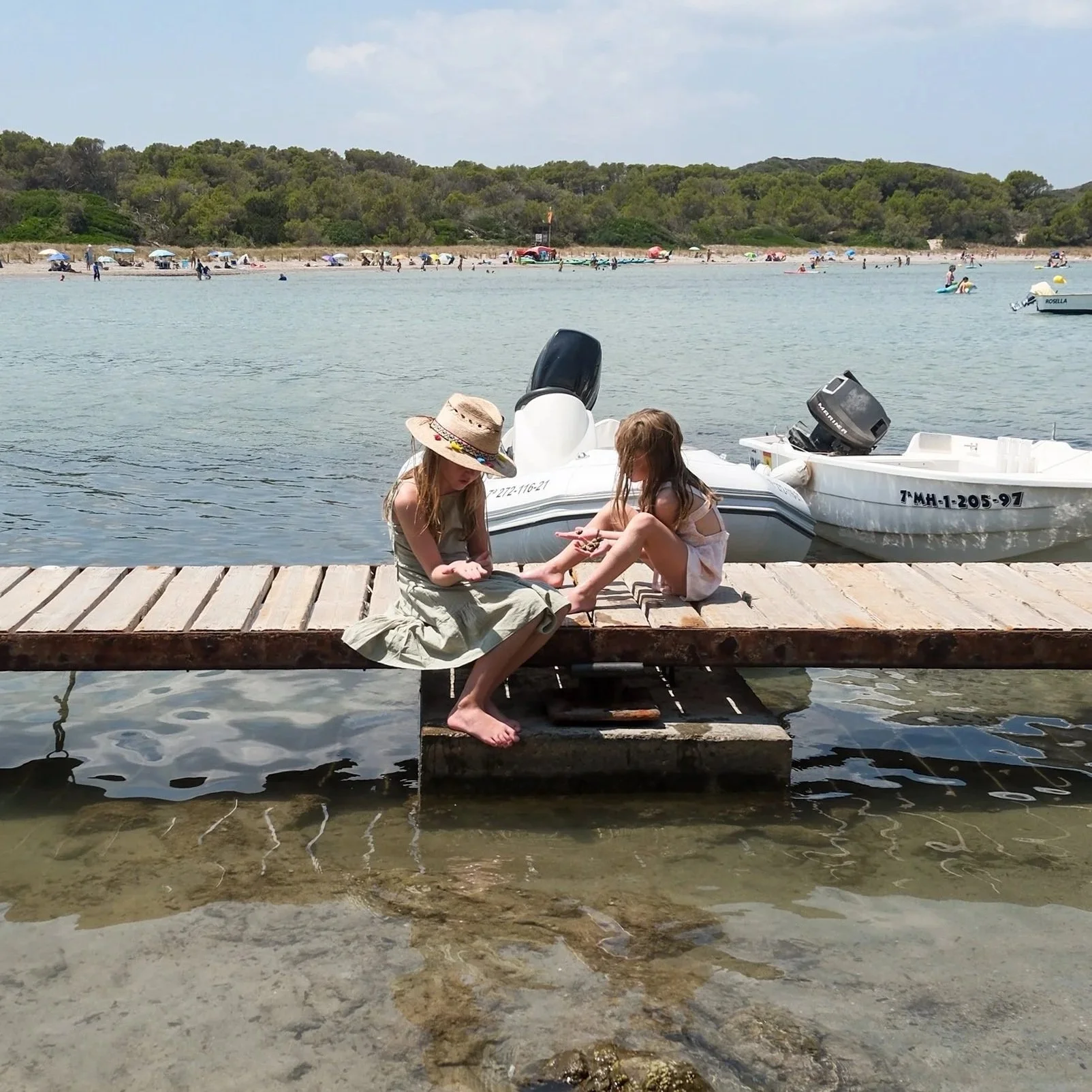
Rent a car; the best beaches are scattered and unreachable otherwise. For the virgin calas, arrive before 10 a.m. or after 5 p.m. in summer, bring everything (water, shade, snacks), and wear real shoes for the walking paths. Check wind direction daily—south-coast days and north-coast days are usually decided by the forecast. June and September deliver the same water with half the parking anxiety. And if you're basing yourself in the center of the island—the countryside around Alaior puts Son Bou, the south-coast calas, and the north coast all within a 20-to-30-minute drive—every beach in this guide is a day trip from one unpacked suitcase.
FAQ
What is the best beach in Menorca?
Cala Macarella is the most famous and arguably the most beautiful—white sand, pine-backed cliffs, and turquoise water—with its smaller neighbor Macarelleta just beyond. For a wilder, less crowded rival, Cala Pregonda on the north coast is the most distinctive beach on the island.
What are the best beaches in Menorca for families?
Son Bou and Es Grau, from our firsthand family trips. Son Bou is the island's longest beach with a gentle entry and restaurants on the sand; Es Grau is a shallow, sheltered bay in a natural park where the water stays calm and shallow, with village restaurants behind the beach.
Does Menorca have beach clubs?
Not in the Ibiza sense—there are no large daybed-and-DJ clubs on the sand, because the island's protected status keeps its best beaches undeveloped. Instead, Menorca has excellent beach bars and chiringuito restaurants, including Es Bruc at Sant Tomàs, Isabella near Binibeca, and the cliff-cave sunset bar Cova d'en Xoroi above Cala en Porter.
What is Cova d'en Xoroi?
A famous bar built into cliffside caves above Cala en Porter on the south coast. Terraces carved into the rock face look straight out over the sea, making it the island's best sunset drink; after dark it becomes a club with DJs. Book ahead in summer.
Are Menorca's best beaches hard to reach?
The famous virgin calas—Macarella, Turqueta, Mitjana, Pregonda—require walks of roughly 15 to 30 minutes from inland parking areas that fill by mid-morning in July and August. Go early or late. Developed beaches like Son Bou, Cala Galdana, and Sant Tomàs have direct access and full facilities.
When is the best time for Menorca's beaches?
June and September: the water is warm, the light is beautiful, and the parking lots, calas, and chiringuitos are at half the July–August pressure. Peak summer works too if you time beach visits early and late and reserve restaurants ahead.