
Fornells, Menorca: A Complete Guide to the Island's Watersports Village
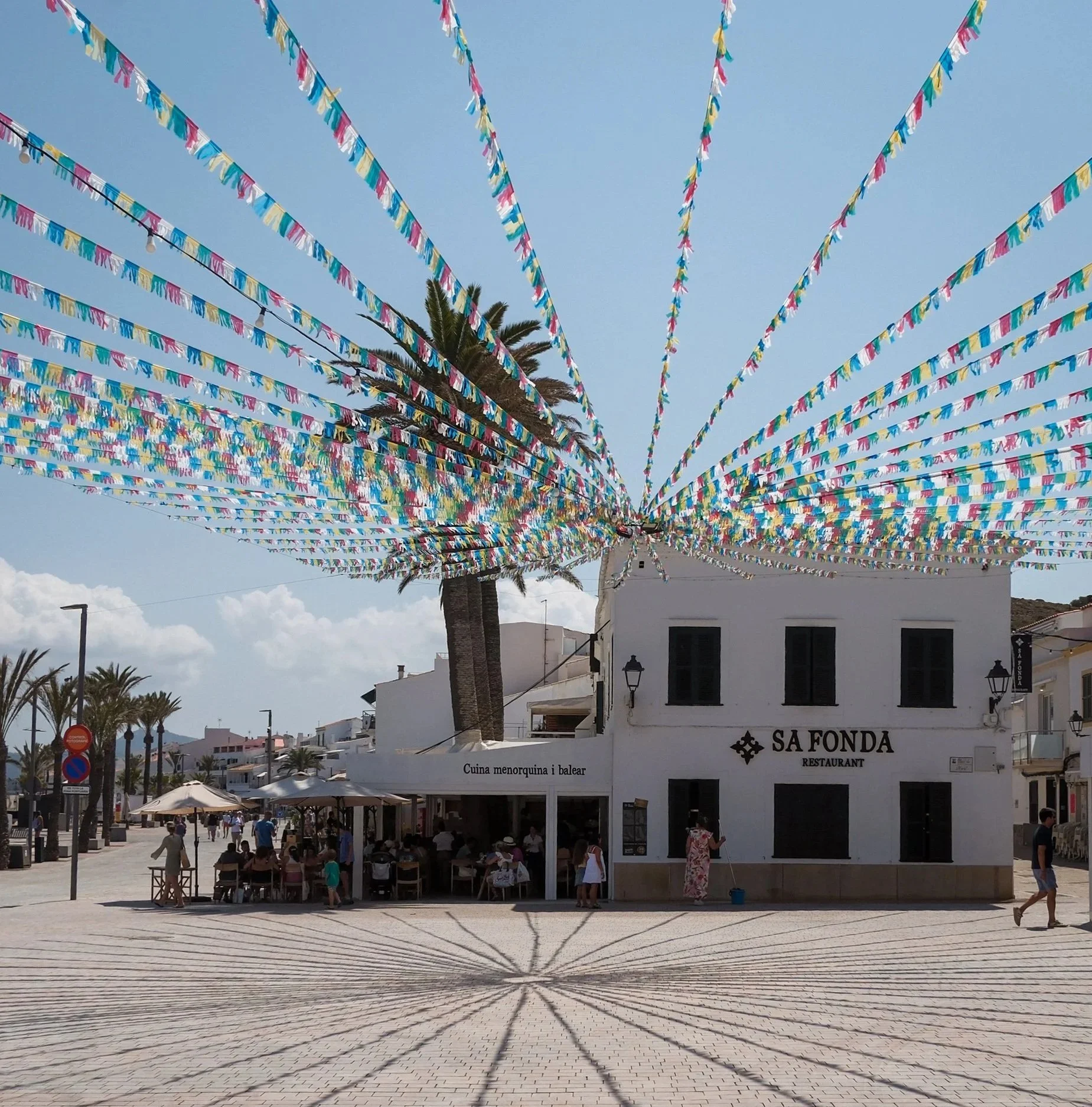
Everything in this guide comes from a Menorca trip we paid for ourselves. No comps, no press rates. Just what we'd tell a friend.
The verdict: Fornells is a whitewashed fishing village on Menorca's north coast wrapped around a long, shallow, wind-blown bay, and it does two things better than anywhere else on the island. It's the watersports capital, where the flat protected water makes it the best place in Menorca to learn to waterski, sail, paddleboard or windsurf. And it's the home of caldereta de langosta, the lobster stew that put Menorca on the culinary map. Give it a full day: a morning on the water, lunch or a long dinner on the harborfront, the fort on the headland for the view, and ice cream on the walk back. There's no beach in the village itself, which keeps it on the quiet side.
Why Fornells
Fornells exists because of the bay. It's a long, narrow inlet on the north coast, shallow almost all the way across, sheltered from open sea by the headlands at its mouth. That geography made it a pirate haven first and a naval prize second, and the village grew up around the fortifications built to control it.
What that same geography gives you now is a two mile stretch of flat water with reliable wind and no swell. It's why every sailing school on the island ends up here, and why Fornells is where Menorcan kids learn to sail. The tramuntana blows across the north coast most afternoons in summer, and Fornells is the one place that turns that into an asset instead of a problem.
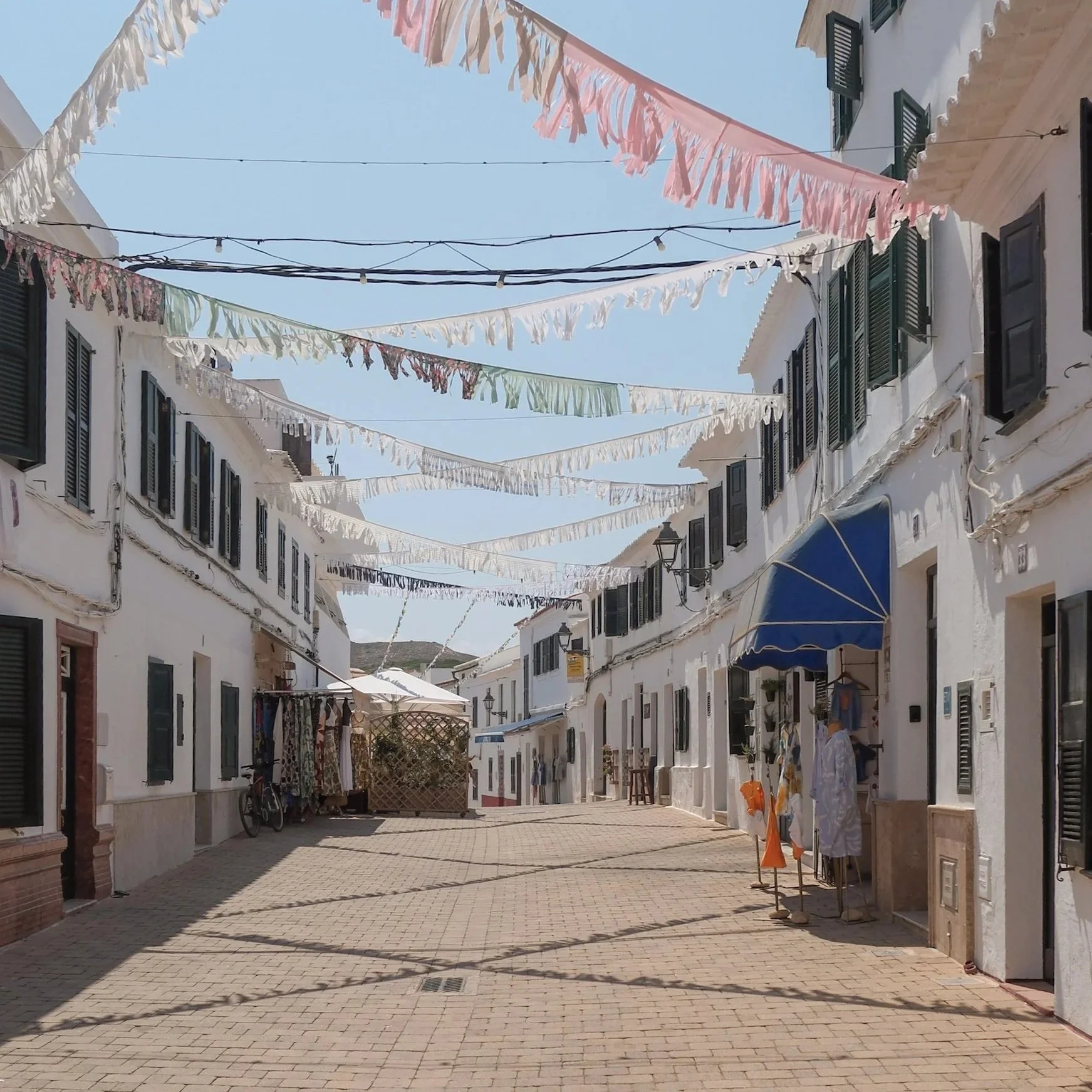
The village itself is small. A few streets of low whitewashed houses, a working fishing dock, a single row of restaurants along the water, and a church. It takes fifteen minutes to walk end to end. Most first-timers to Menorca base in the south and never make the drive up.The smaller villages have so much charm that they are definitely worth your time. Check out our guide to our other favorite quaint village in Menorca, Es Grau.
What to Do
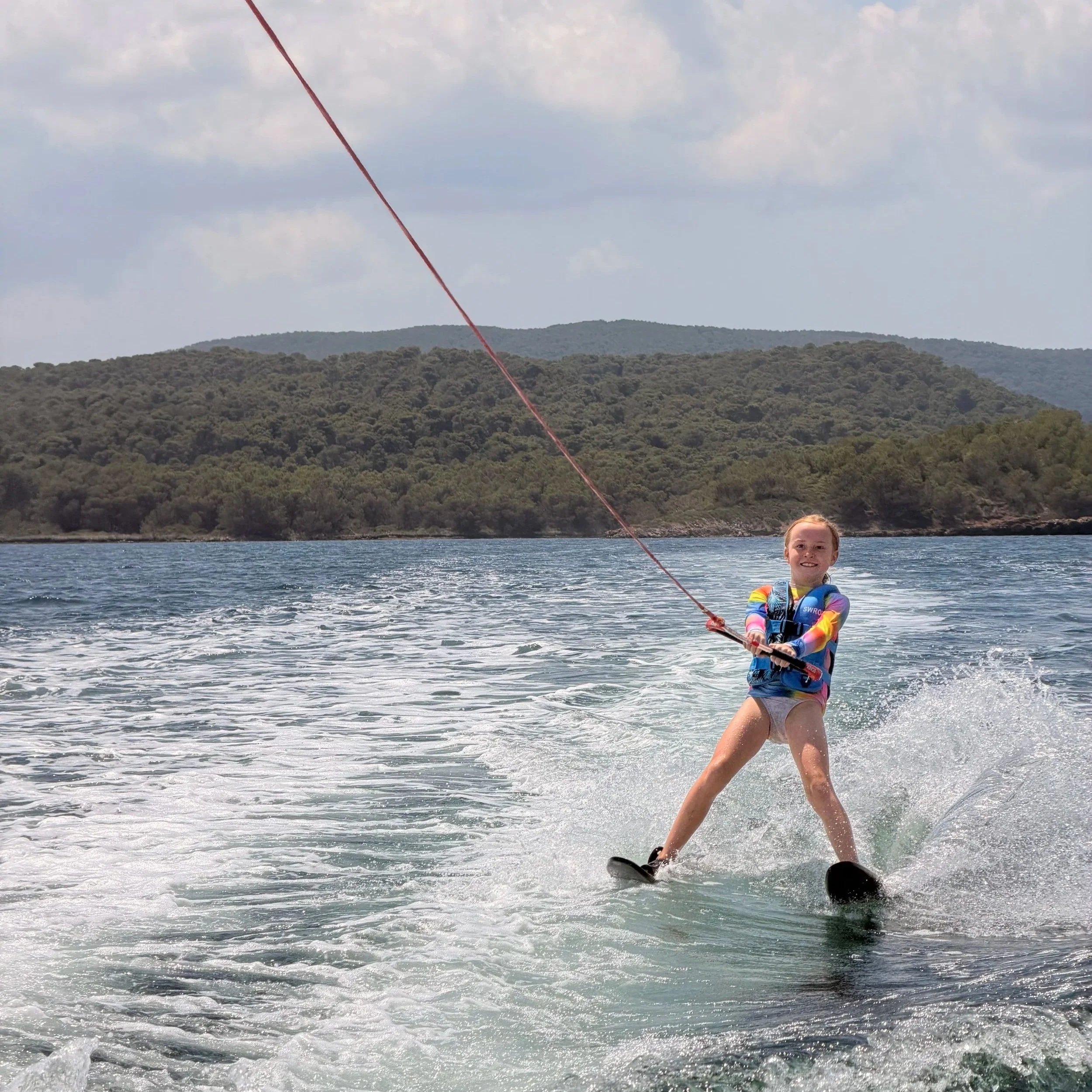
The water comes first. We spent a morning waterskiing with Ski Fornells, which runs out of the bay on the Es Mercadal road, and it was one of the best mornings of the trip. The bay is glass-flat early, the boat runs are long, and the instructors get in the water with beginners rather than shouting from the deck. Our kids, 9 and 6 got up quickly with the help of our wonderful instructors.
Next door, Wind Fornells is the sailing and board school, family-run, and it covers windsurfing, wing foiling, kayaks, and paddleboarding. We paddleboarded from there and the appeal is obvious the moment you're out: the water is waist deep a long way from shore, so nobody is nervous. Rentals run in the region of 48 euros for ninety minutes and a lesson with practice time closer to 62 euros, which is fair for what you get. They post wind conditions daily, so check before you drive up if you're coming specifically to sail.
Then walk out to the fort. The Torre de Fornells sits on the headland at the mouth of the bay, a squat British defensive tower built between 1801 and 1802 during the last occupation of the island. Entry is around 2.40 euros, it's usually open mornings into the early afternoon, and the view from the top takes in the whole bay on one side and the open Mediterranean on the other. Closer to the village, the ruins of the Castell de Sant Antoni sit right on the harbor. It guarded the entrance for a century and a half before Carlos III ordered it demolished in 1782, and what's left is a low set of restored walls with interpretive signage and a genuinely good sunset view. Both are short walks. Do the tower if you're only doing one.
The village has no beach, but it has swimming. Plaça del Forn is the local spot, a small stone-edged inlet where the water is clear and completely flat, and it's better for snorkeling than most actual beaches on the island. Kids jump in off the rocks all afternoon.
In summer the village runs an evening market along Carrer del Mar, generally weekend nights from around eight, plus a daytime flea market midweek. It's small and it's genuinely local, which is the appeal. If evening markets are your family's thing, our Menorca with kids guide covers the island-wide summer night market circuit, and Fornells is the most low-key of them. The village also throws its Sant Antoni festa in late July, one of Menorca's horse festivals, and it is worth planning a trip around if the dates line up.
Where to Eat
Fornells punches far above a village of a thousand people, because caldereta de langosta was effectively invented here and the town has been feeding people who drove an hour for it since the sixties.
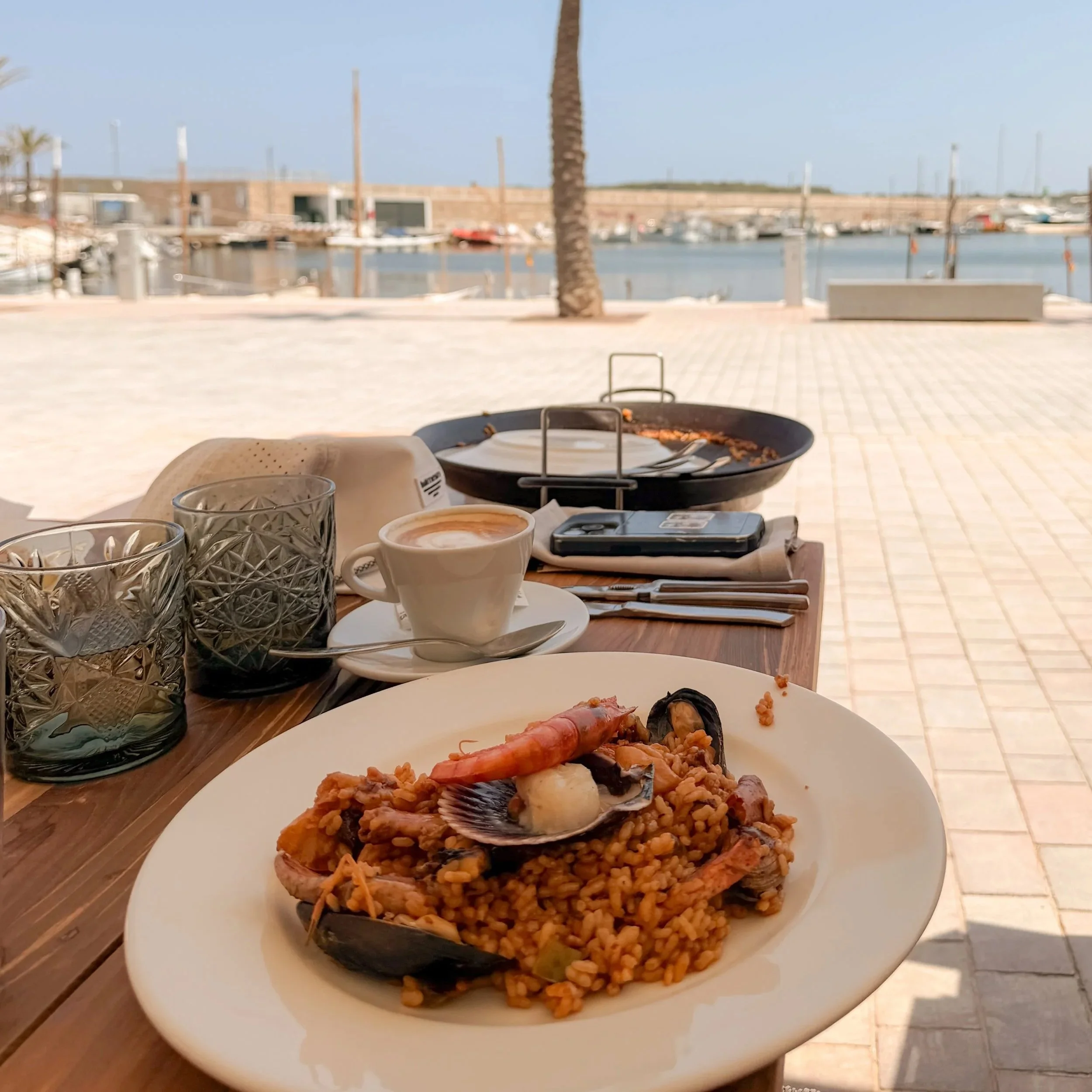
We ate at Sa Fonda, on the seafront in front of the fishermen's dock, and it's the restaurant we'd send you to first. It's in a restored old building looking straight out at the water, the cooking is Menorcan and product-driven, and it manages to be a proper dinner without being stiff about kids at the table. The rice dishes are the move if you're not committing to the lobster.
Es Cranc is the institution. Nearly fifty years of caldereta, a plain dining room a street back from the water, and a reputation that means you reserve days ahead in summer or you do not get in. It's expensive. Lobster is priced by weight and a caldereta for two lands well into three figures, so go in knowing that. Sa Llagosta, on the seafront promenade, is the polished version of the same idea, chef-driven with a serious wine list and prices to match. Sa Proa is the reliable harborfront table when you want fish and a view without the occasion. Es Port does the same on the water and has been in the same family for years. And Ca Na Marga, just outside the village on the road in, is the outlier: a grill house for Menorcan beef, croquettes and cheesecake, and the one to book when everyone has had enough seafood. It already appears in our best restaurants in Menorca guide alongside the island's other favorites.
One more, slightly out of the village: Cafè del Nord sits up above Platges de Fornells with a view down over the bay and across to Monte Toro. Rice dishes, and the best outlook of any table up here.
Coffee and Ice Cream
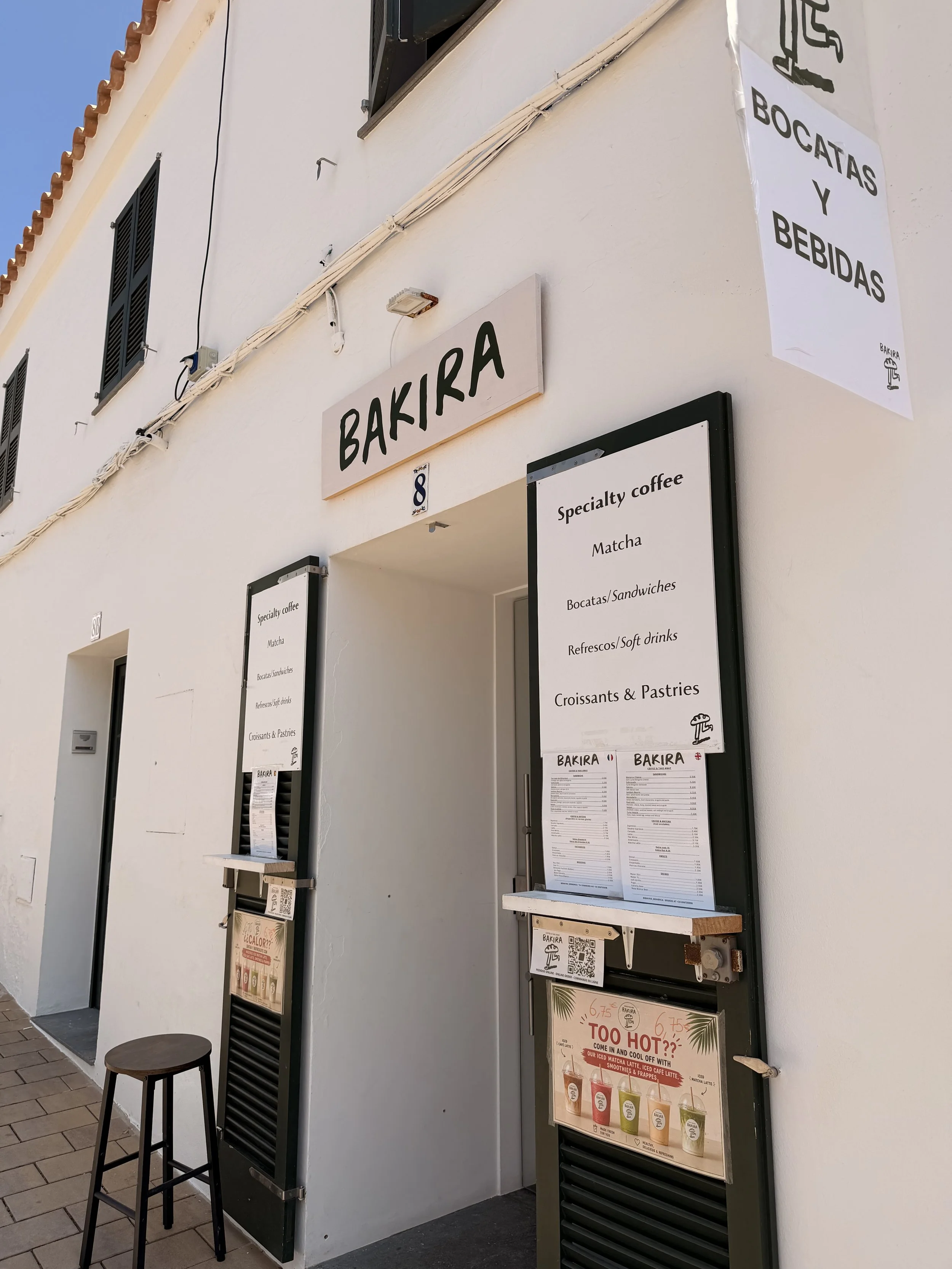
Bakira, on Carrer de les Roques a minute from the port, is where we started every Fornells day. Good coffee, properly made sandwiches, pastries in the morning, and staff who will tell you what the wind is doing. It's small and it closes mid afternoon, and it's shut one day midweek, so it's a morning plan rather than a fallback.
For ice cream, Ricardo Riera is the reason people who don't care about lobster still drive to Fornells. It's handmade on site, the fruit flavors taste like the actual fruit, and the chocolate with olive oil and salt is the one to order. The family connection is a nice detail: Ricardo learned desserts working at his father's restaurant, Es Port, a few doors down the same waterfront. There's a queue out the door most evenings in August. Join it.
The Beaches Nearby
Fornells has no beach, but the north coast around it has the island's most distinctive ones. Platges de Fornells and Cala Tirant are the closest, both wide and shallow and both easy with kids. Push further west along the coast and you reach the red and ochre sand that makes the north coast look nothing like the rest of the Balearics, including Cala Pregonda, which is a walk from the parking and worth every step. Our best beaches in Menorca guide covers the full list, including which ones you can realistically park at in August.
Where to Stay
Honest answer: you don't stay in Fornells. You daytrip to it. The village has hostals and apartments and a club-style resort out at Platges de Fornells, and nothing that belongs in a luxury guide. What Fornells is good for is being twenty-five to thirty-five minutes from most of the island's best hotels, which puts it comfortably in reach of a morning on the water and dinner on the harbor.
We stayed at Torre Vella Fontenille near Alaior, which is about half an hour south and remains our favorite place on the island, and its sister property Santa Ponsa Fontenille on the same estate. Both make Fornells an easy day. If you want the full ranked list including Son Vell and Villa Le Blanc, our guide to the best hotels in Menorca covers all of them. High season rates at the island's best properties generally start in the mid hundreds per night and climb from there in July and August, and the good ones sell out by spring.
Best Time to Visit and Book
Fornells is a summer village. Most of the restaurants and the watersports schools run roughly May through October and a good number close entirely outside that. June and September are the sweet spot: the water is warm, the schools are running, and you can get a table at Es Cranc without a week's notice. July and August are hot, busy and bookable only in advance, though Fornells still feels calm compared to anywhere on the south coast.
Book restaurants before you arrive if you want the famous ones. Es Cranc in particular takes reservations well ahead in peak weeks. Watersports are easier and can usually be arranged a day or two out, but morning slots go first because the bay is flattest early and the wind builds through the afternoon. If you're coming for the Sant Antoni festa in late July, hotels across the island tighten up, so book that one months ahead.
For the hotel itself, Menorca's small properties sell out earlier than people expect. January and February booking for a July stay is normal, not cautious.
FAQ: Fornells, Menorca
Is Fornells worth visiting? Yes, and it's the stop most first-timers skip. It's the best watersports bay on the island, the home of caldereta de langosta, and one of the few villages in Menorca that still reads as a working fishing town. Give it a full day rather than an hour.
Does Fornells have a beach? Not in the village. Plaça del Forn is a small stone-edged swimming inlet in town, and the nearest proper beaches are Platges de Fornells and Cala Tirant, both a few minutes away. The absence of a beach is a large part of why the village stayed quiet.
What is caldereta de langosta? Menorca's signature dish: a rich lobster stew built on a sofrito base, traditionally made by Fornells fishermen with the spiny lobster caught off the north coast. It's priced by weight and it is not cheap. Es Cranc is the most famous place to eat it, with Sa Llagosta and Sa Fonda as strong alternatives.
What can you do in Fornells Bay? Waterskiing and wakeboarding with Ski Fornells, and sailing, windsurfing, wing foiling, kayaking and paddleboarding with Wind Fornells. The bay is shallow and protected, which makes it the best learning water on the island for kids and beginners.
How far is Fornells from Mahón and Ciutadella? Roughly half an hour from Mahón and about forty-five minutes from Ciutadella, both easy drives. You need a car; bus service to Fornells is limited.
Where should you stay to visit Fornells? Not in Fornells. The island's best hotels sit in the center and south, twenty-five to thirty-five minutes away, which is close enough for a morning on the water and dinner on the harbor.
Related Articles
Menorca Travel Guide: Where to Stay, Eat, and Swim on Spain's Quietest Balearic Island
Mahón, Menorca: A Complete Guide to the Island's Harbor Capital
Ciutadella, Menorca: A Complete Guide to the Island's Most Beautiful Town
The Best Restaurants in Menorca (2026): 13 Favorites From Ciutadella to Mahón
Santa Ponsa Fontenille Menorca Review: The Island's Most Beautiful Gardens